
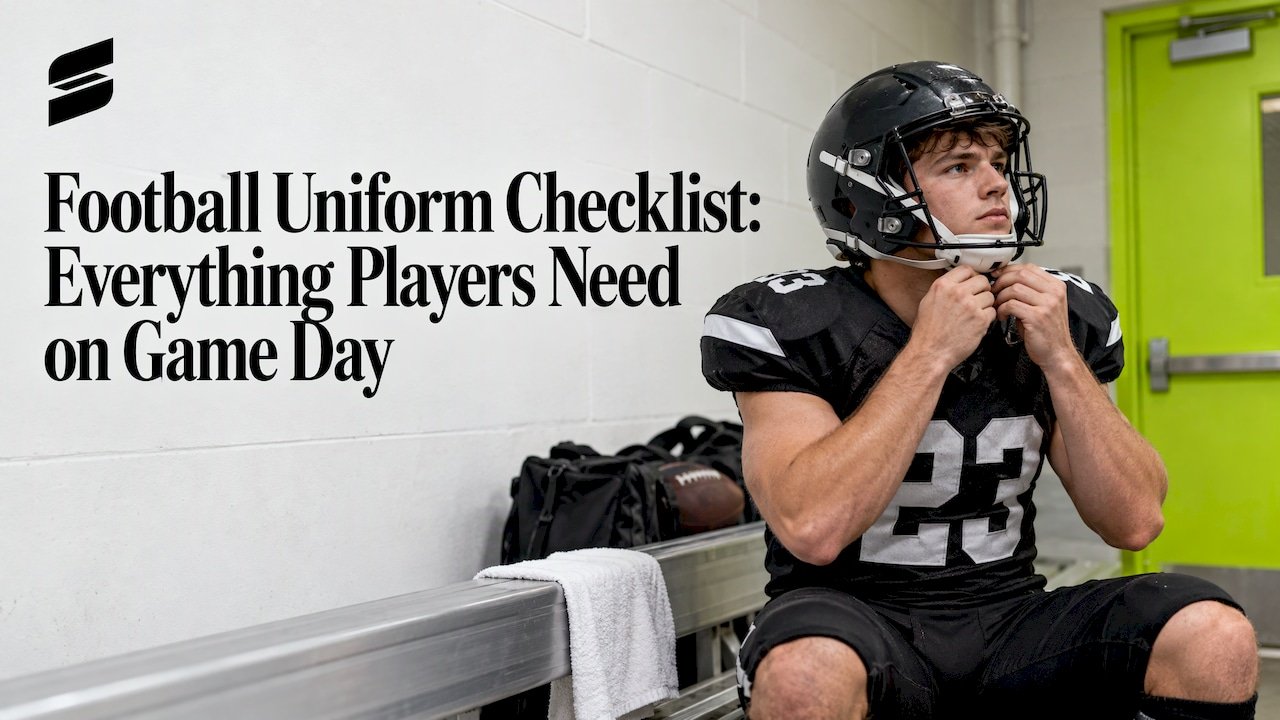
Football Uniform Checklist: Everything Players Need on Game Day
A football uniform checklist has three layers: the items every player carries (football, gloves, mouthguard, water bottle, bag, socks, cleats), the tackle-only protective gear (helmet, pads, belt, pants, girdle), and the jersey and pants details your league or school requires. Check all three before the team leaves, and you avoid the missing mouthguard, the wrong-color jersey and the pad that does not fit.
This guide is written for coaches, team parents and athletic directors. It follows the equipment list from NFL Play Football, adds the 2026 NFHS jersey rules, covers fit checks, and ends with a printable-style game day routine you can run in five minutes.
TL;DR
- Every player needs a football, gloves, mouthguard, water bottle, athletic bag, socks and cleats. Tackle players add a helmet, chin strap, pads, belt, pants, girdle, performance shirt and practice jersey.
- High school teams follow NFHS rules: professionally manufactured, properly fitted equipment, plus set jersey number sizes and contrast.
- Fit matters as much as having the item. Check helmet height, shoulder-pad coverage and range of motion before the first snap.
- Pack a backup mouthguard, extra socks and a weather layer, and label everything.
- Flag football has a shorter list: team jersey, flag belt and pocketless shorts.
Table of Contents
- The core football uniform checklist
- What your league or school requires
- Fit checks before the first snap
- Game day packing list beyond the uniform
- Weather and wear: avoiding missing or damaged items
- The coach’s pregame inspection routine
- Why we build our football uniforms around this checklist
- Ready to order jerseys that pass inspection?
- FAQ
- Sources
The core football uniform checklist
Start with the master list. NFL Play Football’s parent guide splits it into items for all players and items for tackle football only.
Items every player needs
- Football (for practice and for throwing at home)
- Gloves
- Mouthguard
- Water bottle
- Athletic bag
- Socks
- Cleats
These come straight from the NFL Play Football equipment checklist. Cleats should suit the playing surface and fit without causing blisters or discomfort, according to the same page. A player who limps through warmups because of a new pair of cleats is a player who needed a break-in week.
Extra items for tackle football
- Helmet and chin strap
- Seven-piece pad set
- Shoulder pads
- Belt
- Integrated pants
- Padded girdle
- Padded performance shirt
- Practice jersey
The same NFL Play Football page lists these as the tackle additions. Your game jersey sits on top of this layer, which is why jersey sizing is its own step, covered below.
Flag football is simpler
Flag players receive a team jersey and a flag belt, and should wear pocketless shorts, per NFL Play Football. Pockets can snag flags, so check shorts before you leave the house. If your league plays 7v7 or flag, our flag football uniform builder lets you lay out jerseys before ordering.
What your league or school requires
The checklist above is the baseline. Leagues and states add rules on top, and the most common ones for school teams come from the National Federation of State High School Associations (NFHS).
Equipment standards
NFHS rules call for professionally manufactured, properly fitted equipment, including a jersey and pants, shoulder pads, hip pads, a tailbone protector, thigh guards and knee pads, as summarized by NFL Play Football. The 2026 NFHS jersey and pants rules add that mandatory equipment cannot be altered in ways that reduce protection.
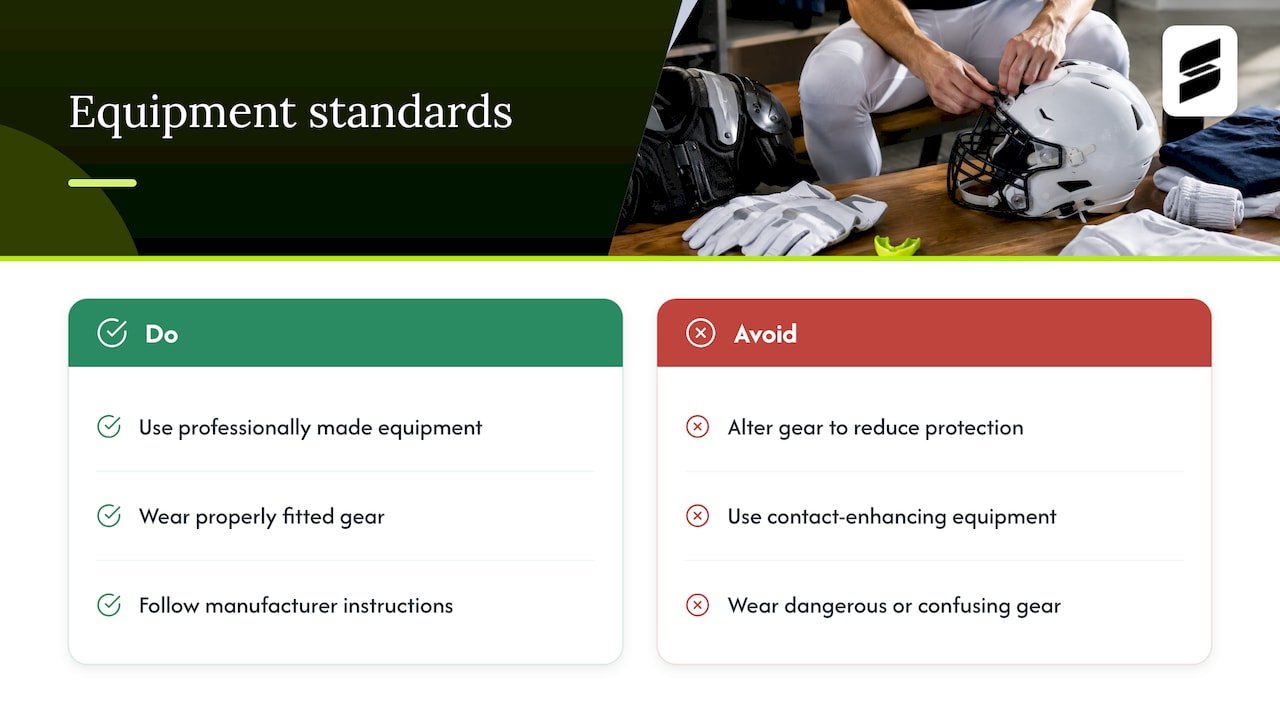
Those rules also say what to avoid: dangerous, confusing or inappropriate equipment, equipment made to enhance contact, and gear not worn as the manufacturer intended. If a player has cut, trimmed or reshaped a pad to feel more comfortable, that is a problem to fix before game day, not at the pregame inspection.
Jersey length and fit under the rules
According to the 2026 NFHS rules, the jersey must reach the top of the pants and cover the shoulder pads and torso pads. If it is longer, it must be tucked in. A jersey that rides up over the pads is a common cause of last-minute swaps.
Jersey numbers
The same document sets the numbering standard:
- Numbers from 0 through 99
- On the front and the back
- At least 8 inches high on the front and 10 inches high on the back
- Strokes of approximately 1.5 inches
- A solid color that contrasts with the jersey
Check every jersey against this list, including spares. A duplicate number on the roster or a faded number that no longer contrasts can hold up an official. For the full picture, see our guide to NFHS soccer and football uniform rules. Youth leagues, rec leagues and state associations may differ, so confirm with your league office before you order.
Fit checks before the first snap
Owning every item does not make a player ready. Equipment that fits well supports protection, freedom of movement, agility and speed without limiting range of motion, as NFL Play Football puts it. Here is a quick fit routine a coach or parent can run.
Helmet
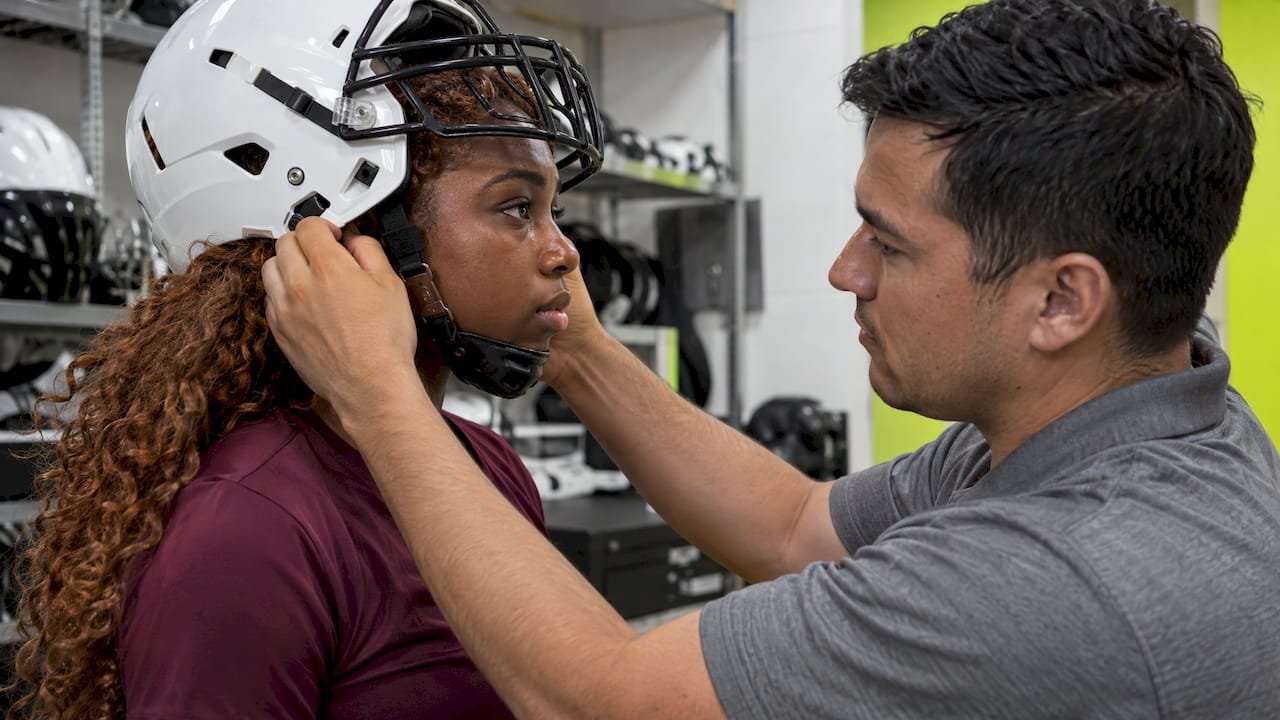
USA Football’s equipment fitting guidance describes the process: record the head size, position the helmet about one inch above the eyebrows, adjust the front-to-back and side-to-side position and the face pads, then check the fit and adjust the chin strap. If the helmet shifts when the player shakes their head, go back through those steps with a trained fitter rather than guessing.
Shoulder pads
Fitting starts with chest and shoulder measurements. Then the straps or laces get secured, front and rear coverage gets checked, and the fit gets confirmed, per USA Football. The Riddell youth pad fitting guide hosted by USA Football adds practical details:
- Measure the torso and shoulders
- Bring the pads down over the head carefully
- Secure belts and elastic straps
- Check for pinching at the collar
- Confirm coverage of the sternum and the front of the upper shoulder
- Check range of motion
If you are not sure how to fit protective gear, ask your league’s equipment manager or a certified fitter. Pad and helmet fitting is not a job for trial and error on game morning.
Jersey and pants
The jersey goes over the pads, so size it with pads on. Measure the player in full pad layers, not in a T-shirt. Our custom football uniform size chart and team uniform sizing guide for coaches walk through chest, length and pants measurements. Parents choosing between youth and adult cuts for a growing player can use our youth jersey sizing page and the youth vs adult sizes breakdown.
When we work with teams on custom orders, we send one sizing sample at no extra charge, so a coach can try it over pads before the whole roster is sized.
Game day packing list beyond the uniform
A player can wear the whole uniform and still have a bad day because something small was missing. NFL Play Football’s guidance points to a short list: water bottles, an athletic bag, socks and a backup mouthguard. We would add a few extras that cost nothing to carry.
The bag
- Water bottle, filled
- Backup mouthguard, per NFL Play Football
- Extra pair of socks
- Gloves, plus a spare pair if the player has one
- Cleats in the bag, not on feet, if the walk to the field is long
- Towel and a dry shirt for after the game
- A small bag for wet or muddy gear
Team-level items for the coach
- Roster with jersey numbers, checked against the physical jerseys
- Spare jerseys in a second color or size, if your program has them
- Footballs for warmups
- Water coolers and cups
- Any league paperwork the officials request
A youth program that does not own spare equipment can still keep a short loaner kit of mouthguards and socks. If you are deciding where to spend a youth sports budget, this guide to youth sports equipment explains how a parent can think about gear that supports a player through the season.
Weather and wear: avoiding missing or damaged items
Game day rarely goes wrong because of the big pieces. It goes wrong because it is raining, a sock is gone, or a jersey number peeled off in the wash. A few habits take care of most of it.
Cold and wet games
- Pack a warm layer for the sideline and a dry shirt for halftime
- Keep gloves in the bag in a sealed plastic bag so a spare stays dry
- Choose cleats that suit the surface, as noted by NFL Play Football, and bring the other pair if conditions are uncertain
Any layer worn under the jersey still has to fit within the jersey and pad rules described above, so test cold-weather layers at practice, not for the first time at kickoff.
Hot games
- Send more water than you think you need and refill between series
- Bring an extra dry performance shirt
- Watch players for signs of heat illness and follow your league’s heat policy and your school’s athletic trainer’s guidance
Labels and storage
- Write the player’s name or number inside the bag, on the mouthguard case and on the water bottle
- Air out pads and the helmet after each practice rather than leaving them zipped in the bag
- Wash jerseys according to the care label so numbers and colors last; our sublimated jerseys are made with printing that is part of the fabric, but care labels still apply
- Do a bag check the night before, not in the parking lot
The coach’s pregame inspection routine
Use this order in the locker room or at the trailhead of the field. It takes about five minutes with a roster in hand.
- Roster check. Match each jersey number to the roster.
- Protective gear. Helmet, chin strap, shoulder pads, hip pads, tailbone protector, thigh guards and knee pads are present and unaltered.
- Jersey and pants. Jersey covers the pads and reaches the pants; if it is longer, it is tucked in.
- Numbers. Front and back numbers are legible, contrast with the jersey and meet the size requirements.
- Mouthguard and gloves. Each player has them, and a spare mouthguard is in the bag.
- Footwear. Cleats suit the surface and nothing rubs.
- Hydration and bag. Water bottle filled, bag zipped, name on it.
Why we build our football uniforms around this checklist
We have seen the same pattern across football programs: teams plan carefully for pads and helmets, then run into trouble with the jersey. Sizes are guessed over a T-shirt, numbers do not match the roster, or a color order arrives without a plan for spares.
That is why we start every order with a free design mockup, delivered in 24 hours, and work directly with professional designers who handle unlimited revisions. A coach can see the jersey, number placement and colors before committing, then check them against the league’s rules.
For sizing, we send one sizing sample at no extra charge, so players can try it over pads. Our team minimum is 10 sets, which fits most youth squads, school programs and rec leagues. Our sublimated materials are designed to hold color and numbers through a season of washes.
The best uniform is the one that is ready, correct and comfortable on game day. We design our process to make it that.
Agha
Ready to order jerseys that pass inspection?
Capra Sports makes custom sublimated football uniforms for youth teams, schools and rec leagues, with free design mockups in 24 hours and direct work with our designers. Pricing for football uniforms is [PRICE TBD]; see the pricing page for the current details.
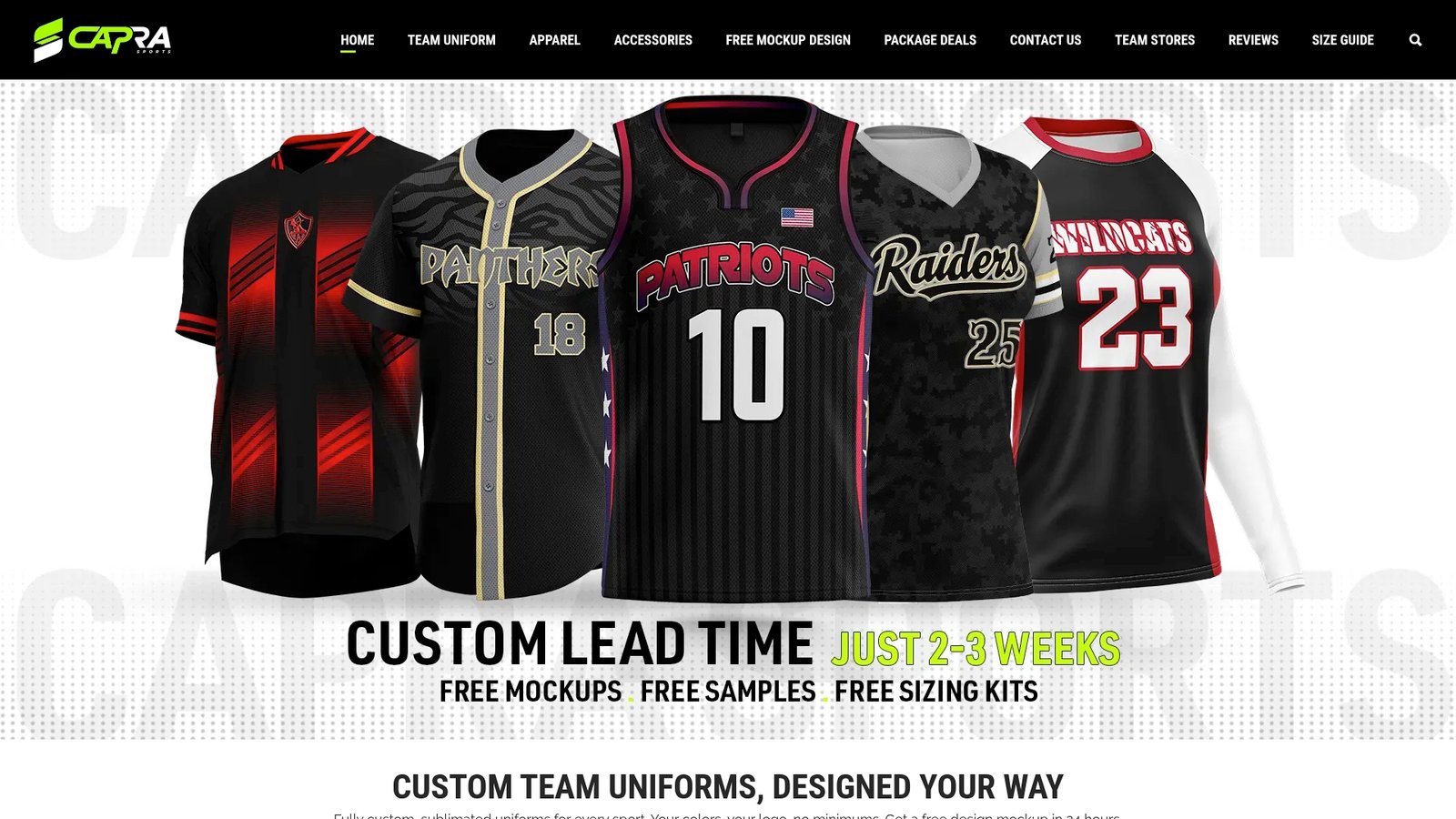
Browse our custom football uniforms for teams, get ideas from our football uniform design ideas, or start a flag football roster with our 7v7 flag football packages.
FAQ
What is the minimum a football player needs to play?
All players need a football, gloves, mouthguard, water bottle, athletic bag, socks and cleats. Tackle players also need a helmet, chin strap, seven-piece pad set, shoulder pads, belt, integrated pants, padded girdle, padded performance shirt and practice jersey, according to NFL Play Football. Your league may add to this list.
How big do football jersey numbers have to be?
Under the 2026 NFHS rules, numbers must be at least 8 inches high on the front and 10 inches on the back, with strokes of about 1.5 inches in a solid contrasting color. Numbers run from 0 through 99. Youth leagues can set their own standards, so check with yours.
What should a player pack besides the uniform?
Pack a filled water bottle, an athletic bag, extra socks and a backup mouthguard, as recommended by NFL Play Football. A towel, a dry shirt and a bag for wet gear are easy additions.
What do flag football players wear?
Flag players get a team jersey and flag belt, and should wear shorts without pockets, per NFL Play Football. No helmet or pads are needed for flag.
Sources
- Football Equipment checklist, NFL Play Football
- 2026 NFHS Football Jersey and Pant Rules
- Equipment Fitting, USA Football
- Riddell Youth Pad Fitting Guide, USA Football