
Avoid Ordering Errors: Stirrups or Two in Ones, History and Checklist
Baseball stirrups are footless overlay socks worn over a white sanitary sock, built to show a stripe of color at the calf without covering the foot. Full socks and two-in-one socks are single-piece alternatives that skip the layering entirely. If your team values tradition and a retro look, go with stirrups; if you want faster dressing and easier laundry, choose two-in-ones. Below, you’ll find the history, the trade-offs, and a coach’s checklist for ordering.
TL;DR:
- Traditional stirrups were originally designed for hygiene reasons, with a separate sanitized sock protecting against infection from spike wounds.
- Two-in-one socks offer a more convenient, all-in-one solution that simplifies dressing and laundry, especially for youth and high school teams.
- Longer pants and relaxed uniform rules have largely phased out visible stirrups in Major League Baseball since the 1980s, but they remain popular in amateur levels for style.
- Properly wearing stirrups requires careful blousing and adjustment with bands to prevent slipping during the game, unlike easy-slip two-in-ones.
- Coaches should verify league rules, pant length, and team branding goals before ordering to ensure sock style aligns with uniform aesthetics and practicality.
Table of Contents
- Stirrups vs Socks Baseball: What’s the Actual Difference?
- Why Were Baseball Stirrups Invented in the First Place?
- Which Is Better: Baseball Stirrups or Full Socks?
- How Do You Put on Baseball Stirrups Correctly?
- Are Stirrups Making a Comeback in Baseball?
- What Should Coaches Check Before Ordering Team Socks?
- A Coach’s Take on Sock Choice and Team Identity
- Order Coordinated Socks, Pants, and Jerseys Without the Guesswork
- Sources
- FAQ
Stirrups vs Socks Baseball: What’s the Actual Difference?
A traditional stirrup is a colored, footless tube that stretches from the knee down under the arch of the foot, leaving a gap where a separate sanitary sock shows through. That underlayer is called a sanitary sock for a reason rooted in early-1900s hygiene practices, not just tradition. Together, the two pieces create the classic layered look you see in old photographs and some retro uniforms today.
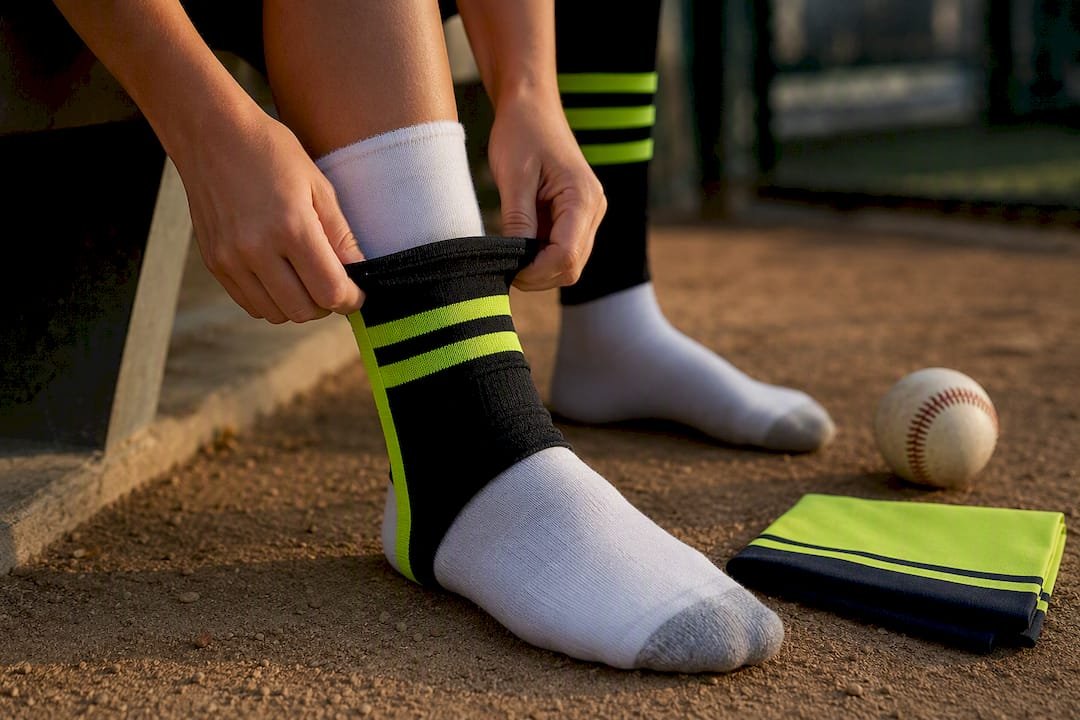
A two-in-one sock solves the same visual goal with one piece of fabric instead of two. It’s knit to look like a stirrup stacked over a white sanitary sock, but there’s no separate underlayer to fit, align, or lose in the wash. Full socks, meanwhile, are just a solid-color knee-high with no stirrup styling at all.
Cut length matters too. Stirrups and two-in-ones typically come in three standard rises:
- 5-inch cut: shows more sanitary sock, a lower-profile stirrup look
- 7-inch cut: the middle ground typical for youth and high school teams
- 9-inch cut: a taller stirrup panel, closer to the traditional high-cut style
Most are knit from polyester or a poly-cotton blend for stretch and moisture control, per Wikipedia’s overview of the garment.
Why Were Baseball Stirrups Invented in the First Place?
Stirrups weren’t originally a fashion choice. They started as a health fix. In the early 1900s, players kept getting infections from spike wounds because the dye in colored socks would bleed into open cuts. The sanitary sock, plain white and dye-free, went on first to protect the skin, and the colored stirrup went over it purely for team identity, according to Mlb.
Nap Lajoie’s era is often cited as the point where this two-piece system took hold across professional rosters. From there, the look kept evolving. Mid-century teams pushed cut heights up, ribbon-thin stirrup strips became popular for a while, and eventually manufacturers built the two-in-one sock to eliminate the hassle of matching two pieces every game day, a progression the Baseball Hall of Fame’s stockings exhibit documents in detail.
Stirrups started fading from MLB dugouts as pants got longer and uniform rules loosened. Once pant hems dropped past the calf, there was no visible stripe to show off, and many players simply stopped bothering with the extra layer.
Which Is Better: Baseball Stirrups or Full Socks?
Neither option is objectively superior. It depends on what your team is optimizing for.
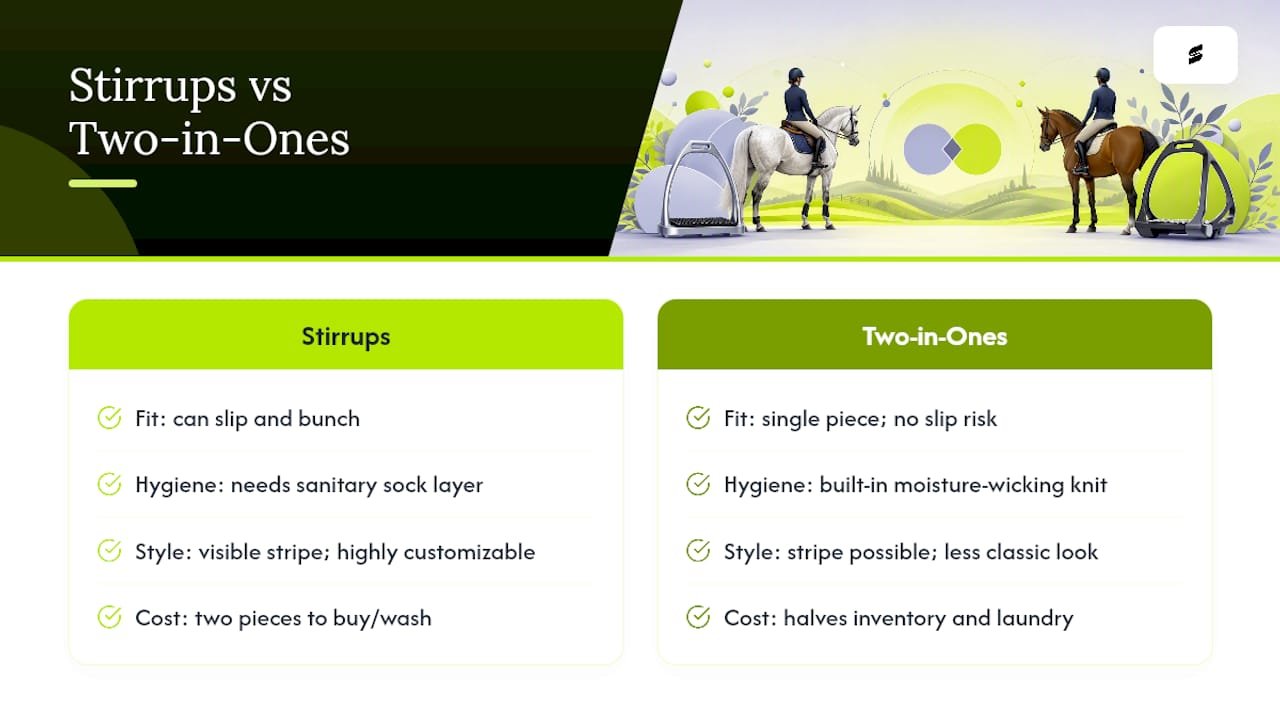
Performance and fit. A stirrup that isn’t snug enough can shift inside a cleat during a sprint, bunching under the foot arch. Full socks and two-in-ones remove that risk since there’s nothing to slip out of alignment.
Hygiene and comfort. The original sanitary sock layer still matters if you’re wearing traditional stirrups. It’s a moisture-wicking barrier between skin and stirrup fabric, something a single-piece sock has to build into one knit instead of two.
Style and branding. This is where stirrups win outright. That visible stripe under the pant leg is instantly recognizable and easy to customize with team colors, and it’s part of why some fans view stirrups as shorthand for old-school baseball, a point MLB.com’s own retrospective makes explicitly.
Cost and upkeep. Two pieces means two things to buy, size, and wash. Two-in-one socks cut that inventory in half, which matters a lot when you’re managing laundry for 15 or more players over a season.
Pro Tip: If your team wants the retro stripe without the sanitary-sock hassle, order two-in-ones in your team colors first, then test a full traditional stirrup set for your varsity or showcase games where the classic look carries more weight.
How Do You Put on Baseball Stirrups Correctly?
Getting stirrups to sit right takes more than pulling them on and hoping. Here’s the order that actually works:
- Put on the sanitary sock first. Smooth it flat across the heel and calf so there are no wrinkles under the stirrup.
- Pull the stirrup over it. Center the strap along the front of the shin, keeping the stirrup loop tucked under the arch of your foot.
- Adjust for even height. Check both legs in a mirror or ask a teammate. Uneven stirrups are the most common visual mistake on a roster.
- Pull your pants over the top and blouse them. Use a blousing band, rubber band, or athletic tape just below the knee to hold the pant leg and stirrup in place, a method detailed in BaseballScouter’s stirrup guide.
- Test with a walk and a squat. If the stirrup slides or the sanitary sock peeks out unevenly, redo the blousing before you take the field.
Two-in-ones skip steps one through three entirely. Just pull them on like a normal sock, blouse your pants, and you’re done. The most common error with traditional stirrups is skipping the blousing band altogether. Without it, the stirrup slowly works its way down your shin over the course of a game.
Are Stirrups Making a Comeback in Baseball?
MLB’s shift toward longer pants throughout the 1980s and 1990s largely pushed the visible stirrup out of the majors, and that sock evolution has been well documented as a mix of player comfort choices and relaxed uniform codes rather than any rule change. Long pants simply covered up what used to be a visible stripe.
Youth and high school programs tell a different story. Plenty of coaches at that level actively bring the stirrup look back for team photos, playoff games, or throwback nights, since shorter pant styles at the amateur level still show off the sock. Two-in-ones have made that revival easier because teams get the aesthetic without training players to layer two pieces correctly every game.
What Should Coaches Check Before Ordering Team Socks?
Before you place a bulk order, run through this short list:
- Confirm your league’s uniform rules. Some youth and school leagues specify pant length or sock visibility, which affects whether stirrups even matter.
- Decide your budget model. Two-piece stirrup sets cost more to stock and replace than a single two-in-one sock, since you’re buying and laundering double the pieces.
- Match socks to your pant style. Knicker-cut pants show off a stirrup stripe; full-length pants hide it almost entirely, so check your pant cut before locking in sock style.
- Consider two-in-ones for younger age groups. Less gear to manage means fewer dressing mistakes before first pitch.
Coaches ordering a full kit at once should also confirm pant, jersey, and sock colors match before production starts. That’s a step worth reviewing in a broader coach’s guide to choosing custom baseball uniforms.
A Coach’s Take on Sock Choice and Team Identity
Sock choice is a small decision that shows up in every team photo you take that season. Capra Sports works with coaches on custom uniform design daily, and the teams that plan pants, jersey, and sock color together always end up with a cleaner final look. Request a sample or mockup before finalizing your order, especially if you’re mixing stirrups with a new pant style for the first time.
— Agha
Order Coordinated Socks, Pants, and Jerseys Without the Guesswork
Capra Sports builds custom sublimated uniforms for baseball teams, and unlike ordering socks from one supplier and pants from another, we coordinate colors and stripe details across your entire kit in one design process.
Every order starts with a free design mockup, and you get one sizing sample at no extra charge before committing to a full team run, so a coach unsure whether stirrups or two-in-ones will actually match the pant cut can confirm it before production begins. Custom Baseball Uniforms run 66.99 to 74.99 USD per piece, and our design team works directly with you through unlimited revisions until the stripe placement, colors, and fit are right. If you’re planning a full kit refresh, start by browsing custom baseball uniforms for your team and request your first mockup this week.
Sources
- Baseball stirrups — Wikipedia
- Mlb
- Dressed to the Nines — Stockings exhibit | National Baseball Hall of Fame
- Baseball uniform stirrups guide — BaseballScouter
FAQ
Do Any MLB Players Still Wear Stirrup Socks?
A handful of players and some throwback uniform nights still feature visible stirrups, but most current MLB rosters wear long pants that cover the sock entirely. The style survives more actively in youth and high school baseball than in the majors.
Why Don’t MLB Players Wear Stirrups Anymore?
Pants got longer starting in the 1980s and 1990s, and uniform enforcement around sock visibility relaxed, so there was little reason to keep layering a stirrup under a pant leg nobody could see. It became a personal preference rather than a required look.
Why Do Baseball Players Wear Stirrup Socks?
Stirrups started as a sanitary measure, keeping colored dye away from spike wound infections, and evolved into a style statement tied to team identity. Today, players and coaches who choose them do it mainly for the traditional, old-school aesthetic.
What Are the Benefits of Wearing Stirrup Socks?
Stirrups offer a customizable, retro stripe look that full socks can’t replicate, plus a separate sanitary layer for comfort. The trade-off is more pieces to size, align, and launder compared to a single two-in-one sock.
Should My Team Order Stirrups or Two-in-One Socks?
Choose traditional stirrups if your league allows knicker-style pants and your team wants the classic layered look for photos or showcase games. Choose two-in-ones if you want simpler sizing and easier laundry across a full roster, and check Capra Sports’ sizing guide before placing a team-wide order.