
Avoid Costly Reorders, Shooting Shirt vs Jersey: 5 Coach Decisions
A shooting shirt is a fitted, longer-cut performance top built for practice, warmups, and layering under a pinnie. A jersey is a looser, numbered garment built for identification and durability during real competition. If you’re outfitting a team and can only buy one, buy jerseys first. Shooting shirts are the upgrade you add once the roster is set.
TL;DR:
- Shooting shirts are fitted, long-cut tops designed for mobility and layering during practice, while jerseys are looser, durable garments for competition.
- Polyester mesh is standard for jerseys due to its breathability, while shooting shirts often use nylon or spandex blends for better movement and moisture management.
- Compression shooting shirts can modestly improve shooting accuracy by reducing head and trunk movement, but benefits vary by sport and individual body type.
- Shooting shirts are ideal for warmups and skill drills, whereas jerseys are necessary for actual games due to their durability and identification features.
- Proper fit, moisture-wicking fabric, reinforced seams, and ordering a sample are key factors when selecting team apparel to prevent costly mid-season replacements.
Table of Contents
- Shooting Shirt vs Jersey: Construction and Design Differences
- Materials and Performance: What the Fabric Actually Does
- When to Wear a Shooting Shirt vs a Jersey
- Coach’s Checklist for Ordering Shooting Shirts and Jerseys
- Where Custom Apparel Fits Into a Team’s Setup
- How to Order Custom Shooting Shirts and Jerseys From Capra Sports
- Sources
- FAQ
Shooting Shirt vs Jersey: Construction and Design Differences
The two garments solve completely different problems, and the cut gives it away instantly. Pick either one up off a rack and you can usually tell within five seconds which job it was built for.
Shooting shirts share a few hallmark features across brands and sports:
- A longer tail that stays tucked in during full-extension shooting motions
- An athletic, closer cut through the torso so it layers cleanly under a pinnie or jersey
- Stretch panels or a bi-swing back for shoulder mobility on release
- Underarm gussets that prevent binding when the arms go overhead
Retail product pages for shirts marketed to shooters consistently list these same details, including longer tails and gusseted backs for mobility as the defining construction choices.
Jerseys are built for a different job entirely:
- A looser, boxier fit that allows freedom of movement during contact
- Permanent or sublimated numbering and lettering for officiating and identification
- Mesh side panels or full mesh bodies for airflow during sustained play
- Reinforced seams and collars that survive grabbing, checking, and repeated washing
The looser fit matters more than it looks. A jersey needs room for a compression layer or shooting shirt underneath it on cold days, and reinforced seams matter because jerseys take contact that shooting shirts never see. Worth noting: a “shooting shirt” in a hunting or shotgun-sports catalog is a completely different garment, built around recoil pads and gun mounts rather than athletic mobility. If you’re shopping for team apparel, ignore those listings entirely.
Materials and Performance: What the Fabric Actually Does
Fabric choice isn’t cosmetic. It changes how a shirt moves with the body and, according to at least one study, how well an athlete shoots in it.
Polyester mesh dominates jerseys because it’s light, breathable, and dries fast between plays. Cotton blends show up in cheaper practice gear but soak up sweat and get heavy, which is why most performance shooting shirts skip cotton for nylon or spandex blends instead. Some outdoor-oriented shooting shirts add UPF sun protection and a vented back yoke for airflow in warm-weather sessions, a detail worth copying for teams practicing outdoors in early fall or late spring.
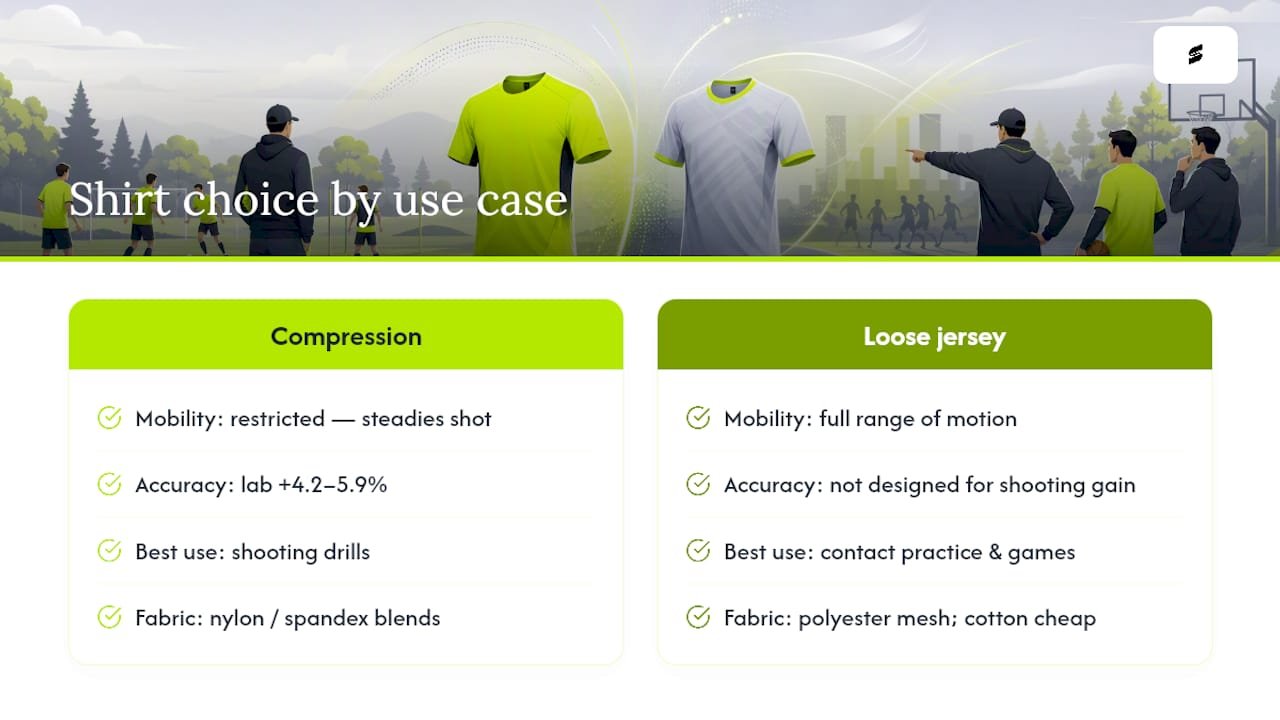
Compression fits into this picture through proprioception, the body’s sense of where its limbs are in space. A snug compression top can quiet unnecessary movement in the shoulders and trunk, which theoretically steadies a shooting motion.
A 2020 lab study on 20 male basketball players found upper-body compression garments improved free-throw accuracy by about 4.2%, and full-body compression improved it by about 5.9%, alongside reduced head and trunk range of motion during the shot.
That’s a real signal, but read it carefully. Twenty subjects is a small sample, the setting was a controlled lab rather than a live game, and the effect likely varies by sport, shooting motion, and individual body type. Other performance commentary on compression gear points the same direction: modest, situation-dependent benefits rather than a guaranteed edge.
Practical takeaway: try compression shooting shirts during dedicated shooting drills, where the mobility restriction is a feature. Keep loose jerseys for contact practice and games, where you need full range of motion and durability, not restriction.
When to Wear a Shooting Shirt vs a Jersey
Matching the garment to the activity is simpler than it sounds once you break it down by moment in practice.
- Warmups and shootarounds. Shooting shirts or compression tops make sense here for mobility and because a matching set looks sharp walking onto the court or field before tip off.
- Skill drills and shooting practice. Wear a shooting shirt under a pinnie so loose fabric doesn’t interfere with release mechanics or catch on a teammate’s arm during passing drills.
- Full-contact practice and games. Jerseys are mandatory here. Identification numbers and durable seams aren’t optional once bodies start colliding at game speed.
- Sport-specific conventions. Lacrosse players commonly wear shooting shirts under pinnies during stick work and shooting drills. Basketball teams lean on shooting shirts almost exclusively for pregame warmups. Baseball and softball follow their own convention, favoring fitted undershirts and batting practice jerseys rather than a true shooting shirt.
The pattern across sports is consistent: shooting shirts own practice and preparation, jerseys own competition.
Coach’s Checklist for Ordering Shooting Shirts and Jerseys
Ordering team apparel comes down to five decisions, and getting any one of them wrong means reordering mid-season.
- Fit. Shooting shirts should sit snug through the torso with a longer tail. Jerseys need more room, especially if players layer a compression top or shooting shirt underneath on cold days.
- Fabric. Prioritize moisture-wicking polyester blends for both garments. Jerseys benefit from added abrasion resistance since they take more physical wear.
- Customization and printing. Sublimated printing holds up better over a full season than screen printing because the ink is embedded in the fabric rather than sitting on top of it, which matters most on jerseys that see heavy contact and repeated washing.
- Durability and care. Check for reinforced stitching at the collar, sleeves, and side seams, and ask what wash-cycle durability the fabric is rated for before committing to a full team order.
- Logistics. Order one sizing sample before committing to a full team order, and review a mockup for colors, numbering, and logo placement before production starts.
Pro Tip: Order your sizing sample in the roster’s most common build, not the coach’s own size. A sample that fits the average player prevents a wave of exchange requests once the full order arrives.
A basketball buying guide built specifically for coaches covers sizing charts and roster planning in more depth if you’re ordering for a full squad for the first time.
Where Custom Apparel Fits Into a Team’s Setup
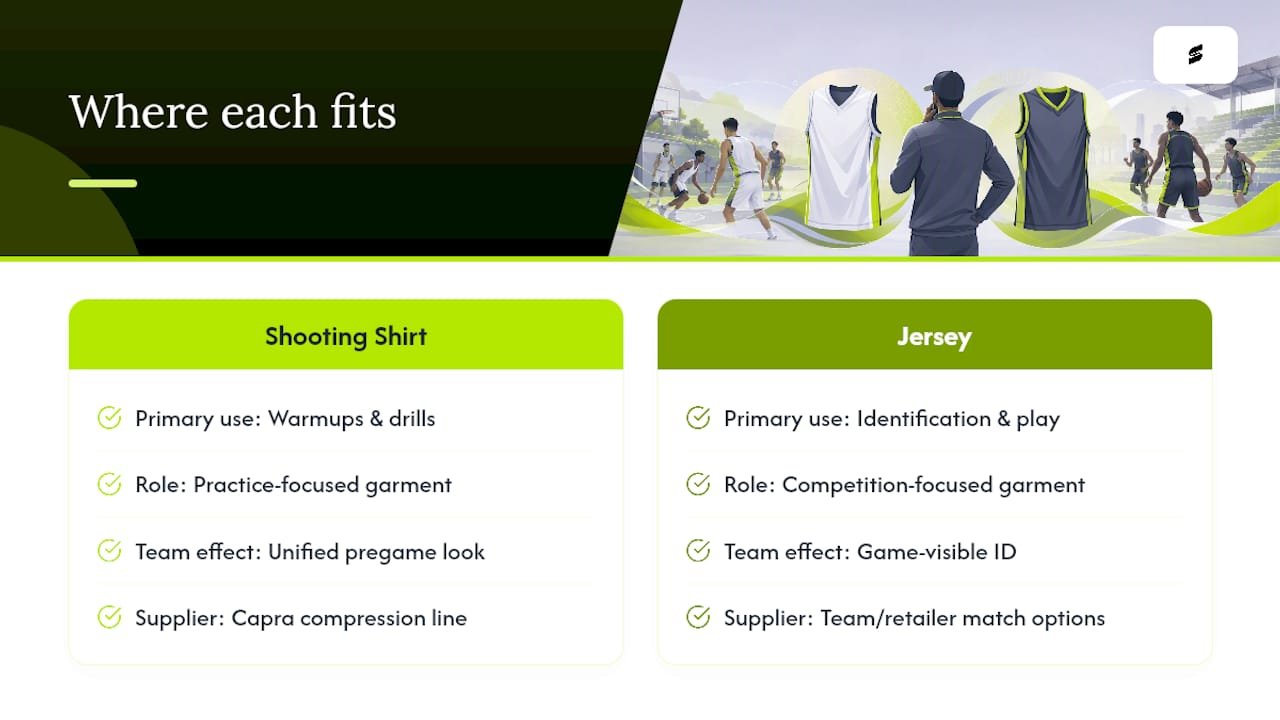
Most teams end up needing both garments, not one or the other. Shooting shirts handle warmups and skill work; jerseys handle identification and competition. Coordinated warmup gear also does something beyond function: teams that wear matching shooting shirts during pregame routines often report a sharper, more unified look that carries into how the team presents itself to opponents and parents alike.
Capra Sports supplies both sides of that equation, including a compression shirt line built for the exact shooting-drill use case this article covers. The overlap between what teams actually need and what gets manufactured for them isn’t always clean, and that gap is where a lot of programs end up overspending on the wrong garment first.
— Agha
How to Order Custom Shooting Shirts and Jerseys From Capra Sports
Capra Sports builds both sides of this comparison: sublimated compression and shooting-style tops for practice, and full team jerseys for game day, all made to your team’s colors and numbers.
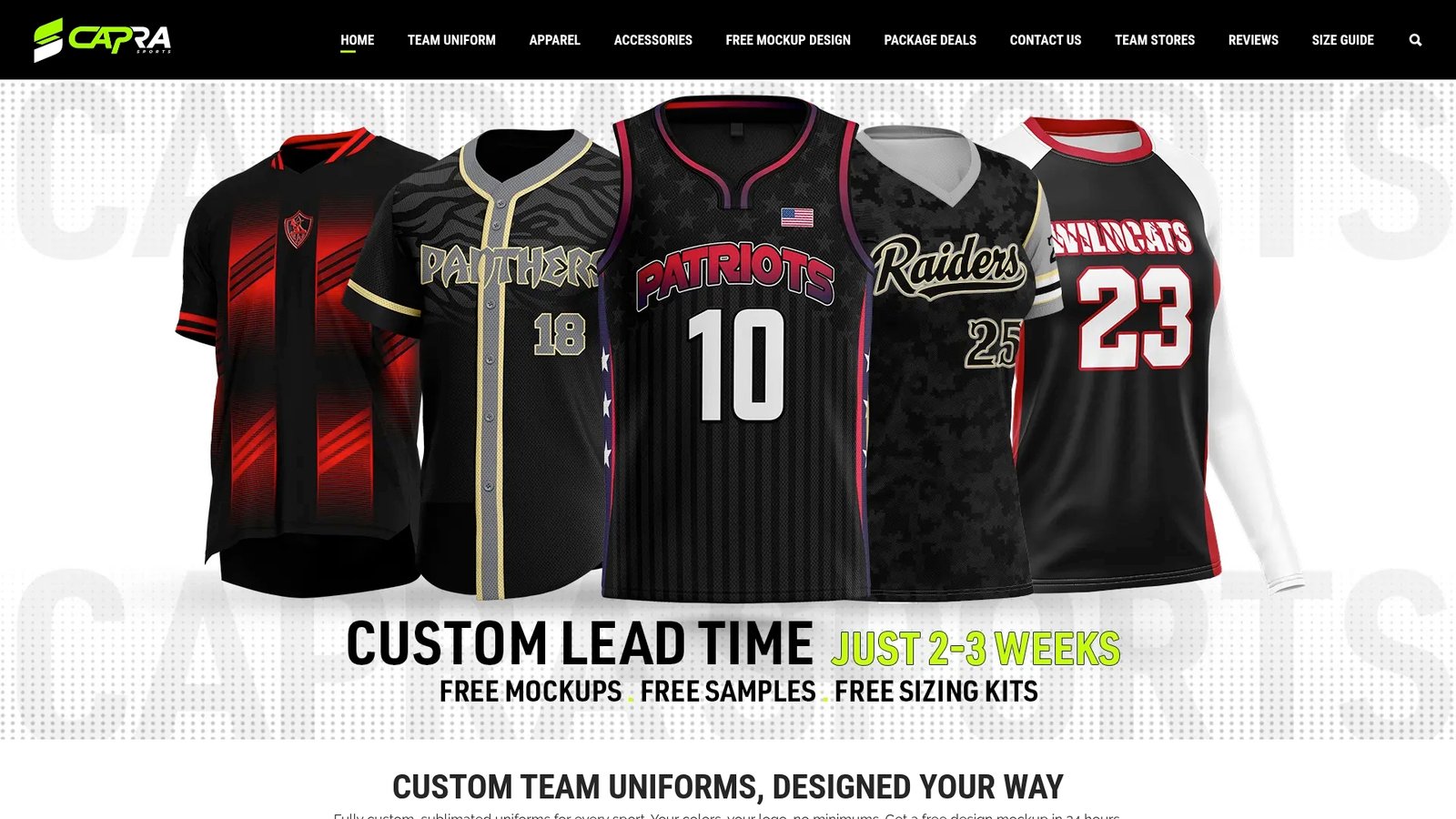
Ordering custom team apparel often begins with a sizing sample to ensure proper fit across the roster. Teams typically submit roster sizes and receive a free design mockup for review before production. Minimum order quantities and sample policies vary by supplier.
Ready to compare options side by side? Check current pricing for basketball, baseball, soccer, football, and volleyball uniforms, or go straight to the custom basketball jersey page if your team already knows it needs new game jerseys this season.
Sources
- Effects of Upper-Limb, Lower-Limb, and Full-Body Compression Garments on Full Body Kinematics and Free-Throw Accuracy in Basketball Players
- Kevin’s performance shooting shirt product page
- Men’s short-sleeve featherweight shooting shirt | Orvis
FAQ
What is the purpose of a shooting shirt?
A shooting shirt is a fitted, longer performance top designed for practice, warmups, and shooting drills. It’s built to layer cleanly under a pinnie and give shoulders full mobility during a shot, not to identify players in a game.
What is the difference between a shirt and a jersey?
A shirt, in this context a shooting shirt, is fitted and cut for mobility during drills, while a jersey is looser, numbered, and built with reinforced seams for competition and contact. One is a training tool; the other is game-day equipment.
What is a shooting jersey in basketball?
Basketball teams generally use the term “shooting shirt” rather than “shooting jersey” for pregame warmup gear worn over or in place of a jersey. Capra Sports lists dedicated compression shirts for this exact warmup and drill use case.
What is a shooter shirt in lacrosse?
In lacrosse, a shooter shirt (also called a shooting shirt) is a fitted top players wear underneath a pinnie during stick work and shooting drills, as commonly described in player forum discussions. It keeps loose fabric from interfering with the release or catching on a stick or another player’s arm.