
U.S. Coaches: 3 Steps to Beat an AAU Basketball Uniform Technical
AAU basketball runs on NFHS rules with AAU-specific modifications layered on top, and uniform violations are one of the few things that cost you points before the ball is even tipped. The essentials: numbers on front and back in approved sizes, a light and a dark jersey set, undershirts that match jersey color with no logos or lettering, and an illegal jersey drawing a two-shot administrative technical foul. Always cross-check your specific tournament or district handbook, since local modifications are common.
TL;DR:
- Jerseys must have contrasting, clearly visible numbers in recommended sizes, with back numbers at least 4 inches tall for optimal visibility.
- Teams competing at national tournaments need both light and dark jersey sets, with schedule placement determining which color to wear.
- Undershirts must match jersey color and contain no logos, lettering, or decorations to meet compliance standards.
- An illegal jersey results in a two-shot technical foul as soon as the player enters the game, making pregame checks crucial.
- Prepare early with a checklist confirming uniform compliance, and consider ordering custom uniforms from supplier like Capra Sports with verified size and contrast standards.
Table of Contents
- What Are the AAU Basketball Uniform Rules for Jersey Numbers?
- Do AAU Teams Need Both Light and Dark Jerseys?
- Undershirts, Logos, and Name Rules
- Shorts, Equipment, and Bench Attire Standards
- When Do Referees Call a Technical Foul for Uniform Violations?
- Pre-Tournament Uniform Compliance Checklist
- How to Choose Compliant Custom Uniforms
- Fabric and Material Rules for AAU Uniforms
- Sock and Shoe Rules for AAU Basketball
- Logo and Sponsorship Placement Rules
- Shorts Length and Style Rules
- Warm-Up Attire Guidelines
- Medical and Religious Accommodations for Uniforms
- A Coach’s Take on Uniform Compliance
- How Capra Sports Helps Teams Meet AAU Uniform Rules
- Official AAU and District Rule Pages to Check
- Sources
- FAQ
What Are the AAU Basketball Uniform Rules for Jersey Numbers?
Every player’s jersey needs a number on the front and the back. AAU rules allow 0, 00, and 1 through 99, and no two teammates can wear the same number on the court at the same time. The rules exist so referees can call plays and record fouls without squinting at a scorer’s table roster mid game.
Size matters more than most coaches realize until it costs them. AAU event materials commonly reference minimum number sizes of 2 inches on the front and 4 inches on the back, though bigger is almost always better for visibility from the stands and the scorer’s bench. Official AAU uniform definitions also spell out a contrast requirement and recommend minimum number heights specifically for visibility purposes.
Keep these specifics in mind when you’re placing an order or checking an existing set:
- Numbers must contrast clearly with the jersey’s background color. A white number on a pale gray jersey will get flagged.
- Front numbers can run smaller than back numbers, but neither should dip below the commonly cited minimums.
- A thin contrasting border around each number improves legibility under gym lighting and satisfies most officials’ visual check.
- Numbers should sit clear of side panels, piping, or design elements that could make them hard to read at a glance.
Do AAU Teams Need Both Light and Dark Jerseys?
Yes, and this trips up more first-year AAU teams than any other rule. Teams competing in National Championship tournaments must show up with both light and dark jersey sets, and many district and regional events expect the same. The home team wears light, the visiting team wears dark, based on how the tournament schedule lists the matchup, typically with the home team listed on top or on the left.
That schedule placement is not just paperwork. It determines what set your kids put on that morning, and guessing wrong means a scramble in the locker room or, worse, a penalty once the game starts.
A few habits keep this simple on tournament weekends:
- Pack both sets for every single game, even ones you’re sure you’ll be “home” for. Schedules shift.
- Label each bag or duffel by set color so a parent volunteer can grab the right one without texting you mid warmup.
- Do a five-second color check against your opponent’s warmups before tip off. If both teams show up in the same shade, someone has to change, and it’s better to catch that in the hallway than after the horn.
Undershirts, Logos, and Name Rules
Undershirt color rules trip up more teams than jersey number sizing does, mostly because coaches assume any dark shirt will pass. It won’t. AAU handbooks specify that undershirts must be a color similar to the jersey and cannot carry logos, lettering, decorations, or trim. A black compression shirt under a navy jersey is a judgment call officials can flag, and a shirt with a visible brand wordmark across the chest is an automatic problem.
The rule isn’t arbitrary. It keeps the uniform looking like a uniform and keeps numbers and identifying marks from getting lost under mismatched layers, a point AAU officials have made when explaining why the color-matching requirement exists in the first place.
Names and sponsor logos have their own limits worth knowing before you order:
- Team names or abbreviations on the jersey should stay limited so they don’t crowd or obscure the required numbers.
- If your undershirt is designed to tuck into game pants, it counts as part of the shirt and needs to stay tucked.
- Sponsor logos are permitted on the uniform, but only if they don’t obstruct the number, a distinction confirmed in AAU’s official uniform definitions.
- Keep sponsor patches on the lower hem or side panel, well clear of the chest number and the back number.
Pro Tip: Bring one plain black and one plain white undershirt in every player’s size to the tournament, regardless of your jersey colors. It’s the cheapest insurance against a same-day color dispute you’ll ever buy.
Shorts, Equipment, and Bench Attire Standards
Shorts get more design freedom than most coaches expect. AAU handbooks state plainly that uniform bottoms don’t have to match the tops, so a navy jersey with black shorts is fine as long as the overall look reads as a coordinated team, not a mismatched scrimmage squad.
Equipment rules lean on official discretion more than a strict checklist. Jewelry is generally out, visible taping needs to look clean and intentional, and knee sleeves or compression garments are typically fine as long as they don’t create a safety issue or an unfair advantage. When in doubt, officials make the call at the scorer’s table before tip off.
Bench standards matter just as much as what’s on the court:
- Coaches and bench personnel should dress in a way that reflects the team, not necessarily matching uniforms but presentable and consistent.
- At least one adult 18 or older must be present on the bench at all times per most AAU event requirements.
- Compression garments and knee sleeves should match a neutral or team-appropriate color when possible to avoid unnecessary official scrutiny.
When Do Referees Call a Technical Foul for Uniform Violations?
The penalty structure is more specific than most coaches assume, and it’s not a warning system. Tournament rule pages describe the enforcement mechanism clearly: an illegal jersey draws a two-shot administrative technical foul, and it’s assessed the moment the player wearing it enters the game, not before.
That timing detail matters. A player can sit on the bench in a non-compliant jersey without triggering anything, but the second they check in, the technical is live.
Most violations that show up in real tournaments trace back to the same handful of causes:
- Numbers printed below the recommended minimum size, especially on the back where visibility matters most for officials tracking substitutions.
- Undershirts in a color that doesn’t reasonably match the jersey, or undershirts with a visible logo across the chest.
- Two teams showing up in the same light or dark shade because nobody checked the schedule’s home/visitor designation ahead of time.
Officials typically flag these during a pregame check and give you a short window to fix it, whether that means swapping a jersey, covering a logo with tape, or pulling a compliant undershirt from a bag. Catching it before that conversation happens is always cheaper than catching it after.
Pre-Tournament Uniform Compliance Checklist
A little structure here saves you from a Saturday morning scramble in a gym parking lot. Build the check into your prep schedule the same way you’d build in a scouting report.
- Seven days out: The head coach or team manager confirms every player has both light and dark sets, checks number sizes against the roster, and flags any player missing a compliant undershirt.
- Forty eight hours out: A parent volunteer or assistant coach does a visual pass on every jersey and undershirt, checking color match and confirming no logos or lettering are visible.
- Thirty minutes before warmups: One designated staff member runs a final check against the opponent’s colors and confirms the schedule’s home/visitor call before anyone sets foot on the court.
Assign these three checkpoints to specific people, not “the team” in general. Vague ownership is how a check gets skipped.
Pro Tip: Keep a small tournament kit packed year-round: spare iron-on numbers in your team color, a roll of clear athletic tape, a couple of neutral undershirts in extra sizes, and a folder with each player’s measurements and a photo of the approved uniform. Most illegal-jersey issues are fixable in five minutes if you’ve got the right supplies on hand.
How to Choose Compliant Custom Uniforms
Ordering a new uniform set is the easiest place to build compliance in from the start instead of fixing it later. Before you approve any design, confirm the supplier can hit the number sizing AAU handbooks reference, deliver a genuine light and dark set, and print undershirts or provide guidance that keeps them logo free.
Capra Sports works directly with teams on custom sublimated basketball uniforms, and the basketball uniform size chart is a useful starting point for confirming number placement and garment sizing before you commit to a bulk order. Reviewing a mockup against your team’s actual colors, rather than approving it on a screen alone, is the single best way to catch a contrast problem before it becomes a tournament-day technical foul.
Run through this short list with any uniform supplier before you sign off on production:
- Confirm number height meets or exceeds the sizes referenced in AAU materials, front and back.
- Verify the jersey color and number color pass a real contrast check, not just a screen preview.
- Ask for both a light and dark version, not just one set with a color swap promised later.
- Get written confirmation on undershirt color guidance if you’re ordering those too.
Keep a folder of your team’s approved measurements and a photo of the final printed sample. Tournament organizers occasionally ask for proof of compliance, and having it ready beats digging through email threads at check-in.
Fabric and Material Rules for AAU Uniforms
AAU rule books don’t specify an exact fabric type down to a brand or weave, but they do enforce standards that affect what materials actually work on the court. The uniform has to allow a number to stay legible, contrast properly with the printed number color, and hold its shape through a full tournament weekend of games, sweat, and wash cycles between rounds.
Sublimated polyester mesh has become the default across youth and AAU basketball for a practical reason: dye-sublimation prints the design into the fibers rather than on top of them, so numbers and team colors don’t crack, peel, or fade the way heat-pressed vinyl can after a few wash cycles. That matters directly for compliance, since a faded or peeling number that’s lost its required contrast can draw the same scrutiny as one that was undersized to begin with.
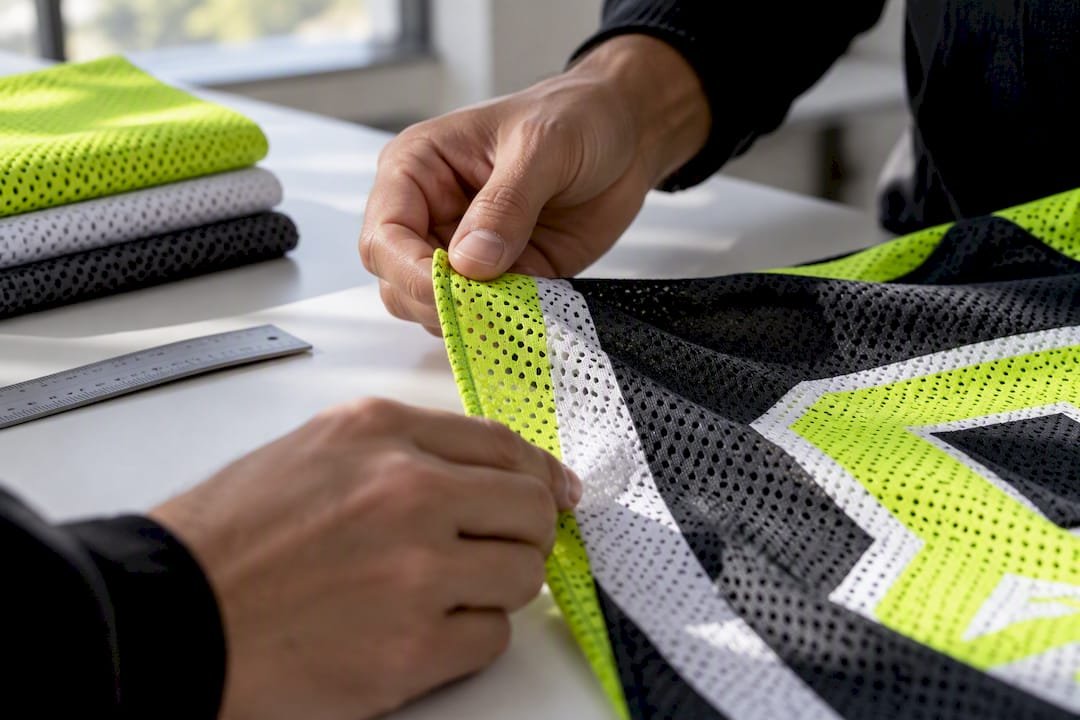
Moisture-wicking performance mesh is standard for a second reason that has nothing to do with rules and everything to do with comfort in a gym with no air conditioning in July. A heavier cotton blend jersey will pass a rule check just fine, but it won’t hold up the way a lighter athletic mesh does across a three-game Saturday.
There’s no AAU rule dictating a specific fabric weight or thread count, so teams have real flexibility here. The practical standard most competitive programs land on is a lightweight, breathable mesh that takes sublimated printing cleanly, since that combination protects both comfort and the number visibility rules officials actually check at the scorer’s table.
Sock and Shoe Rules for AAU Basketball
AAU handbooks give teams considerably more freedom on socks and shoes than on jerseys, and that surprises a lot of first-time tournament parents who expect a strict dress code from ankle to head. There’s no national AAU rule mandating a specific sock color that must match the jersey, and shoes are largely left to player and parent choice rather than team-wide mandate.
That said, “no strict rule” doesn’t mean “no expectations.” Most AAU coaches still ask players to wear matching team socks for a simple reason that has nothing to do with the rulebook: a team that looks uniform photographs better, presents better to college scouts at exposure events, and reinforces team identity in a sport where AAU squads often pull kids from multiple school districts who’ve never played together before that weekend.
Shoes carry a genuine safety consideration that does connect to the rules, even without a specific color mandate. Officials retain discretion to flag footwear that creates an unsafe playing surface interaction, like a shoe with an exposed sole edge or hardware that could catch on the court or another player. That’s a safety call, not a style call, and it’s rare in practice.
Practical guidance for coaches building out a full team look: coordinate sock color with your jersey set if you want the polished look tournament photographers and scouts respond to, but don’t spend money mandating a specific shoe brand or color since AAU rules don’t require it and players often already own shoes they’re comfortable playing in.
Logo and Sponsorship Placement Rules
Sponsor logos are allowed on AAU uniforms, and that’s good news for teams relying on a local business or booster club to help cover jersey costs. The restriction that actually matters is placement, not existence: AAU’s official uniform definitions confirm sponsor logos are permitted provided they don’t obstruct the uniform number, front or back.
That single rule shapes where you should design in a sponsor mark from the start. The safest zones are the lower hem of the jersey, a side panel below the ribcage, or the front of the shorts, all locations well clear of the chest and back numbers officials check first.
A few practical placement guidelines worth building into your design process:
- Keep any sponsor patch or printed logo at least a couple of inches clear of the number’s border in every direction.
- Avoid placing logos directly behind or beside the back number, where officials scan first during a pregame check.
- If you’re running multiple sponsors, resist the urge to stack them near the numbers just because there’s open space. Spread them across the shorts and hem instead.
- Team names or mascots printed large across the chest can create the same obstruction problem as a sponsor logo. Size them to leave the number as the dominant visual element.
None of this restricts how many sponsors a team can carry or how much sponsorship revenue a program can bring in. It only governs where those marks sit relative to the number, which keeps the rule simple to design around once you know it up front.
Shorts Length and Style Rules
AAU shorts rules are looser than most coaches expect, and the flexibility is spelled out directly in the handbooks rather than left to guesswork. AAU handbooks state that uniform bottoms don’t have to match the tops, which means a team can run a navy jersey with black shorts, or mix a secondary color into the shorts design without violating anything.
There’s no single length rule that governs every league the way there might be at the high school level under strict NFHS enforcement. AAU’s approach leans more on team presentation than a hard measurement, expecting shorts and top to read as a coordinated set even if the colors aren’t identical.
Style-wise, most teams follow a few unwritten conventions that officials rarely need to enforce because programs already default to them:
- Shorts typically fall at or near the knee, matching the athletic-cut standard most uniform manufacturers already build into youth and AAU sizing charts.
- Side panels, piping, and secondary colors on shorts are common and unrestricted, as long as the overall look still reads as one team.
- Shorts should stay free of any logo placement that could be confused with a jersey number, though this rarely comes up given where shorts logos typically sit.
The practical takeaway for coaches ordering new uniforms: you have real design room on shorts. Use it to complement your jersey rather than defaulting to an exact match, since AAU rules give you that flexibility deliberately.
Warm-Up Attire Guidelines
Warm-up gear sits outside the strict in-game uniform rules, which gives teams more creative and practical latitude than the jersey itself allows. AAU doesn’t mandate a specific warm-up shirt, shooting sleeve, or pregame jacket, so most of what you see on a tournament floor before tip off reflects team culture and comfort rather than rule compliance.
That said, warm-up attire still needs to come off cleanly and completely before the game starts. A player can’t take the court in a warm-up layer over their jersey once play begins, and anything worn during warmups that would violate the in-game rules, like a shooting shirt with an unauthorized logo, simply needs to come off before the whistle rather than needing separate approval.
Practical points coaches should keep in mind:
- Warm-up shirts and shooting sleeves can carry team branding, sponsor names, or design elements far more freely than the actual jersey, since they’re off before the game starts.
- Layered warm-up gear in cold gyms is common and unrestricted, but plan for a quick changeover so pregame introductions aren’t held up by ten kids peeling off hoodies at once.
- If your team wears matching warm-up shirts for team photos or introductions, that’s a presentation choice, not a compliance requirement, so don’t let it become a budget priority over the actual game jerseys.
Medical and Religious Accommodations for Uniforms
AAU rules follow the same general spirit as NFHS guidance when it comes to accommodations: a player’s health and religious practice take priority over a strict reading of uniform standards, and officials retain discretion to approve reasonable exceptions on the spot or through a documented request ahead of the event.
Medical accommodations most often come up around compression sleeves, knee braces, or protective wraps that extend beyond standard taping. Rather than assuming a brace will draw a technical, coaches should loop in the tournament director or head official before the game starts, especially for hardware like a metal-hinged knee brace that might otherwise raise a safety flag under standard equipment rules.
Religious accommodations typically involve head coverings or additional layered clothing worn for modesty, like a hijab or an undershirt layer that extends further than the standard color-matching rule anticipates. NFHS has moved toward broader allowances for religious headwear in recent years, and AAU events generally follow that same posture rather than creating a separate, stricter standard.
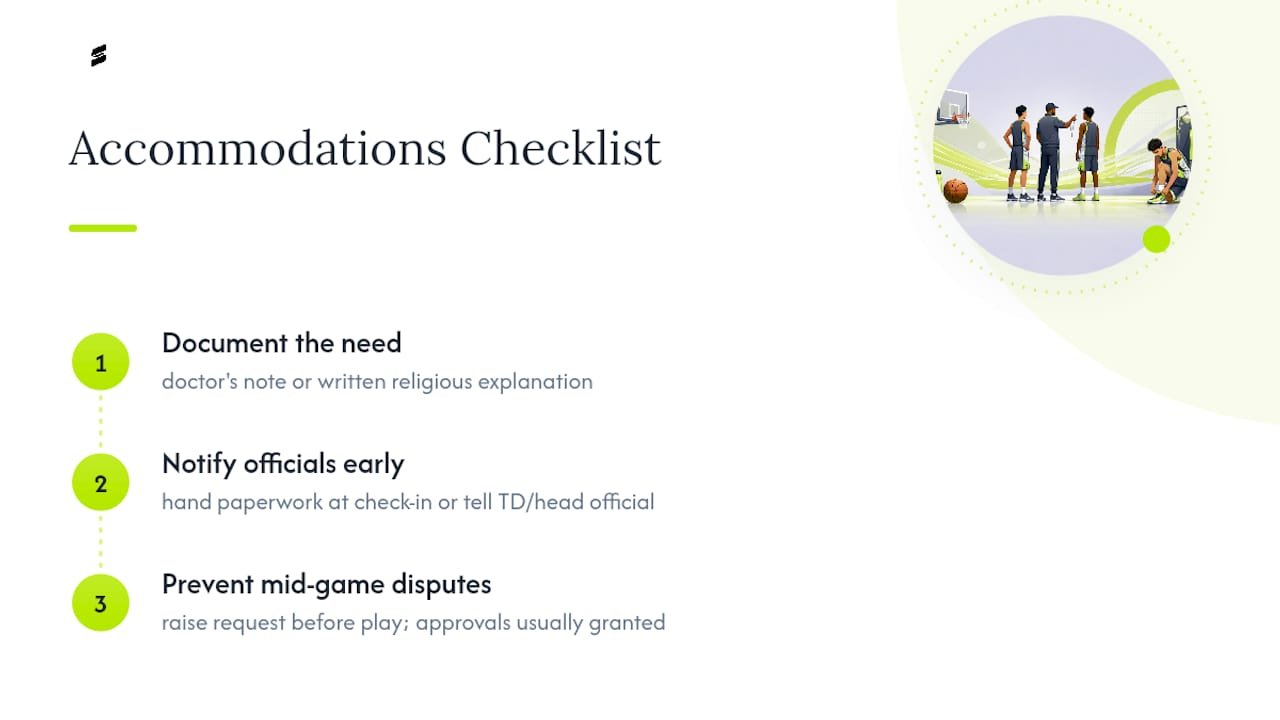
The practical move for any coach managing either situation is the same: document the need in writing before the tournament, whether that’s a doctor’s note for a medical brace or a simple explanation of a religious practice, and hand it to the tournament director or head table official during check in rather than waiting for a pregame dispute. Most accommodation requests get approved without friction when they’re raised early instead of discovered mid-game by an official who has no context.
A Coach’s Take on Uniform Compliance
Most uniform violations aren’t rule confusion. They’re logistics failures. A coach knows the light and dark rule exists but forgot to check who’s “home” on the schedule, or a parent grabbed the wrong duffel bag that morning. Fixing this isn’t about memorizing the handbook cover to cover.
Run one full uniform inspection the day before your first tournament game, and put one person, not “the team,” in charge of it. That single habit prevents more technical fouls than any amount of rule reading. And always check your specific tournament or district handbook, since local modifications can override what you assumed was standard.
— Agha
How Capra Sports Helps Teams Meet AAU Uniform Rules
Getting jersey numbers, colors, and undershirt guidance right starts at the design stage, not on tournament morning. Capra Sports builds custom sublimated basketball uniforms with a size chart teams can check against AAU’s number and sizing references before committing to a bulk order, and every design goes through a free mockup so you can verify contrast and placement before production starts.
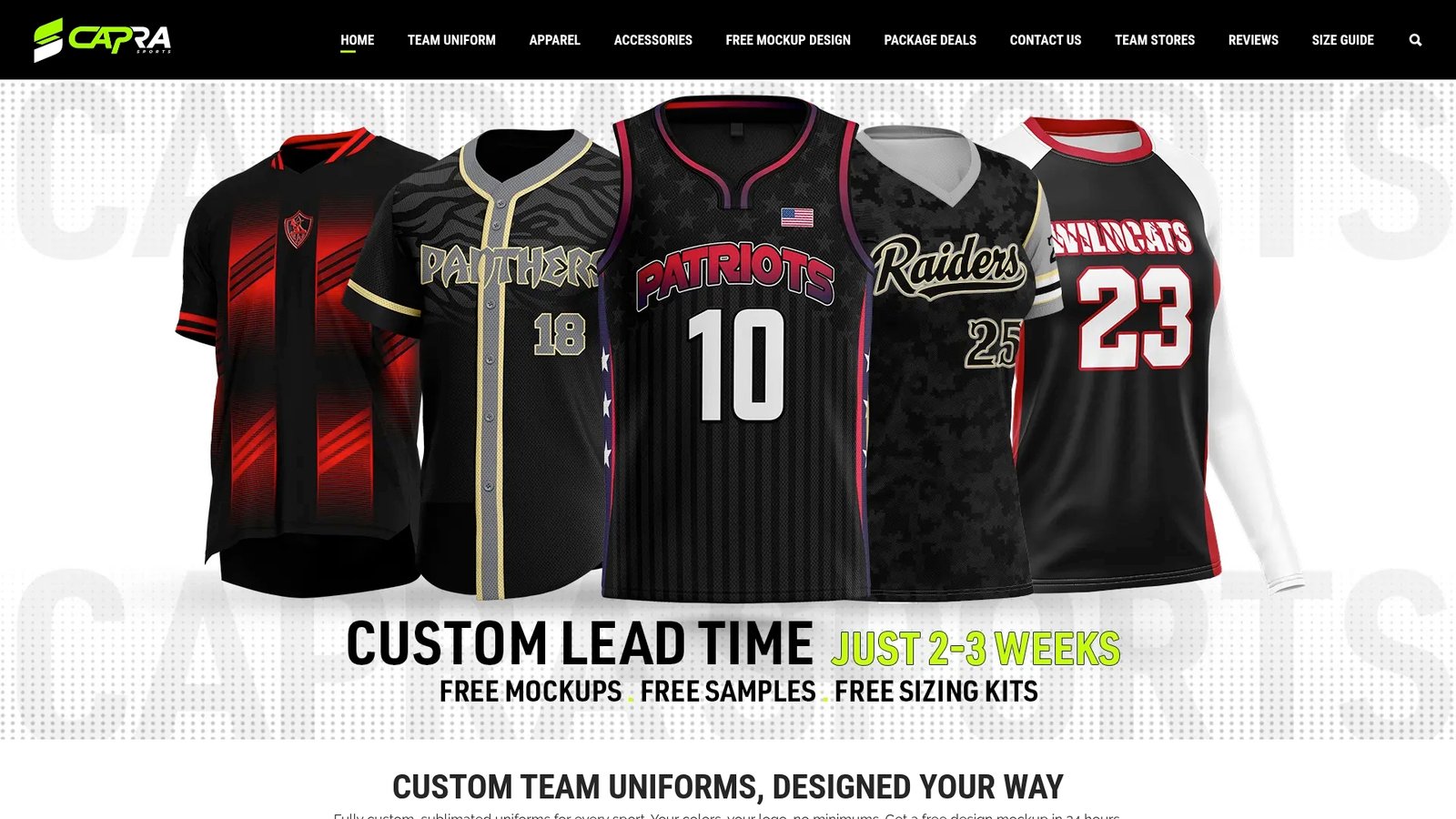
Orders typically include one sizing sample, allowing teams to compare actual fabric and printed numbers against existing jerseys before ordering a full set. Team orders have minimum quantities, and mockup turnaround times support timely pregame checks.
If your team needs a light and dark set that’s built around AAU’s visibility standards from the start, start with the custom basketball jersey options or head to the pricing page to see current rates and request your free mockup today.
Official AAU and District Rule Pages to Check
Before your next tournament, bookmark these sources rather than relying on secondhand summaries from other coaches.
- The AAU Girls Basketball Handbook covers undershirt, jersey, and general uniform definitions in full detail.
- The Ohio AAU coaches information page shows how a district communicates number sizing and penalty enforcement.
- SAAU’s playing rules and bylaws illustrate how state organizations adopt NFHS with local modifications.
Always check your specific event’s handbook, since tournament hosts frequently add their own notes on top of the national rules.
Sources
- GIRLS BASKETBALL HANDBOOK
- 2025 Ohio AAU Basketball Membership Tip Off – Coaches Information
- BBKB Rules Bylaws
- AAU UNIFORM DEFINITIONS
FAQ
What Numbers Are Allowed on AAU Basketball Jerseys?
AAU jerseys can use 0, 00, or any number from 1 through 99, and no two players on the same team can share a number. Numbers must appear on both the front and back of the jersey in sizes commonly cited as 2 inches front and 4 inches back.
Do AAU Teams Really Need Two Jersey Colors?
Yes, teams at National Championship tournaments must bring both light and dark jersey sets, and most district and regional events expect the same. The schedule determines which color you wear, with the home team typically listed on top or on the left and wearing light.
Can Undershirts Have Logos or Team Names?
No. AAU handbooks require undershirts to be a color similar to the jersey with no logos, lettering, or decorations. A visible brand mark or team name on the undershirt can draw the same scrutiny as an illegal jersey.
What Happens if a Player Wears an Illegal Jersey?
An illegal jersey triggers a two-shot administrative technical foul, assessed the moment that player enters the game. Officials typically flag the issue during a pregame check and give the team a short window to fix it before it becomes a live penalty.
Where Can I Order AAU-Compliant Custom Uniforms?
Capra Sports offers custom sublimated basketball uniforms built around standard number sizing and contrast guidance, with a free mockup and one sizing sample included at no extra charge. Current prices are listed on the pricing page, and team orders start at a 10-set minimum.