
11 School Mascot Ideas That Fit Your Community’s Identity
The right school mascot starts with your values, not with a list of available animals. Pick a symbol that maps to your community’s actual history, geography, or character, then test it against three criteria: is it distinctive in your region, can it be built as a real costume, and does it hold up culturally over time. Skip another duplicate Tigers or Eagles. This guide walks through the categories, the selection process, and the practical checks that keep a mascot from becoming a liability.
TL;DR:
- Choosing a mascot based on school values and community identity ensures it remains distinctive, culturally safe, and meaningful over time.
- Regional and mythic options like bison, coyote, phoenix, or dragon tend to create stronger, more lasting school identities than overused predators.
- Conducting a thorough community consultation, testing designs in real contexts, and verifying costume feasibility significantly increase mascot loyalty and durability.
- Avoid Native American imagery without tribal consultation and steer clear of fleeting pop culture trends to prevent cultural harm and future branding issues.
- Professional design, trademarking, and consistent integration into school branding and uniforms are essential to make the mascot a true school symbol.
Table of Contents
- How to Choose a School Mascot: A Values-First Selection Process
- Mascot Ideas by Category: Animals, Myth, Region, and Abstract Concepts
- Making Your Mascot Distinctive and Built to Last
- Cultural Sensitivity, Native American Imagery, and NCAA Guidance
- From Concept to Costume: Budgeting and Rollout
- Getting Students and the Community Actually Invested
- Testing Mascot Designs Before You Commit
- Turning the Mascot Into Real School Spirit
- What Actually Separates a Mascot That Sticks From One That Fades
- Turning Your Mascot Into Game-Day Uniforms
- Sources
- FAQ
How to Choose a School Mascot: A Values-First Selection Process
Before anyone sketches a logo, define what your school stands for. A mascot is a narrative device, and brand strategists who work with schools consistently find that committees who start with artwork instead of values end up attached to a design that doesn’t actually represent anything. Ask your team three questions first: What does this school value? What makes this place different from the district next door? What story do we want alumni telling in twenty years?
Once you have answers, build a committee that actually reflects the community, not just the loudest voices in the room.
- Include students from multiple grade levels, not just seniors who’ll graduate before it matters
- Add staff, a few parents, alumni, and, where relevant, cultural advisors who can flag sensitivity issues early
- Give the group real criteria to score against, not a popularity vote
Score each concept against five factors: regional uniqueness, visual versatility across logo and costume and merchandise, how well it translates into an actual costume, staying power over decades, and cultural safety. Then run a structured process: brainstorm concepts with no design work attached, survey the wider community for reactions, narrow to two or three finalists, and make a final call. One documented school branding case used story-based workshops before ever presenting visual options, and reached unanimous community support in eight weeks. Budget at least one full academic semester for the whole process. Rushing this step is the single most common reason schools end up revisiting their mascot a few years later.
Mascot Ideas by Category: Animals, Myth, Region, and Abstract Concepts
Here’s an idea bank organized by the kind of story each option tells, drawing on options that regularly outperform overused predators in terms of long-term identity.
- Bison — Signals heritage and endurance, especially strong for schools in plains or prairie regions with genuine historical ties to the animal.
- Otter — Playful but tenacious; works well for schools that want a lighter, less aggressive brand without losing competitive edge.
- Coyote — Reads as adaptable and sharp, a good fit for schools in the Southwest or anywhere coyotes are part of the local landscape.
- Roadrunner or Armadillo — Genuinely rare in athletics, which makes them stand out instantly on a schedule board or scoreboard graphic, according to curated lists of alternative mascots.
- Pelican — Strong coastal identity option, distinctive in regions saturated with generic ocean themes like sharks or dolphins.
- Dragon — A fantasy option with huge visual range, though costume builders note it needs careful engineering around wings and tail so performers can actually move.
- Phoenix — Carries a rebirth narrative that resonates for schools recovering from a merger, rebuild, or difficult period in their history.
- Griffin — Combines two strong animal symbols into one, but complex hybrid creatures are harder to render consistently across embroidery and large costumes.
- Miners, Loggers, or Mariners — Fits schools with a real industrial or maritime history; feels authentic where it reflects actual local economy, hollow where it doesn’t.
- Thunder, Storm, or similar phenomena — Strong graphic potential for logos and jerseys, but no obvious costume form, so plan for a human-figure or abstract-symbol mascot instead of a full suit.
- Unity or Pride-based abstract themes — Works as a supporting brand element more than a standalone mascot; pair with a visual anchor like a color or emblem.
Trend-driven references to movies, memes, or pop culture might feel fun in committee meetings, but branding guidance for schools is blunt about how fast this age. A mascot chosen for a joke in 2026 reads as dated by 2032. Classic animals, real regional history, and natural phenomena hold up because they aren’t tied to a cultural moment.
Making Your Mascot Distinctive and Built to Last
Before you lock anything in, check what schools and colleges within your athletic conference and region already use. A near-identical mascot to a rival school invites confusion at best and legal friction at worst.
- Search state athletic association rosters and nearby college programs for overlapping names or artwork
- Consider trademarking your nickname and copyrighting the artwork once finalized, since NFHS guidance on trademark issues notes this protects your brand and prevents disputes down the line
- Design the mark so it scales: it needs to work embroidered at two inches, on a digital scoreboard graphic, on a full-size costume, and on stadium signage
- Favor timeless symbolism over anything tied to a current trend, movie, or meme
- Write a one-page usage guide covering approved colors, spacing, and file formats so every department uses the same version
Pro Tip: Don’t let a student art contest decide your final design. Contests are great for gathering concepts and building buy-in, but hand the actual production artwork to a professional designer who understands how a mark behaves across embroidery, vinyl, and costume fabric.
Cultural Sensitivity, Native American Imagery, and NCAA Guidance
If a proposed mascot involves any Native American name, imagery, or symbolism, treat this as a mandatory review step, not an optional one. The NCAA’s settlement with the University of North Dakota established that hostile or abusive racial and ethnic mascots require formal tribal consultation, and many programs have needed documented transition plans as a result. Cultural leaders including Kevin Gover at the Smithsonian have argued that these mascots trace back to assimilation-era policy and can perpetuate harm even when a school’s intent is respectful.
- Never adopt a Native American name, image, or gesture without direct, documented consultation with the affected tribal nation
- Avoid caricatures, stereotypes, or generic “tribal” imagery for any mascot, Native-themed or not
- If your school already carries a legacy mascot under scrutiny, start with outside cultural review, document the community conversation, and build a transition timeline rather than reacting defensively
From Concept to Costume: Budgeting and Rollout
Turning a chosen concept into a working mascot takes coordination, not just approval.
- Estimate your costume budget realistically. A professional-grade costume typically runs several thousand dollars, and costume suppliers recommend designing for performer ventilation, sightlines, and comfort so it lasts a decade rather than falling apart in two seasons.
- Send your mascot art to whoever handles your uniform design early, so colors and proportions translate correctly instead of getting reinterpreted at the last minute. A step-by-step uniform design guide covers how artwork should be prepared for different jersey panels.
- Order a sample or mockup before committing to a full production run, since color and scale often look different on fabric than on a screen.
- Plan a reveal event, a maintenance schedule for the costume, and a refresh cadence for the graphic mark every several years, and write down usage rules so every team and department stays consistent.
Getting Students and the Community Actually Invested
A mascot chosen behind closed doors rarely earns the loyalty one chosen with real input does. Run an open call for concept ideas, not finished designs, through student council, the art department, and school social media, so anyone can pitch a direction without needing design skills.
Survey the wider community once you’ve narrowed to two or three finalists. A short, anonymous online survey sent to families, staff, and alumni takes the temperature without turning into a popularity contest driven by whoever posts loudest. Ask specific questions: does this feel like us, would you want it on a jersey, does it feel respectful and lasting.
Hold at least one open forum, ideally during a school event where attendance is already high, so people can ask questions and raise concerns in person rather than only online. This matters most for schools with any legacy mascot controversy, where a rushed or closed process almost guarantees backlash later.

Give students specific roles beyond voting: a student subcommittee that helps draft survey questions, a small group that presents finalist options to the school board, or a student liaison on the main committee. Ownership built during the process is what carries into actual school spirit once the mascot launches. Alumni matter here too. Long-graduated classes often fund spirit gear and attend homecoming, and a mascot that ignores their history risks feeling imposed rather than chosen.
Testing Mascot Designs Before You Commit
Once you have finalist concepts, test them the way you’d test any brand decision, not by asking “which do you like” but by asking specific functional questions.
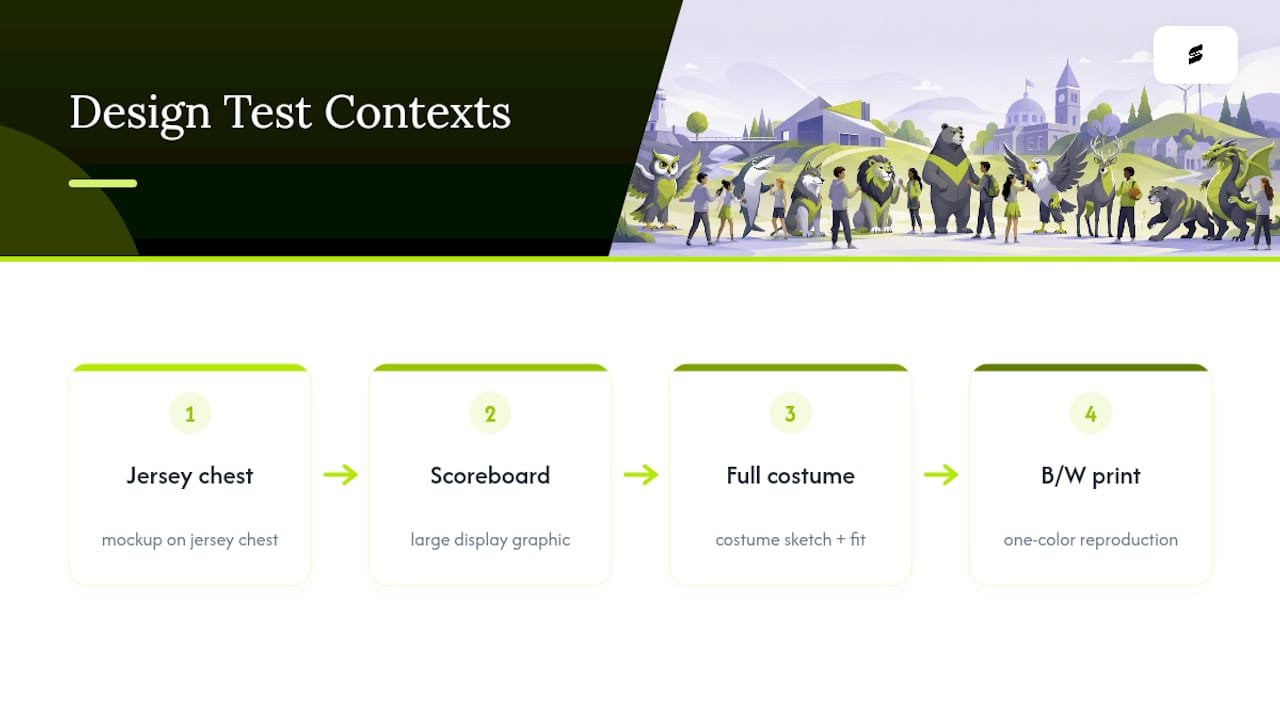
Show each design mocked up in the actual contexts it will live in: a jersey chest logo, a scoreboard graphic, a full costume sketch, and a simple black-and-white version for printing. Designs that look strong in full color sometimes fall apart in one color or at small sizes, and that gap only shows up when you test it directly instead of judging a single polished rendering.
Run a small focus group across different ages, students, staff, and a few alumni, and ask them to react without prompting: what does this look like, what does it feel like, would you wear it. If multiple groups independently read the design the same way you intended, that’s a strong signal. If interpretations scatter, the concept needs more work before it goes further.
Check costumability directly with whoever will build the suit. A design that’s stunning as flat art can be nearly impossible to build with proper ventilation and visibility for the performer inside it, and catching that during testing costs far less than catching it after production starts.
Turning the Mascot Into Real School Spirit
A mascot only earns its place once it shows up consistently, not just on game day. Put it on hallway signage, the school website, staff email signatures, and student ID cards so it becomes part of daily visual language rather than something people see twice a year.
Give the mascot a name through a school-wide contest once the design is locked, since a named character generates far more emotional attachment than a generic animal or symbol. Build simple traditions around it: a mascot appearance at pep rallies, a photo booth at homecoming, a social media account run by student leadership.
Coordinate the rollout with your athletic department so every team’s uniforms, banners, and gear reflect the same mark at the same time, rather than a slow, inconsistent rollout across seasons. A written team code of conduct that covers mascot and brand usage keeps coaches and student leaders aligned on how the mark gets represented at events.
What Actually Separates a Mascot That Sticks From One That Fades
The schools that get this right treat mascot selection as a strategic decision, not a creative afterthought. The ones that struggle almost always rushed the community input step or let a design contest make the final call instead of just gathering ideas from it. A mascot chosen by committee, tested for costumability, and vetted for cultural risk earns loyalty precisely because people had a real hand in it.
— Agha
Turning Your Mascot Into Game-Day Uniforms
Once your school has a finalized mascot, the next challenge is getting that artwork onto actual uniforms without the colors shifting or the design shrinking into an unrecognizable blob. Some custom uniform providers offer design mockups delivered within 24 hours to show how your mascot looks on fabric before committing to a full order.
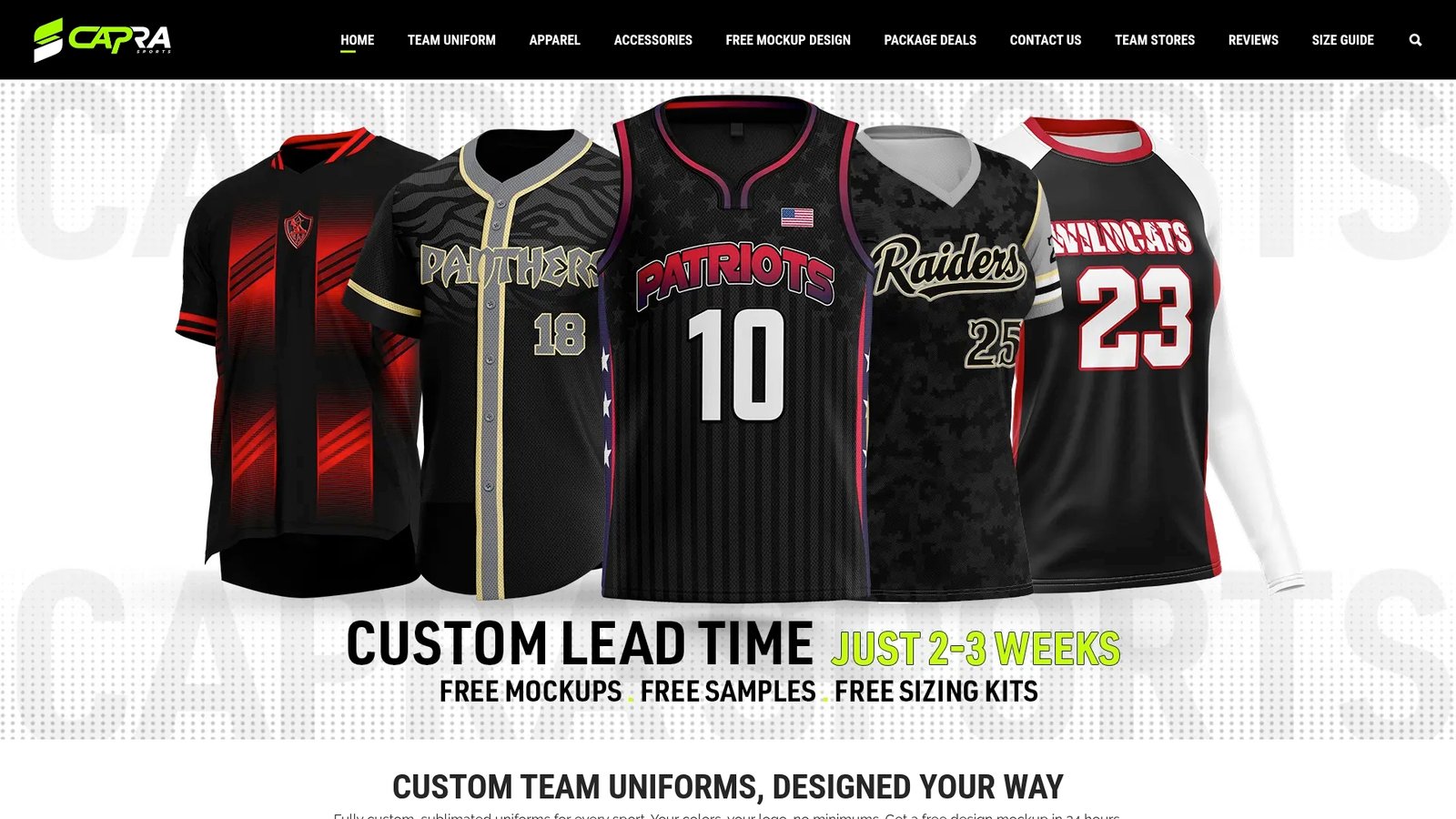
Ordering a sizing sample before the full roster is outfitted can help confirm color accuracy and scale, potentially saving from costly reprints if adjustments are needed. Collaboration with professional designers on revisions can help ensure your mascot’s details survive the jump from flat artwork to a jersey. Browse custom uniform pricing for basketball, baseball, soccer, football, and volleyball, or start with a custom uniform build for your school to request a mockup with your new mascot applied.
Sources
- How to Choose a School Mascot (+ 100 Mascot Ideas)
- NCAA press release: settlement with University of North Dakota
- Trademark issues with use of college names, logos, mascots — NFHS
- High School Mascot Ideas | Unique Options to Build School Spirit
- Mascot Ideas: 80+ Animal Mascot Ideas, Types & How to Choose Yours
FAQ
What Are Some Good Ideas for a Mascot?
Strong mascot ideas come from your school’s actual geography, history, or values rather than a generic list. Regionally distinctive options like bison, roadrunners, pelicans, or coyotes, or mythic figures like phoenixes and dragons, tend to build a stronger long-term identity than commonly duplicated animals.
What Is a Cool School Mascot?
A cool mascot is usually one that’s rare in your region, visually bold, and genuinely tied to something real about your school, like local wildlife or industry history. Dragons, griffins, and phoenixes score high on visual drama, while animals like otters or armadillos stand out simply because so few schools use them.
What Are Some Funny School Mascots?
Some schools lean into humor with unexpected choices like a Banana Slug, a Hoosier, or a pierogi, symbols with no aggressive posture that lean fully into local quirk instead of a mascot arms race. These work best when the humor connects to a real inside joke or local history rather than being random for its own sake.
What Are the Most Popular School Mascots?
Eagles, Tigers, and Bulldogs remain the most common school mascots nationally, largely because they’re safe, recognizable, and easy to design. That popularity is exactly why branding guides increasingly recommend distinctive regional alternatives that won’t blend into every other school’s gear on the field.
Does Capra Sports Help With Mascot Artwork on Uniforms?
Capra Sports collaborates directly with professional designers to apply school mascot artwork to custom sublimated uniforms, with free mockups delivered within 24 hours. Current pricing for basketball, baseball, soccer, football, and volleyball uniforms is available on the Capra Sports pricing page.