
Coaches: 3 Baseball Pants Styles and How to Avoid Costly Reorders
Baseball pants come in three main styles: knicker-length (ending below the knee), tweeners (a 3/4 length that splits the difference), and full-length (reaching near the ankle). For most teams, full-length with a closed hem gives the cleanest, most uniform look and the best slide protection, while knickers suit clubs chasing a retro identity and don’t mind enforcing a strict sock rule. Tweeners split the difference for players who want mobility without going fully throwback.
TL;DR:
- Knicker-length pants are favored by teams seeking a retro look and require matching socks for uniformity, but they offer better airflow.
- Tweeners provide a middle ground with a 3/4 length, blending style preferences with more flexibility over sock compliance.
- Full-length pants are most common in high school and college levels, offering greater slide protection and hiding sock mismatches.
- Selecting the right hem style and fit (closed vs open hem, tapered vs loose) impacts both appearance and functionality during slides.
- Ordering in advance and requesting free mockups helps ensure the pants match team policies and fit correctly, reducing costly mistakes.
Table of Contents
- Baseball Pants Styles Compared: Knickers, Tweeners, and Full-Length
- Hem Style and Fit: Closed vs Open, Tapered vs Loose
- Pinstripes, Piping, or Solid Color: Choosing a Team Look
- What Baseball Pants Are Made of and What to Look for
- How to Choose and Order Pants for Your Whole Team
- How Capra Sports Handles Mockups, Samples, and Low-MOQ Orders
- What Coaches Get Wrong About Pant Styles
- Get a Free Mockup Before You Order Team Pants
- Sources
- FAQ
Baseball Pants Styles Compared: Knickers, Tweeners, and Full-Length
Each style solves a different problem, and the differences show up the moment a player slides into second base.
Knicker-length pants stop just below the knee, exposing a stretch of sock all the way down to the cleat. This was standard through most of early baseball history, and the Baseball Hall of Fame’s uniform timeline traces the look back to the sport’s earliest decades, before full-length pants took over as the default. Knickers ventilate better in hot weather and give a sharp, old-school silhouette that a lot of travel-ball and college programs use to stand out. The tradeoff: they demand a matched sock across the whole roster, and any player who shows up in the wrong color throws off the entire team photo.
Tweeners, sometimes called 3/4-length pants, land mid-calf. They’re a compromise pick, giving some of the retro sock reveal without the full commitment to a knicker cut. Coaches who like the look but worry about roster-wide sock compliance often land here.
Full-length pants reach down to the top of the cleat and are the modern default across most levels of play. Under Armour’s pants buying guide notes that this length covers more skin during slides and hides sock mismatches, since barely any sock shows at all.
Quick breakdown of who tends to wear what:
- Knickers: retro-style travel teams, showcase teams, players who prioritize a throwback look over coverage
- Tweeners: players who want a mid-ground look without a strict sock policy
- Full-length: rec leagues, most high school and college programs, pitchers and infielders who slide often and want more leg coverage
Full-length pants provide more coverage and protection during slides, while knickers offer better airflow and that classic exposed-sock look. Neither is objectively “better.” It’s a question of what your team values more: uniform simplicity or visual identity.
Hem Style and Fit: Closed vs Open, Tapered vs Loose
The hem is where a lot of teams get tripped up, because it changes both how the pant looks and how it behaves around a cleat.
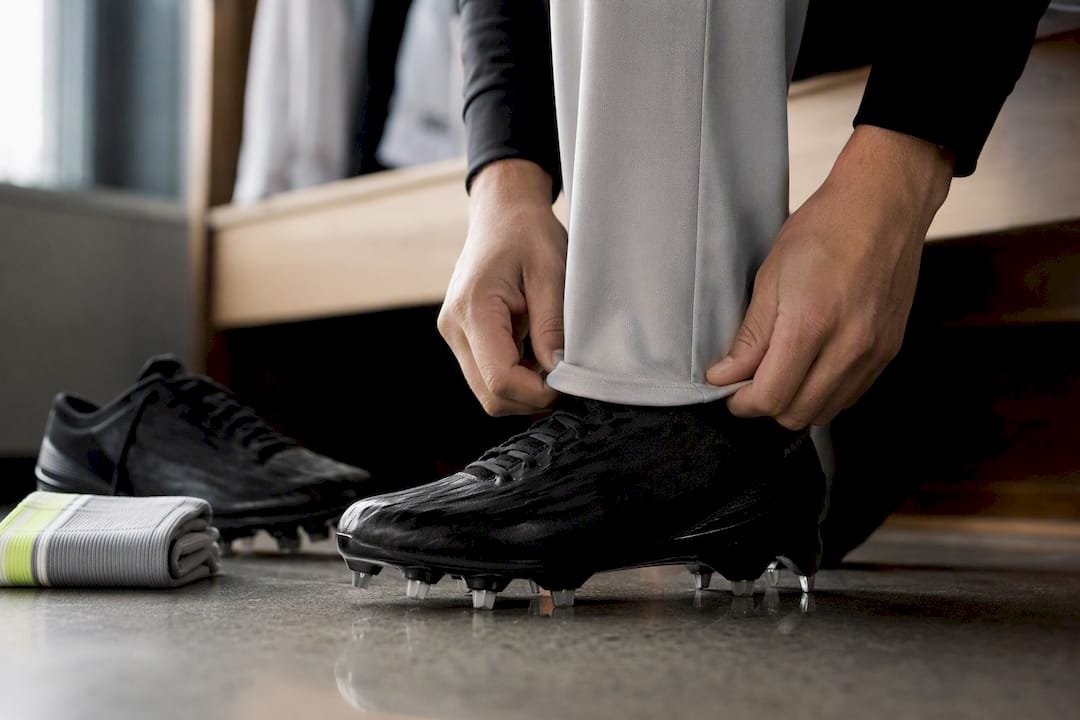
A closed hem uses elastic to cinch the pant leg shut, which is standard on knicker styles. Closed-hem knickers simplify the classic look and reduce fabric bunching around the cleat, which matters for players who slide headfirst and don’t want loose fabric catching on the dirt. An open hem sits looser at the bottom and is more common on full-length and tweener pants, giving a relaxed drape over the shoe.
Fit changes the equation too:
- Tapered/skinny fits hug the leg, popular in college and pro ball for a streamlined look
- Traditional loose fits give more room to move and are easier to size across a wide range of body types
- Altered hems: some players roll or cuff full-length pants to fake a knicker look, which works fine for one or two players but creates visual inconsistency on a full roster if it isn’t a planned team decision
If your team wants flexibility without buying two pant styles, a full-length pant with an open hem that can be worn long or cuffed short is the more economical route.
Pinstripes, Piping, or Solid Color: Choosing a Team Look
Pants aren’t just a length decision. The pattern says as much about team identity as the jersey does.
Pinstripe, piped, and solid-color options each carry a different visual weight:
- Pinstripes read as classic and formal, the look most associated with historic MLB clubs
- Piping (a colored stripe down the outer seam) adds a pop of team color without full pattern commitment
- Solid colors are the cleanest match for bold, modern jersey designs and photograph well in bright team colors
Whichever you pick, coordinate it with jersey and sock colors before ordering, not after. Solid colors show dirt fastest and need more frequent washing to stay presentable, while pinstripes tend to hide grass stains a little better between washes.
What Baseball Pants Are Made of and What to Look for
Most baseball pants are built from polyester or polyester blends, chosen for stretch and breathability rather than pure cotton comfort. That stretch matters mid-swing and mid-slide, when a rigid fabric would restrict a player’s hip turn or stride length.
Beyond fabric, a few construction details separate a pair of pants that lasts a season from one that rips by June:
- Reinforced knees and seat: double-stitched panels at high-wear points hold up against repeated sliding
- Integrated sliding shorts or padding: some pants build this in, cutting the need for a separate layer underneath
- Double-needle stitching: a small detail, but it’s the difference between a seam that survives a season and one that blows out after a few slides
- Waist options: elastic waists are easier to fit across a young roster with mixed body types, while belt-loop waists give a more traditional, tailored look for older players
Fit matters as much as fabric. A pant that’s too tight restricts the slide and looks awkward in team photos; too loose, and it bunches around the cleat and becomes a tripping hazard. Checking a size chart against actual player measurements, not just age-based sizing, saves a lot of return shipments.
For care, wash in cold water and skip the dryer’s high heat setting. Polyester blends hold their shape and color far longer when they’re air-dried, and stains lift more easily when they’re treated before they set in the wash.
For teams that lean on faster-drying fabrics for practice gear, the moisture-wicking builds used in quick-dry performance pants show the same breathability principles that make polyester blends the standard choice for game-day baseball pants.
How to Choose and Order Pants for Your Whole Team
Picking a style is only half the job. Getting a full roster into matching, well-fitted pants without a logistics mess takes a plan.
- Decide your uniform policy first. Will every player wear the same length and hem, or is there room for player choice? Teams that skip this step often end up with mismatched socks and hems showing up in team photos.
- Match the style to position and climate. Pitchers and catchers who slide less can wear tighter, tapered fits; infielders who dive and slide often benefit from the extra coverage of full-length pants. Hot climates favor the ventilation of knickers or tweeners.
- Weigh maintenance against appearance. Full-length pants hide dirt less well and need more frequent washing, but they also hide sock mismatches. Knickers stay visually cleaner overall but show wear faster at the knee.
- Check sizing before the full order. Pull a team size chart and measure two or three players across your roster’s size range, not just the biggest and smallest.
- Ask vendors the right questions before committing: What’s the sample policy? What’s the lead time? Is there a minimum order quantity? Will they provide a mockup before production starts?
Pro Tip: Order one sample pair in your team’s most common size before placing a full roster order. It costs a little upfront but catches hem length, fabric weight, and color-matching problems before you’re stuck with 20 pairs that don’t fit right.
How Capra Sports Handles Mockups, Samples, and Low-MOQ Orders
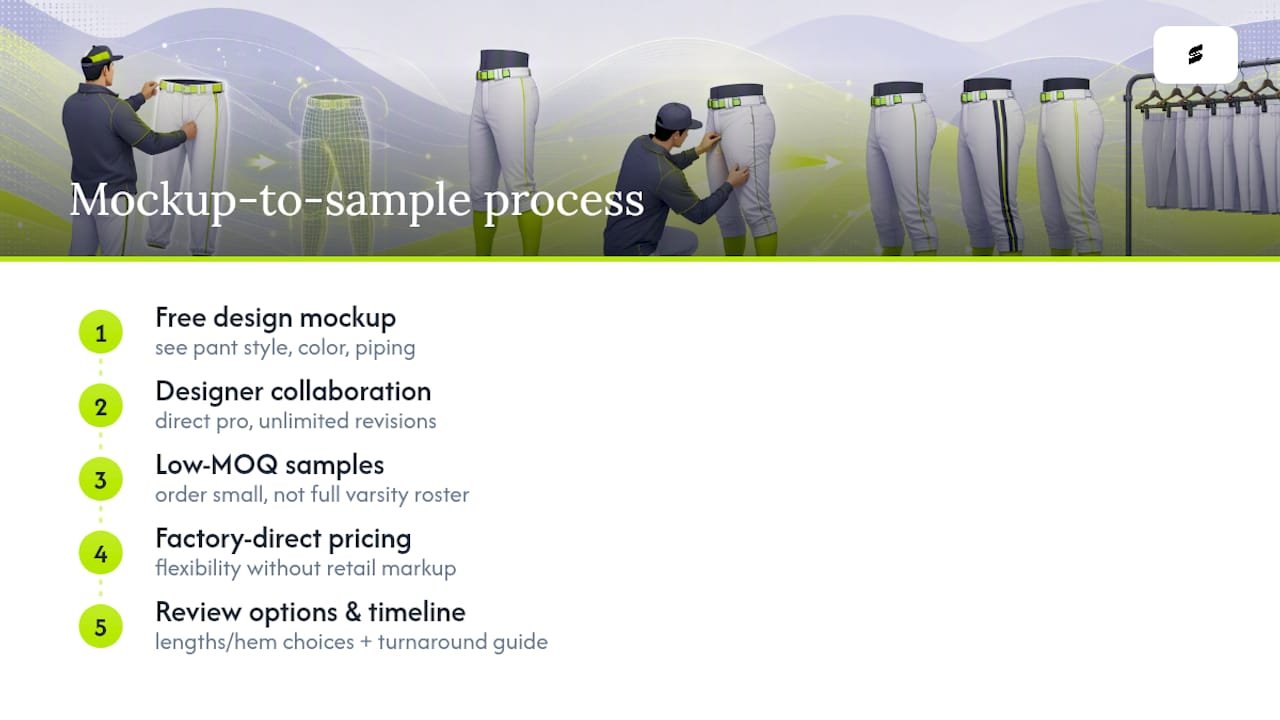
Getting the hem, fit, and fabric right before a full team order is the single biggest way to avoid a costly reorder. Capra Sports builds its process around that exact problem: free design mockups so coaches can see the pant style, color, and piping before committing to production, plus low minimum order quantities that don’t force a program to buy for a full varsity roster just to place an order.
Every design goes through direct collaboration with a professional designer, with unlimited revisions until the mockup matches what the team actually wants. Factory-direct pricing keeps that flexibility from turning into a markup. Reviewing the custom baseball pants lineup shows the range of lengths and hem options available, and pairing that with the step-by-step design guide for coaches lays out what to expect for turnaround before a season deadline hits.
What Coaches Get Wrong About Pant Styles
The most common mistake isn’t picking the wrong style. It’s not picking a style at all, and letting players show up in whatever length they already own. That single decision creates half the sock-mismatch, hem-inconsistency problems teams run into every season.
The second mistake is trusting retail sizing over an actual sample. A men’s medium from one brand fits nothing like a youth large from another, and a 14-year-old’s “team fit” pant is not the same as a grown man’s. Order a sample, check it against your roster’s actual measurements, and lock in a written policy on hem length and sock color before you place the full order. That one document saves more headaches than any style choice ever will.
— Agha
Get a Free Mockup Before You Order Team Pants
Choosing a style is the easy part. Getting twenty or thirty players into pants that actually fit, match, and hold up through a full season is where most teams run into trouble, and where paying for samples upfront saves money later. Some custom uniform providers offer free mockups so you see the exact pant style and color before production starts, and have ordering policies intended to fit small rosters without forcing overbuying.
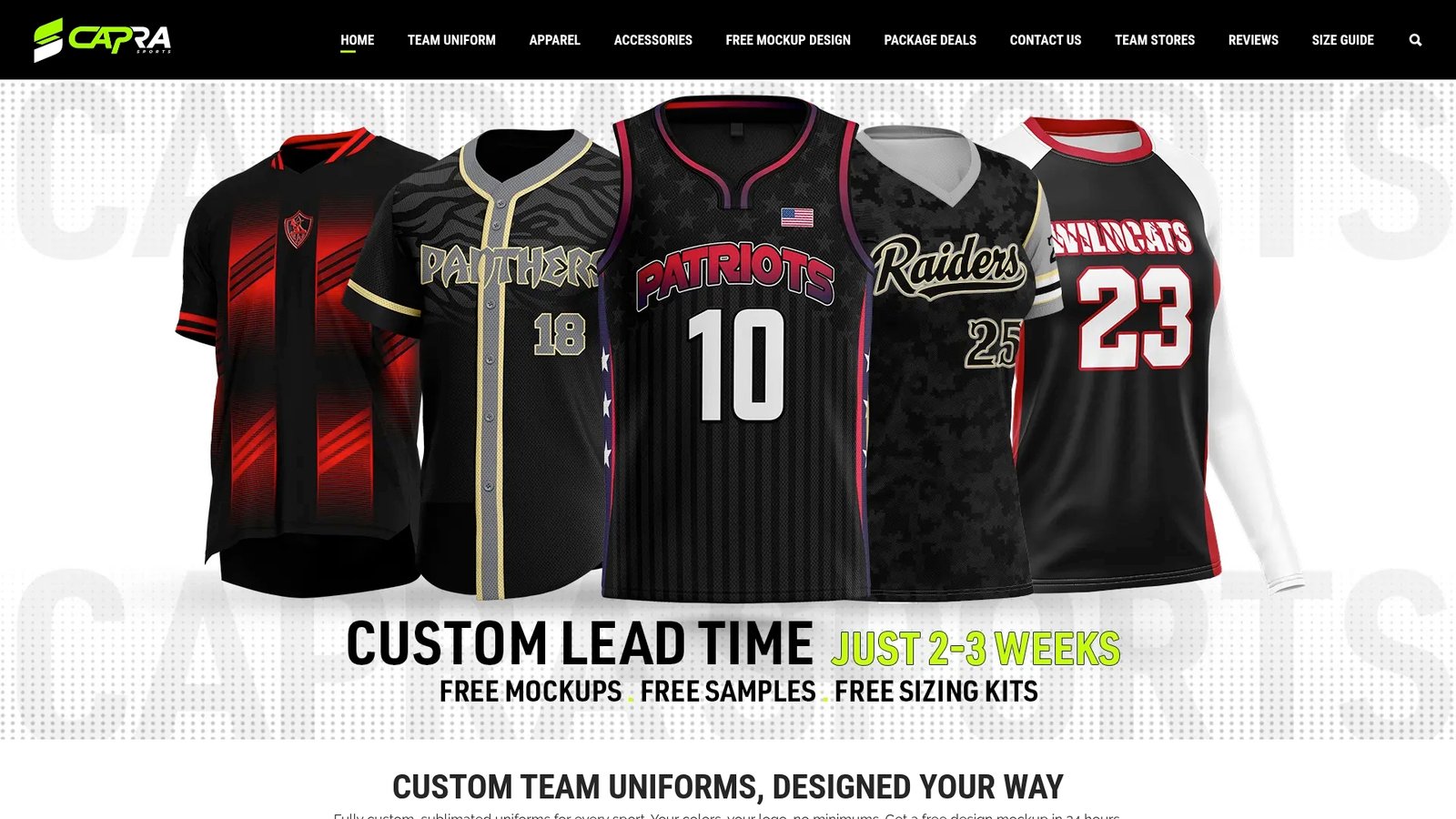
Orders often include collaboration with professional designers and may offer revisions to ensure the final product matches the approved mockup. If your roster is still deciding between knickers, tweeners, or full-length, request a free custom uniform mockup and see the options side by side before committing a single dollar to a full order.
Sources
- How to Buy the Best Baseball Pants | Under Armour
- Baseball pants guide: fit, styles & features | DICK’S Sporting Goods
- A Complete Guide to the Different Types of Baseball Pants | Midway Sports
- Baseball Hall of Fame — historical timeline
FAQ
What are baseball pants called?
They’re simply called baseball pants, though the specific styles go by names like knickers (knee-length), tweeners (3/4-length), and full-length pants depending on how far down the leg they reach.
What are the different types of sports pants used in baseball?
Baseball uses three main lengths: knicker-style pants that stop below the knee, tweener or 3/4-length pants that hit mid-calf, and full-length pants that reach near the top of the cleat.
What are the different styles of pants in terms of fit and hem?
Beyond length, pants vary by hem type (closed elastic hem versus open hem) and fit (tapered/skinny versus traditional loose cut), plus design details like pinstripes, piping, or solid colors.
What kind of baseball pants do pros wear?
Most professional players wear full-length pants for coverage and a modern look, though knickers and high socks have made a comeback among some MLB players who prefer the retro style.
Should a whole team wear the same pant style?
Yes. Roster-wide consistency in pant length, hem, and sock color keeps the uniform looking intentional, and setting that policy before ordering avoids costly mismatched reorders.