
Avoid Costly Reorders: Embroidered vs Sublimated for Teams
Choose sublimation when your team needs full coverage, photo quality graphics, or gradient color on polyester jerseys. Choose embroidery when you want a small, textured crest on polos, caps, or jackets that has to survive years of washing. The real trade-off comes down to this: sublimation wins on color and coverage, embroidery wins on tactile durability for small marks.
TL;DR:
- Sublimation requires polyester fabrics and offers full-color, photo-quality graphics, making it ideal for jerseys and all-over prints.
- Embroidery works on a wider range of fabrics, including cotton and blends, and provides durable, textured logos suited for small marks and polos.
- Cost for sublimation remains stable regardless of artwork complexity, while embroidery costs increase with stitch count and design size.
- Proper fabric and color testing via physical samples are essential to prevent issues like color shifting or puckering before bulk orders.
- Care instructions vary: sublimated garments should be washed in cold water and line dried, while embroidered items require turning inside out and avoiding high heat drying.
Table of Contents
- Embroidered vs Sublimated: A Quick Comparison
- How Does Dye Sublimation Work?
- How Does Embroidery Work?
- Which Has More Pros and Fewer Cons?
- What Fabrics Work Best With Each Method?
- How Much Do Embroidery and Sublimation Cost?
- How Should You Wash and Care For Each Method?
- How Do You Choose the Right Method For Your Team?
- How Capra Sports Applies These Methods to Team Uniforms
- Why Teams Overthink This Decision
- Ready to Order Custom Sublimated Uniforms?
- Sources
- FAQ
Embroidered vs Sublimated: A Quick Comparison
Before digging into the mechanics of each method, it helps to see them side by side. Here’s how embroidery and sublimation stack up across the factors that actually affect a team’s buying decision.
- Design capability: Sublimation handles unlimited colors, gradients, and photo-realistic art. Embroidery is limited by stitch count and thread color library, so fine detail and shading get simplified.
- Fabric compatibility: Sublimation requires polyester or polyester-coated substrates. Embroidery works on cotton, poly blends, twill, fleece, and knit fabrics.
- Durability: Sublimated dye is part of the fiber and won’t crack or peel, but it can be vulnerable to excess heat. Embroidery resists surface abrasion well on small marks but can fray or pucker over time on lower-quality backing.
- Feel and texture: Sublimated graphics are flat, breathable, and add zero weight. Embroidery sits on top of the fabric with a raised, textured hand that reads as premium.
- Cost drivers: Sublimation costs scale with garment construction, not artwork complexity. Embroidery costs scale with stitch count, so bigger and busier designs cost more.
- Ideal products: Sublimation suits jerseys, all-over prints, and shooting shirts. Embroidery suits polos, caps, jackets, and small emblem placements.
The one absolute rule to remember: sublimation only works on polyester or poly-coated materials, according to a City of San Diego technical brief on dye sublimation. Embroidery has no such restriction, which is why you’ll see it on cotton team hoodies and twill caps where sublimation simply isn’t an option.
How Does Dye Sublimation Work?
Sublimation is a chemistry trick as much as a printing process. Disperse dyes get printed onto transfer paper, then heat and pressure turn those dyes into a gas that bonds directly into polyester fibers rather than sitting on the surface, per the City of San Diego’s technical guide. Once the fabric cools, the dye solidifies inside the fiber structure. That’s why a well-made sublimated jersey never cracks, peels, or feels like it has a print layer on top. It’s the fabric’s actual color.
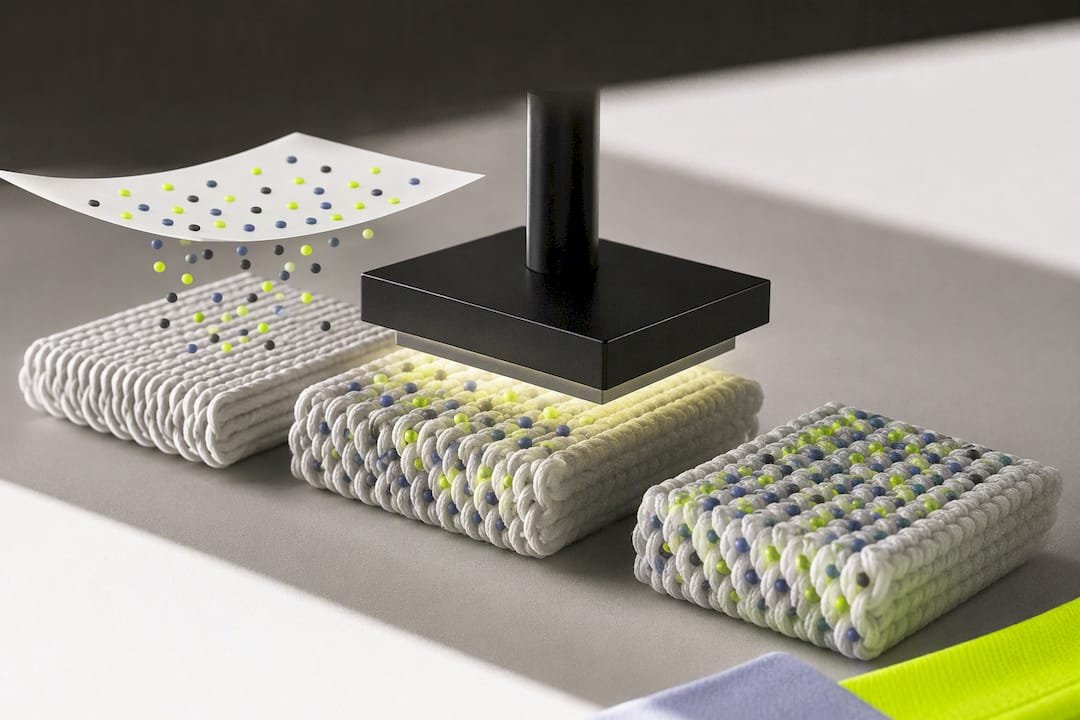
Two things determine whether sublimation looks good: the base fabric and the ground color. White or light polyester takes dye cleanly and lets the full color range show through. Dark or non-white grounds mute or distort the printed colors, since sublimation dye can’t cover over an existing color the way ink or thread can.
Production typically follows this sequence:
- Artwork gets printed in reverse onto sublimation transfer paper using specialized inks.
- Fabric panels (or finished garments) get loaded into a heat press or calendar press.
- Heat around 400°F and firm pressure convert the dye to gas, which penetrates the polyester fibers.
- For full custom jerseys, printed fabric panels get cut and sewn into the finished garment, a workflow noted by Goal Uniform’s comparison of sublimation and embroidery jerseys.
- Finished pieces cool and cure before quality inspection.
Pro Tip: Ask your supplier for a fabric swatch printed with your actual design before approving a bulk order. Color can shift slightly between screen mockups and printed polyester, and a swatch catches that before 20 jerseys arrive the wrong shade.
Sublimation isn’t foolproof. Dye migration, where residual dye continues to move under heat after production, can cause color bleeding into white areas months later. Disperse dyes are graded by energy level, and higher-energy dyes combined with correct finishing temperatures significantly reduce migration risk, according to a technical guide on disperse dye standards. The mitigation is straightforward: work with a producer who controls press temperature and dwell time precisely, and avoid ironing sublimated garments directly.
How Does Embroidery Work?
Embroidery starts with digitizing, the process of converting artwork into a stitch file a machine can read. A digitizer decides stitch type (satin, fill, or running stitch), stitch direction, and density, and those choices determine whether a logo looks crisp or looks like a blob of thread. Unlike sublimation, embroidery places thread physically on top of the fabric rather than dyeing the fabric itself, a distinction laid out clearly by Palmway Apparel’s comparison of embroidered and sublimated shirts.
Backing and stabilizer matter more than most buyers realize. Without the right stabilizer, stretchy knits pucker under the tension of dense stitching, and lightweight wovens can pull or distort around the design. A good embroiderer matches stabilizer weight to fabric type, then trims or tears away the backing after stitching so it doesn’t show or feel stiff against skin.
Embroidery has real limits worth knowing before you commit to a design:
- Fine gradients and photographic detail don’t translate to stitches. Thread has a finite color palette compared to sublimation’s continuous color range.
- Large coverage areas get heavy and stiff fast. A full-back design in embroidery adds noticeable weight and can feel like wearing a small patch of cardboard.
- High stitch counts slow production and raise cost, since every stitch takes machine time.
- Poor backing choices lead to puckering, especially on performance knits used in athletic jerseys.
Durability issues in embroidery usually trace back to two things: thread abrasion from repeated washing or contact (think backpack straps rubbing against a chest logo) and backing failure where stabilizer wasn’t properly secured or removed. Both are production quality issues, not inherent flaws in the method. A shop that uses quality thread, matches stabilizer to fabric, and tests stitch density before running a full order avoids nearly all of it.
Which Has More Pros and Fewer Cons?
Neither method wins across the board. It depends entirely on what the garment needs to do.
Sublimation’s biggest strength is unlimited color and full-coverage capability. You can put a photo-realistic mascot, gradient fade, or sponsor logo array across an entire jersey without paying more per color. It also produces a soft hand feel with zero added weight, which matters for athletes who need breathability. The Bushi Sports comparison of the two methods notes that sublimation scales especially well for personalization: player names, numbers, and sponsor logos add no meaningful per-unit cost the way stitching would. The downside is real too. Sublimation only works on polyester, it’s sensitive to high heat during care, and dye migration remains a risk if finishing wasn’t done correctly.
Embroidery’s strength is a tactile, premium look that reads as quality the moment someone touches it. It resists surface wear well on small, localized marks, which is why it’s the default for polos, caps, and corporate or staff apparel where a logo needs to last years, not just a season. The tradeoff is cost escalation with size and detail. A large, dense design gets expensive and heavy fast, and it simply can’t reproduce fine gradients or photographic imagery the way sublimation can.
| Factor | Sublimation | Embroidery |
|---|---|---|
| Color range | Unlimited, photo quality | Limited to thread library |
| Fabric requirement | Polyester or poly-coated only | Cotton, poly blends, knits, wovens |
| Best coverage | Full garment, all-over prints | Small to medium localized marks |
| Feel | Flat, soft, breathable | Raised, textured, adds weight |
| Cost scaling | Tied to garment construction | Tied to stitch count and size |
| Typical use | Jerseys, shooting shirts, all-over kits | Polos, caps, jackets, patches |
Plenty of teams don’t pick one exclusively. A sublimated jersey with an embroidered captain’s patch, or a sublimated body with an embroidered collar tag, combines the coverage advantage of one method with the premium detail of the other.
What Fabrics Work Best With Each Method?
Sublimation has a hard requirement: the fabric needs to be polyester or coated with a polymer that accepts disperse dye. Cotton, cotton blends, and most natural fibers won’t hold sublimated color at all, since the dye has nothing to bond to at the molecular level.
Embroidery doesn’t have that ceiling. It stitches onto cotton tees, poly-blend polos, twill caps, fleece jackets, and technical knits alike. The variable to watch is how the fabric behaves under a needle. Tightly woven fabrics like twill hold stitches cleanly with minimal stabilizer. Stretchy performance knits, the kind used in athletic jerseys, need a cutaway or no-show mesh stabilizer to prevent puckering around the design.
A few special cases matter for team orders:
- Patches: Sublimated patches reproduce photographic detail and complex gradients well, while embroidered patches deliver the raised, traditional look many programs associate with varsity letters and military-style crests, a distinction Monterey Company’s patch comparison lays out clearly.
- Caps: Structured caps almost always use embroidery since the curved surface and foam front panel aren’t practical for sublimation transfer.
- Jackets: Fleece and soft shell jackets typically take embroidery for chest logos, though sublimated panels can appear on polyester-shell athletic jackets.
- Laminated or coated surfaces: These generally favor sublimation since needle penetration on coated fabric can crack the coating or cause tear-out around stitches.
How Much Do Embroidery and Sublimation Cost?
Cost structure is where the two methods diverge the most, and it’s often the deciding factor for teams working with a fixed budget.
Embroidery pricing is driven by stitch count. More stitches mean more machine time, and machine time is what you’re paying for. A simple three-inch logo with 5,000 stitches costs less than a detailed six-inch design with 15,000 stitches, even on the identical shirt. Multiple locations (chest plus sleeve, for example) multiply that cost, and each thread color change adds setup time. Complex, multicolor artwork gets expensive fast in embroidery because every color and every stitch adds up.
Sublimation works differently. Once the print and press setup is done, artwork complexity barely moves the price. A photo-realistic all-over design costs roughly the same to produce as a simple two-color layout, because you’re paying for garment construction (cutting and sewing fabric panels) rather than per-stitch labor, as Palmway Apparel notes in its cost comparison. That’s a major advantage for teams that want detailed graphics, sponsor logos, or player-specific name and number combinations without paying extra per design element.
Lead times follow a similar logic:
- Small orders (under 20 pieces) of either method typically run one to three weeks depending on design complexity and current shop capacity.
- Large team or league orders (50+ pieces) benefit from batch production efficiency, especially in sublimation, where cut-and-sew workflows scale smoothly.
- Digitizing a new embroidery file adds setup time upfront, but that file gets reused for every future order.
- Always request a physical sample before committing to a full team order. It’s the single best way to catch color, sizing, or fit issues before they multiply across 20 or 30 uniforms.
How Should You Wash and Care For Each Method?
Care mistakes cause more uniform damage than normal wear does. Both methods have specific do’s and don’ts, and skipping them shortens the life of a jersey or polo fast.
For sublimated polyester, wash in cold water on a gentle cycle and skip fabric softener, which leaves a residue that dulls colors over repeated washes. Line dry when possible, or use low heat in the dryer. The biggest risk to sublimated graphics is heat: high dryer heat or direct ironing can cause dye migration, where color bleeds or shifts, since sublimation fastness testing shows dye can reactivate and move at elevated temperatures even after curing. If you need to remove wrinkles, iron on the reverse side with a pressing cloth, never directly on the printed surface.
For embroidered garments, turn the piece inside out before washing to reduce thread abrasion against other items in the load. Avoid high heat drying, which can loosen backing adhesive and cause puckering around the stitched area over time. Skip direct ironing over the embroidery itself; iron around it or use a pressing cloth.
A simple wash-test protocol before bulk approval:
- Request one finished sample garment with your final artwork, whether embroidered or sublimated.
- Run it through five full wash and dry cycles using your team’s normal laundry routine.
- Check for color fading, puckering, thread pulls, or dye bleeding into surrounding fabric after each cycle.
- Compare hand feel and stitch integrity against the original sample.
- Approve bulk production only after the sample passes all five cycles without visible degradation.
This kind of testing catches problems on one shirt instead of forty. For more detail on preserving sublimated color specifically, see this guide on washing sublimated jerseys.
How Do You Choose the Right Method For Your Team?
Run through these questions before you commit to either method:
- What’s the garment’s primary use? Game-day jersey, practice gear, staff polo, or fan apparel each points toward a different answer.
- What fabric have you already selected, or does the design dictate the fabric choice?
- How complex is the artwork? Gradients, photo elements, and many colors favor sublimation. Simple, bold logos work fine in either.
- What’s your budget per unit, and how many locations need decoration?
- How often will this piece get washed? High-frequency laundering (game jerseys, practice gear) demands a method that survives repeated cycles cleanly.
When a physical sample arrives, inspect it methodically rather than just glancing at the logo. Check color match against your team’s official palette, run your hand over the surface to judge texture and stiffness, count stitch density on embroidered pieces to confirm it’s not too sparse or too heavy, and check that backing material doesn’t feel scratchy against skin.
Pro Tip: Combined approaches solve more problems than people expect. An embroidered crest on the chest of a sublimated jersey gives you a premium 3D logo plus full-color graphics elsewhere on the same piece. Heat-sealed nameblocks on a sublimated back panel are another common combo that avoids stitching through performance fabric.
Sublimation tends to suit high-heat environments particularly well, since embroidery’s added local stiffness can restrict airflow exactly where athletes need it most during intense play.
How Capra Sports Applies These Methods to Team Uniforms
Custom sublimated uniforms are available for sports such as basketball, baseball, softball, soccer, football, volleyball, and cheer, along with personalized apparel like hoodies, backpacks, and warmup gear. Many orders include free design mockups and options for revisions to help teams visualize their products before production.
The sample process follows the same logic outlined earlier in this guide: request a fabric swatch with your actual artwork, check the color match and hand feel, and confirm the finalized mockup before bulk production begins. That checkpoint matters more than most buyers realize, since it’s the difference between catching a color mismatch on one swatch versus discovering it across an entire team order, a practice detailed in Capra Sports’ own overview of the mockup-to-delivery process.
Teams typically have a minimum order quantity for sets per team, along with an option for a sizing sample to confirm fit before committing to full quantities. This combination of commitment level and physical sampling helps reduce guesswork in uniform orders.
Why Teams Overthink This Decision
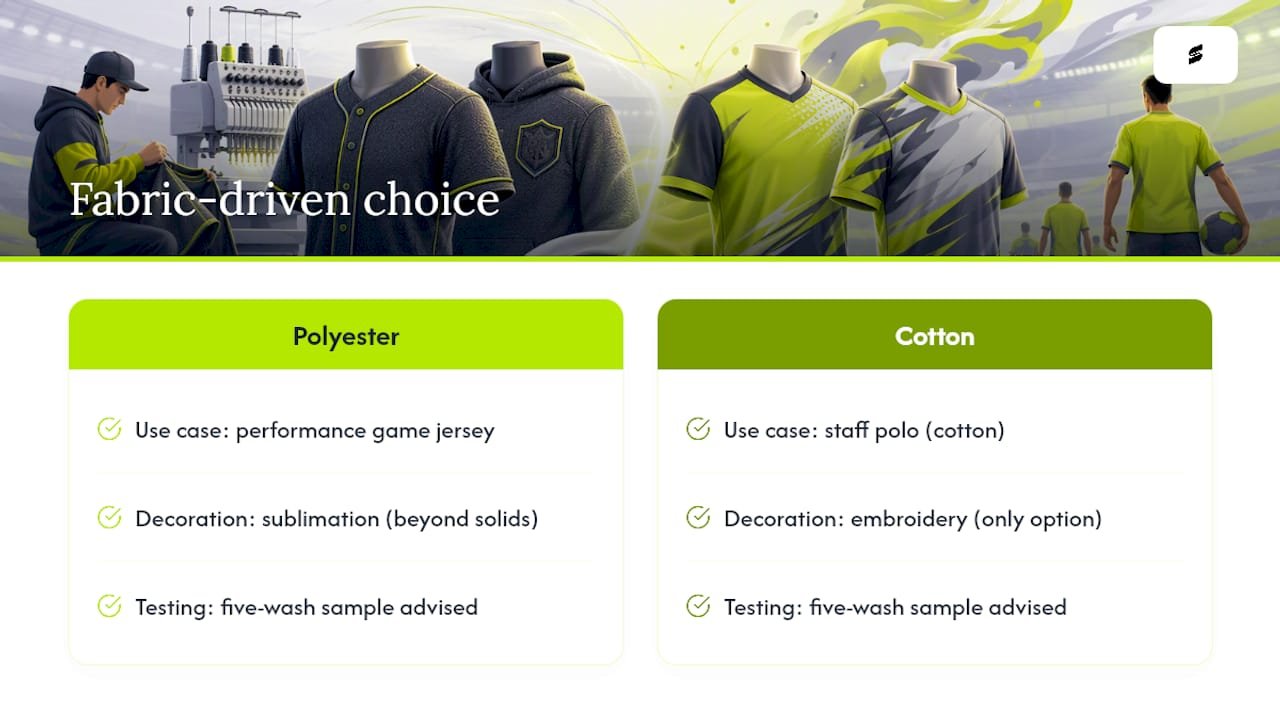
The conventional advice treats embroidery versus sublimation like a taste preference, something you pick based on which “looks more premium.” That framing misses the point entirely. The actual decision tree is fabric-driven: if you need polyester performance fabric for a game jersey, sublimation is your only real option for anything beyond a solid color. If you want a logo on a cotton staff polo, embroidery is your only real option, full stop.
Where I think teams genuinely go wrong is skipping the physical sample step to save a week of turnaround. A five-wash test on one garment costs you almost nothing compared to reordering fifty jerseys because the color shifted or the stitching puckered after month one. That single checkpoint, more than any theoretical debate about which method is “better,” determines whether a uniform order goes smoothly.
Prioritize fabric requirements first, artwork complexity second, and budget third. Aesthetic preference should be the last filter you apply, not the first.
— Agha
Ready to Order Custom Sublimated Uniforms?
If you’ve read this far, you already know sublimation is the right call for full-color, photo-quality jerseys on polyester, and that’s exactly what Capra Sports builds. Every order starts with a free design mockup from a professional designer, and you can request one sizing sample at no extra charge before committing to your full team quantity.
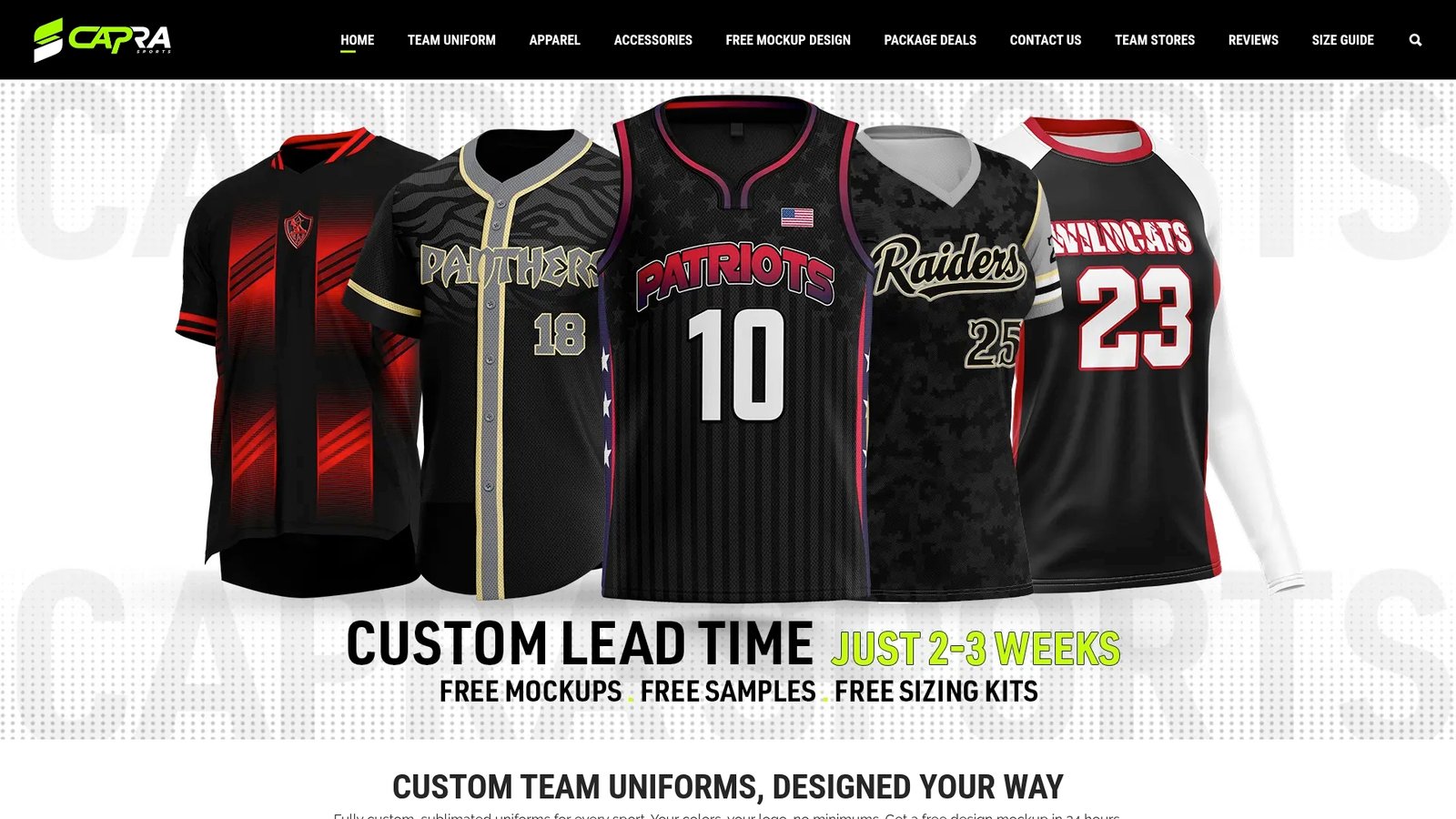
The process is simple: submit your team’s colors, logo, and roster details, review your free mockup, request a sample if you want to check fit and color in hand, then confirm final order details. Custom basketball uniforms run $35.99 to $39.99 per piece, soccer and volleyball uniforms run the same range, baseball uniforms run $66.99 to $74.99, and football uniforms run $57.99 to $64.99, all listed on the Capra Sports pricing page. If your team plays baseball or softball and wants sport-specific guidance before ordering, this coach’s buying guide walks through the same fabric and fit questions covered here. Check current pricing and request your sample today.
Sources
- Dye sublimation guide (City of San Diego technical brief)
- Embroidered shirts vs sublimation (Palmway Apparel)
- Understanding disperse dye standards for polyester filament (GLYarn)
FAQ
Is Sublimation Better Than Embroidery?
Neither method is universally better. Sublimation wins for full-color, photo-quality graphics on polyester, while embroidery wins for durable, textured logos on caps, polos, and jackets across a wider range of fabrics.
Which Jersey Method Is Better, Sublimation or Embroidery?
For jerseys specifically, sublimation is usually the stronger choice, since it handles full-coverage color, sponsor logos, and player numbers without added weight, according to Bushi Sports’ comparison. Embroidery on a jersey typically works only for a small chest crest rather than full-garment graphics.
What Are the Downsides of Sublimation?
Sublimation only works on polyester or poly-coated fabric, so cotton and natural fiber blends are off the table entirely. It’s also sensitive to high heat during care, since improper finishing or aggressive ironing can cause dye migration, per fastness testing on sublimated fabric.
What Are the Three Types of Embroidery Commonly Used on Team Apparel?
The most common stitch types are satin stitch for lettering and borders, fill stitch for larger solid areas, and running stitch for fine outlines or detail work. A digitizer chooses among these based on design size and the level of detail needed.
Does Capra Sports Offer Both Embroidery and Sublimation?
Capra Sports specializes in custom sublimated uniforms across basketball, baseball, softball, soccer, football, and volleyball, with free mockups and a sizing sample available before bulk ordering. Current pricing by sport is listed on the Capra Sports pricing page.