

Stop Choosing Fleece by Weight: What Runners, Hikers, and Coaches Need
If you run, hike hard, or work up a sweat outdoors, a lightweight or microfleece will serve you best. If you want a do-everything layer for commuting or general cold weather, midweight (200-series) is the safer bet. Heavyweight fleece belongs on low-output days: camp, spectator sports, or chores outside. The rule that matters more than any label is matching weight to activity and layering role, not chasing a higher number.
TL;DR:
- The effectiveness of fleece depends on construction factors like pile height, knit density, and backing, not just its weight label.
- Micro and lightweight fleece are best for high-output activities, while midweight and heavyweight fleece suit low-output, static situations.
- Testing shows that fleece warmth-to-weight performance varies within the same weight class, so fit and fabric details matter when choosing.
- Proper layering and fit are crucial, with a focus on activity level, climate, and garment style, rather than relying solely on fleece weight.
- For team apparel, consistent sizing and appropriate fleece weight for the climate are essential, with custom options available to ensure proper fit and look.
Table of Contents
- How fleece weight is measured: g/m², oz/yd², and the 100/200/300 shorthand
- Lightweight vs midweight vs heavyweight: properties and everyday uses
- Why weight isn’t the whole story: measured tests and construction factors that change warmth
- Practical decision guide: pick fleece by activity, layering slot, and climate
- Garment styles and fit: hoodies, pullovers, vests, and full-zip jackets
- Care, durability, and shedding: laundry, pilling, and ‘Shed Less’ tech
- How teams and coaches choose fleece for custom hoodies and warmups
- A practical closing synthesis
- A custom option for teams that need consistent warmups
- Sources
- FAQ
How fleece weight is measured: g/m², oz/yd², and the 100/200/300 shorthand
Fleece weight is reported two ways: grams per square meter (g/m², often called GSM) and ounces per square yard (oz/yd²). A fabric listed at 200 g/m² works out to roughly 5.9 oz/yd², and a 300 g/m² fabric lands near 8.9 oz/yd². These aren’t exact conversions across every mill, but they get you close enough to compare products from different brands.
The industry shorthand of micro, 100, 200, and 300 comes from Polartec’s original fleece series, and most other brands have adopted similar naming even when their fabric isn’t Polartec-made. Polartec’s product pages map these to intended uses: micro for ultralight layering, 100 for lightweight mid-layers, 200 for versatile midweight layers, and 300 for heavy insulation.
Because vendors sometimes report finished-garment weight rather than raw fabric weight, the same “200-weight” label can mean slightly different things depending on backing, trim, and construction. Testing compiled by Backpacking Light offers a practical way to sort the bands:
| Class | Weight range | Typical shorthand |
|---|---|---|
| Micro | Under 100 g/m² | Microfleece |
| Lightweight | 100 to 200 g/m² | 100-weight |
| Midweight | 200 to 300 g/m² | 200-weight |
| Heavyweight | Above 300 g/m² | 300-weight |
Treat these as reference bands rather than guarantees. Two 200-weight jackets from different brands can feel noticeably different once you factor in pile height and knit density, which the next section covers.
Lightweight vs midweight vs heavyweight: properties and everyday uses
Each weight class trades warmth for breathability in a fairly predictable way, though construction can shift the balance (more on that shortly).
- Lightweight or micro fleece breathes well and packs small, making it suited to trail running, gym workouts, and high-output hiking where you’re generating your own heat.
- Midweight (200-series) fleece balances insulation and breathability for commuting, travel, and general cold-weather layering across a wide range of temperatures.
- Heavyweight (300-series) fleece delivers the most warmth for low-output situations like standing at a sideline, sitting around camp, or doing chores in cold air.
- Vests work well over a base layer when your arms need to stay unrestricted and your core needs the most warmth.
- Pullovers suit static or low-movement settings where you don’t need a full zip for temperature control.
- Full-zip hoodies offer the most versatility, letting you vent heat quickly once you start moving.
A trail runner heading out in cold weather usually reaches for a micro or 100-weight piece as a wind buffer over a base layer, since anything heavier turns into a sweat trap within the first mile. Someone walking to work or waiting at a bus stop is better served by a 200-weight midlayer that holds heat without needing constant venting. And a person tailgating at a football game in December wants the 300-weight jacket, because they’re not moving enough to generate heat on their own. The North Face’s fleece guidance frames this the same way: heavier fleece runs warmer at rest but risks overheating during exertion, while lighter fleece favors movement.
Why weight isn’t the whole story: measured tests and construction factors that change warmth
Nominal weight class is a starting point, not a guarantee of warmth. Measured testing from Backpacking Light found that some heavier fleece samples actually performed worse in warmth-to-weight terms than lighter ones in the same test set, which undercuts the assumption that a bigger GSM number always means a warmer jacket.
Several heavier fleece samples tested lower on warmth-to-weight metrics than some lighter samples in the same comparison.
Backpacking Light thermal testing
A measured comparison of fleece samples found warmth-to-weight performance varies enough within the same nominal class that label alone cannot predict how warm a jacket will feel. That’s according to Backpacking Light’s fleece testing, and it means pile height, knit density, and how tightly the fabric compresses under a shell matter as much as the number on the tag.
Construction details worth checking before you buy include pile height (taller pile traps more air), density (a tighter knit resists wind better), and whether the fleece has a smooth or textured backing. Products like Polartec High Loft improve warmth-to-weight by engineering larger air pockets into the pile, while a dense, low-loft fabric can weigh more without adding proportional warmth.
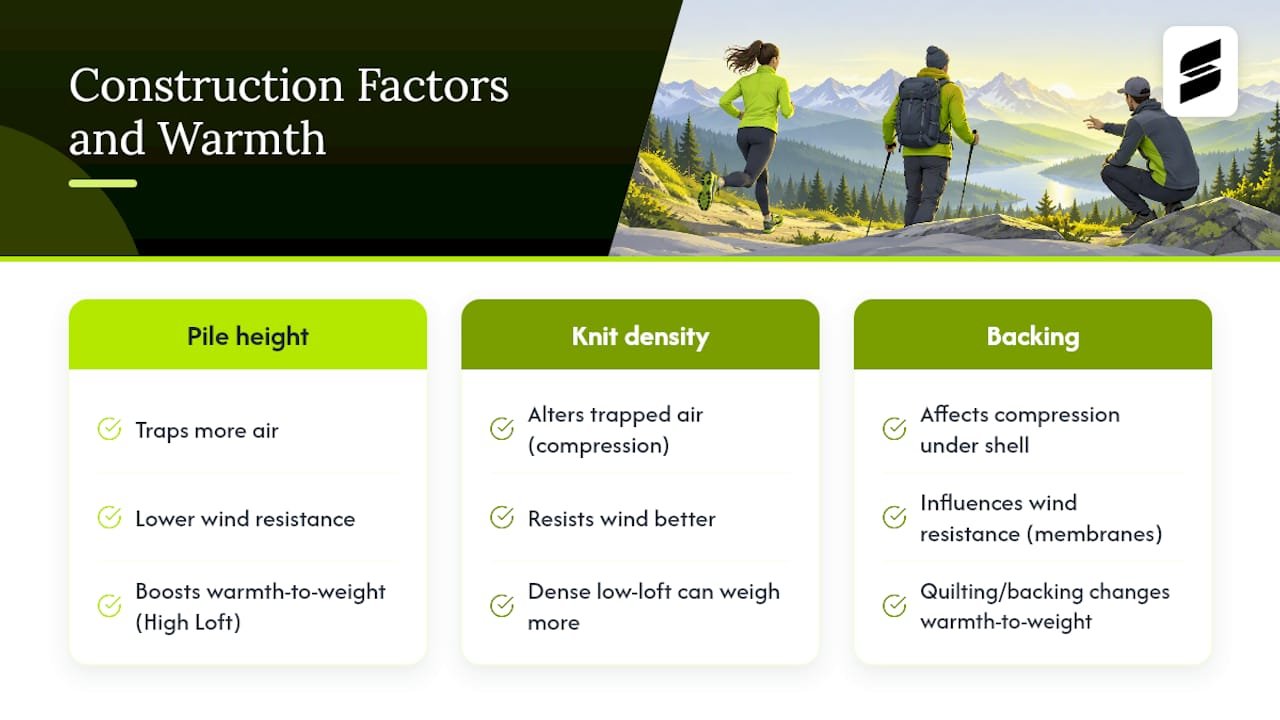
The ASHRAE RP-1760 clothing database reinforces this from a different angle: insulation is an ensemble property, shaped by posture, air movement, and how the whole outfit fits together, not a single fabric’s weight in isolation. When you’re shopping online, look past the GSM figure to product photos showing pile texture, and read spec sheets for mentions of backing, quilting, or wind-resistant membranes.
Practical decision guide: pick fleece by activity, layering slot, and climate
Before buying, answer four questions: how hard will you be working, what layering slot does this piece fill, how cold and windy is your typical climate, and how close-fitting do you want the garment to feel.
- Identify your activity intensity. High-output activities like running or fast hiking call for lightweight or micro fleece; low-output activities call for heavyweight.
- Decide the layering role. A midlayer under a shell can run lighter than a standalone outer piece meant to handle wind directly.
- Account for your climate. Cold and dry favors heavier fleece for warmth; cold and active favors lighter fleece paired with a wind shell.
- Test the fit before buying. Raise your arms and reach forward in the jacket to confirm it moves with you rather than restricting your shoulders.
When shopping, ask about pile loft, wind resistance, seam construction, and whether the piece is meant as a midlayer or an outer layer. A useful outdoor packing resource from Grand Canyon Journeys walks through similar activity-based layering logic for variable climates, which reinforces that the decision starts with what you’re doing, not the label on the tag.
Pro Tip: Bring the jacket you’ll layer it over into the fitting room. A midweight fleece that fits perfectly on its own can feel tight the moment you add a shell.
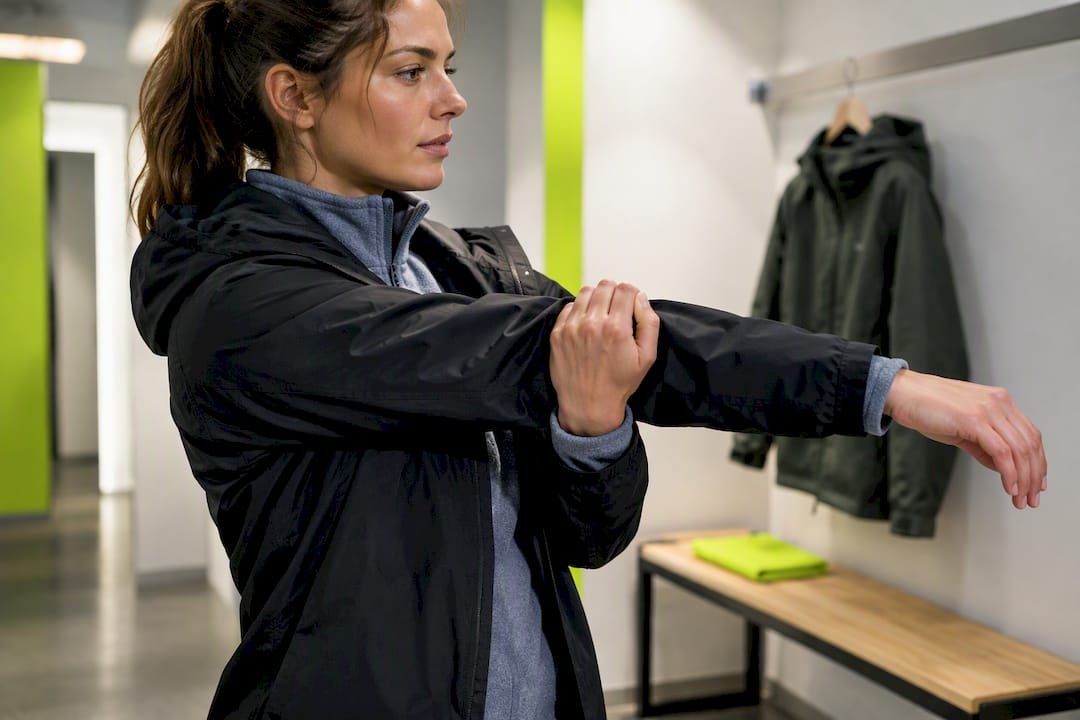
The most common mistake is buying based on the weight number alone and skipping the mobility check, which leaves people with a jacket that’s technically warm enough but uncomfortable to move in.
Garment styles and fit: hoodies, pullovers, vests, and full-zip jackets
The cut of a fleece garment changes how it performs almost as much as its weight does.
- Vests free up your arms for high-exertion movement while still warming your core, a common choice for layering under a shell during aerobic activity.
- Full-zip jackets give you the most temperature control since you can vent quickly once you warm up, which matters for anything with variable effort like hiking with elevation changes.
- Pullovers tend to run slightly warmer than full-zips because they have fewer places for air to leak, making them a good fit for low-movement, static cold.
- Hoodies add warmth around the neck and head for static warmth, useful for standing around outdoors, but the extra fabric can feel like overkill during hard exertion.
A trim fit traps a thinner layer of warmed air but layers more easily under a shell, while a relaxed fit holds more air (and more warmth) but can bunch under outer layers. For high-exertion use, prioritize pit zips or mesh-lined pockets that vent heat fast. For static warmth, prioritize a hood and a higher collar instead.
Care, durability, and shedding: laundry, pilling, and ‘Shed Less’ tech
Fleece holds up longest when it’s washed cold, on a gentle cycle, and air-dried or tumbled on low heat, since high heat breaks down synthetic fibers and accelerates pilling.
- Wash cold and gentle to reduce friction that causes pilling and fiber breakdown over time.
- Skip the fabric softener, which coats fleece fibers and reduces their loft and warmth.
- Look for anti-pill finishes, denser knits, or double-faced construction as signs of a longer-lasting garment.
- Use a laundry filter bag to catch fiber fragments before they reach wastewater.
Polartec’s Shed Less process reduced fiber-fragment shedding during home laundering by an average of about 85% compared with untreated fabric, based on AATCC TM212-2021 testing, and was first applied to the Polartec 200 Series. That figure, reported in Polartec’s Shed Less announcement, is a useful example of how textile makers are addressing microfiber shedding at the fabric level rather than leaving it entirely to laundry habits. Broader context on how manufacturers are rethinking synthetic textile production is covered in Yarnex’s overview of sustainable fabric practices.
How teams and coaches choose fleece for custom hoodies and warmups
Coaches ordering warmups or team hoodies face the same weight-versus-activity trade-off as individual buyers, just multiplied across a roster. A team that stands on the sideline for long stretches benefits from a heavier fleece for warmth, while a team that layers warmups over practice gear often prefers something lighter that won’t restrict movement during drills. Fit consistency across a roster of different body types adds another variable, which is why sizing samples matter before committing to a full order.
Capra Sports produces custom team hoodies and works from a size guide to help coaches match fit across a full roster before placing a bulk order.
A practical closing synthesis
If there’s one thing worth remembering here, it’s that the number on a fleece tag is a starting point, not a verdict. Construction, fit, and how you plan to use the piece matter just as much as whether it says 100, 200, or 300. When you’re unsure, lean toward testing a layer in motion rather than trusting the label alone, and check the product specs for pile height and backing details before you buy.
— Agha
A custom option for teams that need consistent warmups
Individual buyers have plenty of retail choices, but teams ordering matching gear face a different problem: getting a consistent look and appropriate warmth across a whole roster. Capra Sports builds custom team hoodies and warmup pieces with input from professional designers, so coaches can specify the look they want and get a sample to check fit before committing to a full order.
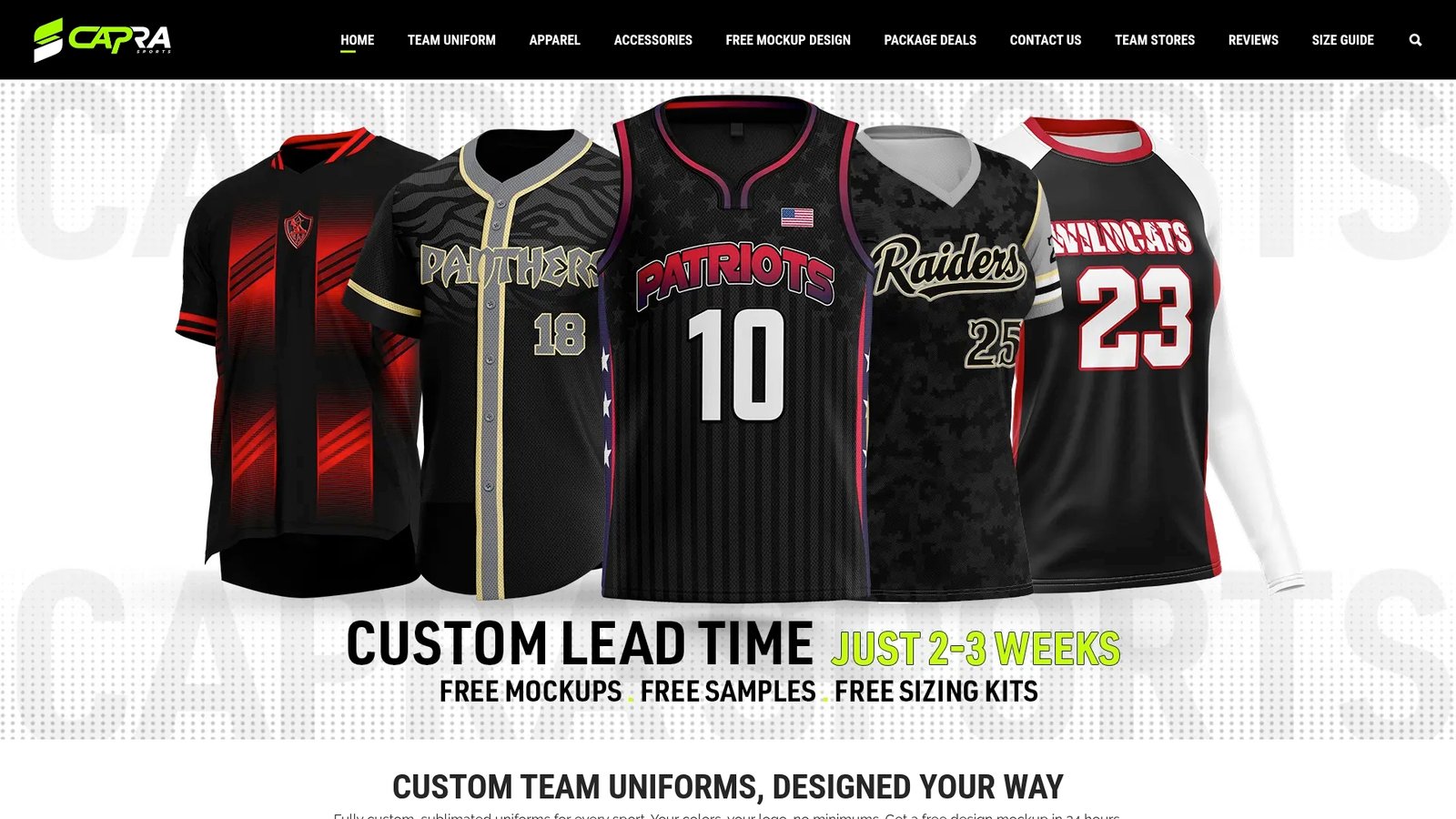
A team choosing custom fleece gear typically weighs a few things beyond weight class alone:
- Consistent branding across every player’s warmup, not just a similar color.
- Appropriate fleece weight for the squad’s climate, whether that’s a sideline in October or a gym in January.
- A sizing sample to confirm fit before ordering for the full roster.
Coaches ready to move forward can check current pricing on custom team apparel or browse warmup pants to see available styles.
Sources
- By the numbers: thermal performance measurements of fleece insulations — Backpacking Light
- Polartec fleece series product information — Polartec
- Polartec introduces Shed Less technology — InsideOutdoor / Polartec press summary
- Fleece fabrics and warmth guide — The North Face
FAQ
What is a good weight for fleece?
A good weight depends on activity: lightweight or micro fleece (under 200 g/m²) suits high-output movement, while midweight (200 to 300 g/m²) works for general everyday use, following the Backpacking Light weight bands. There’s no single “correct” weight since it depends on how active you’ll be and what you’re layering it with.
Is 200 weight fleece warm?
Yes, 200-weight fleece (roughly 200 to 300 g/m² per the Backpacking Light classification) offers a warm, versatile midlayer suited to commuting and general cold-weather use. It runs warmer than lightweight fleece but breathes better than heavyweight 300-series fabric.
Is 8 oz of fleece heavy?
An 8 oz/yd² fleece converts to roughly 270 g/m², which falls in the upper midweight to heavyweight range under the Backpacking Light bands. That makes it a warm option better suited to low-output cold weather than to high-exertion activity.
Are there different grades of fleece?
Yes, fleece is generally grouped into micro, 100-weight, 200-weight, and 300-weight classes based on grams per square meter, as documented on Polartec’s fleece series pages. Beyond weight, construction features like pile height, knit density, and anti-pill or Shed Less treatments also distinguish fleece quality within the same weight class.