
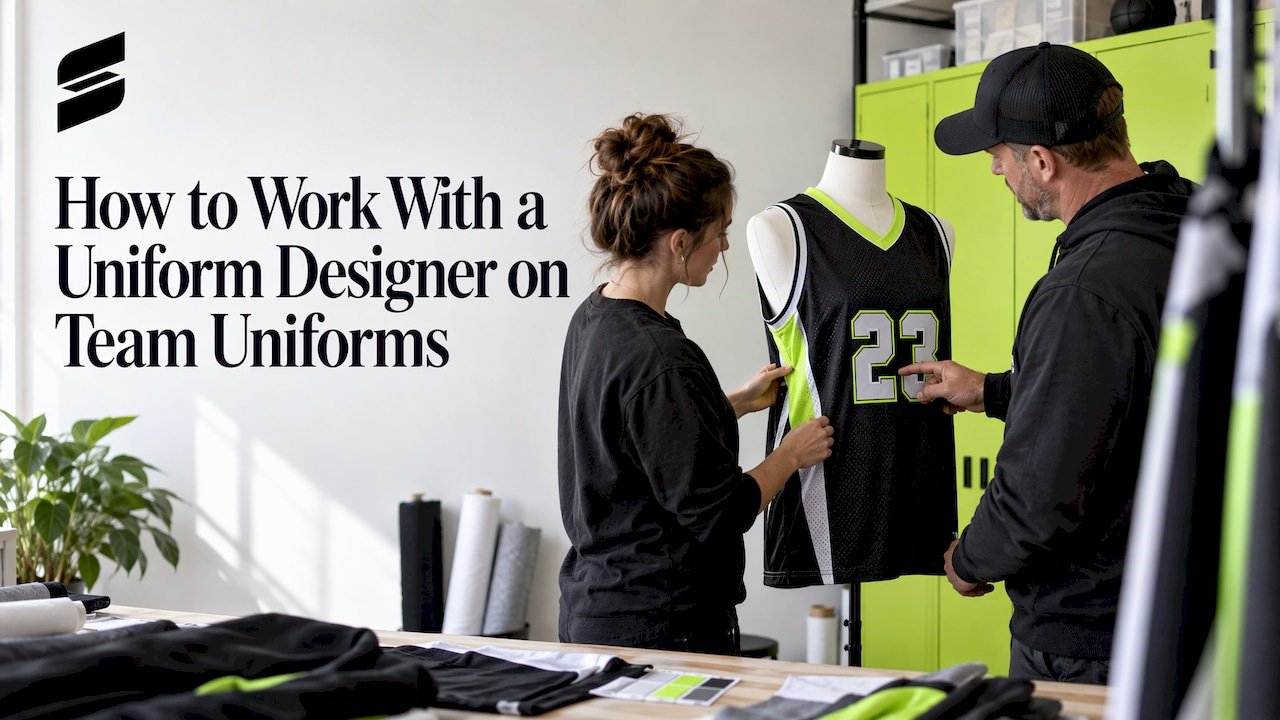
How to Work With a Uniform Designer on Team Uniforms
Working with a uniform designer goes fastest when you arrive with four things: your sport, your colors, your logo file and a headcount. The designer turns those into a mockup, you revise it until it is right, and you approve it once, in writing, before anything is produced. At Capra Sports, you work directly with professional designers, mockups come back within 24 hours, and revisions are unlimited until you sign off.
This guide is for coaches, parents running a team order, athletic directors and league organizers. It walks through the whole collaboration in order, and shows where orders usually go wrong.
TL;DR
- Bring your sport, team colors, a vector logo, player count and a need-by date. That is enough for a designer to start.
- Give feedback in specifics (“make the side panel navy, move the number 1 inch lower”) and ask for changes until the mockup matches what you pictured.
- Check league and association rules on colors and numbers before you approve, not after.
- Order a sizing sample first, then finalize the roster sizes. Our policy is a 10-set team minimum with one sizing sample at no extra charge.
- Approve the mockup in one written step from one person, and work backward from your first game date.
Table of Contents
- What a uniform designer actually does for a team
- Prepare before the first message
- How to communicate your design preferences
- What happens during design, proofing and approval
- Check materials, sizing and fit
- Plan your quantities and budget
- Build your timeline backward
- Perspective
- Order with Capra Sports
- FAQ
- Sources
What a uniform designer actually does for a team
A uniform designer takes the identity your team already has (a name, a mascot, a color or two) and turns it into a layout that works on a jersey, shorts, pants and accessories. That means deciding where the logo sits, how large the number is, how colors split across panels, and how every piece looks as a set.

With sublimated uniforms, the design is printed into the fabric rather than sewn on, so the designer is not limited to a few flat colors. Gradients, patterns and full-panel graphics are all possible. That freedom is also why a good brief matters: the more the designer can do, the more your direction shapes the result.
At Capra Sports, the designer works with you directly, and the mockup is free. You are not guessing from a catalog photo. You see your team name, colors and numbers on the actual garment layout before you commit to anything.
Prepare before the first message
Most delays begin with an incomplete first message. A designer can only move as fast as the information they receive. Gather this before you reach out.
The basics
- Sport and pieces. Basketball, baseball, softball, soccer, football, volleyball or cheer, and whether you need jerseys only or full uniforms with pants, shorts, warmups, hoodies or backpacks.
- Headcount. Players on the roster, plus a few extra for growth or late joiners. This also tells you whether you meet the 10-set team minimum.
- Need-by date. The date of your first game or photo day, not a vague “spring.”
- Decision maker. One person who gives final approval. Orders stall when a coach, a booster club and three parents each hold a veto.
Your artwork
Locate your logo file now. The most useful format is a vector file (usually .ai, .eps or .svg), which can be enlarged to any size without going blurry. If all you have is a screenshot or a photo of a banner, say so up front. The designer can often rebuild it, but that takes a round of back-and-forth you can skip.
If you do not have a logo, tell the designer the team name, mascot and any colors or themes. Designing from scratch is part of the job.
Your colors
Name your colors in words and, if you have them, exact references. “Blue” can mean navy, royal or Columbia. If your school or club has an official color code, send it. If not, send a photo of something that matches, such as last year’s jersey, and say whether the new color should match it or improve on it.
Rules you must follow
Check your league, school or association rulebook before you design. Rules differ by sport and level, and a beautiful uniform that cannot be worn is an expensive mistake. For example, the national high school federation’s basketball rules, as summarized in a state association’s uniform guidelines, call for a single solid color on the jersey torso and a front number at least 4 inches high. Rules like these affect the design from the first draft, so share them with your designer at the start. Baseball and softball leagues, youth soccer organizations and parks and recreation programs each have their own requirements too. Ask your league contact for the current document.
If you plan to put a sponsor’s logo on the jersey, read our guide to sponsor logo placement on youth baseball jerseys first, since league rules often limit size and position.

How to communicate your design preferences
Designers are not mind readers, and “make it look cool” produces generic results. These habits get you to the right mockup in fewer rounds.
Show, then describe
Send two or three examples of uniforms you like, and say specifically what you like about each: the stripe on the sleeve, the way the number is outlined, the color blocking. Looking at finished work helps too. Our portfolio includes football designs such as yellow and white, blue and white and black and white layouts. For basketball, see six uniform design styles for teams, and for baseball, 30 jersey design styles.
Say what must not change
Tell the designer which elements are fixed: the logo as it exists, the exact school colors, the number of the retired jersey. Everything else is open to suggestion. This one line prevents the most common frustration, a designer improving something you wanted left alone.
Give feedback in specifics
Compare these two notes:
- Vague: “The shirt feels too busy.”
- Specific: “Remove the pattern on the shoulders and keep the stripe on the sides. Make the player number 20% larger.”
The second gets you the change in one round. If you are unsure what is wrong, say that too, and ask the designer for two alternatives to compare side by side.
Collect opinions before you send them
If coaches, parents or players have input, gather it in one place and send a single consolidated message. Conflicting notes from several people are the surest way to add rounds. Our designers work through unlimited revisions with you, but a clean set of notes still gets you to approval sooner.
What happens during design, proofing and approval
The sequence is simple, and knowing it lets you plan.
- Brief. You send your sport, colors, logo, roster size and need-by date.
- Mockup. The designer builds a mockup of your uniform with your team name, colors and numbers. At Capra Sports, this arrives within 24 hours and is free.
- Revisions. You mark up what to change. The designer updates it. This repeats until you are satisfied, and revisions are unlimited.
- Sizing sample. You check fit on a real garment (more on this below).
- Approval. One person signs off on the final mockup, including every spelling, number and color.
- Production and delivery. The order is produced and shipped.
We lay out each of these stages in how custom uniforms are made from free mockup to delivery, and our coach’s guide to designing a custom team uniform covers the design decisions in more depth.
How to approve a mockup without regrets
Approval is the one step you cannot undo, so slow down for it. Before you sign off, check:
- Team name and every player name, letter by letter.
- Every number, matched to the right size on the roster.
- Colors on the mockup against your official colors.
- Logo placement on the front, back and sleeves.
- Any league or association requirement, such as number height or color contrast.
- Sizes and quantities, including goalie or catcher variations.
Print the mockup and have a second person read it aloud while you follow along. Typos survive because everyone who has looked at the file has stopped really reading it. Our design mockup approval guide explains how to sign off on team uniforms step by step.
Check materials, sizing and fit
A uniform looks right on a screen and fits wrong on a shortstop. Sizing is where parent complaints begin, so deal with it before production.
Start with the sizing sample
We send one sizing sample at no extra charge. Use it to try the cut on players of different builds, not just your average-sized athlete. Have the smallest, the largest and a typical player each wear it. Check:
- Shoulders and sleeve length with arms raised.
- Jersey length when a player bends or reaches, especially for volleyball and basketball.
- Waist and inseam on shorts and pants.
- Whether a player can move freely through a full range of motion.
Record the size each player wore, then use those notes to fill out the roster. Do this with a tape measure and the garment’s size chart, not by guessing from age or grade. Kids in the same grade can be two or three sizes apart.
Plan for growth and roster changes
Youth rosters change. Order a small number of extra sets in common sizes if your league allows late additions, and ask your designer how reorders work so next season’s numbers match this season’s colors.
Ask about the fabric
Our uniforms are made of sublimated materials, meaning the color is printed into the fabric instead of sitting on top of it. Ask your designer how that affects the look of the design in your sport and climate. A volleyball jersey, a football jersey and a baseball pant each use different cuts, so tell the designer when your team plays and in what conditions.
Plan your quantities and budget
Price per piece depends on the sport and the garments you choose. Our published pricing page lists per-piece ranges by sport, and for this guide the figure for your order is [PRICE TBD]. See the Capra Sports pricing page for the current numbers by sport.
To build an accurate budget, decide these things before you ask for a quote:
- Pieces per player. Jersey and shorts, or also pants, a warmup shirt, a hoodie or a backpack?
- Home and away sets. Two colorways double the garment count.
- Coaches and staff. Do they get matching apparel?
- Names and numbers. Confirm what is included for each garment and what is not.
- Shipping and timing. Ask what delivery to your address costs and how long it takes.
- Spares. A few extra sets in common sizes can save a reorder.
A worked example: a 12-player youth basketball team that wants a jersey and shorts per player, plus two coach shirts, is ordering 12 uniform sets and 2 extra pieces. That clears our 10-set minimum, and you can build the budget by multiplying the per-piece price by the pieces on the list. Put the total on a single page so parents, boosters or the athletic department can see what the figure covers.
For school athletic programs and parks and recreation departments, a written quote with the full list of items makes purchasing approval much easier.
Build your timeline backward
The usual cause of a late order is not production. It is the time spent getting a design approved. A merch industry article from April 2026 makes the same point and advises having print-ready artwork ready and working back from your need-by date.
Here is the planning method:
- Write down the date of the first game or event that needs uniforms.
- Subtract a buffer of at least a week for the unexpected.
- Subtract the shipping window to your address.
- Subtract the production window the designer gives you.
- Subtract time for the sizing sample and for final roster sizes.
- What remains is the date by which you must approve the design.
Registration drives many youth teams, so rosters are often not final until shortly before the season. Collect sizes early and flag any that may change. Adult recreational leagues that need speedy orders benefit most from a prepared brief, because each round of questions is a day lost.
Perspective
Coaches tell us the uniform order feels like a test they never studied for. It does not need to be. When a team comes to us with colors, a logo and a headcount, we can usually get a mockup back within 24 hours, and the rest is conversation.
Here is what we believe. A uniform is a team’s first shared decision, so the process should include the people who wear it, but not all at once. Pick one decision maker. Let the designer, who does this every day, handle the layout questions. Check the fit on a real sizing sample before you commit a whole roster.
Unlimited revisions with a professional designer exist so that nobody approves a design they are unsure about. Use them. A third round that makes you smile is better than a first round you accept to save time.
Agha
Order with Capra Sports
If you are ready to start, Capra Sports makes custom sublimated uniforms for basketball, baseball, softball, soccer, football, volleyball and cheer, along with hoodies, backpacks and warmup shirts and pants. You get a free design mockup, work directly with professional designers and can request unlimited revisions. Our policy is a 10-set team minimum, with one sizing sample at no extra charge.
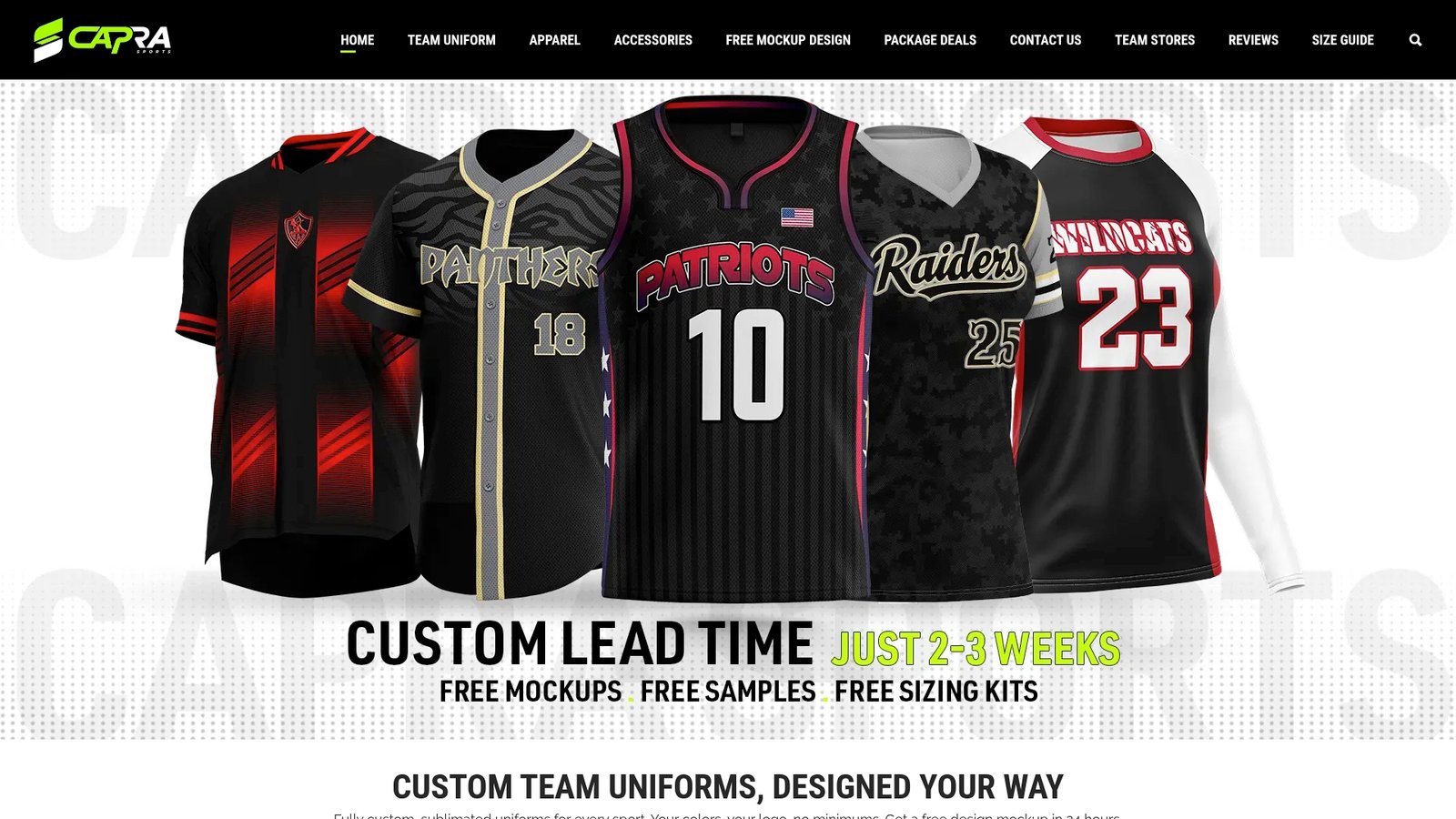
Send your sport, colors, logo and roster size through our site and a designer will begin your mockup. You can also check per-sport pricing first, or see our team pages for basketball, baseball and football. If you would rather play with colors yourself first, try the baseball uniform builder.
FAQ
How long does it take to get a first design from a uniform designer?
At Capra Sports, your free mockup arrives within 24 hours of receiving your brief. A complete brief with a vector logo, colors and roster size helps the designer get it right the first time. Production and shipping times are separate, so plan them backward from your need-by date.
What file do I need to send for my team logo?
A vector file, such as .ai, .eps or .svg, is best because it stays sharp at any size. If you only have a picture of your logo, send it anyway and tell the designer, who can advise on the next step. Include your team colors in words, and exact color codes if you have them.
How many design changes can I ask for?
With Capra Sports, revisions are unlimited while you work with the designer. Combine feedback from everyone on your team into one message per round, and be specific about what to move, resize or recolor. That is the quickest route to approval.
Do I need to order a certain number of uniforms?
Our policy is a 10-set team minimum. We also provide one sizing sample at no extra charge, so you can check fit on real players before you finalize the roster sizes.
What should I check before approving the mockup?
Check every name, number, color and logo position, then compare the design to your league or association rules. Have a second person read the proof aloud. Once you approve, that is the version that is produced.
Sources
- Basketball uniform guidelines summarizing NFHS rules, Missouri State High School Activities Association
- How Far in Advance Should You Order Custom Merch?