
Athletic Fit vs Regular Fit for Muscular Builds: Measure, Don’t Guess
Athletic fit is a closer cut with less ease through the chest, waist, and thigh, shaped to follow a V-shaped build. Regular fit is a straighter, roomier cut with extra ease for comfort and layering. Try athletic fit if you have broad shoulders or muscular legs, and regular fit if you want room. Decide by measurements, not by the size label.
TL;DR:
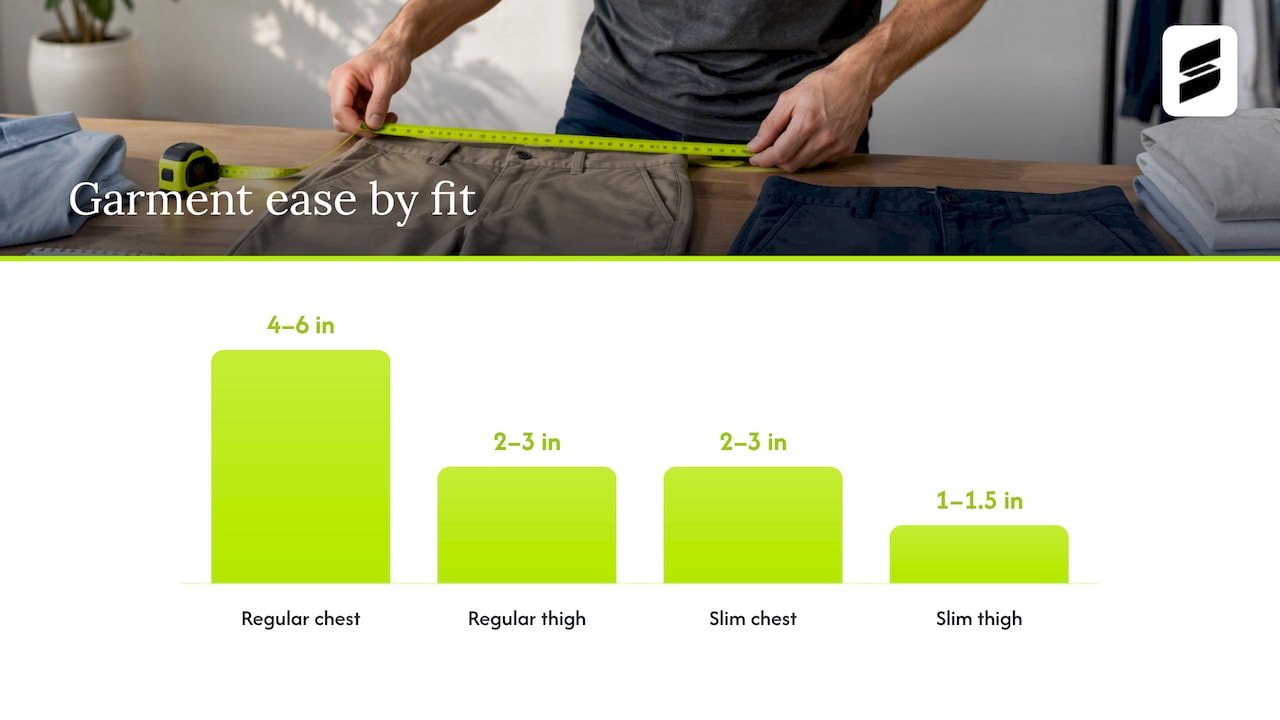
- Regular fit commonly adds 4–6 inches of chest ease and 2–3 inches at the thigh; slim fit adds 2–3 and 1–1.5 inches, respectively.
- Choose regular fit for layering or airflow, especially with a base layer; athletic fit suits a broad chest and narrower waist when worn alone.
- Athletic fit jeans suit thighs or seats that strain standard cuts; a medium or high rise adds comfort, while tapering keeps the lower leg neat.
- Stretch fabric can make a closer athletic cut comfortable, but rigid fabric needs more ease; check the fiber content before choosing a size.
- Compare chest, waist, and thigh measurements with the garment chart; sizing up can leave shoulders oversized without easing a tight waist or thigh.
Table of Contents
- What fit actually means: ease, silhouette, and measurable differences
- How the difference looks by garment type
- Who should choose athletic fit and who should choose regular fit
- How to measure yourself and a try-on checklist
- Shopping and tailoring tips
- Capra Sports perspective: choosing fit for team uniforms
- Capra Sports: custom-fit uniforms and sizing support for teams
- FAQ
- Sources
What fit actually means: ease, silhouette, and measurable differences
Fit is not the same thing as size. Size tells you the scale of a garment. Fit tells you how that garment sits on your body: how much room it leaves, where it tapers, and where it hugs. Two shirts both labeled “Large” can feel completely different because they were cut for different silhouettes.
The number that explains most of the difference is ease. Ease is the extra fabric a garment has beyond your actual body measurement. If your chest measures 40 inches and the shirt’s chest circumference is 46 inches, the shirt has 6 inches of ease. More ease means a looser, boxier drape. Less ease means a closer, more tailored line.
Here is how the two fits typically compare in practice:
- Regular fit is the traditional standard cut. It is straight through the body, with a generous chest and a roomy sleeve, so it moves easily and layers well over a base layer or under a jacket.
- Athletic fit keeps the shoulders and chest comfortable but pulls in the fabric through the waist and often the sleeve. It follows the difference between a broad upper body and a smaller waist instead of hanging straight down.
- Slim fit sits closest to the body and removes the most fabric. It is a separate category and often runs too snug across muscular shoulders and thighs, which is why athletic fit exists in the first place.
The numbers give you something concrete to check against a product page. According to one knitting and garment-fit reference, regular fit commonly includes about 4–6 inches of ease at the chest and 2–3 inches at the thigh, while slim fit uses only 2–3 inches at the chest and 1–1.5 inches at the thigh. Athletic cuts generally land between those two on the chest and waist, then add room back in the shoulders and thighs where muscular builds need it.
Regular fit adds roughly 4–6 inches of chest ease and 2–3 inches at the thigh, while slim fit adds only 2–3 inches and 1–1.5 inches. That gap of two or three inches is the whole story. It is why a shirt that looks relaxed on one person looks tight on another, and why a “medium” can feel different from brand to brand.
How pattern changes create the two silhouettes
Designers do not create an athletic fit by shrinking a regular pattern. They redraw it. Three adjustments do most of the work:
- Shoulder seam and armhole depth. An athletic cut often raises the armhole and narrows the sleeve opening, which removes bulk under the arm and lets you lift your arms without the whole shirt riding up. A regular cut keeps a lower armhole and a fuller sleeve.
- Taper through the torso. An athletic pattern pulls the side seams inward from the chest to the waist. A regular pattern runs those seams nearly straight from underarm to hem.
- Top block and leg shape in pants. The top block is the part of a pattern covering the seat and thigh. Athletic pants widen that block and then taper toward the hem. Regular pants keep a straighter line from hip to ankle.
You can see these choices on a product photo even before you read the specs. Look at the side seam. If it curves inward at the waist, you are looking at a tapered cut. If it hangs straight, it is a regular cut.
Why changing size is not a fit fix
A common mistake is treating a bigger or smaller size as a way to fix a fit problem. It rarely works. Consumers often confuse the two ideas, and sizing up can leave the shoulders too big without solving a tight waist or thigh. You end up with sleeves that droop past your shoulder point and a body that is still snug where you needed room.
If a garment pulls across your thighs but fits your shoulders, the answer is usually a different cut, not a different size. That is the real reason to compare athletic and regular fit side by side. They solve different proportion problems, and picking the right one saves you from buying the wrong thing twice.
How the difference looks by garment type
The same words, “athletic fit” and “regular fit,” show up on everything from T-shirts to jeans. They mean slightly different things on each, so it helps to read them garment by garment.
T-shirts and polos
On a knit tee or polo, the differences are easy to spot in a photo. An athletic-fit tee has a narrower torso, a higher armhole, and a sleeve that hugs the upper arm. A regular-fit tee has a roomier chest, a straighter side seam, and a fuller sleeve.
- Athletic tees show your shoulders and arms and keep the fabric from billowing at the waist. They work well for training, casual wear, and anyone who dislikes excess fabric.
- Regular tees hang straighter and feel more forgiving. They are the safer pick if you want airflow, plan to wear a layer underneath, or simply prefer a relaxed look.
Knit fabric changes the math. A cotton-spandex tee stretches with you, so a closer cut feels comfortable even with little ease. A stiff cotton tee has no give, so the same cut can feel restrictive across the chest.
Dress shirts
Woven dress shirts have less natural stretch, so the cut matters more. An athletic-fit dress shirt reduces fullness through the torso and tapers at the waist, which removes the extra fabric that bunches when you tuck. It is built for people with a broad chest and a smaller waist who find regular shirts balloon at the midsection.
A regular-fit dress shirt keeps a straighter silhouette from underarm to hem. That straight line is useful if you wear the shirt untucked, layer a sweater over it, or want room to move at a desk all day.
A simple test: if a regular shirt fits your shoulders and chest but leaves a lot of loose fabric at the waist, you are a candidate for athletic fit. If an athletic shirt pulls at the buttons across your belly or chest, step back to regular.
Jeans and pants
Pants are where athletic fit earns its name. Athletic-fit jeans expand the top block, meaning the thigh and seat, then taper toward the hem. Stylist guidance for muscular legs also points to a medium-to-high rise and extra top-block room, so the waistband sits comfortably without gapping or digging in.
- Athletic-fit pants give you room through the seat and thigh, then narrow below the knee so the leg line stays clean. This suits people with larger quads and glutes who find standard jeans tight on top and baggy at the waist.
- Regular-fit pants keep a straighter top block and carry more room through the leg all the way down. They suit people with straighter proportions or anyone who prefers a looser, more traditional leg.
If you struggle to find jeans that fit both your thighs and your waist, athletic fit is the first thing to try. The taper below the knee is optional in practice, since you can pair an athletic top block with a straighter hem if you prefer.
How fabric stretch changes the fit
A label only tells part of the story. Fabric content decides how forgiving a cut really is.
- Knit versus woven. Knits (like most tees and polos) stretch in both directions. Wovens (like dress shirts and many pants) stretch little or not at all, so they need accurate ease built into the pattern.
- Elastane percentage. A small amount of elastane, often listed as spandex, adds recovery and comfort. Fabrics with higher stretch let you wear a closer cut without feeling trapped. Fabrics with no stretch need more ease to move well.
- Fabric weight. Heavier fabrics drape away from the body and add visual bulk. Lighter fabrics cling more, which can make an athletic cut look even closer.
The practical takeaway: a stretch athletic fit can feel just as comfortable as a rigid regular fit, while a rigid athletic fit may feel tight even in your correct size. Always check the fiber content before you decide.
Who should choose athletic fit and who should choose regular fit
The right fit comes down to your proportions and how you plan to use the clothes. Use the markers below as a starting point, then confirm with a try-on.
Athletic fit usually suits you if:
- Your shoulders and chest are broader than your waist, creating a visible taper.
- Your thighs, glutes, or quads are larger than average for your waist size.
- Standard sizes leave loose fabric at your waist while feeling tight in your shoulders or legs.
- You want a fitted, performance-style silhouette for training or active use.
Regular fit usually suits you if:
- Your proportions are straighter, with a chest and waist closer in measurement.
- You prioritize comfort, airflow, and freedom of movement over a tailored line.
- You often layer with sweaters, jackets, or base layers.
- You prefer a relaxed, traditional look.
Here is a quick way to decide:
- Compare your chest and waist. Measure both. A difference of several inches, with the chest larger, points toward athletic fit. A small difference points toward regular fit.
- Check your thigh against your waist. If pants that fit your waist feel tight on your thighs, athletic fit is likely the better match.
- Think about layering. If you regularly wear something underneath or over the garment, regular fit gives you the room you need.
- Consider how you move. Training, reaching, squatting, and overhead motion all feel better with a cut that keeps fabric from bunching, which favors athletic fit with some stretch.
- Let comfort win a tie. If your body cues point one way and your style preference points another, prioritize comfort and mobility. A garment you can move in gets worn more than one that only looks right in a mirror.
How fit affects performance and layering
Fit changes how clothing behaves when you are active. Excess fabric can catch, flap, and trap heat. A closer cut moves with you and reduces distraction, which is why many athletes lean toward athletic fit for training and play. Too tight, though, and the garment restricts your shoulders or pulls when you reach, so the best performance fit leaves enough ease to move without drag.
Layering is the other half. A regular fit leaves room for a base layer or a team warm-up on top. An athletic fit is better when it is the outermost layer or the only one, because stacking layers over a close cut can feel stiff and tight. If you plan to wear something underneath, size or cut accordingly.
When personal style and body cues disagree
Not everyone fits neatly into one category. You might have an athletic upper body and straight hips, or the reverse. In those cases, choose the cut that fits your largest or most muscular area, then let a tailor handle the rest. It is far easier to take in a loose waist than to let out a tight shoulder or thigh. Tailoring can solve many mismatches, and we cover what a tailor can and cannot do further down.
How to measure yourself and a try-on checklist
Measurements remove the guesswork. Use a soft tape measure to compare a product against your own measurements. Wear light, fitted clothing, stand relaxed, and keep the tape snug but not tight.
Take these measurements, in this order:
- Chest. Wrap the tape around the fullest part of your chest, under your arms and across your shoulder blades. Keep it level.
- Shoulder width. Measure straight across your back from the edge of one shoulder to the other. A helper makes this easier.
- Sleeve length. Measure from the shoulder point down the outside of a slightly bent arm to your wrist bone.
- Waist. Measure at your natural waist, the narrowest part of your torso, usually just above the belly button.
- Hip. Measure around the fullest part of your hips and seat, with feet together.
- Thigh. Measure around the fullest part of your upper thigh, just below the crease.
- Inseam. Measure from the crotch seam down the inside of your leg to where you want the hem to fall.
Write the numbers down and keep them in your phone. You will use them every time you shop.
Pro Tip: Record your measurements once, then compare them to a product’s measurement chart instead of trusting the size label. Fit preference can affect which size feels right, and labels vary between brands, so compare your measurements with the product chart.
The try-on checklist
Once a garment arrives, or when you are in a fitting room, run through these checks before you decide.
- Shoulder seam. On shirts and jackets, the seam should sit at the edge of your shoulder bone. If it droops down the arm, the garment is too big. If it climbs toward your neck, it is too small.
- Sleeve length. The cuff should land near the wrist bone with your arms relaxed. Too long looks sloppy, and too short rides up when you reach.
- Chest ease. Do a fist test: you should be able to slide a closed fist between the shirt and your chest without strain. If you cannot, it is too tight. If you can fit a lot more, it is loose.
- Range of motion. Raise both arms overhead, then reach forward. The hem should not climb past your waistband, and you should not feel tension across your back.
- Sit and squat test for pants. Sit down and squat all the way. Pants should not dig into your waist, pull across your thighs, or slip down at the back.
- Walk and twist. Move around for a minute. Fit problems that hide while you stand still show up in motion.
Signs of poor fit
Learn to read the fabric. These signals tell you something is off:
- Pulling or horizontal wrinkles across the chest or thighs mean the garment is too tight in that spot.
- Gaping at the waistband or between buttons means the cut is too narrow for your torso or the wrong shape for your hips.
- Extra fabric bunching at the waist or back means too much ease for your build, often a sign you want a more tapered cut.
- Diagonal wrinkles pointing toward a tight area show where the garment is straining against your body.
If you see more than one of these, the problem is likely the cut, not the size.
Shopping and tailoring tips
Buying clothes online adds uncertainty because you cannot try before you commit. Fit is the biggest reason people send things back. Apparel return rates are often reported between 20% and 40%, with fit uncertainty a major driver, and measurement-based decisions help reduce them. You can lower your own odds of a return by shopping with numbers.
- Read the measurement table, not just the size label. Compare your chest, waist, and thigh to the garment’s listed measurements. Look for the flat-lay numbers and double them for circumference where needed.
- Check the model notes. Many product pages list the model’s height, weight, and the size worn. Use that as a rough reference for how a fit runs on a real body.
- Look at fabric content. A stretch blend forgives; a rigid weave does not. Choose a closer cut when there is elastane, and allow more room when there is not.
- Decide whether to size up or stay put. Research on online size selection finds that shoppers who prefer a looser fit often pick a larger size than their single measurement suggests, and the effect is stronger on low-elasticity garments like jackets. If you like room and the fabric has no stretch, sizing up can make sense. If you like a close fit and the fabric stretches, stay with your measured size.
- Order a comparison size when unsure. If a brand is new to you, buy your size and one alongside it, keep what works, and return the other.
What a tailor can and cannot fix
Tailoring is the most underrated shopping tool. It lets you buy for your largest measurement and adjust the rest.
Usually easy to alter:
- Hems on pants and sleeves
- Taking in the waist or side seams
- Shortening sleeves
- Tapering the leg from the knee down
Hard or impractical to alter:
- Shoulder width and shoulder-seam position
- The top block of pants, meaning seat and thigh geometry
- Chest girth when the garment is already snug
The rule is simple: buy to fit the parts a tailor cannot change, then let them adjust everything else.
Capra Sports perspective: choosing fit for team uniforms
On a team, fit is not one person’s preference. It is a roster of different builds that all need to look consistent and move well. A uniform that fits a tall guard may hang off a smaller teammate, and a cut that works for one sport may restrict another. That is why we treat sizing as part of the design process instead of an afterthought.
We offer free design mockups, and we send a sizing sample at no extra charge so a coach can see and feel the fit before committing to a full roster. We also publish a team uniform sizing guide and a size guide so every player is measured the same way. Our advice for any team order is straightforward: test a sample, confirm your measurement template across the roster, and only then place the full order.
— Agha
Capra Sports: custom-fit uniforms and sizing support for teams
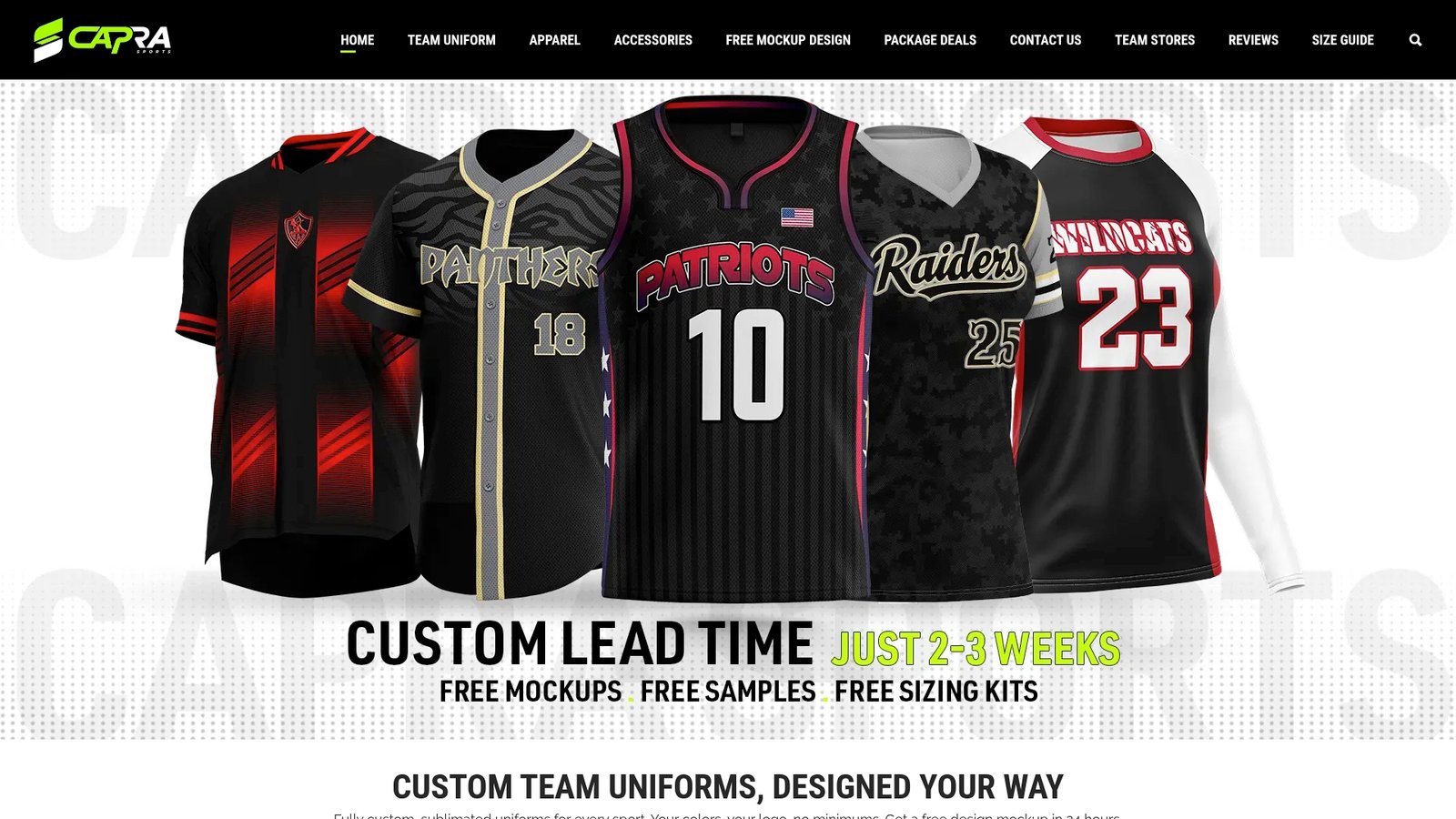
If you are reading this because you are ordering for a team, we can take the fit guesswork out of it. We make custom team uniforms for sports including basketball, baseball, softball, soccer, football, and volleyball, and we provide sizing resources to help with fit.
Here is what that looks like in practice:
- Free mockups. We send a design mockup within 24 hours so you can see your colors, logos, and layout before anything is produced.
- A sizing sample. For team orders, one sizing sample comes at no extra charge, so you can check fit on a real player before the full run.
- Sizing resources. Our guides walk coaches through measuring every player the same way, including sport-specific notes such as measuring a football jersey over pads, a basketball uniform size chart, and youth jersey sizing for younger rosters.
- Team orders. Our policy is a 10-set team minimum, so we are built for teams, clubs, and leagues rather than single-piece orders.
Cut matters on a team uniform just as it does in your closet. A jersey that rides up on a player reaching for a rebound, or shorts that bind during a sprint, show up in games. Testing a sample first lets you catch that early, and our designers can adjust the pattern details to suit your sport and your players.
To get started, look over our pricing and ordering details for the cost of each sport’s uniforms, or start with a mockup and a sample for your own roster. Pricing is PRICE TBD] here, and the pricing page has the current figures. When you are ready, [request your free mockup and sizing sample and we will take it from there.
FAQ
Who should wear athletic fit jeans?
Athletic fit jeans suit people with larger thighs, glutes, or quads relative to their waist. They add room through the seat and thigh, then taper toward the hem. If standard jeans fit your waist but feel tight on your legs, try athletic fit first.
What is tighter, slim fit or athletic fit?
Slim fit is generally tighter. It removes the most fabric through the chest, waist, and thigh. Athletic fit keeps more room in the shoulders and thighs while still tapering at the waist, so it often feels more comfortable on muscular builds.
Is athletic fit baggier than straight fit?
Not usually. Athletic fit has more room in the top block (thigh and seat) than a straight cut, but it tapers below the knee, so the overall leg looks narrower. Straight or regular fit keeps a more consistent width from hip to ankle.
What is the difference between regular fit and athletic fit?
Regular fit is a straighter, roomier cut with extra ease for comfort and layering. Athletic fit has less ease through the chest and waist and more room where muscle sits. Choose by comparing your measurements to the garment’s chart rather than by the size label.
Should I size up in athletic fit?
Only if the fabric has little stretch and you prefer a looser feel. With stretch fabric and a closer-fit preference, stay with your measured size. Sizing up often leaves shoulders too large without fixing a tight waist or thigh.
Sources
- Support
- How Does Customers’ Fit Preference Impact Apparel Size Selection for Online Shopping?
- Blog
- 14 Best Athletic Fit Jeans 2026, According to GQ Denimheads | GQ