
Fundraising With Apparel: A Coach’s Plan That Works
Apparel fundraising works when you sell a small number of items people actually want to wear, price them with a clear margin, and give supporters a firm deadline. Done well, the team raises money, families get something useful, and every shirt on a sideline or in a hallway advertises your program. This guide walks through the models, the math, the timeline and the mistakes that leave teams with boxes of unsold sizes.
TL;DR
- Sell one to four items, not a catalog. A university recreation guide to online team stores found that limiting a store to 1 to 4 items improves the odds of a successful fundraiser.
- Pick a model that matches your risk tolerance: pre-order sales with no inventory carry the least risk, bulk buys carry the most.
- Work backward from your goal: profit per item times the number of buyers you can realistically reach.
- Plan roughly 4 to 8 weeks: a short planning phase, a firm sales window, then delivery.
- Keep players’ game uniforms separate from supporter spirit wear so fit, timing and budget never collide.
Table of Contents
- How apparel fundraising works
- Four apparel fundraiser models
- Choose items people will wear
- Price it and estimate your profit
- Build a 4 to 8 week timeline
- Promote the fundraiser
- Control inventory and sizing risk
- How apparel compares with other fundraisers
- Our perspective
- Start your team store with Capra Sports
- FAQ
- Sources
How apparel fundraising works
The idea is simple. Your team sells branded clothing to players, families, alumni and local fans at a price above your cost. The difference is the fundraiser’s profit. Unlike a car wash or a bake sale, the product is something supporters keep and wear, and it keeps promoting the team after the campaign ends.
Three things decide whether it works:
- Demand: will people wear this item to games, school or practice?
- Margin: is the gap between your cost and your selling price large enough to matter after you account for a few mistakes?
- Logistics: can you collect orders, sizes and payment, then hand out products without chaos?
Everything below is about getting those three right.
Four apparel fundraiser models
Most team fundraisers fall into one of four setups. Each trades risk against effort.
| Model | How it works | Inventory risk | Best for |
|---|---|---|---|
| Pre-order drive | You collect sizes and payment first, then place one order | Low | Most youth, school and rec teams |
| Online team store | Supporters order from a store page during a set window | Low | Teams with a wide base of fans and relatives out of town |
| Bulk buy and resell | You buy a quantity up front and sell from stock | High | Events with guaranteed foot traffic, such as a tournament |
| Spirit wear program | A recurring or seasonal line sold across the year | Medium | Schools and clubs with a steady community |
Pre-order drives
This is the safest model. Families fill out a form or order sheet, pay, and you order exactly what was sold. You never carry unsold sizes. The tradeoff is that you must be organized: sizes have to be right the first time, because there is no spare stock to swap from.
Online team stores
An online store replaces the paper form. Supporters open a link, choose a size and pay, and the system tallies the order. It is especially useful for grandparents and alumni who live far away. Capra Sports offers free team stores built to outfit a team and raise money at the same time, so the page you share with supporters can carry your design and your deadline.
Bulk buy and resell
Buying stock and selling it at a game or event can bring in quick cash, but you are betting on how many people show up and in what sizes. If you go this way, order conservatively and favor the sizes adults buy most. Treat leftovers as a cost you have to cover, not as a given sale.
Spirit wear programs
Spirit wear is the long game. Instead of one drive, you keep a small line available and reopen it each season. Our guide to school team spirit wear recommends starting with a tee, a hoodie and one accessory, which also fits the advice to keep your catalog short.
Choose items people will wear
The fastest way to a failed fundraiser is a long list of options. Every extra item splits attention, multiplies size combinations and increases the chance that something sits in a box. The same university guide mentioned above points to a store of 1 to 4 items as the range that improves your chances.
A practical starting set for a school or youth team:
- One everyday item: a tee or a hoodie that works for kids and adults.
- One warmth or premium item: a hoodie or quarter zip for cold-weather games. See our comparison of quarter zips and heavier hoodies if coaches and players want different things.
- One accessory: a backpack or something small that fits any buyer without sizing.
Football programs often lead with a hoodie. Browse a custom football hoodie for ideas on how a team color palette and logo placement work on a fan-facing piece.
Design for the buyer, not the roster
Supporters wear what they feel proud of, not what looks like a roster sheet. A few rules help:
- Put the team name or mascot big and readable. Save small print for the back.
- Use your real team colors so the item matches the uniforms people see on the field.
- Keep the design to two or three colors. It looks cleaner and photographs better for promotion.
- Offer a youth and an adult size range, since parents often buy for several family members.
Capra Sports works with professional designers and sends a free mockup within 24 hours, so you can see the design before you share it with anyone. Unlimited revisions mean you can change the logo size or color until the board approves.
Quality and fit matter more than you expect
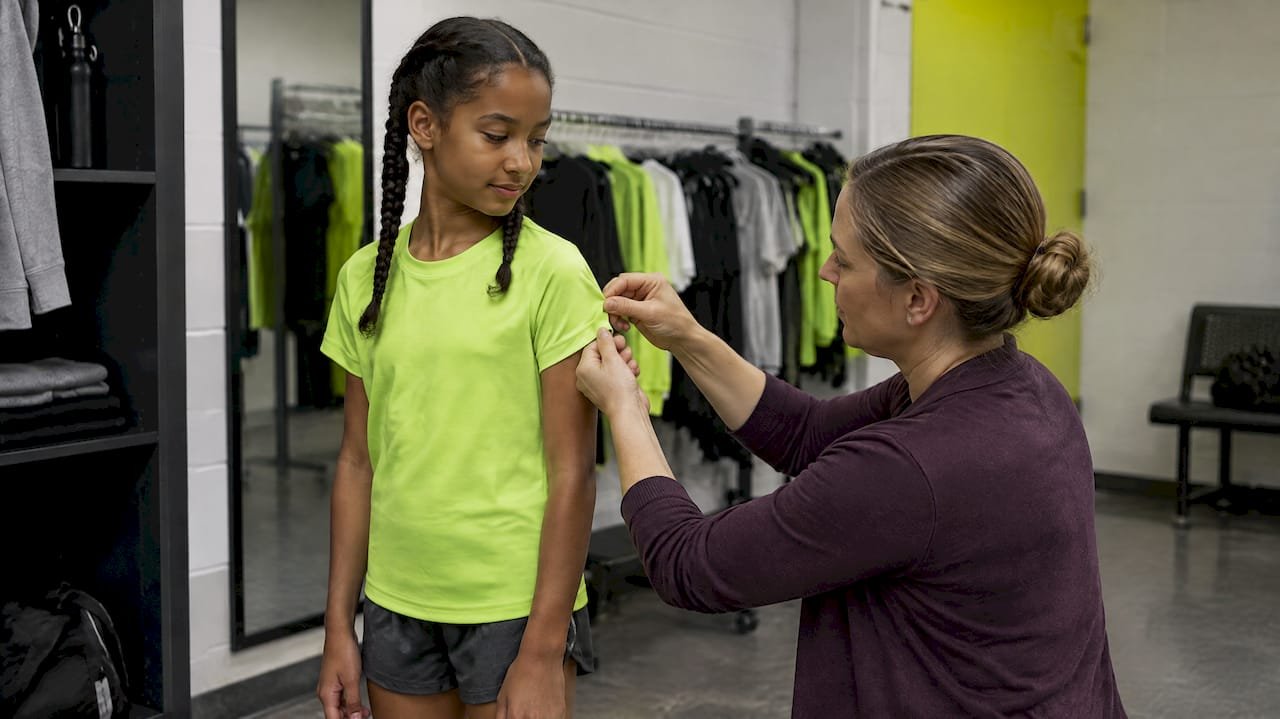
A shirt that shrinks, fades or fits badly turns a supporter into a one-time buyer. Weight and fabric matter most on hoodies and warmups. Before you open sales, check a sample in hand. Capra Sports includes one sizing sample at no extra charge, which lets coaches and parents try a size on a real child instead of guessing from a chart.
Price it and estimate your profit
Parents and boosters always ask the same question: how much should we charge? Start from cost, not from what feels fair.
Profit per item = selling price − your cost per item
Total profit = profit per item × items sold − any fixed costs (shipping, design fees, payment fees)
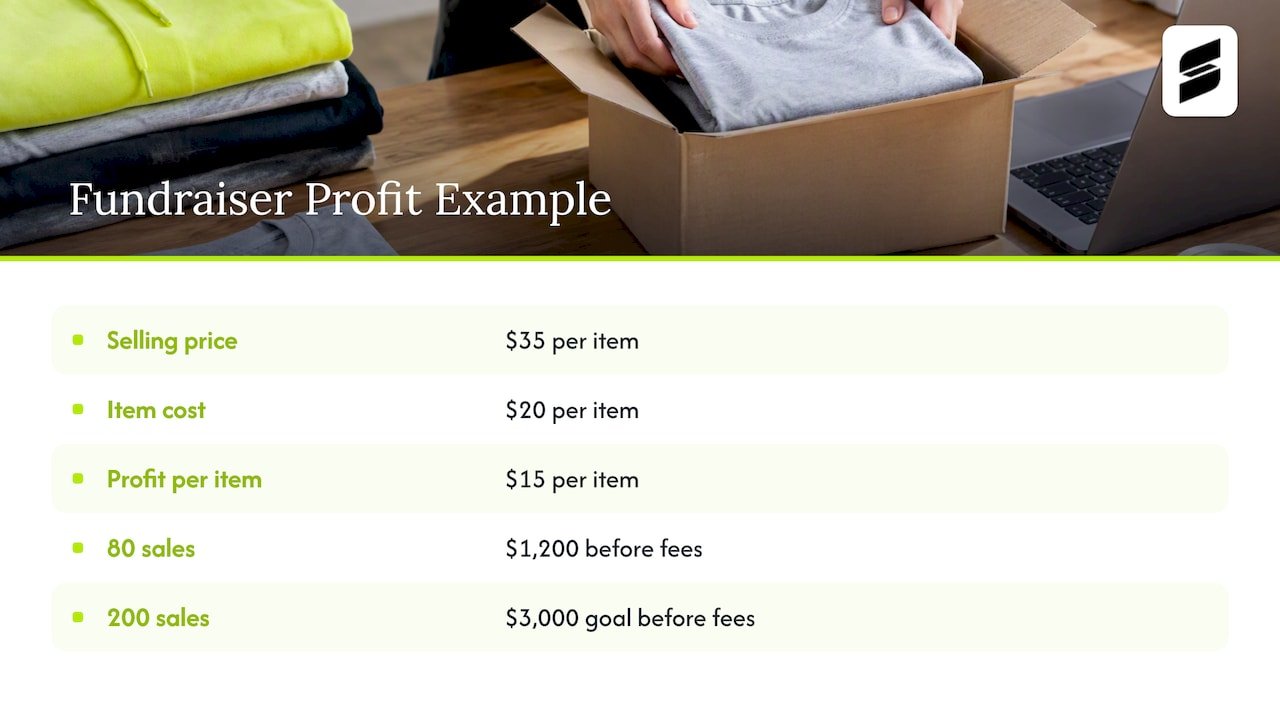
Here is an arithmetic illustration with made-up numbers, not a quote. Say an item costs your team $20 and you sell it for $35. Your profit is $15 per item. If 80 supporters buy one, the fundraiser nets $1,200 before fees. If you need $3,000, you need 200 sales at that margin, which tells you quickly whether your goal fits your community.
For your real costs, use the item pricing from your supplier. For Capra Sports items, the per-piece cost is [PRICE TBD]; confirm it on the pricing page or in your mockup before you set a selling price.
A pricing checklist
- Add shipping, payment processing and any sales tax your state requires to your cost before you set the price.
- Leave room for mistakes: a wrong size, a reorder, a refund.
- Compare your price to what families already pay for similar items at local retailers. If you are far above it, expect pushback.
- Consider a slightly higher price for adults than for youth sizes, since adults have larger garments and fewer price-comparison habits.
- Check with your school, league or parks department about whether fundraising sales are taxable or need a form in your state. Rules vary by state, and your athletic director or district business office can tell you what applies.
Build a 4 to 8 week timeline
Fundraisers drift when nobody sets a date. A tight schedule creates urgency and keeps ordering and delivery predictable. We recommend working in three phases.
- Planning (1 to 2 weeks): set the goal, choose the items, approve a mockup, decide who handles money and who handles sizing.
- Sales window (2 to 4 weeks): open orders with a clear kickoff date, a visible deadline and check-ins along the way.
- Fulfillment (1 to 2 weeks): place one order, receive it, sort by name and size, and hand out products at a practice or game.
Build the schedule backward from the day you want shirts in hand. If you want them for opening game or homecoming, subtract production and delivery time, then subtract the sales window and planning. Ask your supplier for current production and delivery times instead of assuming; they change with season and volume.
Why one deadline beats rolling orders
Rolling orders create reorders, small shipments and constant sorting. A single cutoff gives you one order, one delivery and one handout day. Announce the cutoff more than once, and send a short reminder in the final 48 hours.
Promote the fundraiser
Most sales come from people who were asked directly, more than once. Plan a few channels and use them on a rhythm.
- Kickoff message: share the design, the price, the deadline and the link on the same day, in team group chats, email and social media.
- Player-to-family asks: each player reaches out to relatives and neighbors with a short, personal message and the store link.
- Game and practice reminders: put a QR code or sign-up sheet where parents gather.
- Progress updates: post the total raised so far toward the goal. People buy when they see momentum.
- Final call: one message 48 hours before close.
If you also run a live event, such as a tournament or community night, use it to promote the apparel as well. A charity golf tournament checklist shows how organizers plan the pre-event marketing and day-of details that also apply when you tie a clothing sale to a team event.
Control inventory and sizing risk
Unsold stock is the main way apparel fundraisers lose money. You can limit the risk with a few habits.
- Pre-sell instead of pre-buy. Collect payment and sizes before you order.
- Use a sizing sample. Try one set on a few players of different builds so families can choose with confidence.
- Keep the catalog short. Fewer items means fewer size combinations to get wrong.
- Use size charts in the order form. Show chest measurements, not just S, M and L.
- Plan a small, known overage only if you must. If you order extras, choose a common adult size and count the extras as a cost.
Keep uniforms and spirit wear separate
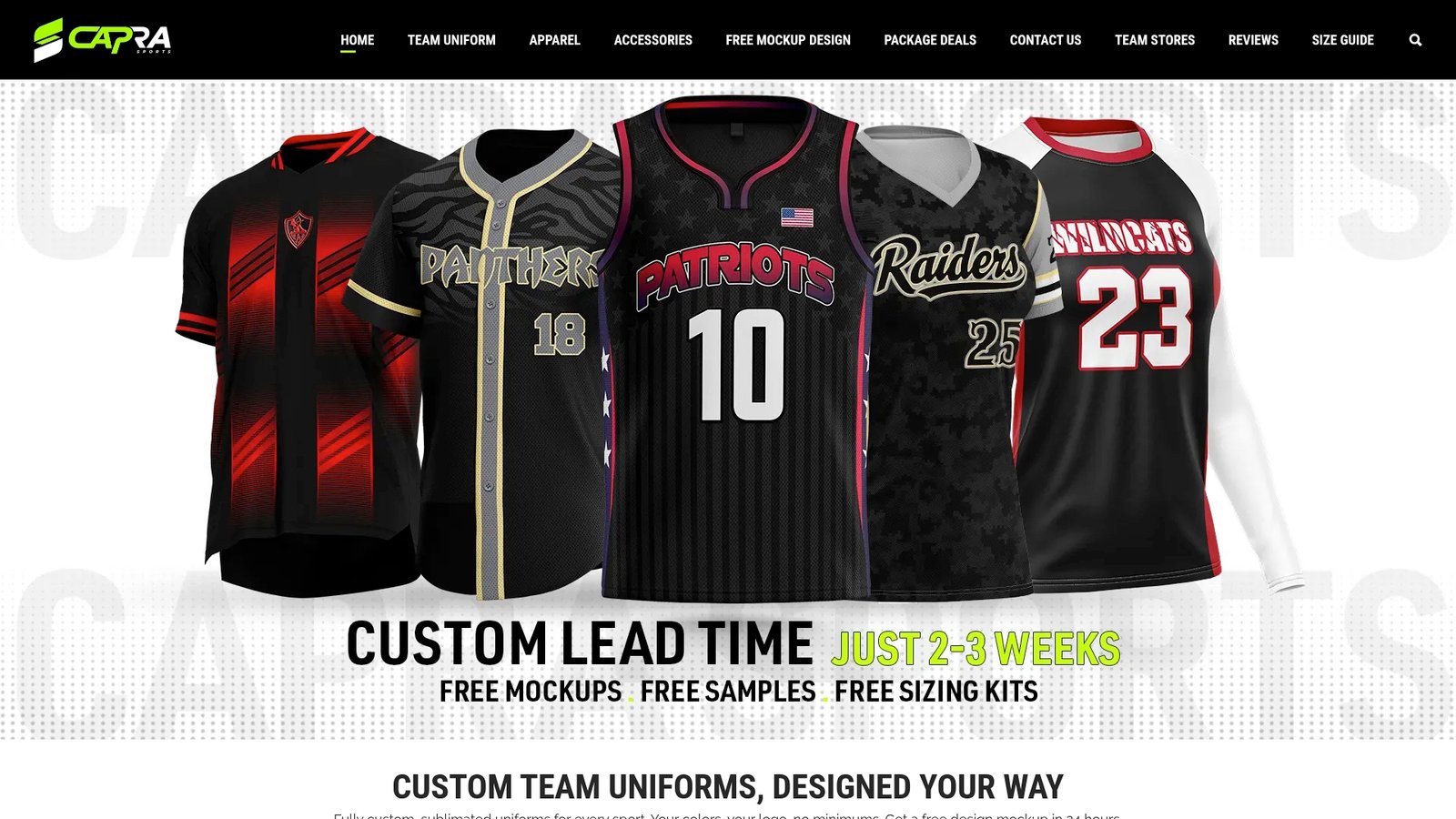
A fundraiser works best when supporters buy spirit wear and the team’s game uniforms are handled on their own track. Uniforms have fixed sizing, names and numbers, and they need to be ready for the first game. Capra Sports makes custom sublimated uniforms for basketball, baseball, softball, soccer, football, volleyball and cheer, and our team order minimum is 10 sets. If your fundraiser is meant to help pay for uniforms, set the fundraising goal first, then place the uniform order when funds arrive, so a late sale never delays your season.
How apparel compares with other fundraisers
No single fundraiser wins everywhere. Here is how apparel typically stacks up by type.
| Factor | Apparel | Food or bake sale | Event (dinner, tournament) | Cash donation drive |
|---|---|---|---|---|
| Upfront cost | Low if pre-ordered | Low to medium | Medium to high | Very low |
| Effort | Medium, front-loaded | Medium, repeated | High | Low |
| Lasting promotion | High, since buyers wear it | None | Some | None |
| Main risk | Wrong sizes, leftovers | Weather, spoilage | Low attendance | Donor fatigue |
Apparel earns its place when you want visibility as well as money. It is less suited to a one-weekend scramble if you have no time to plan sizing and delivery. Many teams pair it with an event, selling spirit wear at the same game or tournament they are already hosting.
Our perspective
We see the same pattern with teams that come to us: the fundraisers that go well are small and deliberate. A coach picks a tee or hoodie, approves a mockup, sets a deadline and sells it to the people who already care. The ones that struggle try to sell six items in eight sizes with no firm date.
We built our process around that reality. A free mockup within 24 hours lets a team see the design and decide quickly. One sizing sample at no extra charge helps parents trust the fit before anyone pays. Direct work with professional designers, with unlimited revisions, means the board is happy with the logo before the page goes public. Our advice is always the same: keep the first fundraiser simple, learn what your community buys, and add a second item next season.
— Agha
Start your team store with Capra Sports
If you want to outfit your team and raise money in one step, Capra Sports can help you set up a team store with custom designs. Share your colors, logo and goal, review a free mockup, and try one sizing sample before you open sales. Our free team store page explains how mockups and the sizing sample work, and our pricing page lists the uniform lines we make. Per-piece costs are [PRICE TBD] until you confirm them with your mockup.
Ready to talk through your design? Start from our homepage and tell us your sport, team size and timeline.
FAQ
How much should we charge for fundraiser apparel?
Start with your full cost per item, including shipping, fees and any tax, then add the profit you need per sale. Compare the result with similar items at local stores to be sure it feels reasonable to buyers. Adults usually tolerate a slightly higher price than youth sizes.
What is the best item to sell?
A tee or hoodie in your team colors is the safest starting point, since nearly everyone can wear one. Add a single accessory such as a backpack if you want a second price point. Keep the total at one to four items.
How long does an apparel fundraiser take?
Plan on roughly 4 to 8 weeks from start to handout: one to two weeks of planning, two to four weeks of sales and one to two weeks of production and delivery. Ask your supplier for current turnaround before you commit to a date.
How do we avoid leftover inventory?
Collect payment and sizes before ordering, and place one order at the deadline. Use a sizing sample so families choose the right size the first time. Avoid buying stock to resell unless you have guaranteed traffic.
Can the same fundraiser pay for uniforms?
Yes, many teams use proceeds toward uniforms. Set your goal first and place the uniform order once funds are in hand. Capra Sports uniform orders start at a 10-set team minimum, so check that your goal covers it.