
Basketball Uniform Cost: What Teams Actually Pay in 2026
Expect to pay $38 to $75 per player for a custom jersey-and-shorts set, with most teams landing in the $50 to $85 range once they add sublimated graphics. A 10-player team should budget $380 to $750 before extras; a 15-player roster runs $570 to $1,125. Here’s the quick math:
- Basic sets: $38–$50 per player → $380–$500 (10 players) / $570–$750 (15 players)
- Sublimated/midrange: $50–$85 per player → $500–$850 (10 players) / $750–$1,275 (15 players)
- Premium sets: $85+ per player → $850+ (10 players) / $1,275+ (15 players)
Names, numbers, warmups, sponsor patches, and rush shipping all sit on top of those numbers. For a factory-direct quote and a free mockup before you commit, Caprasport works directly with teams to lock in pricing early.
Key Takeaways
Custom basketball uniform costs run $38 to $85+ per player depending on materials and decoration, and quantity, extras, and shipping determine the final team total.
| Point | Details |
|---|---|
| Basic tier pricing | Expect $38–$50 per player for economy fabric and simple screen-printed decoration. |
| Sublimated tier pricing | Budget $50–$85 per player for full-color, crack-resistant sublimated graphics. |
| Small extras add up | Names, numbers, and patches multiply across a roster and can add $30–$75 to a 12–15 player team total. |
| Order early to save | Rush production fees and small reorders both cost more than planning ahead and ordering spares upfront. |
| Get a mockup first | Caprasport offers free mockups and factory-direct pricing so teams can confirm fit and cost before production runs. |
Table of Contents
- What Drives Basketball Uniform Cost at Each Price Tier
- What Actually Changes Your Total Uniform Bill
- Sample Budgets by Roster Size
- How to Get an Accurate Quote Without Surprises
- Practical Ways to Cut Your Uniform Budget
- The Long-Term Cost of Uniform Maintenance and Replacement
- Get a Free Mockup and Quote From Caprasport
- Sources
- FAQ
What Drives Basketball Uniform Cost at Each Price Tier
Not all “custom uniforms” mean the same thing, and the price gap between tiers comes down to fabric, decoration method, and how much design work goes into the artwork.
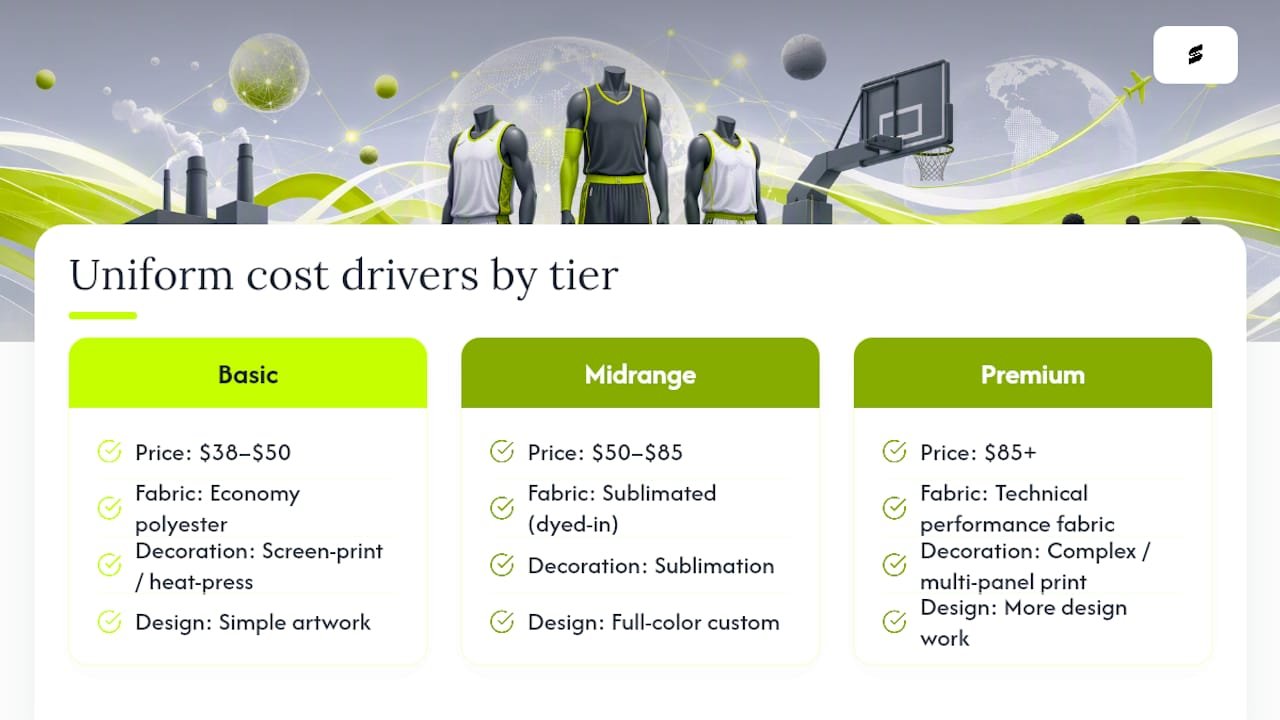
Basic uniforms typically run $38 to $50 per player. You’re usually getting economy polyester, simple screen-printed or heat-pressed numbers, and limited color options. These work fine for a rec league that needs something functional and cheap, but the graphics tend to crack or peel after a season or two of regular washing.
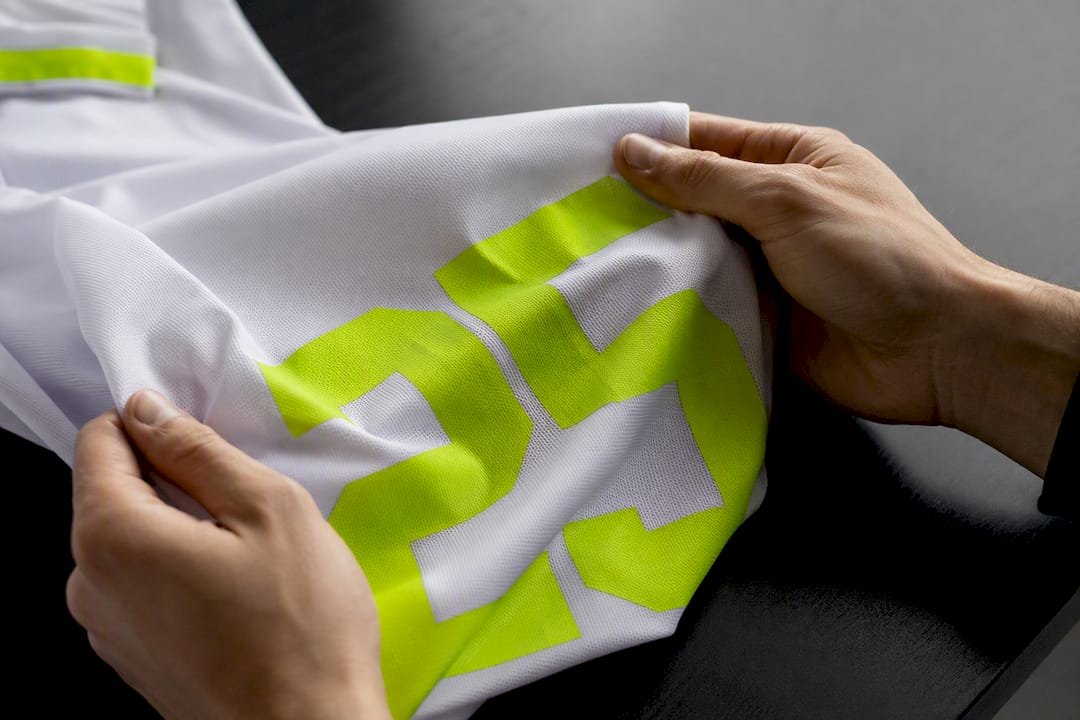
Sublimated or midrange sets land between $50 and $85 per player. Sublimation dyes the design directly into the fabric fibers instead of printing on top of them, which means the graphics won’t crack, peel, or fade the way screen printing does. This is where most travel teams, school programs, and club teams end up, because it hits a sweet spot: full-color custom artwork with solid durability at a per-unit cost that stays reasonable even for medium-sized orders.
Premium sets run $85 and up per player. This tier usually includes heavier or more technical performance fabric, more complex multi-panel designs, and sometimes matching warmup gear built into the package. Programs with sponsorship budgets or multi-year uniform cycles tend to gravitate here.
A quick note on outliers: some retailers advertise single basic shirts for as little as $15 to $25, but that’s a per-item price, not a full jersey-and-shorts custom set. And retail NBA replica jerseys often sell for $70 to $125 or more on sites like Nike — that’s licensed retail pricing, which has nothing to do with what your team will actually pay for a custom bulk order. Reversible jerseys sit in their own category too, often costing more per piece but eliminating the need for separate home and away sets.
What Actually Changes Your Total Uniform Bill
Six variables move the needle on your final invoice, and understanding each one lets you control your budget instead of getting surprised by it.
- Fabric choice. Moisture-wicking performance polyester costs more than economy-grade fabric, but it holds up better through a full season of washing and sweat.
- Decoration method. Full sublimation prints the entire garment in one pass and tends to offer the most efficient per-unit cost for medium and large runs. Screen printing and applique numbers add labor steps, which raises the price, especially on smaller orders.
- Extras. Reversible sets, matching warmups, bags, socks, and sponsor patches all add cost per player, and those small line items multiply fast across a full roster.
- Name and number fees. These often look cheap individually, $2 to $5 per player, but multiplied across a 12 to 15 player roster, they can add $30 to $75 to your total bill without you noticing until checkout.
- Logistics. Shipping, rush production fees, and any mid-order artwork changes are the most common source of budget overruns.
Pro Tip: Build a 5 to 10 percent contingency into your uniform budget from the start. Shipping delays, rush fees, and last-minute roster changes are common enough that padding your number upfront beats scrambling for extra funds later.
Sample Budgets by Roster Size
Here’s what real team budgets look like once you plug in roster size and tier. These numbers assume standard jersey-and-shorts sets with basic name and number decoration.
- 8-player team, basic set: $304–$400 total ($38–$50 per player)
- 8-player team, sublimated set: $400–$680 total ($50–$85 per player)
- 10-player team, basic set: $380–$500 total
- 10-player team, sublimated set: $500–$850 total
- 12-player team, basic set: $456–$600 total
- 12-player team, sublimated set: $600–$1,020 total
- 12-player team, reversible set: roughly $720–$1,140 total, since reversible pieces typically cost more per unit than a standard two-piece set
- 15-player team, sublimated set with warmups and bag: $1,200–$2,000+ total, once you factor in the added apparel
Two things shift this math after the fact: ordering one or two spare uniforms later almost always costs more per piece than including them in the original run, and requesting a physical sample before full production adds a small upfront cost but prevents a much larger sizing mistake down the line.
How to Get an Accurate Quote Without Surprises
Vendors can only quote you accurately if you hand them complete information upfront. That means a vector art file (AI, EPS, or PDF, not a low-resolution logo pulled from a website), a full roster with sizes, your decoration choices, a shipping address, and your target delivery date.
- Request a vector-format logo or design file, not a JPEG or screenshot
- Confirm your full roster and sizes before requesting final pricing
- Decide on decoration type (sublimation, screen print, applique) before quoting
- Give your vendor a real deadline, since rush production typically adds a premium
- Approve a physical sample or digital mockup before the full run gets produced
Standard production usually takes several weeks; rushing that timeline costs extra. Caprasport builds free mockups into its ordering process specifically so teams can confirm sizing, colors, and layout before committing to a full production run, and its low minimum order quantities mean smaller teams aren’t forced to overbuy just to hit a vendor’s threshold.
Pro Tip: Never skip the mockup step, even when you’re in a hurry. Catching a color mismatch or sizing error before production runs is dramatically cheaper than reordering after the fact.
Practical Ways to Cut Your Uniform Budget
A few small decisions early in the process save real money without sacrificing quality.
- Order 1 to 2 spare uniforms in your initial run. Reordering a single piece later almost always costs more per unit than adding it upfront.
- Simplify your decoration. Fewer colors and simpler number styles cost less than complex multi-panel designs.
- Coordinate orders across multiple teams or seasons in your program to hit better volume pricing breakpoints.
- Use factory-direct vendors and approve mockups before production to avoid costly reorders and returns.
- Plan your timeline months ahead. Rush fees are one of the easiest costs to eliminate entirely with early ordering.
Pro Tip: Ask your vendor about mixed-order volume pricing. Some factory-direct suppliers count multiple teams within the same organization toward one volume tier, even if the designs differ slightly.
The Long-Term Cost of Uniform Maintenance and Replacement
Uniform cost doesn’t end at the initial order. Sublimated uniforms tend to hold their color and graphics through repeated washing far better than screen-printed pieces, where lettering and numbers can start cracking or peeling within a season or two of regular use. That difference matters more than it looks like on a spreadsheet, because a set that needs replacing every year costs more over three seasons than a slightly pricier set that lasts four or five.
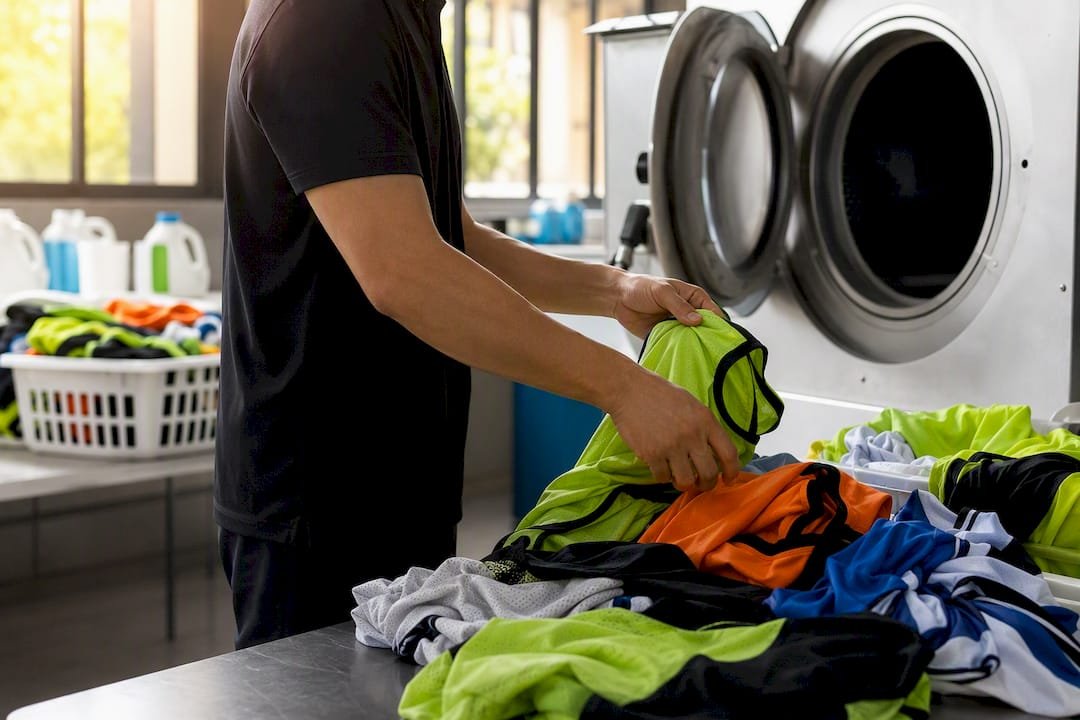
Washing habits matter too. Cold water washes and air drying extend uniform life significantly compared to hot water and machine drying, which break down synthetic fibers and accelerate fading. Programs that issue written care instructions with each uniform tend to see fewer early replacements.
Growth is the other factor coaches underestimate. Youth programs often need to replace or resize uniforms every one to two years as players grow, while high school and adult teams can often stretch a set across three to five seasons with proper care. Building replacement cycles into your multi-year budget, rather than treating each order as a one-time expense, avoids the scramble of an emergency reorder mid-season.
Sponsor patches and player-specific customization also complicate replacements. A uniform with heavy customization costs more to replace piece by piece than a simpler design, since you’re paying setup and decoration costs again on a smaller order. Teams that expect turnover or growth often choose simpler decoration specifically to keep future reorders cheap and fast.
Publisher perspective: cost versus team identity
Travel teams playing long seasons justify spending more per player. A rec league running eight games a year doesn’t need premium fabric. Caprasport’s factory-direct pricing and design support exist precisely to let programs at either end get a uniform that fits their budget without cutting corners on fit or durability.
— Agha
Get a Free Mockup and Quote From Caprasport
Once you know roughly what tier fits your budget, the fastest way to lock in a real number is to get a mockup made. There are other ways to source uniforms, screen printers, local sporting goods stores, generic online marketplaces, but most either mark up heavily for small orders or can’t show you what the final product looks like before you pay.
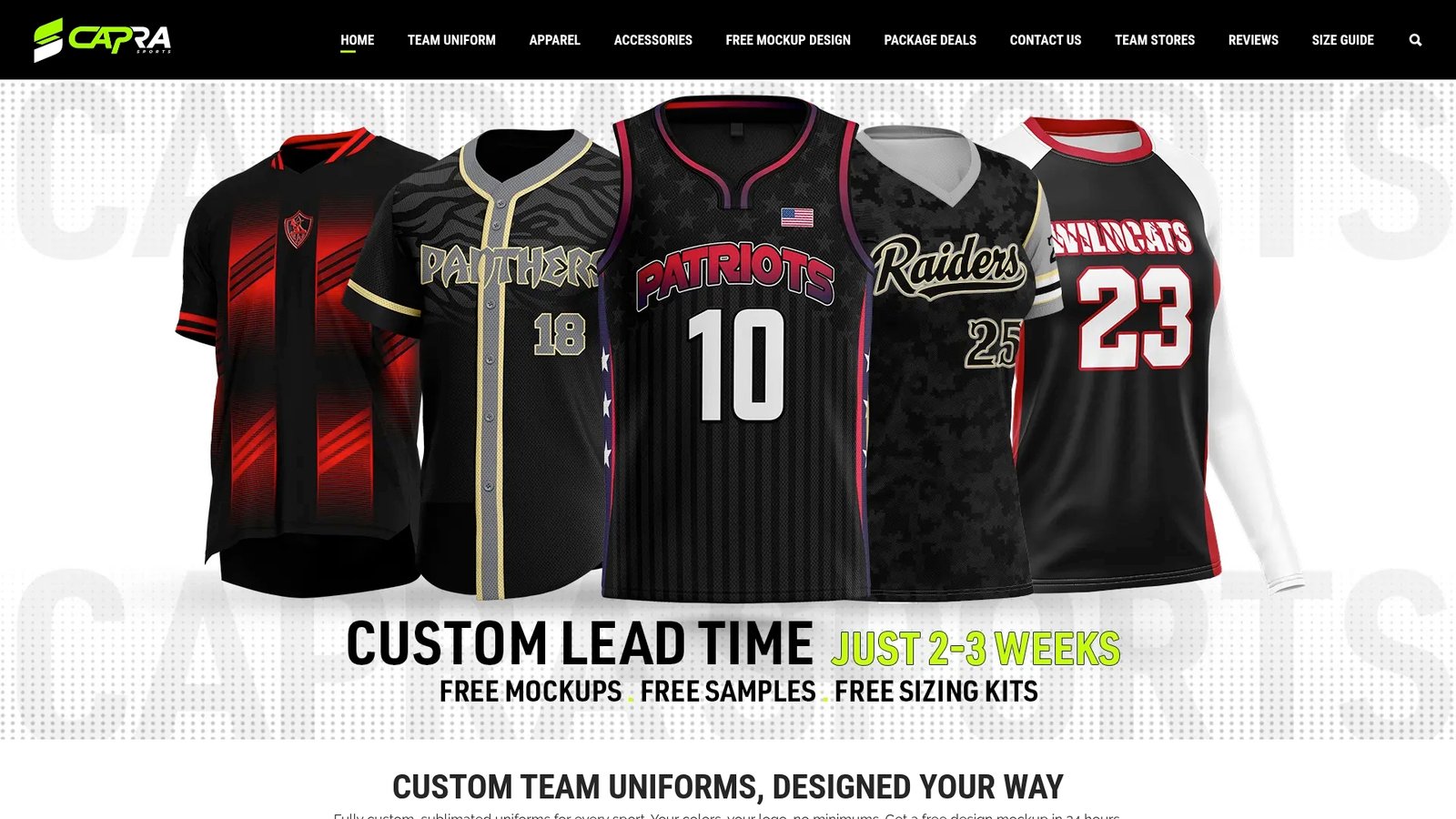
Caprasport skips that guesswork. You get factory-direct pricing with no middleman markup, low minimum order quantities so small rosters aren’t penalized, and a free mockup before you commit a dollar to production. Upload your logo, pick your colors, and a designer builds a real digital preview you can review with your coaching staff before approving anything. Browse basketball uniform packages starting under $40 per player, or head to the full catalog to compare options across jerseys, warmups, and bags. Request your free mockup today and get a firm number back within a day.
Sources
FAQ
How much does an NBA uniform cost?
NBA game jerseys aren’t sold as consumer products at retail; what you’ll find in stores are licensed replica jerseys, which typically sell for $70 to $125 or more per jersey. That retail licensing price has no bearing on what a team pays for a custom bulk order.
How much does a basketball uniform usually cost?
Most custom jersey-and-shorts sets cost $38 to $75 per player, with sublimated midrange sets often landing at $50 to $85 once you factor in full-color graphics.
How much do custom basketball uniforms cost for a full team?
A 10-player team typically budgets $380 to $850 total depending on tier, while a 15-player team runs $570 to $1,275 before extras like names, numbers, and warmups. Caprasport’s team packages start under $40 per player for basic sets.
How much do team uniforms cost across other sports?
Basketball, baseball, softball, soccer, and football uniforms all follow similar per-player pricing logic that varies depending on fabric, decoration, and sport-specific gear requirements. Football and baseball sets tend to run higher due to additional equipment and piece count.
Why do some basketball jerseys cost only $15 to $25?
Those prices usually reflect a single basic item, often without shorts or full customization, not a complete custom team set. Once you add matching shorts, names, numbers, and team colors, the real per-player cost climbs into the $38-plus range.