
Coaches: 5 Questions on Ply, Fabric, and Reversible vs Single Jerseys
Use reversible jerseys for practice and scrimmages, and single-sided jerseys for official games. Reversibles win on flexibility and cost since one garment does the work of two, while single-sided jerseys win on appearance, comfort, and print quality. Most programs land on a mix: reversibles for the grind, single-sided for the games that matter.
TL;DR:
- Reversible jerseys are ideal for frequent practices and scrimmages due to their lower cost and storage efficiency, but they are bulkier and less comfortable for competition.
- Single-sided jerseys provide higher print fidelity, are lighter, more breathable, and better suited for official games, branding, and high-quality visuals.
- The fabric choice and layering (1-ply versus 2-ply) significantly impact comfort, durability, and weight, with mesh preferred for hot weather and interlock for detailed graphics.
- In outdoor or summer practices, a 1-ply mesh reversible often offers better breathability and lighter weight, avoiding heat retention and odor issues.
- Most programs benefit from a mixed approach: reversibles for daily practice wear, and single-sided jerseys for game day and branding purposes.
Table of Contents
- Reversible vs Single Jerseys: Definitions and Construction Types
- Reversible Jerseys Pros and Cons vs Single-Sided
- How Fabric and Ply Affect Comfort and Durability
- Breathability, Weight, and Durability on the Field
- Design and Print Limits on Reversible Jerseys
- Cost, Inventory, and ROI: When Reversibles Pay Off
- How to Choose Between Reversible and Single-Sided Jerseys
- What Capra Sports Recommends for Coaches
- Coaches Overthink the Binary and Underthink the Fabric
- Get a Free Mockup Before You Order Either Jersey Type
- Sources
- FAQ
Reversible vs Single Jerseys: Definitions and Construction Types
A reversible jersey is built from two layers of fabric stitched together so a team can wear either color out, useful for pickup scrimmages, tryouts, and split-squad drills. A single-sided jersey has one printed face and one layer of fabric, which keeps it lighter and gives it a cleaner surface for detailed graphics.
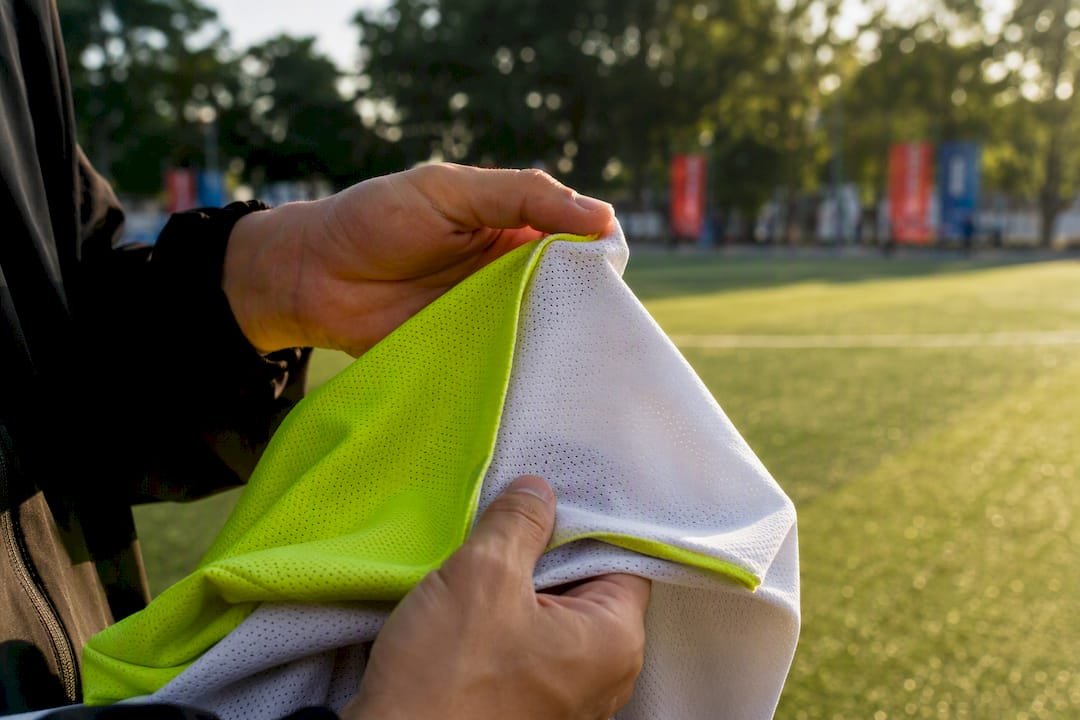
Reversibles come in two main builds. 1-ply versions use a single thinner layer with color woven or printed differently on each side, and 2-ply versions sew two full fabric layers back to back. According to Homegrown Sports Group, 1-ply reversibles run lighter and cooler but wear out faster and look less premium than 2-ply, which is heavier but more durable and closer to a “real” uniform in feel.
Single-sided jerseys typically use one of two fabrics:
- Mesh, an open-weave knit that maximizes airflow for hot gyms and high-intensity sports
- Interlock, a tighter, smoother knit that holds sublimated print detail better and feels more premium against the skin
Basketball and soccer programs lean on both reversible and single-sided builds depending on season phase; football and volleyball skew toward single-sided interlock for game day.
Reversible Jerseys Pros and Cons vs Single-Sided
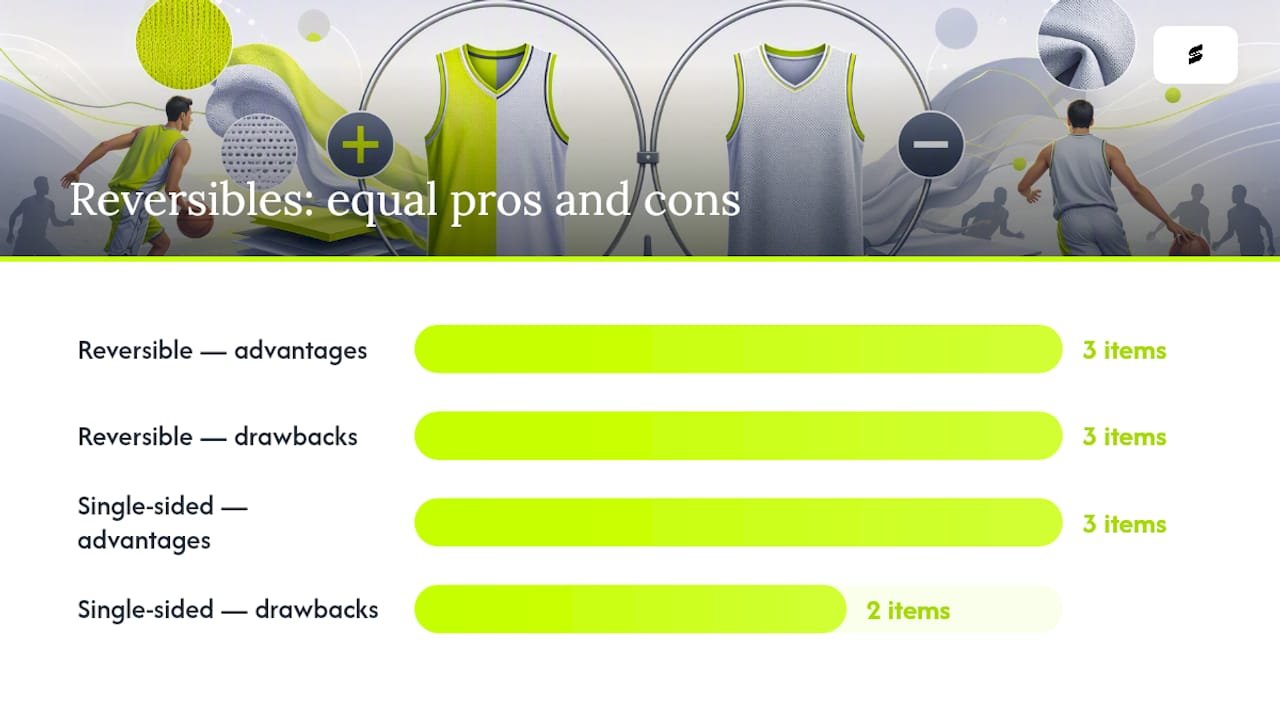
Coaches juggling budget, storage, and roster changes need to know exactly what each option buys them and what it costs. Here’s the practical breakdown.
Reversible jersey advantages:
- One purchase covers two “teams” for scrimmages, camps, or intrasquad games
- Cuts storage and inventory in half since there’s no separate light/dark set
- Lets you split a roster instantly for practice drills without extra gear
Reversible jersey drawbacks:
- Double-layer construction traps heat, which matters in summer basketball or football camps
- Complex logos and multicolor art rarely translate cleanly across both sides
- Bulkier fit than most players want for actual competition
Single-sided jersey advantages:
- Sharper, higher-fidelity print for logos, sponsor marks, and player names
- Lighter and more breathable, which shows up in fourth-quarter legs
- Reads as more “official” for photos, tournaments, and recruiting film
Single-sided jersey drawbacks:
- Requires two full sets if you need a light and dark option
- Doubles closet space and doubles the reorder headache when sizes change
Basketball programs feel this trade-off hardest because scrimmages happen constantly. Football and 7v7 squads feel it less, since most games are single-color anyway. According to Friend Brothers Sports, many team guides recommend exactly this split: reversibles for practice, single-sided or premium uniforms for the games people actually watch.
How Fabric and Ply Affect Comfort and Durability
The construction decision matters more than the reversible-versus-single label alone. A well-built 1-ply reversible in the right fabric can outperform a cheaply made single-sided jersey, and vice versa. Fabric and layer count drive comfort, weight, and how long a jersey survives a season of practices and washes.
SevenJerseys breaks the trade-offs down cleanly:
- Mesh ventilates best for hot climates and high-output sessions
- Interlock takes sublimation printing best and feels smoother on skin
- Double-layer reversible builds give a true two-sided look but add noticeable weight
Choose 1-ply reversibles for hot-weather programs running practice-only kits, and 2-ply for competitive leagues that want durability and a more finished look on the field.
Laundering matters too. Double-layer reversibles take longer to dry and can retain odor between layers if a program is washing gear on a tight turnaround between practices.
Pro Tip: If your team practices outdoors in summer heat, order a 1-ply mesh reversible sample before committing to a full set. The weight difference is obvious the first time you put it on.
Breathability, Weight, and Durability on the Field
Double-layer construction is warmer by design, simply because there’s more fabric and stitching between the player and the air. That’s a real factor for outdoor summer practices or back-to-back tournament games, less of a factor for a once-a-week indoor scrimmage.
- Reversibles run heavier and warmer than single-layer jerseys because of the extra fabric and seams
- Interlock single-sided jerseys hold up well to repeated washing when stitched correctly at the seams
- Double-layer stitching is the first failure point on reversibles, so check seam reinforcement before ordering in bulk
Positions that sprint constantly (guards, wide receivers, outside hitters) notice reversible weight fastest. Linemen, post players, and goalkeepers tend not to care as much.
Design and Print Limits on Reversible Jerseys
Reversible construction fights against complex artwork. Seam alignment between the two layers means logos and numbers often shift slightly from one side to the other, which pushes most teams toward simpler graphics and higher-contrast numbering rather than intricate crests or gradient art.
Sublimation on interlock fabric delivers the cleanest single-sided print, which is why programs chasing detailed sponsor logos or multi-color mascots almost always go single-sided for that reason alone. Sponsor placement on reversibles is typically restricted to a small chest patch, and number fonts stay basic and high-contrast so they read from the bleachers on both sides.
- Keep reversible artwork to one or two colors and bold block numbers
- Reserve detailed sublimated graphics for single-sided interlock jerseys
- Confirm number placement and size with your supplier before finalizing reversible art
Cost, Inventory, and ROI: When Reversibles Pay Off
The math is simple once you frame it correctly: one reversible jersey replaces two single-sided jerseys for a roster that needs a light and dark option. If your budget is tight and your team scrimmages often, that math favors reversibles almost every time.
- Reversibles cost more per piece than a basic single-sided jersey, but less than buying two full single-sided sets
- Storage and reorder logistics shrink by half since there’s one SKU per player instead of two
- Break-even usually favors reversibles for programs running frequent intrasquad splits or multiple practice groups
Single-sided jerseys justify the extra spend when branding, tournament presentation, or team photos are on the line. A reversible jersey rarely photographs as well as a crisp single-sided design, and sponsors notice that difference on game day.
How to Choose Between Reversible and Single-Sided Jerseys
Run through this checklist before you request quotes:
- How often does the team scrimmage or split into groups? Frequent splits favor reversibles.
- What’s your climate? Hot, humid programs should lean 1-ply mesh over 2-ply double-layer.
- How important is sponsor or logo detail? Complex art points you toward single-sided interlock.
- What’s the real budget per player, not per jersey? Compare one reversible set against two single-sided sets.
- How will these get washed and by whom? Double-layer builds take longer to dry between practices.
When you talk to a supplier, ask directly: What’s the ply and fabric weight? Can I see a physical sample before ordering? What’s your minimum order quantity? What’s the actual production lead time, not the marketing estimate?
Choosing the right construction often matters more than the reversible-versus-single decision itself, so don’t skip the fabric conversation to save time.
Pro Tip: Order one sample in each construction you’re considering before committing to a full roster order. A $20 sample that saves you from a 20-jersey mistake is the cheapest insurance in team sports.
What Capra Sports Recommends for Coaches
Order reversibles when your season includes heavy scrimmage time, tryouts, or camp-style splits. Order single-sided jerseys when the games count for standings, film, or recruiting. That’s the rule of thumb behind most of the roster orders Capra Sports fills each season.
Capra keeps minimums low and turns free mockups fast enough that you can test a fabric before betting a season budget on it. The smart move for most programs: run a small mixed order, reversibles for the grind and single-sided for game day, then adjust next season based on what actually held up in the wash.
Coaches Overthink the Binary and Underthink the Fabric
The reversible-versus-single debate gets more airtime than it deserves. The bigger decision, and the one most buying guides skip, is ply and fabric. A cheap 2-ply reversible in stiff polyester will disappoint a team faster than a well-made 1-ply mesh version, and a poorly stitched single-sided jersey falls apart just as fast as a reversible if the seams are weak.
Conventional advice treats this as an either/or choice. It isn’t. Most competitive programs run both: reversibles that absorb the daily wear of practice, and single-sided jerseys reserved for the games where presentation and durability actually get tested under pressure. Treating it as one-or-the-other usually means overpaying for whichever type you picked, because you end up asking one garment to do a job it wasn’t built for.
If you take one thing from this guide, request a fabric sample before you order anything in bulk. Photos and spec sheets do not tell you how a jersey breathes at minute thirty of a summer practice or how it looks after fifteen wash cycles. A five-dollar sample answers both questions in a way no product description ever will.
— Agha
Get a Free Mockup Before You Order Either Jersey Type
Capra Sports builds both reversible and single-sided jerseys in-house, factory-direct, with no middleman markup on either construction. You get direct input from a designer on ply, fabric weight, and print placement before you commit to a full roster order, and there’s no minimum order quantity holding you back from testing a small mixed batch first.
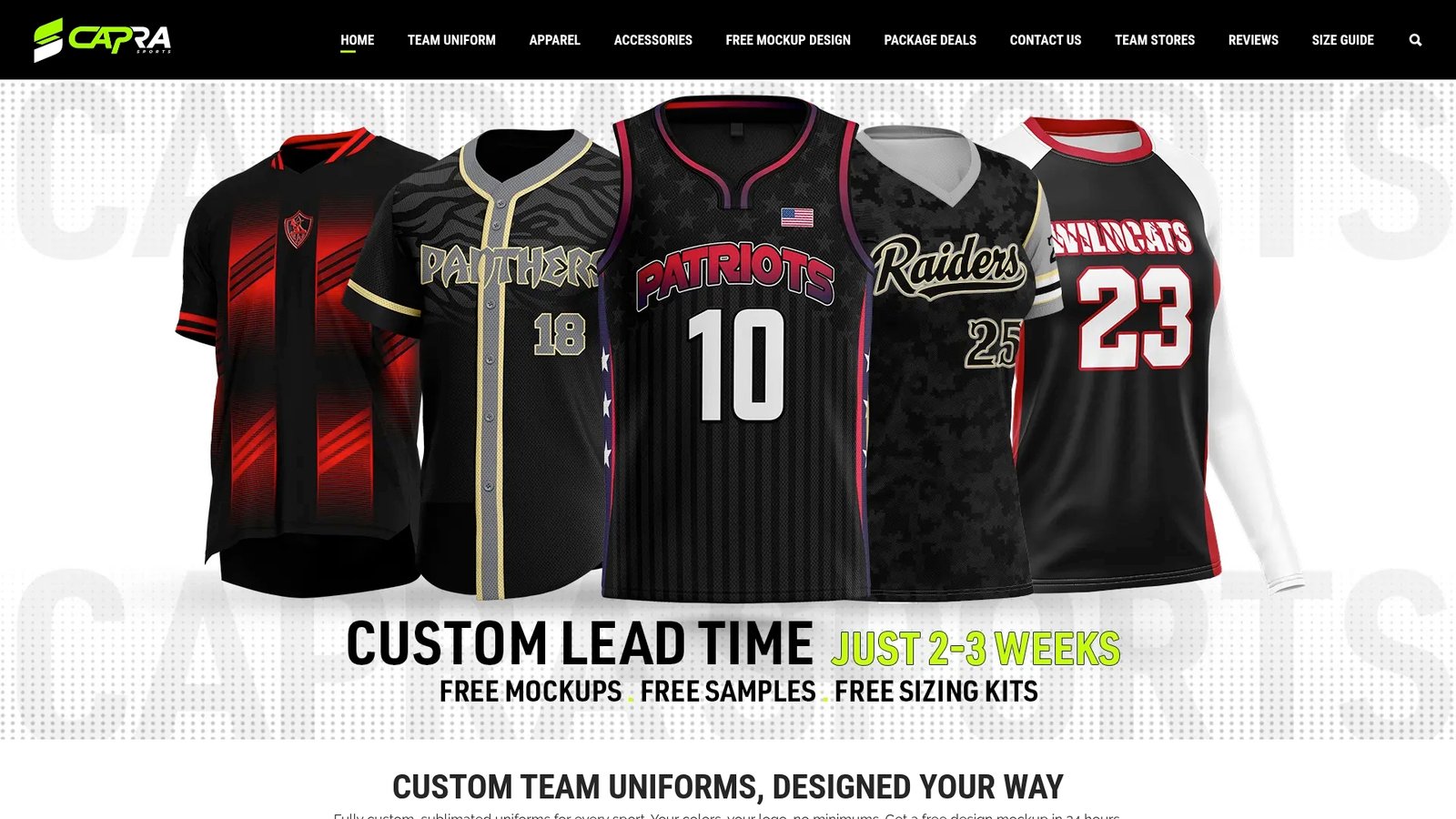
Whether you’re outfitting a basketball program that scrimmages three times a week or a football squad that needs sharp single-sided jerseys for a tournament run, Capra will build a free mockup so you can see the exact print and fit before paying for anything. Request a free custom uniform mockup and ask for both a reversible and single-sided sample in the same order. Most teams get their sample turnaround fast enough to decide before the season budget locks in.
Sources
FAQ
What Does “Reversible Jersey” Mean?
A reversible jersey is built from two fabric layers stitched together so a player can wear either color side out, letting one garment function as two uniforms.
What Is a Reverse Jersey?
“Reverse jersey” is a common informal term for the same thing, a reversible jersey. It flips inside out to show a different color or design on each side.
What Are the Different Types of Jerseys?
The main categories are single-sided jerseys (one printed layer, usually mesh or interlock) and reversible jerseys, which split into 1-ply and 2-ply double-layer constructions.
What Is a Reversible Hockey Jersey?
A reversible hockey jersey works the same way as in other sports: two layers sewn together so a team can switch colors without owning two full sets, with 2-ply builds favored for durability in contact play.
Should My Team Buy Reversible or Single-Sided Jerseys First?
Start with reversibles if your budget is tight and practices dominate your schedule, then add single-sided jerseys once game presentation and sponsor branding become priorities.