
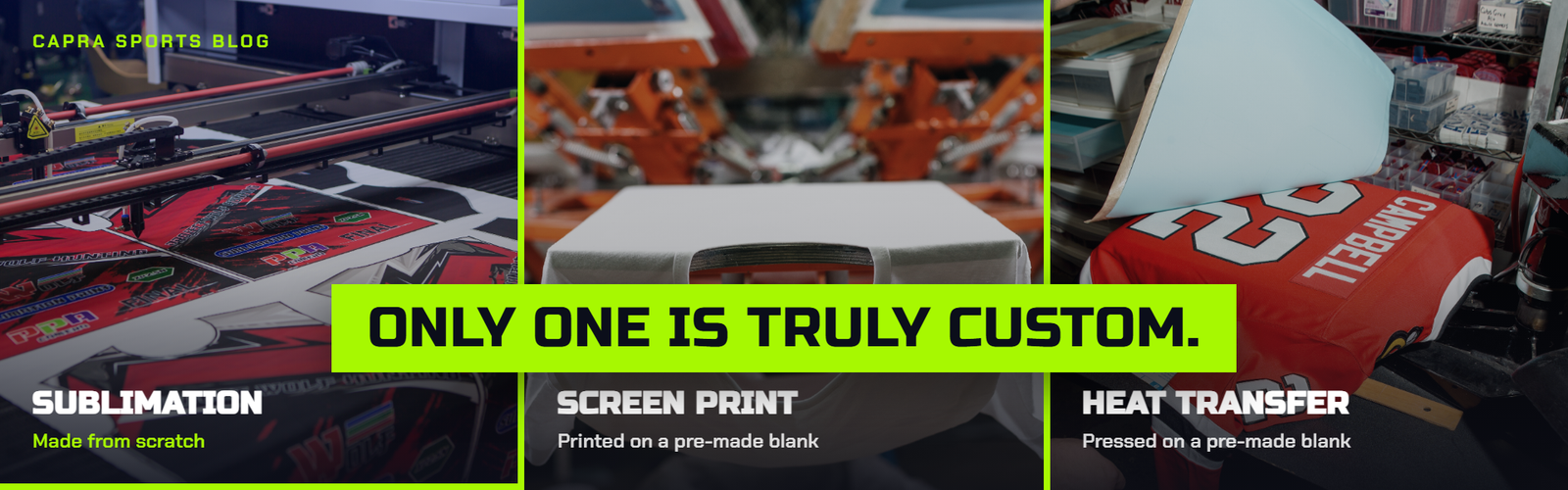
Sublimation vs Screen Printing vs Heat Transfer: Which Is Best for Team Jerseys?
Order jerseys once with the wrong decoration method and you will find out the hard way: numbers that crack by mid-season, logos that peel in the dryer, or a “custom” design that was really just a logo slapped on a stock shirt. The truth is that sublimation vs screen printing vs heat transfer is not a style debate — each method physically puts your design on the fabric in a completely different way, and that difference decides how your jerseys look, feel, and survive a season.
Here is the plain-English breakdown coaches and team managers actually need.
The 30-second answer
- Sublimation — the only method where the jersey is MADE FROM SCRATCH around your design. The artwork is dyed into the fabric before the jersey is even sewn. Unlimited colors, zero added weight, never cracks or peels. The standard for full-custom team uniforms.
- Screen printing — ink is layered ON TOP of a pre-made blank jersey. Great for simple 1-3 color designs on cotton (fan tees, merch), but each color adds cost and the print can crack over time.
- Heat transfer — a printed film is pressed ONTO a pre-made blank jersey. Fast and cheap for small runs and one-off names and numbers, but it sits like a sticker: it can peel, and it traps heat.
And here is the distinction most teams never hear: screen printing and heat transfer do not make a custom jersey — they decorate a stock one. Someone else already chose the cut, the base color, the collar, and the panels; your “customization” is whatever fits in the printable zones. Sublimation is the only method where the jersey itself is built from scratch for your team — which is why it is the only one that can honestly be called fully custom.
How each method actually works
Sublimation: your design becomes the jersey
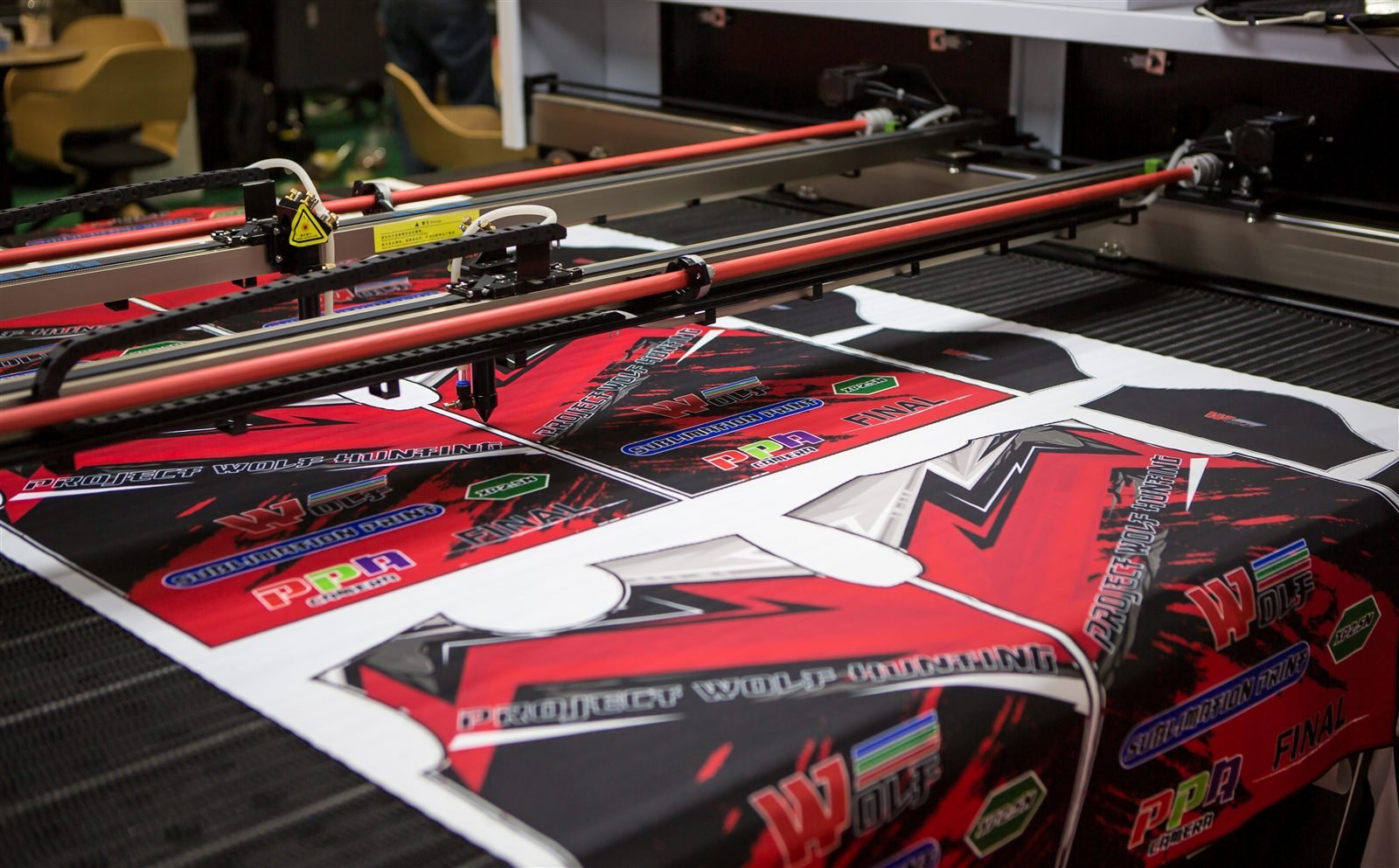
Dye sublimation flips the entire process. Instead of starting with a finished blank jersey, it starts with your design. The full artwork — base colors, patterns, gradients, sponsor logos, names, numbers — is printed onto transfer paper, then heat turns the dye into gas that bonds permanently with the polyester fabric. Those printed panels are then cut and sewn into your jersey.
Read that again: the jersey is constructed from scratch, after and around your design. There is no “blank” anywhere in the process.
What that means on the field:
- True full customization: every inch of the jersey is yours — base color, side panels, collar contrast, all-over patterns, sponsor placement anywhere. You are not limited to the chest-and-back zones of a stock shirt.
- Durability: nothing to crack, peel, or flake — ever. The color lives inside the fiber.
- Feel: zero added weight or texture. The printed area breathes exactly like the rest of the shirt.
- Design freedom: unlimited colors at no extra cost. A 12-color gradient design costs the same to produce as a plain one.
- The catch: it only works on polyester (which is what performance jerseys are made of anyway), since the dye bonds with synthetic fibers.
Screen printing: ink layered on a pre-made blank
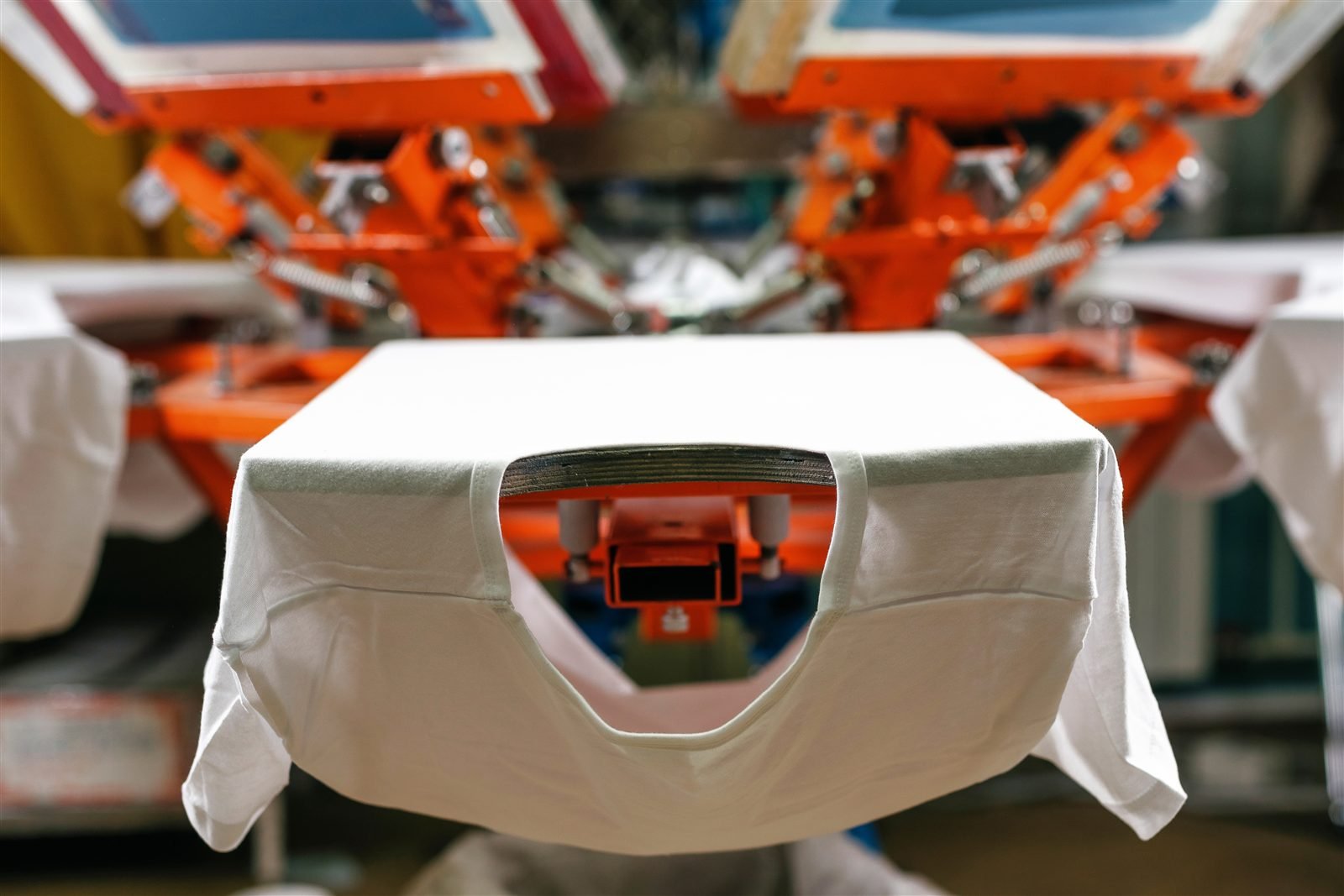
Screen printing starts where sublimation ends: with a finished blank garment. Ink is pushed through a stencil (a “screen”) onto the shirt — one screen per color. It has been the workhorse of the t-shirt world for decades, and for good reason: on cotton, with a simple design, at high quantities, it is cheap and the colors are punchy.
The trade-offs for team jerseys:
- The jersey already exists before your design touches it. You are choosing from someone else’s cuts and colors, and decorating the front and back of it.
- Cost scales with colors. Every color means another screen and another setup fee. A 6-color crest gets expensive fast.
- The print is a layer. It adds a plasticky patch that does not stretch or breathe like the fabric under it, and repeated washing and stretching eventually cracks it.
- No all-over designs. Screen printing decorates zones (chest, back), not the whole garment.
Where it wins: cotton fan tees, spirit wear, and merch — high quantity, few colors, garments that are not worn to sweat in.
Heat transfer: a printed film pressed on a pre-made blank
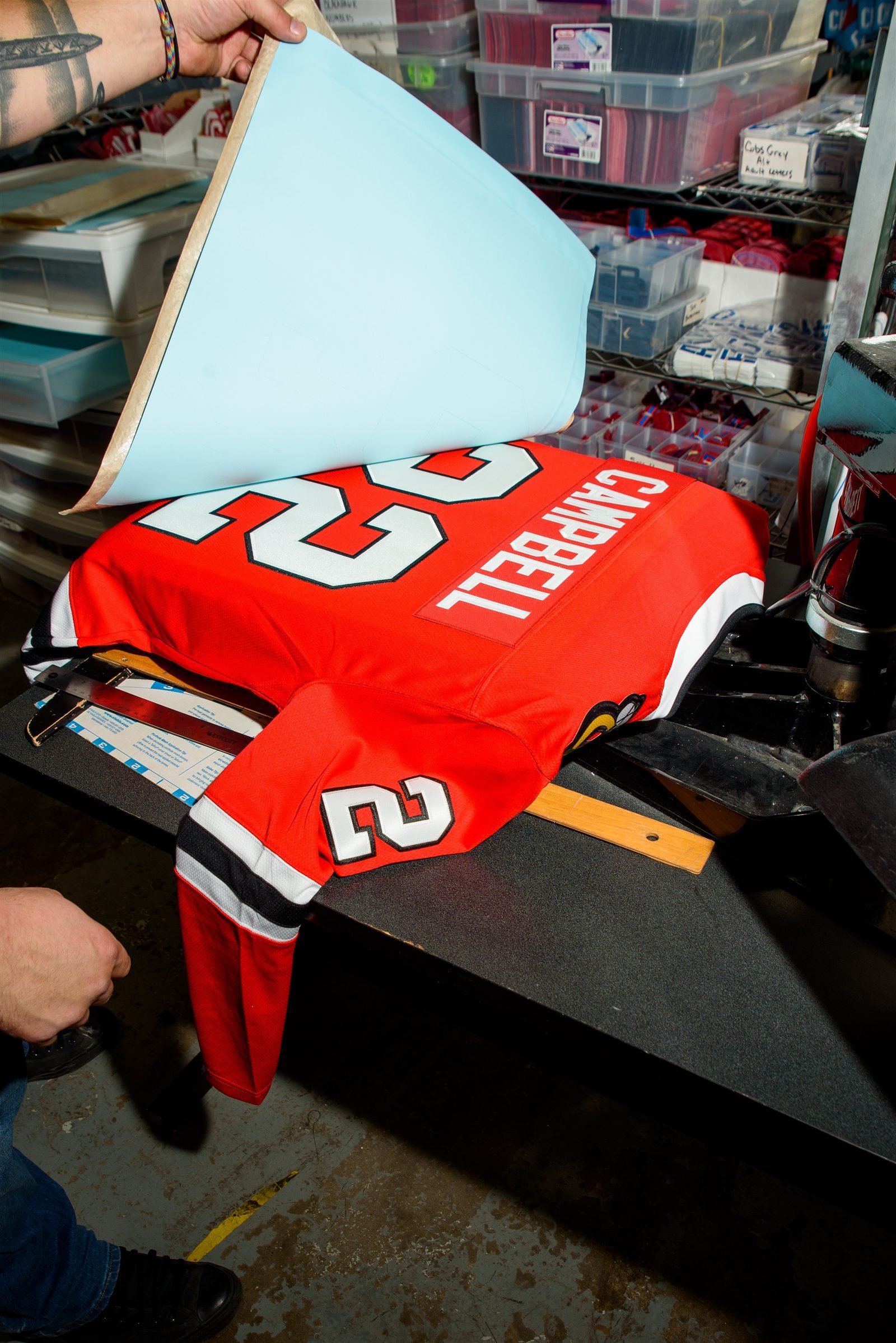
Heat transfer vinyl (HTV) and digital transfers are designs cut or printed on a carrier film, then pressed onto a finished garment with a heat press. It is the method behind most “same-day” customization and most name-and-number jobs on stock jerseys.
The trade-offs:
- Same starting point as screen print: a stock jersey. The transfer personalizes it; it does not customize it.
- It sits on the surface. You can feel the edge of a transfer with your fingernail. Over wash cycles, edges lift and the film can crack or peel.
- It traps heat. A large vinyl block on the back of a jersey is effectively a plastic panel — noticeable in summer tournaments.
- Per-piece work. Each name and number is placed and pressed individually, which is fine for 5 shirts and slow for 50.
Where it wins: tiny orders, one-off replacements, and adding a name to something you already own.
Side-by-side comparison
| Sublimation | Screen Printing | Heat Transfer | |
|---|---|---|---|
| How the jersey starts | Made from scratch around your design | Pre-made blank, then decorated | Pre-made blank, then decorated |
| Fully custom (cut, base color, panels) | Yes | No — stock garment | No — stock garment |
| Design location | Dyed into the fiber | Ink layer on top | Film pressed on top |
| Colors | Unlimited, no extra cost | Priced per color | Limited by film layers |
| Full-jersey (all-over) designs | Yes | No | No |
| Cracking / peeling | Never | Over time | Common at edges |
| Added weight / feel | None | Noticeable print area | Noticeable panel |
| Breathability | Unchanged | Reduced at print | Reduced at transfer |
| Names + numbers | Built into the design | Extra screens/steps | Pressed individually |
| Best fabric | Polyester (performance wear) | Cotton | Most fabrics |
| Best for | Full-custom team uniforms | Fan tees, merch | Small runs, one-offs |
What this means for your team’s order
For game uniforms — the jerseys your team wears every single week, sweats in, slides in, and washes 20+ times a season — sublimation is the clear winner, twice over. It is the only method where the uniform is actually designed and built for your team instead of decorated after the fact, and it is the only method where names, numbers, sponsor logos, and the design itself can never crack, peel, or fade. It is also why sublimated uniforms usually cost LESS than a screen-printed jersey once you add up per-color charges, number packages, and name customization: with sublimation, all of that is simply part of the artwork.
That applies across every sport we build for: soccer, basketball, football, and baseball uniforms are all fully sublimated.
For fan gear and sideline merch — cotton tees, hoodies for parents — screen printing still makes sense at quantity.
For a single replacement jersey or a last-minute name change — a heat transfer will get you through the weekend.
Frequently asked questions
What does “fully custom” actually mean in team uniforms?
It means the jersey is made from scratch around your design — you choose the base colors, patterns, panels, and every placement — rather than a stock blank jersey decorated with your logo. Only sublimation works this way. Screen printing and heat transfer both start from a pre-made garment.
Does sublimation fade after washing?
No. Because the dye is bonded inside the polyester fiber, sublimated jerseys survive repeated washing without fading, cracking, or peeling. Wash cold, skip the fabric softener, and the print outlasts the season.
Is sublimation more expensive than screen printing?
For team uniforms, usually the opposite. Screen printing charges per color and per placement (front logo, back number, sleeve). Sublimation includes unlimited colors, names, numbers, and sponsor logos in one price. At Capra Sports, a fully sublimated custom uniform (jersey + shorts) starts at $38.99 — sponsor logos included at no extra charge.
Can you sublimate on cotton or dark fabrics?
No — sublimation bonds with polyester and needs a light base to dye onto. That is not a limitation for team sports, where performance polyester is the standard, and dark designs are achieved by dyeing the dark color into the jersey itself.
Which method is most durable for team jerseys?
Sublimation. There is no printed layer to fail — the design and the fabric are the same thing. Screen prints crack as the ink layer ages; heat transfers can peel at the edges after repeated washing.
The bottom line
If it is a real team uniform — custom design, names, numbers, sponsors, worn hard all season — go sublimation. It is the only method where the jersey is built from scratch for your team instead of pulled off a shelf and decorated, and the only one where your design can never crack, peel, or fade.
That is exactly how we build every uniform at Capra Sports: fully sublimated, designed for your team from scratch, with sponsor logos at no extra charge.
Want to see your team’s design before you spend a dollar? Request a free custom mockup — we will have it in your inbox within 24 hours.