
Pass NFHS Rules: Baseball Jersey Designs for Coaches, Free Mockup
The clearest path to a great baseball jersey is picking one team identity, choosing a style family such as a button-down, pullover, pinstripe or retro cut, and making sure your numbers meet NFHS contrast and sizing rules. Pair that with sublimation printing for full-color art, then confirm everything with a mockup and a sizing sample before you approve the full order.
TL;DR:
- Contrast rules mandate back numbers to be at least eight inches tall with a solid, contrasting color to ensure visibility from a distance.
- Slipstreaming popular jersey styles, like pinstripe or retro, align design choices with team identity and improve overall cohesion.
- Mockups should clearly show stripe width, collar details, or color breaks to verify authenticity and prevent sizing or contrast issues.
- Color palettes must be consistent across jerseys, caps, and gear, with fabric swatches confirming visual matching in real-world lighting.
- Original team logos and mascots are safest for avoiding trademark issues; copying professional branding can lead to legal disputes.
Table of Contents
- Popular Baseball Jersey Styles and When to Use Each
- Choosing Colors That Work on the Field and Across Gear
- Fonts, Numbers, and NFHS Compliance Rules
- Fabrics and Printing Methods for Custom Jerseys
- Matching Caps, Pants, Socks, and Alternate Jerseys
- From Concept to Order: A Coach-Friendly Checklist
- How Capra Sports Supports Baseball Jersey Design
- Budget Planning for a Custom Jersey Order
- Sourcing Suppliers: What to Check Before You Order
- Legal Considerations for Jersey Logos and Team Names
- What Actually Matters in Jersey Design (and What Doesn’t)
- Get a Free Mockup and Sample From Capra Sports
- FAQ
- Sources
Popular Baseball Jersey Styles and When to Use Each
Every jersey style sends a different signal before a single pitch is thrown. Picking the right family first makes every later decision, colors, fonts, trim, much easier.
- Pinstripe: reads traditional and disciplined, works best for varsity and adult rec teams, and needs tight stripe spacing so it doesn’t wash out under stadium lights; ask for a mockup that shows stripe width at actual jersey scale.
- Button-down: classic and versatile, suits travel ball and high school programs, and should keep button placket color consistent with the trim; request a mockup showing the placket against the main body color.
- Pullover: practical for youth and rec leagues since it’s faster to size and less prone to gapping, and benefits from a V-neck or crew collar that matches team formality; ask for a collar close-up in the mockup.
- Two-tone or modern: bold color blocking signals an aggressive, contemporary identity and suits travel and showcase teams; request a mockup that shows the color break at the shoulder seam, where it’s most visible.
- Retro or vintage: throwback lettering and muted palettes work well for alumni games, fundraisers, or legacy programs; ask for a side-by-side mockup comparing the retro wordmark against a modern number font for legibility.
- Minimalist: a single chest mark and clean numbers suit teams that want the uniform, not the graphics, to carry the identity; request a flat mockup to confirm nothing looks unfinished.
- Alternate or throwback: a secondary jersey for rivalry games or special events should echo the primary jersey’s colors so it still feels like the same team; request a mockup placed next to the primary design.
- Tee-ball and youth variants: simplified graphics and larger numbers help young players and parents spot their kid from the stands; ask for a mockup at the smallest size offered, not just the adult sample.
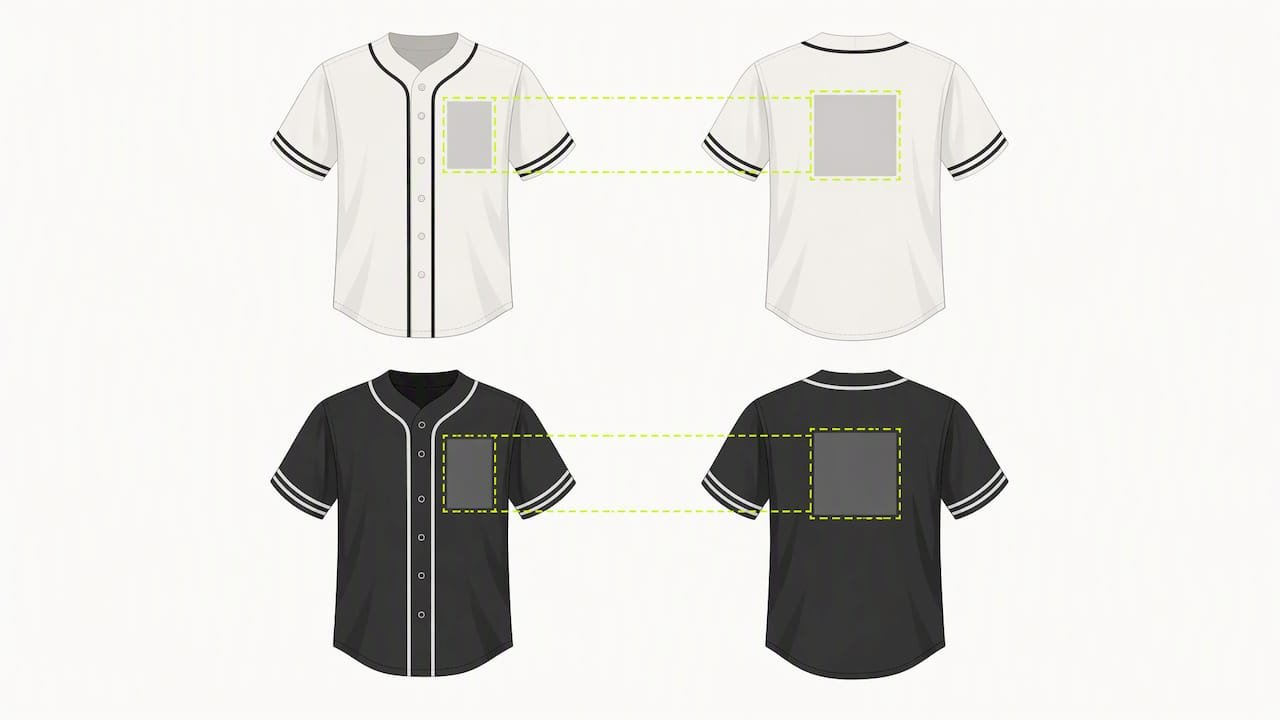
Pro Tip: Keep chest logos under about 20% of the jersey’s front area so they scale cleanly from youth small to adult 3XL without crowding the numbers.
Choosing Colors That Work on the Field and Across Gear
Color choices matter more than most teams expect because a jersey that looks sharp on a screen can lose contrast under field lighting or on certain fabrics. Dark numbers on a light jersey, or light numbers on a dark jersey, read best at distance. Reserve a third accent color for piping, collar trim, or cuffs rather than spreading it across the whole design.
- Set one primary color for the jersey body, one secondary for numbers and lettering, and one trim color for piping or accents.
- Carry the same three colors across caps, warmups, and bags so the team reads as one unit, not mismatched pieces.
- Request a fabric swatch alongside the digital mockup, since screen colors and sublimated fabric colors don’t always match exactly.
- Avoid placing a busy secondary pattern directly behind the numbers, since it competes with the contrast you need for visibility.
Fonts, Numbers, and NFHS Compliance Rules
Numbers are the one part of the design with a hard rule attached. NFHS requires back numbers to be plain Arabic style, a solid color, and at least eight inches high, with a contrasting color against the jersey and borders allowed up to a quarter inch. That eight-inch minimum is non-negotiable for school programs, and it should shape your layout before you touch a font catalog.
- Pair a decorative script, like the baseball-style scripts found in collections from Letterhead Fonts or FontSpace, with a plain, bold sans-serif for numbers; scripts rarely stay legible at distance on a number.
- Put the primary number on the back, add an optional smaller front or sleeve number if your league allows it, and keep placement consistent across the roster.
- Watch for decorative patterns or piping that cross behind the number block, since that’s the most common way teams accidentally fail the contrast requirement.
Fabrics and Printing Methods for Custom Jerseys
Sublimation dyes the design directly into the fabric fibers, which is why it handles full-color art, gradients, and all-over patterns better than other methods and keeps the material breathable. Screen printing or heat-press transfers still make sense for simple, limited-color designs or very small orders where sublimation setup isn’t worth it.
- Ask for moisture-wicking polyester with a mid-weight feel, light enough for summer heat but sturdy enough to hold its shape.
- Request fade-resistant ink or dye so numbers and logos stay sharp through a full season of washes.
- Check stretch at the shoulder and side seams if your team plays in a lot of diving or sliding positions.
- Wash in cold water and air dry when possible, since heat from a dryer breaks down sublimated color faster than normal wear does.
For a deeper breakdown of fabric choices by position and climate, our coach’s guide to choosing baseball and softball uniforms walks through the trade-offs in more detail.
Matching Caps, Pants, Socks, and Alternate Jerseys
A sharp jersey can still look disjointed if the rest of the uniform doesn’t follow the same visual logic. The cap’s front logo should echo the chest mark’s color and style, not introduce a fourth color into the mix.
- Pair pinstripe jerseys with pinstripe or solid-matching pants, never a clashing solid in an unrelated shade.
- Choose stirrups or solid socks that pick up the trim color rather than the main body color, since that keeps the leg line from looking busy.
- Plan any alternate or special-event jersey around the same three-color palette so it still looks like the same team on a different day.
- Before ordering a full set, lay a sample jersey next to a cap and pants swatch and check that none of the fabrics look mismatched in finish, since a shiny jersey next to matte pants reads as an error, not a style choice.
Our step-by-step guide to designing a custom team uniform covers the full coordination process if you’re building out caps, pants, and alternates at the same time.
From Concept to Order: A Coach-Friendly Checklist
Turning design ideas into an actual order goes smoother with a fixed sequence instead of back-and-forth guessing.
- Pick the style family such as pinstripe, button-down, pullover, retro or minimalist.
- Choose your three-color palette and confirm it across jersey, cap, and warmups.
- Lock in fonts and number sizing, checking NFHS compliance if you’re a school program.
- Request a design mockup and review it for contrast, number size, and logo scale.
- Order a sizing sample before committing to the full run.
- Review the mockup and sample against NFHS rules one more time if applicable.
- Approve production once sizing, color, and compliance all check out.
Pro Tip: Order one extra size up and down from your roster’s average, since growth spurts and late sign-ups almost always create a sizing gap mid-season.
Budget for a price per piece depending on style and quantity, and build in extra time if you’re adding an alternate jersey or ordering outside the regular pre-season window.
How Capra Sports Supports Baseball Jersey Design
For teams ready to move from concept to production, we build custom baseball pullover jerseys and button-down styles through direct collaboration with professional designers, so your team’s exact colors, fonts, and numbering survive the jump from idea to fabric.
- We use sublimated materials that hold color and detail through a full season of games and washes.
- We provide a free sizing sample so your team can check fit before committing to the full roster order.
- We design across baseball, softball, basketball, football, soccer, and volleyball, so multi-sport programs can keep a consistent process across uniforms.
Budget Planning for a Custom Jersey Order
Jersey cost depends on style complexity, fabric weight, and order size, and most of the surprises teams run into come from skipping the planning step rather than the printing itself. Button-down and pullover styles with simple graphics tend to cost less than designs with heavy sublimation coverage, multiple accent colors, or added elements like sleeve numbers and patches.
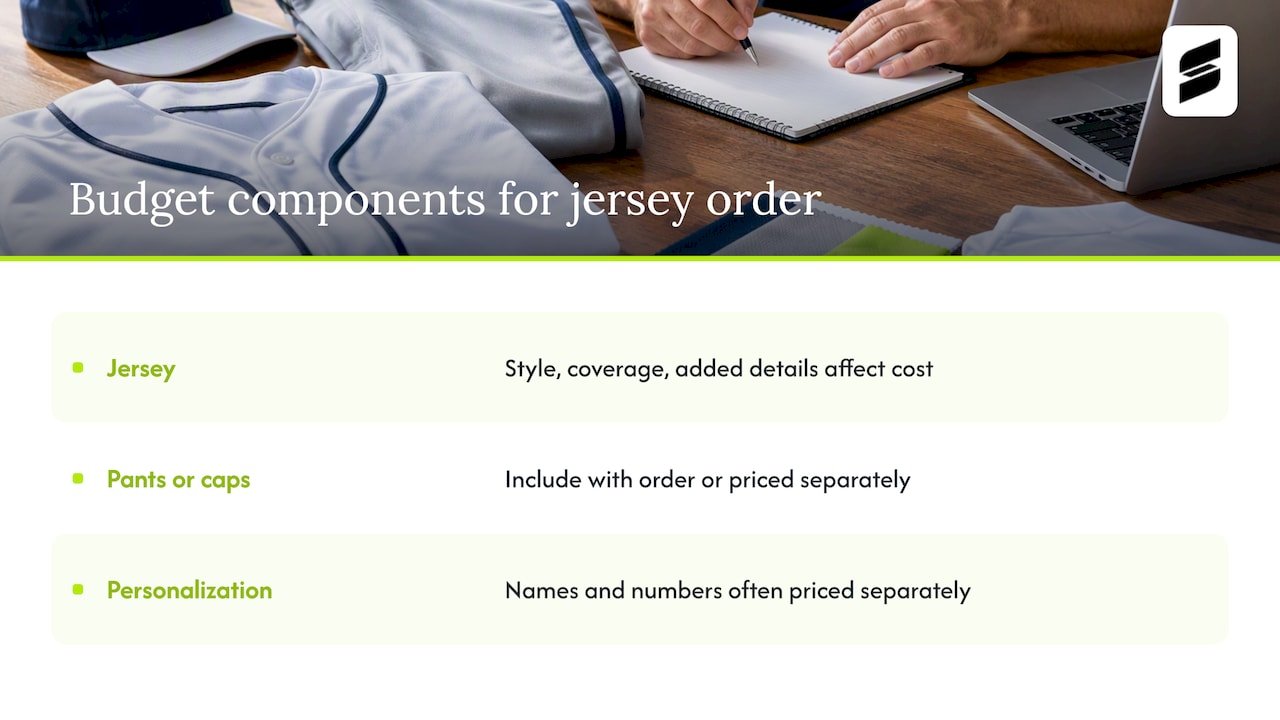
Build your budget around three line items: the jersey itself, any matching pants or caps, and personalization like player names or numbers, which some programs price separately from the base jersey. Ask your supplier for [PRICE TBD] pricing broken out by style before you finalize a design, since a pinstripe or two-tone jersey with full sublimation coverage will typically cost more than a minimalist single-logo design.
Set your budget early in the process, ideally before you fall in love with a specific design, so you’re not redesigning under pressure when the quote comes back higher than expected. Factor in sizing samples as a planning cost rather than an afterthought, since catching a fit issue before the full order ships is cheaper than reordering jerseys that don’t fit.
If your program orders every year, keep a record of what you spent on fabric upgrades, extra colors, or rush fees the previous season. That history makes the next budget conversation with your athletic director or booster club faster and more accurate.
Sourcing Suppliers: What to Check Before You Order
Not every supplier handles custom baseball jerseys the same way, and the differences show up in quality, order flexibility, and how long you wait for your uniforms. Start by asking how a supplier handles minimum order sizes, since some require large team minimums that don’t work for smaller rosters or combined teams.
Turnaround time matters just as much as price. Ask directly how long design mockups take and how long production runs once you approve a design, since a supplier that’s vague about timing is harder to plan a season around. A 24-hour mockup turnaround, for instance, lets you iterate on a design quickly instead of waiting days between rounds of feedback.
Quality is harder to judge from a product photo alone, so lean on the sizing sample. A sample that arrives with accurate colors, solid stitching, and true-to-chart sizing tells you more about a supplier’s real quality than any marketing claim. If a supplier won’t provide one before a full order, treat that as a signal worth weighing.
Ask whether designer collaboration is included or billed separately, since unlimited revisions with a professional designer can save real time compared with a one-shot template tool. Finally, confirm fabric specifics, weight, stretch, moisture-wicking, up front rather than assuming “performance fabric” means the same thing across suppliers.
Legal Considerations for Jersey Logos and Team Names
Designing a jersey logo from scratch avoids most legal headaches, but plenty of teams run into trouble by borrowing artwork, fonts, or mascots they don’t actually have rights to use. A logo that closely mimics a professional team’s branding, even a college or MLB club, can create a trademark problem if your program sells merchandise or represents itself publicly with that mark.
Original school names and mascots are generally safe to use for your own team, but pulling a professional franchise’s exact color scheme, wordmark style, or mascot design is a different matter. If your artwork is inspired by an existing team, change enough of the specific elements, typeface, color combination, mascot pose, that it reads as its own design rather than a copy.
Clip art and fonts also carry licensing terms. A font labeled “free for personal use” isn’t automatically cleared for a team logo that gets printed and sold, so check the license before building a wordmark around it. The same goes for stock graphics pulled from a general image search.
When in doubt, especially for a program that plans to sell jerseys publicly or register a team name, a quick consultation with someone familiar with trademark basics is worth more than guessing. It’s a small step compared with reprinting an entire season’s uniforms because of a rights dispute.
What Actually Matters in Jersey Design (and What Doesn’t)
Most jersey design advice spends too much time on trends, this year’s color combination, that retro font, and not enough on the two things that actually determine whether a uniform works: contrast and consistency. A jersey can be visually interesting and still fail on the field if the numbers aren’t readable from the stands or the dugout, which is exactly what NFHS numbering rules exist to prevent.
The overrated step is chasing a completely original design. Teams spend weeks trying to invent something no other program has ever used, when the stronger move is picking a proven style family and executing it cleanly, tight contrast, consistent color story across every piece of gear, numbers sized correctly the first time. Originality in baseball uniforms tends to come from execution, not novelty.
If you take one thing from this guide, prioritize the mockup and sizing sample step before anything else. A design that looks great in a digital file can still misfire on fabric, and catching that before a 20-jersey order ships saves far more time than any amount of extra design brainstorming upfront.
— Agha
Get a Free Mockup and Sample From Capra Sports
Once you’ve settled on a style, palette, and numbering plan, the fastest way to see it on fabric is to request a mockup. We provide design mockups so you can review contrast, logo scale, and number placement before committing to a full team order.
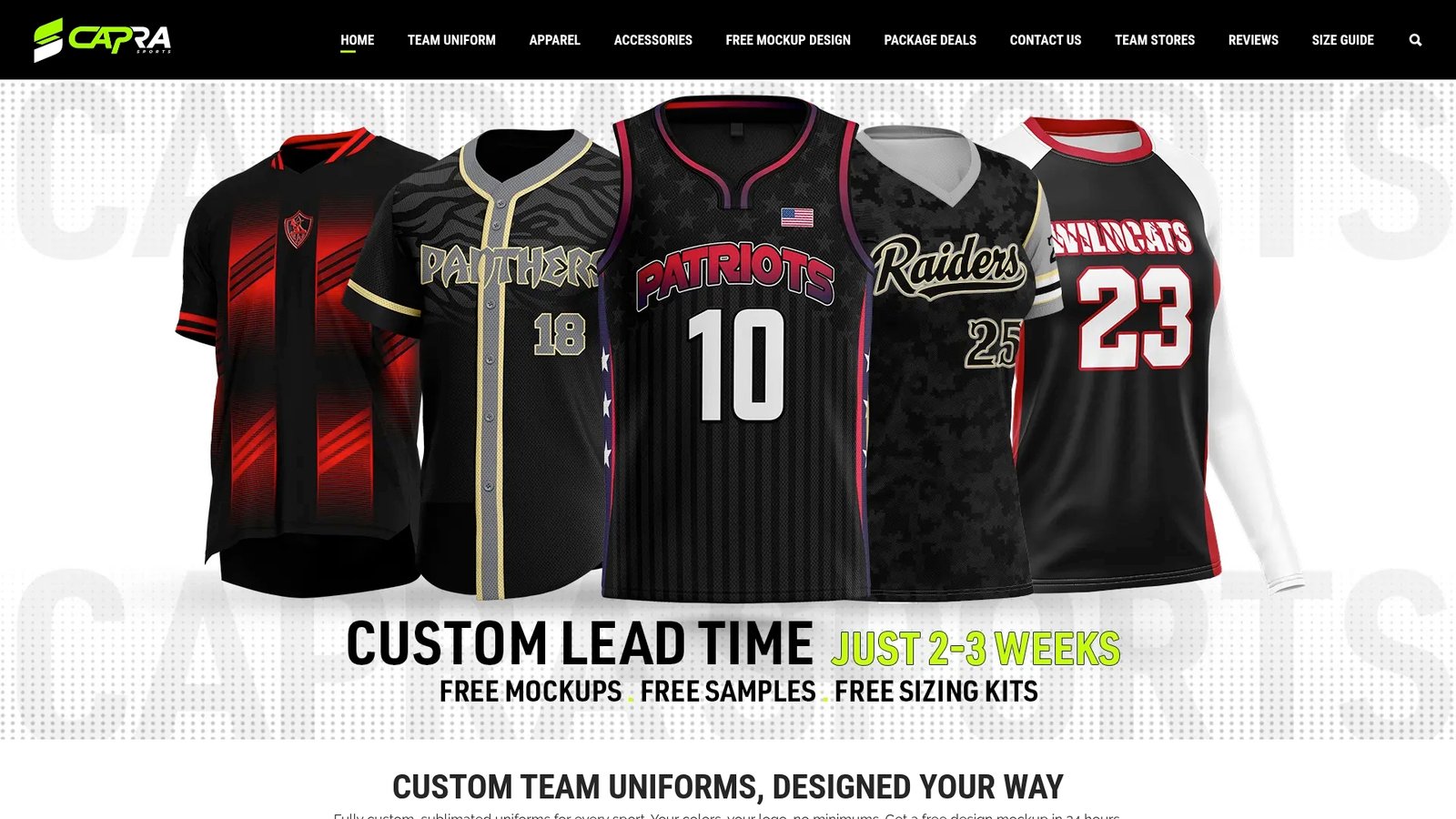
- Browse our custom baseball jerseys to start a design based on button-down, pullover, or retro styles.
- Check pricing by style and note that figures are listed as [PRICE TBD] until you specify your roster size and design details.
- Request a sizing sample so your team can check fit before the full order goes into production.
If you’re also coordinating team communication around a new uniform rollout, RosterSports’ guide to team codes of conduct offers a useful template for introducing changes to players and parents.
FAQ
What makes a good sports jersey design?
A good jersey design starts with one clear team identity: a single style family, a three-color palette, and numbers that meet NFHS contrast and sizing rules. Consistency across the cap, pants, and jersey matters more than any single decorative element.
What are the most popular MLB jerseys right now?
Heading into Opening Day 2026, MLB reported Shohei Ohtani’s jersey as the top seller based on Fanatics network sales data. These lists are a useful reference for current style trends, not a rulebook for team design.
How many inches must a baseball jersey number be?
NFHS rules require back numbers to be at least eight inches high, in a plain Arabic style, solid color, and contrasting with the jersey. Borders around the number are allowed up to a quarter inch.
Is sublimation better than screen printing for a baseball jersey?
Sublimation works best for full-color, all-over designs since the dye embeds into the fabric and keeps it breathable, while screen printing suits simpler, limited-color designs or very small orders. The right choice depends on how complex your artwork is and how many jerseys you’re ordering.
Can I use a professional MLB team’s logo style on our jersey?
Closely copying a professional team’s exact colors, wordmark, or mascot design can create a trademark issue, especially if jerseys are sold publicly. It’s safer to design an original mark inspired by your own school or team name rather than mimicking an existing franchise’s branding.