
Cheer Uniform Design Ideas: Safe Looks Coaches Can Turn Into Samples
For most teams, the smartest move is picking one of three directions: a bold color-block primary look, a mascot-centric crest design, or a modern minimal scheme. Then building every embellishment and seam around visibility and coverage. Each option reads well from the stands or the mat and keeps you inside governing-body rules on coverage and attachments. Whatever direction you choose, treat compliance as a design input from day one, not a fix applied after the mockup.
TL;DR:
- Color blocking provides high visibility and reinforces school colors, especially when using a dominant primary, contrasting secondary, and small trim accents.
- Fabric choices like moisture-wicking and four-way stretch materials are essential for durability and mobility during a full cheer season.
- Rhinestones should only be applied to fabric with factory bonding to reduce dislodgement risks and ensure safety during routines.
- Mockups and samples must be reviewed and approved early, with measurements collected before placing large orders to ensure proper fit.
- Teams should focus on a consistent design motif with two or three key elements to maintain a recognizable identity and secure attachment of embellishments.
Table of Contents
- 1. Top design styles worth considering for your squad
- 2. Materials, fit, and functional design choices
- 3. Embellishments, trims, and safety rules to follow
- 4. From idea to finished uniform: mockups, samples, and ordering
- 5. Checklist and questions to ask your designer or supplier
- 6. The one design rule coaches overlook most often
- How Capra Sports helps you turn a design into a uniform
- Authoritative rule and reference links to consult
- Sources
- FAQ
1. Top design styles worth considering for your squad
Color blocking remains the most reliable starting point because it does two jobs at once: it separates your team visually from every other squad on the sideline and it reinforces school or program colors from a distance. Pick one dominant primary color, a secondary that contrasts sharply (think navy against gold, or black against neon), and a small accent color reserved for piping or trim. Mascot crests work when your program’s identity is strong; keep the artwork centered on the chest or the small of the back, sized so it stays legible at 30 feet, and avoid cramming detail that disappears under stage lighting.
Ombré and gradient panels add motion to a uniform that a flat color can’t match, and they photograph especially well during jumps and tumbling passes where the fabric catches light — for example, check out this Ženska jopica College Sweat Jacket as a stylish option for warmup layers. Geometric panels and angled stripes do similar work for stunt teams: diagonal lines across the torso emphasize the lift and catch sequences that judges are watching. Retro and vintage looks (varsity-style lettering, piping borrowed from old-school warmups) suit programs leaning into tradition, while modern minimal designs, clean fields of color with a single logo mark, suit teams that compete more than they parade and want a uniform that won’t distract from tumbling technique.
- Color blocking: best for sideline visibility and instant brand recognition.
- Mascot crest: best for programs with strong, recognizable team identity.
- Ombré or gradient: best for competition floors with stage lighting.
- Geometric panels: best for stunt-heavy routines that need visual lines.
- Retro or minimal: best for programs prioritizing tradition or clean simplicity.
2. Materials, fit, and functional design choices
Fabric choice determines whether a design idea survives a full season of practice. Stretch-woven blends and moisture-wicking synthetics are the standard for cheer because they move with tumbling and stunting without restricting range of motion, and they dry fast between rounds. Look for fabric with four-way stretch rather than two-way, since two-way stretch tends to bind across the shoulders during full extensions.
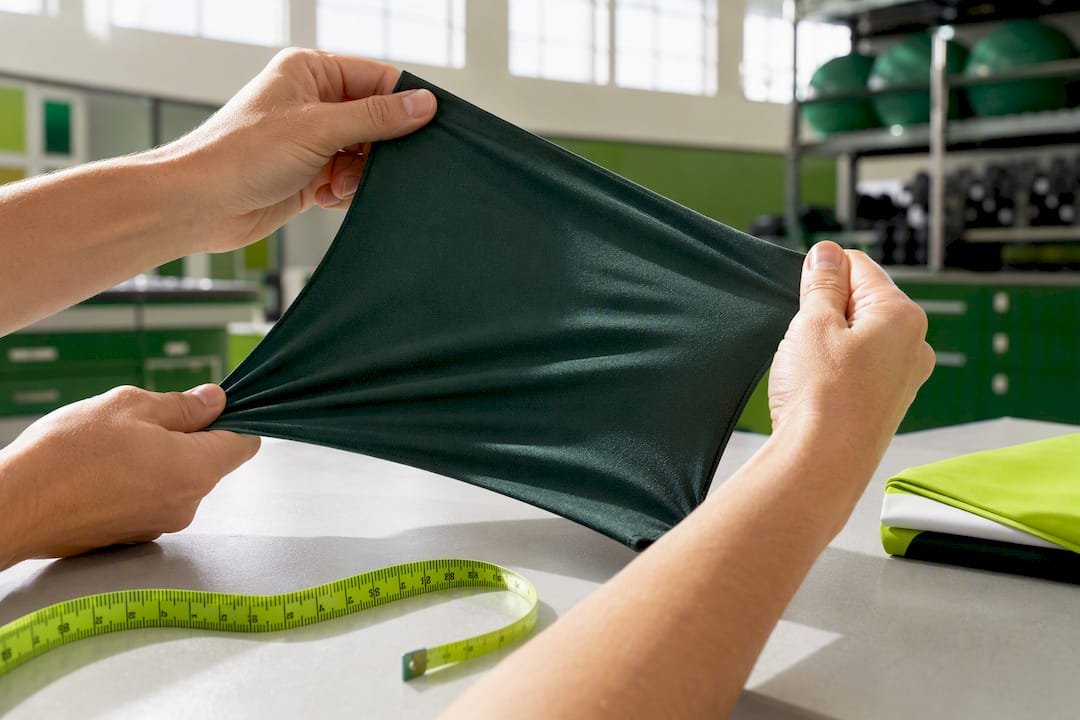
Fit matters as much as fabric. Straps need to sit securely enough that they don’t shift during a toss-to-hands, and shells should sit close to the body without pulling across the midsection when an athlete raises her arms overhead. Coverage at attention (standing still, arms at sides) is the standard governing bodies check first, so any skirt or short length should be measured in that position, not mid-motion.
On construction, ask for reinforced seams at the shoulder and side panels, gussets at the underarm for mobility, and a built-in liner rather than a separate undergarment. These details cost little at the design stage but prevent the tearing and shifting that shows up after a few competitions.
3. Embellishments, trims, and safety rules to follow
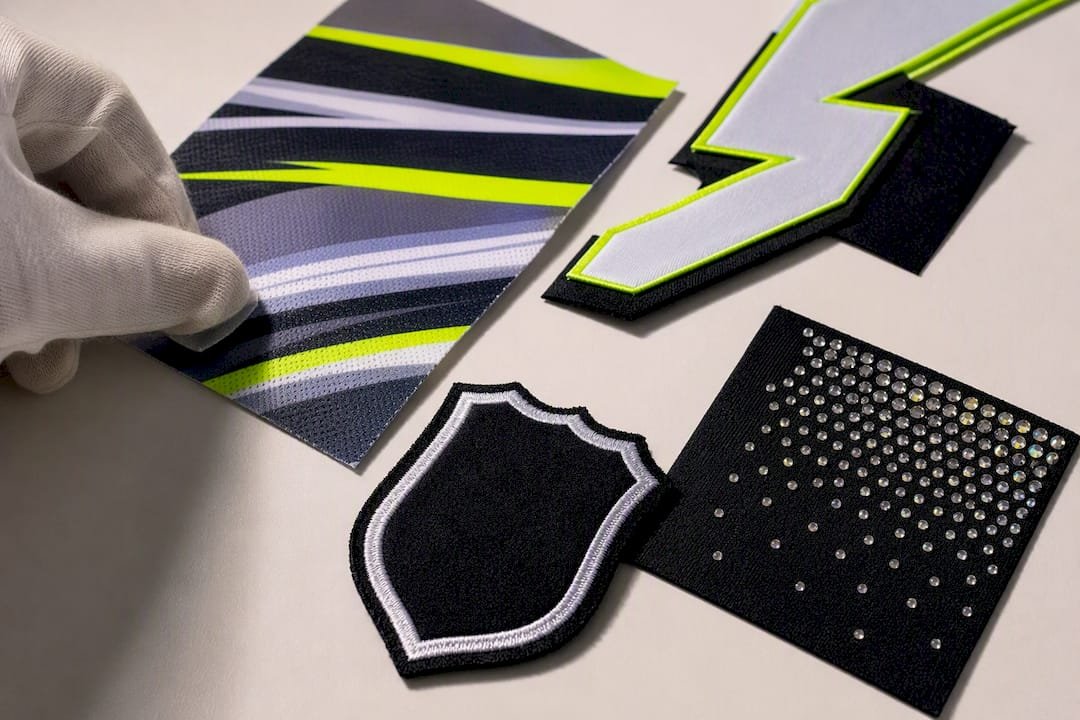
Rhinestones add the sparkle that reads well under arena lighting, but they belong on fabric only. ICU guidance permits rhinestones adhered to clothing while prohibiting them on skin or hair because loose stones near the body raise a dislodgement risk during stunts. Ask your supplier whether stones are factory-bonded during production or hand-glued afterward, since bonded application tends to hold up better across a season.
Sublimation, bonded appliqués, and embroidered crests are safer alternatives to loose rhinestones for teams that want detail without the maintenance. A sublimated design is printed into the fabric itself, so there’s nothing to snag or peel during a stunt sequence.
Bows deserve the same scrutiny as any other accessory: keep them proportional to the athlete’s head size and secured with a clip or elastic rather than a pin. USASF rules prohibit jewelry outright and restrict rhinestones to fabric surfaces, so treat any earring, necklace, or loose accessory as off-limits regardless of how it complements the uniform.
4. From idea to finished uniform: mockups, samples, and ordering
Turning a design idea into a finished uniform follows a predictable sequence, and skipping a step is usually what causes delays later.
- Build a mood board and a short written brief covering colors, mascot elements, and any trim you want, then share it with your designer.
- Review the resulting mockup for color accuracy on both front and back panels, and confirm rhinestone or appliqué placement before signing off.
- Request a full-size sample for a new cut, or a sizing kit if you’re ordering across a wide range of athlete sizes.
- Collect measurements from every athlete using the sizing kit before placing the full order, not after.
- Submit your order early. Designers recommend testing decorative elements in full practice before committing to a full production run, and that testing window needs to be built into your timeline, especially heading into competition season when suppliers see their heaviest volume.
Pro Tip: Order your sizing kit at least one season ahead of a major uniform refresh so fit issues surface before, not during, your production run.
5. Checklist and questions to ask your designer or supplier
A short list of questions before you approve anything saves you from surprises after production starts.
- Ask what the sample and mockup policy covers, and how long turnaround typically takes.
- Confirm sizing minimums and whether a fit kit or single sample is available before a full order.
- Ask how embellishments are attached (factory-bonded versus glued) and what the warranty or repair policy covers.
- Check that the design meets coverage standards at attention, with secure straps and reinforced seams called out specifically.
- If any answer is vague or unverifiable, treat that as a reason to ask for it in writing before you approve the design.
6. The one design rule coaches overlook most often
Coaches often chase sparkle before they lock down identity, and it shows up as a uniform that looks busy instead of recognizable. The programs that get the most mileage out of a design pick two or three consistent elements, a color pairing, a mascot mark, a trim style, and repeat them across the game-day kit and the competition kit so the team reads as one program, not two different squads.
The trade-off worth making is less loose sparkle for more secure attachment. A rhinestone that falls off during a stunt sequence costs you more than the visual impact was worth, and a design that photographs a little less flashy but stays intact through every routine is the one that actually represents the team all season.
— Agha
How Capra Sports helps you turn a design into a uniform
Once you know the direction you want, Capra Sports works directly with you to build it: design mockups, a sizing sample to check fit before the full order, and sublimated fabric designed to keep colors, gradients, and crest details sharp through a full season. Coaches work with a designer through revisions until the mockup matches the team’s vision.
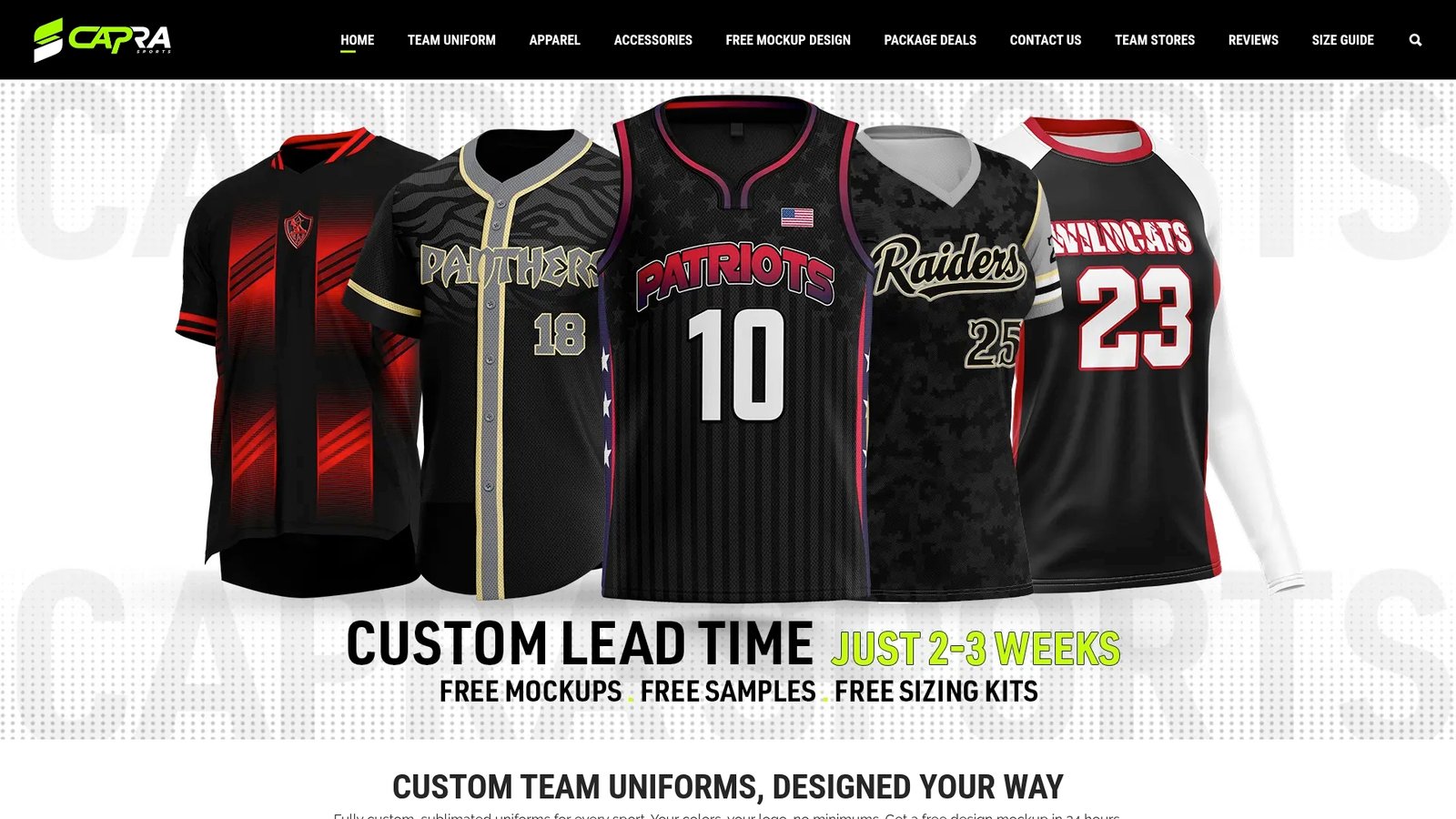
- Free mockups let you check color accuracy and embellishment placement before committing to production.
- A sizing sample confirms fit across your roster before you place a full team order.
- Sublimation printing handles color-block, ombré, and crest designs without loose trim to maintain.
Start by browsing custom uniform pricing to see options for your sport, or check the step-by-step coach’s guide for how the design and approval process works from first sketch to finished order.
Authoritative rule and reference links to consult
- NFHS risk-minimization changes for 2025-26: updated spirit rules affecting uniforms and stunts.
- ICU cheerleading rules: international guidance on embellishments and coverage.
- USASF cheer rules 2025-26: competition standards on coverage, jewelry, and rhinestones.
- Step-by-step custom uniform design guide: a practical design-to-sample workflow.
Sources
- Risk Minimization Focus of 2025-26 High School Spirit Rules Changes
- USASF Cheer Rules 2025-26 (PDF)
- Step-by-step guide to designing a custom cheer uniform
FAQ
Where to design cheer uniforms?
You can work with a uniform supplier that offers direct designer collaboration and free mockups, which lets you review colors, crest placement, and trim before ordering. Look for a process that includes a sizing sample so fit is confirmed before a full team order ships.
What are the latest trends in cheer uniform design?
Ombré and gradient panels, geometric stunt-line paneling, and mascot-centric crests are among the styles teams are leaning into for visibility under competition lighting. Modern minimal designs with a single clean logo mark are also popular among teams that compete more than they parade.
What are the rules for cheer uniform designs?
Governing bodies require adequate coverage at attention, prohibit jewelry, and restrict rhinestones to fabric surfaces rather than skin or hair. USASF’s 2025-26 rules also set minimum inseam and coverage standards for skirts and shorts, so check current rulebooks before finalizing any cut.
What are some cool uniform ideas?
Color blocking with a sharp primary and secondary pairing, a legible mascot crest centered on the chest, and gradient panels that catch light during tumbling passes are all strong starting points. Retro varsity styling or a clean modern minimal look both work well depending on whether your program leans traditional or competition-focused.