
Team Buyers: Decide Mesh vs Dazzle Jerseys in One Week
For most team jerseys, dazzle or a similarly dense smooth polyester is the safer default because it prints cleaner and holds numbers and logos better under game lighting. Open-hole mesh wins on airflow and is worth choosing for hot practices or high-output positions, but you trade some print clarity and durability to get it. The right call depends on whether your team prioritizes cooling or a crisp, photo-ready look.
TL;DR:
- Mesh jerseys offer better airflow but may reduce print sharpness and snag more easily, especially with open-knit constructions.
- Dazzle jerseys provide a denser weave ideal for clear graphics, longer durability, and a traditional jersey feel, making them better for game-day looks.
- The performance of moisture management and drying depends more on knit structure and yarn type than on whether a jersey is labeled mesh or dazzle.
- When decorating, sublimation bonds most effectively with high-polyester fabrics, and proper support during heat-pressing reduces the risk of indentations.
- Testing samples for airflow, drying time, and print clarity before full production ensures fabric choices match team needs and usage conditions.
Table of Contents
- Side-by-side comparison: breathability, moisture management, appearance, and durability
- Printing, sublimation, and heat-press: what works on mesh vs dazzle
- Which to pick by sport, climate, and role
- Buyer checklist: what specs and samples to request and simple tests to run
- A coach’s perspective: common surprises and quick checklist
- How Capra Sports helps teams choose and test jerseys
- Sources
- FAQ
Side-by-side comparison: breathability, moisture management, appearance, and durability
Mesh and dazzle solve different problems, and neither fabric is universally better. The comparison usually comes down to four practical criteria: how much air moves through the fabric, how fast sweat clears, how clean prints look, and how long the jersey holds up.
Open-hole mesh generally allows more air through the fabric than a tight dazzle weave, but the actual airflow depends heavily on how porous the knit is, not just the word “mesh” on the label. A textile study on knit structure found that moisture management and drying performance were driven more by yarn type and knit construction than by marketing terms. Two jerseys both called “mesh” can perform very differently depending on how they’re built.
That same study found something that surprises a lot of buyers: plain single-jersey micro-polyester, not a mesh or blended structure, performed best across drying rate, water-vapor permeability, and vertical wicking in the tested samples. In other words, a smooth, tightly-knit polyester fabric can sometimes outdry a mesh one, because drying depends on microchannel formation in the knit, not on visible holes.
- Air permeability: Mesh’s open structure typically increases airflow, but porosity and yarn denier matter more than the fabric name.
- Moisture management: Drying speed is governed by knit structure, not by whether the tag says mesh or dazzle.
- Opacity and print clarity: Denser weaves like dazzle give sublimation a cleaner, more opaque canvas for numbers and logos.
- Durability: Open constructions snag and pill more easily, especially around seams and under repeated heat-press pressure.
Statistic Callout: According to the knit structure study, plain single-jersey micro-polyester had better performance than textured polyester and polyester-spandex blends across several knit constructions when researchers measured dry rate, air permeability, water-vapor permeability, and vertical wicking. That means the smoothest, most game-ready fabric can also be one of the better performers for sweat management, not just for looks.
Appearance is where the two fabrics diverge most clearly. Dazzle’s tight weave gives sublimated ink a flat, even surface to bond to, so numbers, sponsor logos, and fine text stay sharp from the sideline and in photos. Mesh’s open holes break up that surface, which can blur small details and let an underlayer or skin show through, especially in lighter colors. Weight and feel differ too: dazzle tends to sit heavier and drapes more like a traditional jersey, while mesh feels lighter and looser against the body.
Durability follows a similar pattern. A denser knit resists snagging on equipment, cleats, or turf better than an open-hole structure, and it holds its shape through more wash cycles. Mesh isn’t fragile, but its open cells give more opportunities for a fingernail or a piece of gear to catch a loop and pull it. Proper washing and care extends the life of either fabric, but mesh rewards a gentler routine.
Pro Tip: Ask your supplier for the knit type, yarn denier, and GSM before you compare two fabrics by name alone, since those numbers predict performance better than “mesh” or “dazzle” ever will.
Printing, sublimation, and heat-press: what works on mesh vs dazzle
Decoration method matters as much as fabric choice, and the two are connected. Dye sublimation bonds ink directly into polyester fibers at the molecular level, and it produces the most durable, vivid results on polyester or high-polyester blends, according to a municipal dye sublimation guide. That’s true whether the surface is dazzle or mesh, but the process requires a flat, evenly supported substrate and matched temperature and pressure settings.
Heat-transfer and pigment transfers work well on blends and cotton, but they behave differently on open constructions. A heat-press SOP from an Innovation Studios grant program warns that excessive pressure on textured or open fabrics can leave permanent indentations, and operators are advised to use correct support boards and reduce pressure on those surfaces. Mesh’s holes create uneven contact points under a heat press, so a transfer can press unevenly or leave visible marks where the platen meets open cells versus solid yarn.
- Confirm polyester percentage before choosing a decoration method, since sublimation performs best on high-percentage polyester fabric.
- Request a transferred or sublimated sample on the actual fabric you plan to order, focusing on a numbered area to check edge definition.
- Ask about temperature, pressure, and dwell time the supplier recommends for that specific construction, along with the support method used to prevent indentations.
- Test small fonts and thin lines separately if you’re considering mesh, since fine detail is the first thing lost on an open weave.
Our internal guide on why sublimation printing lasts on team uniforms covers the polyester bonding process in more depth, and our comparison of sublimation, screen printing, and heat transfer breaks down which method fits which fabric and budget.
Pro Tip: Press a small low-pressure sample in-house before approving a full production run. Catching an indentation problem on one swatch is far cheaper than discovering it on thirty finished jerseys.
Which to pick by sport, climate, and role
Matching fabric to the actual game situation solves most of the mesh versus dazzle debate. The two fabrics aren’t competing for the same job most of the time.
- Hot-weather practices and conditioning: Choose mesh or mesh-paneled jerseys for maximum airflow during two-a-days, summer camps, and high-output drills.
- Game jerseys and photographed events: Choose dazzle or a smooth, dense polyester when numbers, sponsor logos, and team colors need to read clearly from a distance or in photos and broadcasts.
- Indoor sports like basketball and volleyball: A denser knit often looks cleaner under arena lighting, but pick a breathable blend if the pace of play runs hot and sweaty.
- Youth and community teams: Balance cost, durability, and appearance, and lean on a sample before committing to a large order since budgets rarely allow for a reorder.
Football and soccer programs that practice in heat but play under lights tend to land on a hybrid solution: mesh panels in high-sweat zones with a denser front panel for the number and logo. Baseball and softball uniforms, which spend more time in direct sun and less time in sustained sprinting, usually do fine with a smooth, dense fabric throughout. The right answer isn’t about which fabric is better on paper. It’s about which one matches how your team actually uses the jersey.
Buyer checklist: what specs and samples to request and simple tests to run
Before you commit to a fabric, get the numbers and touch the material. Specs on a spec sheet don’t always match what arrives.
- Ask for construction details in writing: knit type (single jersey, interlock, or rib), GSM, yarn denier, and polyester percentage.
- Request physical swatches of both fabric options side by side, not just photos or descriptions.
- Order a small transferred sample or a full sublimation sample of a numbered area, then check the edges under normal lighting for blur or bleed.
- Run a blow test by holding the swatch up to a fan or your own breath to compare airflow between two candidates.
- Run a blot and dry test by wetting a small area and timing how long each swatch takes to dry, which tells you more about real-world sweat performance than the label does.
- Do a low-pressure heat-press trial on the swatch if you plan to add names or numbers, checking for indentations before approving the full order.
Jersey knit types vary widely in weight, stretch, and insulation, and general knit fabric structures) explain why single jersey, double knit, and interlock behave so differently even when marketed under similar names. For a high-visibility game set, a new decoration method, or a large spend, order one full-size sample uniform rather than relying on a swatch alone. A swatch tells you about the fabric. A full sample tells you how the whole jersey drapes, fits, and photographs. Our coach’s buying guide for custom basketball uniforms walks through this same checklist for teams ordering their first custom set.
Pro Tip: Keep the swatch and the sample from the same production batch as your final order. Fabric can shift slightly between runs, and matching batches avoids surprises when the full order arrives.
A coach’s perspective: common surprises and quick checklist
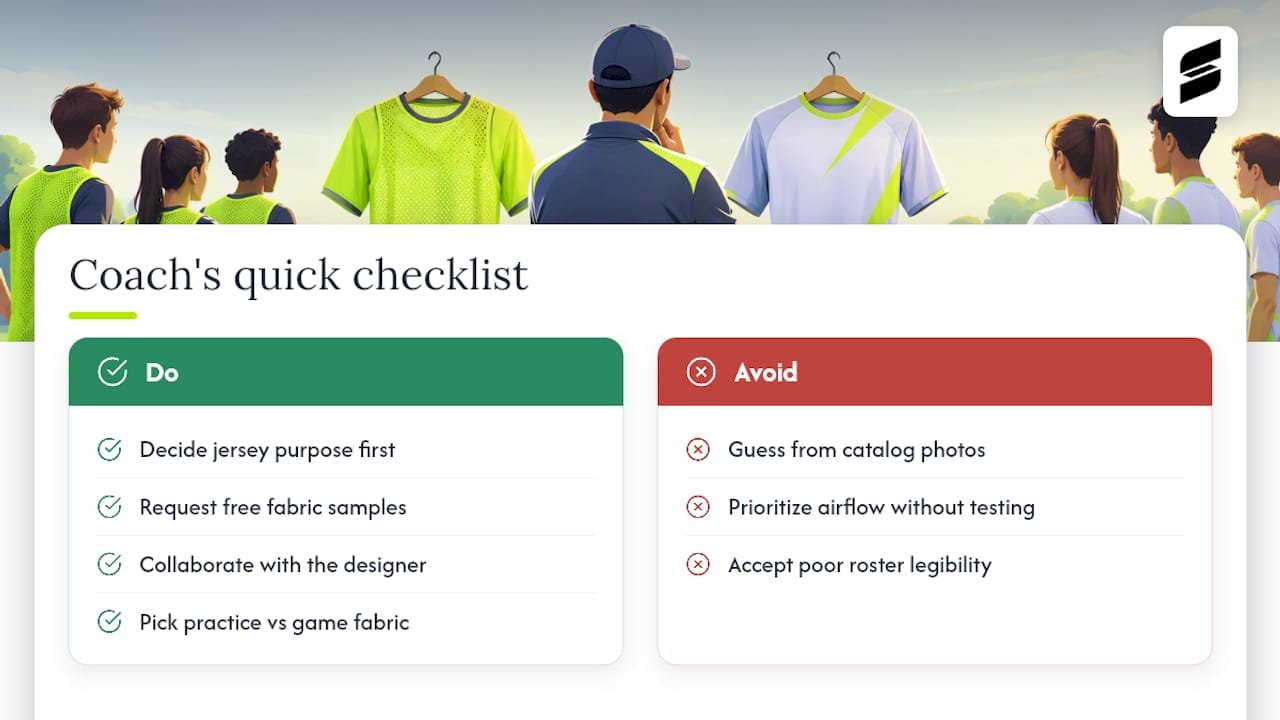
The most common surprise coaches run into is discovering that a mesh jersey they picked for airflow makes the roster numbers harder to read from the bleachers. Great ventilation and clean graphics don’t always come from the same fabric, and that trade-off is worth accepting on purpose rather than discovering it after the order ships.
Most coaches end up prioritizing one thing over the other once they think about how the jersey gets used: practice jerseys favor comfort, game jerseys favor how the team looks in a photo or on film. Free samples and direct designer collaboration can help teams test that trade-off before committing to a full order rather than guessing from a catalog photo.
The fabric that feels best in the locker room isn’t always the one that looks best on the field.
— Agha
How Capra Sports helps teams choose and test jerseys
Choosing between mesh and dazzle gets a lot easier when you can hold both in your hands before you order. Custom sublimated jerseys are available for basketball, baseball, soccer, football, volleyball, and softball, and sizing samples are offered to confirm fit before committing to team quantities, along with designer collaboration to fine-tune the mockup before production.
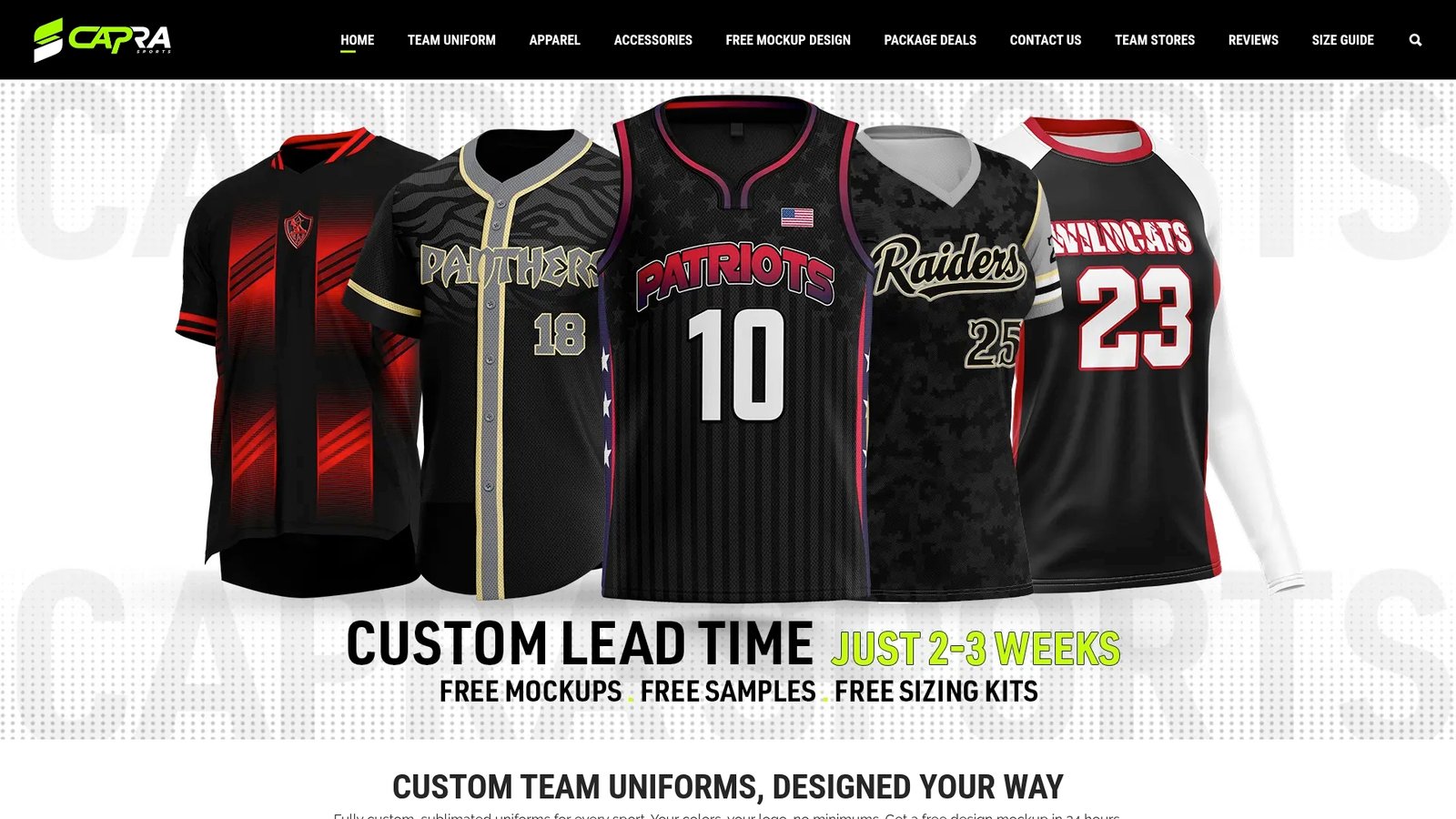
When you reach out, ask for a fabric swatch of both mesh and dazzle options, a transferred sample of your numbers or logo, and a designer mockup that reflects your actual color and font choices. That combination tells you more in a week than a spec sheet tells you in a month.
- Custom sublimated jerseys across seven sports with a designer-collaborated mockup before production.
- A sizing sample at no extra charge so you can confirm fit before committing to team quantities.
- Direct designer input to adjust fabric, layout, and colors based on what your sample reveals.
Browse Capra Sports pricing across all uniform lines to see current per-piece costs, or head straight to the custom basketball jersey page to start a mockup and request your sample.
Sources
- The Influence of Yarn and Knit Structure on Comfort Properties of Sportswear Fabric
- Guide to dye sublimation basics
- EnduraPress heat-press SOP (Innovation Studios grant)
FAQ
Is mesh fabric good for jersey?
Mesh works well for jerseys that need maximum airflow, such as practice wear in hot weather, because its open structure lets air move through more freely than a dense weave. It trades some print clarity and durability for that ventilation, so it fits practice and conditioning gear better than a game-day jersey with detailed graphics.
What are the disadvantages of mesh fabric?
Mesh’s open holes can blur fine print details, let underlayers or skin show through in lighter colors, and snag more easily than a denser knit. Heat-press decoration on mesh also carries a higher risk of uneven pressure or indentations, according to heat-press SOP guidance on textured and open constructions.
What does mesh jersey mean?
A mesh jersey refers to a knit fabric with visible open holes or a porous weave, designed to increase airflow compared to a solid knit. The term describes the visible structure rather than a single fixed fabric, so mesh jerseys can vary in porosity, weight, and polyester content depending on the supplier.
Can you heat press on mesh jersey?
Yes, you can heat press polyester mesh, but the result depends on using a transfer rated for polyester and following the supplier’s recommended temperature, pressure, and dwell time. Supporting the fabric properly during pressing helps avoid the permanent indentations that excessive pressure can leave on open or textured constructions.