
Coaches: Collect Uniform Sizes, Numbers and Names in One Pass
Ask every player for five things in one go: size against the chart of the kit you’re actually buying, jersey number, the exact spelling for the back, how many, and any extras. Give the team one deadline, set three or four days before your real order date, and say out loud what happens to anyone who misses it. Then stop collecting on paper or in a shared spreadsheet and send one link that each family fills in on their own phone. That one change removes the retyping step, and retyping is where most wrong-size jerseys and misspelled names come from.
TL;DR:
- A size on its own isn’t an order. Get size, number, name spelling, quantity and extras in one pass or you’ll chase the roster twice.
- Sizes have to be locked before artwork approval. Custom kits take about 3 to 4 weeks after the proof is approved, so count backwards from game day.
- Paper sheets fail on handwriting and no-shows. Shared spreadsheets fail on overwrites and on nobody knowing who’s still missing.
- A one-link order form lets parents type their own entry, flags duplicate numbers on the spot, and shows you who hasn’t answered. No account for anyone.
- Sublimated names and numbers are dyed into the fabric. A typo means a whole new jersey, not a patch.
Table of Contents
- What Do You Actually Need From Each Player?
- When Should You Collect Sizes, and When Should You Stop?
- Paper, Spreadsheet, or Link: Which Method Actually Works?
- Which Mistakes Turn Into Reprints?
- Does the Same Process Work for Spirit Wear and Fan Shirts?
- Capra Sports’ Field Perspective on Collecting Sizes
- How Capra Sports Fits Into Your Sizing Process
- Get a Free Mockup Before You Collect Sizes
What Do You Actually Need From Each Player?
Most sizing headaches start with asking for too little. If your message says “send me your size”, you’ll be back in the group chat a week later asking for numbers, and again for how the name should be spelled. Here’s the full list, and the specific mistake each item prevents.
| What to ask for | Why it matters | The reprint it prevents |
|---|---|---|
| Size, against the chart of the kit you’re ordering | A youth L compression singlet and a youth L loose basketball jersey don’t fit the same kid | A jersey in the size the player buys at the mall, not the size on the chart |
| Jersey number, plus your tie-break rule | Two players always want 7 | Two number 7s discovered when the box opens |
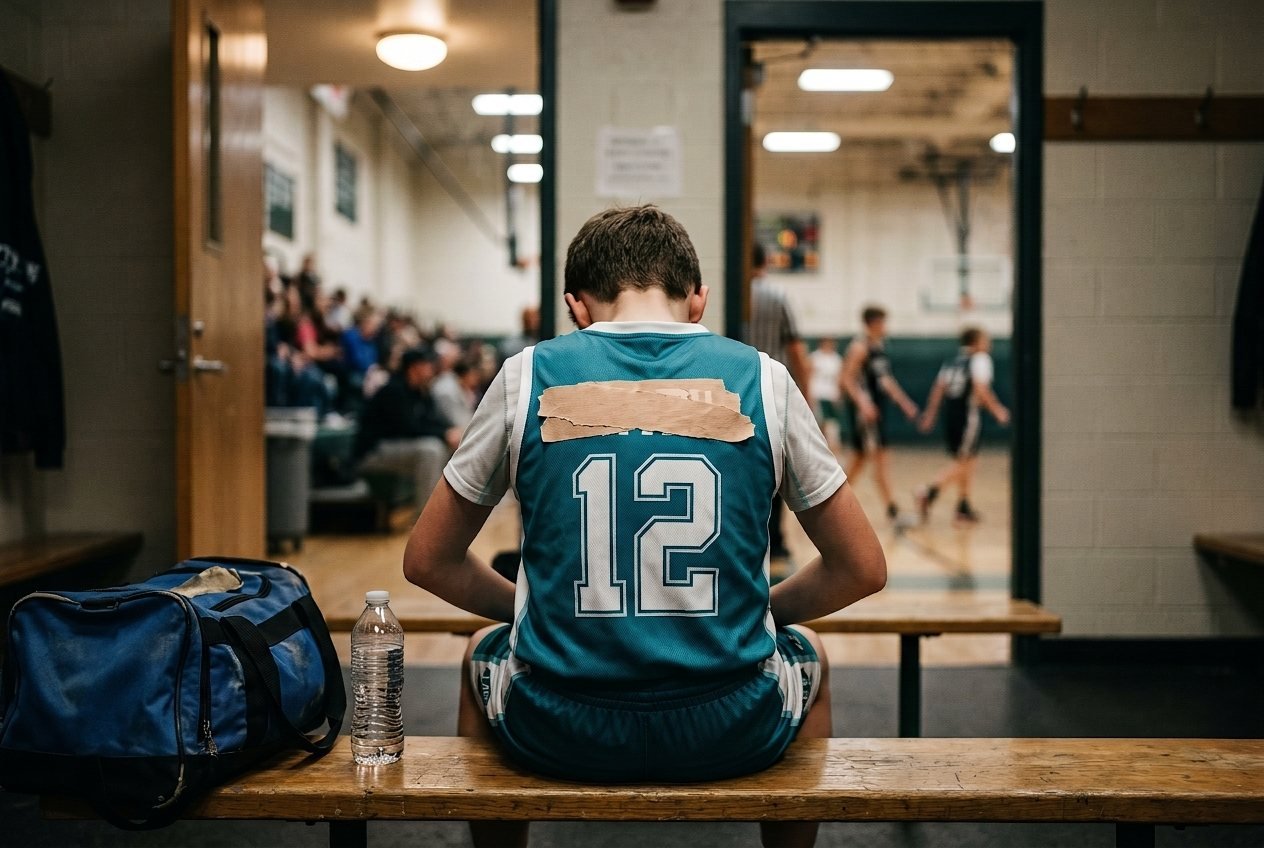
| Name exactly as it should be printed | “Alex” and “Alexander” are different jerseys. So are Nguyen and Nguyễn | The taped-over name in the photo at the top of this post |
| Quantity | Home and away sets, a spare for the keeper, a second shirt for a two-position player | A rush reorder two weeks before the tournament |
| Extras: shorts, socks, warm-up, bag | Optional items get forgotten until the kit arrives without them | A second round of chasing the whole team |
Sizes should be picked against the garment chart, not against habit. Our team uniform sizing guide covers where the tape measure goes and the between-sizes rule. And if there’s a long gap between collecting and playing, remember that kids from age 2 to puberty grow roughly 2 to 2.5 inches a year, per Nemours KidsHealth. A roster measured in May can be a size bigger by September. Our youth jersey sizing guide covers the youth-to-adult crossover sizes where most of those misses happen.
When Should You Collect Sizes, and When Should You Stop?
Custom sublimated kits are made to order. Nothing gets cut until the proof is approved, and sizes have to be final before that. So work backwards from the day the kit needs to be on the players. Here’s the math for a team whose opener is Saturday, October 24:
| Milestone | Date | How it’s worked out |
|---|---|---|
| Season opener | Sat, Oct 24 | The day the kit has to be on the players |
| Kit in hand, with a buffer | Mon, Oct 19 | Five days of slack for a late truck or a wrong-size swap |
| Shipping | Mon, Oct 12 to Mon, Oct 19 | Allow about a week |
| Production | Mon, Sep 14 to Mon, Oct 12 | About 3 to 4 weeks after the proof is approved |
| Proof approved, order placed | Mon, Sep 14 | Sizes must be final by now |
| Player size deadline | Thu, Sep 10 | Three or four days before the order, because someone is always late |
| Send the size link | Mon, Aug 31 | Ten days to collect is plenty when parents can do it on their phone |
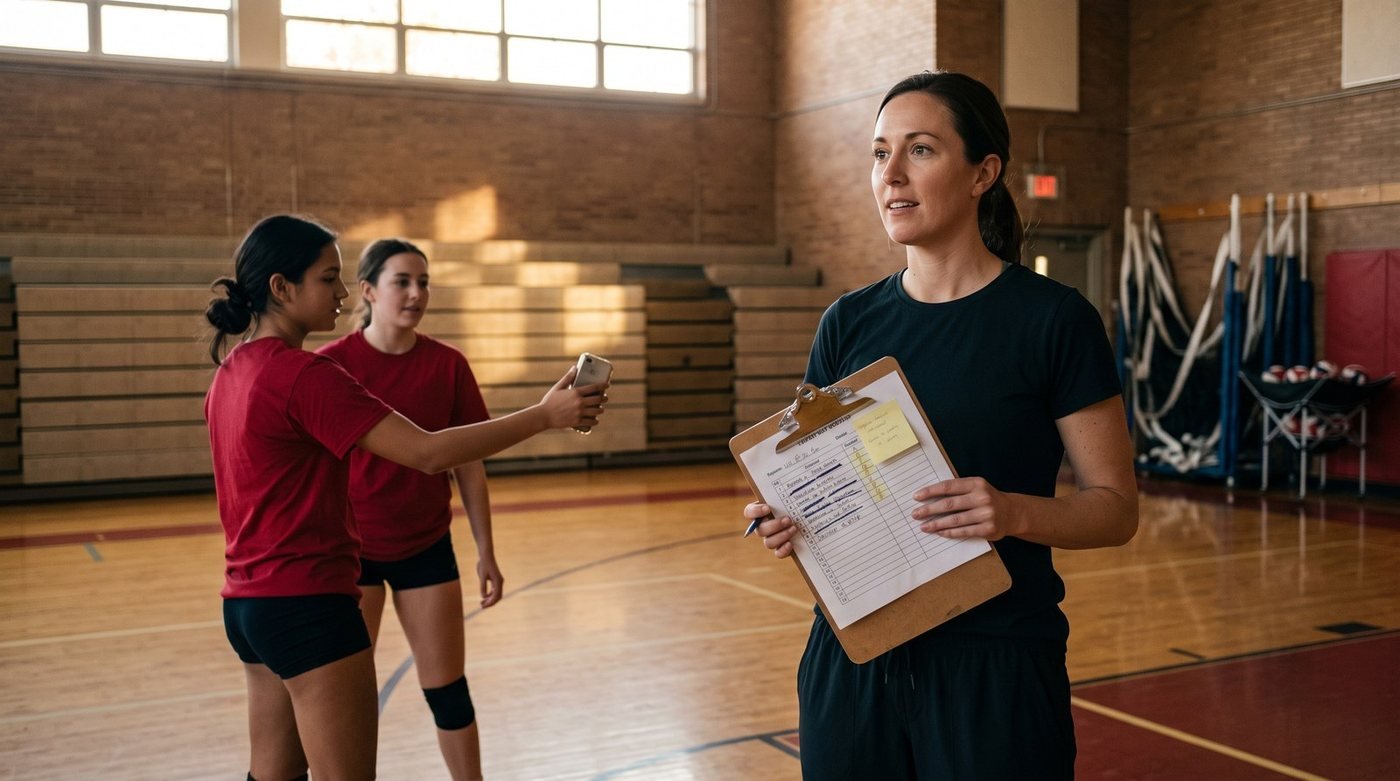
Make the deadline real. The single most useful sentence a coach can put on a sizing request: “Anyone who hasn’t submitted by Sunday night gets ordered a size off the roster and can’t change it.” It isn’t harsh. It’s the only thing that protects the thirteen families who answered from the one who didn’t.
Send it when parents are actually on their phones. A link sent at 9 pm on a school night gets filled in. The same sheet handed out at practice ends up in a car door pocket.
Paper, Spreadsheet, or Link: Which Method Actually Works?
Teams collect sizes three ways, and each one breaks in a different place. Here’s how they stack up on the things that cause reprints.
| Paper sheet at practice | Shared spreadsheet | One-link order form | |
|---|---|---|---|
| Who types the entry | Player, then you retype it | Parent, in a shared file | Parent, on their own phone |
| Times the data gets retyped | 2 (sheet to spreadsheet to supplier) | 1 (spreadsheet to supplier) | 0 (export the roster as-is) |
| Catches duplicate numbers | No | Only if you check by hand | Yes, when the second player picks it |
| Shows who hasn’t responded | No | Only by reading every row | Yes, by name |
| Size chart in front of the parent | Only if you print it | Only if you paste it in | Yes, load any brand’s chart |
| Account or app needed | No | Yes, file access | No |
| Parents can fix their own entry | No | Yes, and everyone else’s too | Yes, only their own, until the deadline |
| Works for the player who missed practice | No | Yes | Yes |
| Best for | Eight players who all show up | Teams that already live in a spreadsheet | Anyone who’s tired of chasing |
The paper sheet still works for eight players who all show up to the same practice. It dies on handwriting, on the kid who missed that night, and on the moment you retype it all into an email for your supplier.
The shared spreadsheet is where most club and travel teams have landed, and it’s better than paper. It fails more quietly. Rows get overwritten, someone sorts the sheet and breaks it, nobody can tell who’s missing without reading every line, and it only works if every parent has and remembers access. Generic form builders fix some of that, but they need an account and know nothing about size charts.
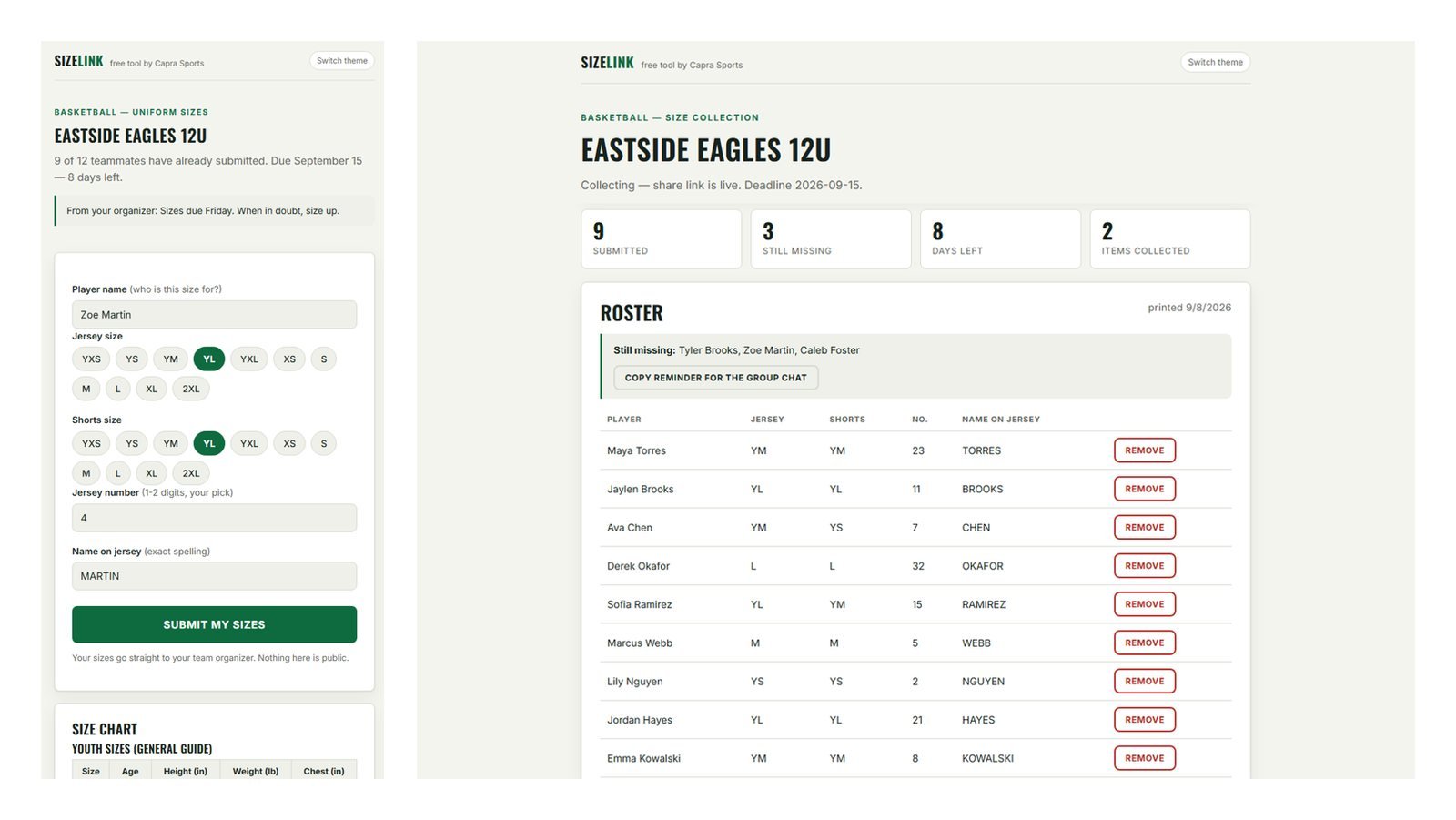
The one-link order form is the third way. Set it up once with the pieces being ordered and the sizes available, drop one link in the group chat, and each family enters their own size, number and name spelling on their phone. You watch the roster fill in live, with the missing names listed. That’s the method we built the free team uniform order form around, after watching coaches lose evenings to the other two.
Which Mistakes Turn Into Reprints?
The expensive mistakes are rarely about a wrong size. They’re about placing the order on the wrong information.
- Ordering off the roster because the deadline passed and half the sizes never arrived.
- Two players with the same number that nobody caught until the box was open.
- Reusing last season’s sizes when half the roster grew over the summer. See the growth number above.
- Sizing blind. A parent picking a size for a jersey they’ve never seen guesses. A parent looking at the mockup of the actual kit, cut and length included, guesses a lot less.
- Deleting the submissions. When a parent swears in October they asked for a large, the timestamped entry that says medium ends the conversation politely.
Here’s why these cost real money. Modern team jerseys are sublimated: the name and number are dyed into the polyester, not stitched or pressed on. A misspelled name can’t be patched. The jersey gets remade, and the remade jersey costs what the first one did. Families are already spending an average of $1,016 a year on a child’s main sport, up 46 percent in five years according to the Aspen Institute’s State of Play 2024 report. Nobody wants to add a second jersey to that bill because of a typo.
Does the Same Process Work for Spirit Wear and Fan Shirts?
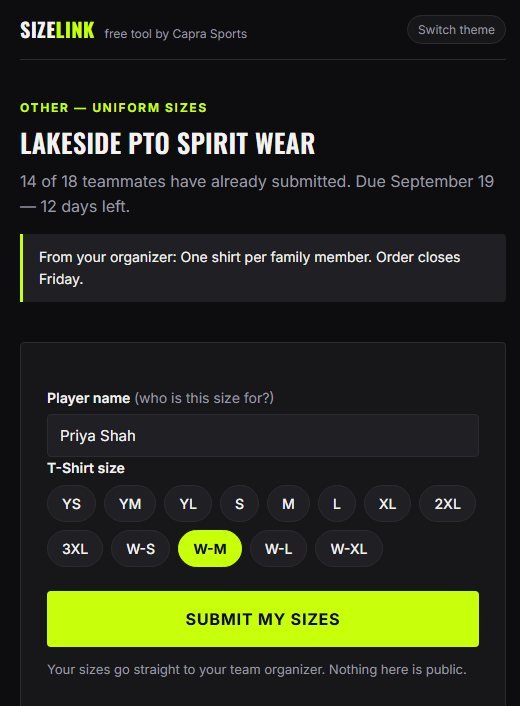
Yes, and it’s usually the bigger order. Booster club shirts, tournament tees and coaches’ polos mix adult and youth sizes on one list and pull in parents and siblings. A t-shirt order form that keeps adult and youth sizes apart and totals them saves the treasurer an evening with a calculator. It also lets the fan order run at the same time as the player order without one holding up the other. Teams that sell spirit wear all season usually move it to a free team store instead, so parents order and pay on their own schedule.
Capra Sports’ Field Perspective on Collecting Sizes
We see the sizing stage from the other end, when the roster lands next to the artwork. The orders that go wrong almost never come from a coach who didn’t care. They come from a coach who did everything right and then retyped fourteen entries at eleven at night.
Coaches volunteer to teach kids a sport and end up doing two weeks of data entry every season. The order form exists to hand them those evenings back. When the parent types the name, the parent owns the spelling, and we print exactly what was typed.
— Agha, Capra Sports
The advice we give every team that asks: collect sizes against the chart of the kit you’re actually buying, put the mockup in front of the families before you ask, and keep the submissions until the season’s over.
How Capra Sports Fits Into Your Sizing Process
The uniform order form is free and stays free whether or not you order from us. Load your own size chart or use ours, share the link, and download the roster when it’s done. If you do order from Capra Sports, that roster becomes the order. Our team uniforms are fully sublimated, team orders start at 10 players, and you can put the design in front of your players before anyone picks a size by requesting a free mockup, back within 24 hours. Our step-by-step design guide for coaches covers what happens once the sizes are in.
Get a Free Mockup Before You Collect Sizes
Parents size better when they can see the kit. Send us your colors, logo and sport and we’ll send back a free custom uniform mockup within 24 hours. There’s no minimum to request one, so you can show the team its jersey before the order form goes out.
Sources
- State of Play 2024 | Aspen Institute Project Play
- Your Child’s Growth | Nemours KidsHealth
- Group Orders | Custom Ink
- Team Uniform Sizing Guide | Capra Sports
FAQ
How far in advance should a team collect uniform sizes?
Send the link about eight weeks before the opener and close it around six weeks out. Custom kits take roughly 3 to 4 weeks after the proof is approved, plus shipping, and sizes have to be final before the proof is approved.
What should a team uniform order form include?
Player name, the name exactly as it should be printed, jersey number, a size for each garment being ordered against that garment’s chart, quantity, and any optional extras such as shorts, socks or a warm-up. Collect all of it in one request.
What if a player is between two sizes?
Size up for a loose-fitting jersey so the player can move and grow into it. Size down for a fitted or compression cut, since the fabric is meant to sit close to the body. Measure the chest and compare it to the garment chart rather than guessing from school clothes.
Is there a minimum order for custom team uniforms?
Team orders start at 10 players. There’s no minimum to request a mockup, so a small team can see its design before deciding how to fill the order.
Can I use the free order form for a kit from a different supplier?
Yes. Load the size chart of whatever supplier you’re ordering from, so the sizes players pick match the garment they’ll get. It works for any group order, not only sports teams.