
6 Sideline Essentials: Coach Apparel Ideas, Templates, Compliance Tips
For most coaches the most useful set is a breathable performance polo, a mid weight quarter zip, a weather-resistant shell, a warmup hoodie, a branded cap, and a stocked coach bag. The polo and quarter zip cover practice and mild game days, the shell handles wind and rain, and the hoodie works for travel and cold bench time. The sections below cover fit, fabric, branding rules, and how to turn this list into an order.
TL;DR:
- Weather-resistant shells and layered tops are essential for outdoor coaches facing changing conditions during long games.
- Fabric quality, especially stitching density and resistance to washes, determines how long apparel maintains a professional appearance.
- Logos should be placed prominently on the left chest, with secondary branding kept small on sleeves or collars to avoid clutter.
- Proper sizing involves ordering slightly larger for layering and requesting samples to confirm fit and fabric drape before bulk orders.
- Pricing varies by finish and fabric weight, with apparel meant for heavy use costing more, and matching uniform prices offering full program consistency.
Table of Contents
- Top coach apparel ideas and when to wear each one
- How sport and coaching role change your apparel picks
- Fabric and feature choices that hold up over a season
- Branding and logo placement that reads clean from a distance
- Packing and ordering logistics that save a season
- Design templates you can hand straight to a designer
- Budget considerations and price ranges for coach apparel packages
- Comparing apparel quality across suppliers
- Choosing apparel by age group and team level
- Getting the fit right for a full day on your feet
- What actually matters when you build a coach wardrobe
- How Capra Sports helps you get from idea to order
- Sources
- FAQ
Top coach apparel ideas and when to wear each one
Every sideline wardrobe starts with a few core pieces, and each one earns its place for a specific moment rather than general style.
A performance polo made from a poly blend handles practices and warm-weather games because it wicks sweat and resists wrinkling after a wash cycle. A quarter zip pullover goes over the polo for early morning practices or cool evening games, adding warmth without blocking arm movement for drills or signals. A sideline shell, built from a windproof or water-resistant fabric, is the piece coaches reach for when weather turns during a game, since it layers over anything else without adding bulk, as detailed in this team jacket design guide.
Warmup hoodies fill the pregame and travel gap, especially for bus rides or chilly warmups before tip-off or first pitch. Headwear and small accessories, like a structured cap or a branded beanie, do double duty: they keep sun and wind off a coach’s face and reinforce team identity every time a camera finds the sideline.
- Performance polo: moisture-wicking fabric for practices and warm games.
- Quarter zip or pullover: light insulation for layering without restricting motion.
- Sideline shell: wind and water resistance for unpredictable weather.
- Warmup hoodie: comfort for travel days and pregame routines.
- Branded cap or beanie: visibility and consistent team identity.
How sport and coaching role change your apparel picks
A football coach’s needs differ sharply from a basketball coach’s, mostly because of how much time each spends outdoors and how much mobility each job demands.
Football coaches lean on weather resistant shells and layered sideline systems, since games run long and conditions shift fast. Baseball and softball coaches tend to favor dugout friendly pullovers and button front tops that look sharp on camera but still allow quick movement to the fence or mound. Basketball and other indoor coaches do better in breathable polos and lightweight track jackets, since gyms run warm and games move fast enough that bulky layers get in the way.
Soccer and other field sport coaches often choose low profile rain shells paired with mobility focused polos, since touchline coaching means constant walking and occasional sprinting. Athletic trainers need garments built around function first: pieces with zippered pockets and quick access points for tape, wraps, or a stopwatch matter more than style.
- Football: weather-resistant shells and layered sideline systems for long games.
- Baseball/softball: dugout-friendly pullovers and button-front tops.
- Basketball/indoor: breathable polos and lightweight track jackets.
- Soccer/field sports: low-profile rain shells with mobility-focused polos.
- Athletic trainers: pocketed, quick-access garments for tape and gear.
Fabric and feature choices that hold up over a season
Fabric choice decides whether coach apparel still looks sharp in October or starts to sag after a few washes. Moisture-wicking synthetics and poly blends dominate for a reason: they dry fast, resist odor, and hold color better than cotton blends through repeated team laundering.
Windproof or water-resistant shells make sense for coaches who spend full games outdoors in unpredictable weather, while insulated liners suit coaches in consistently cold climates who need warmth more than breathability. A few construction details separate a garment that lasts from one that does not: zippered pockets that keep a phone or whistle secure, taped seams that stop water at the stitch line, and underarm venting that keeps a shell wearable during a sprint to the sideline.
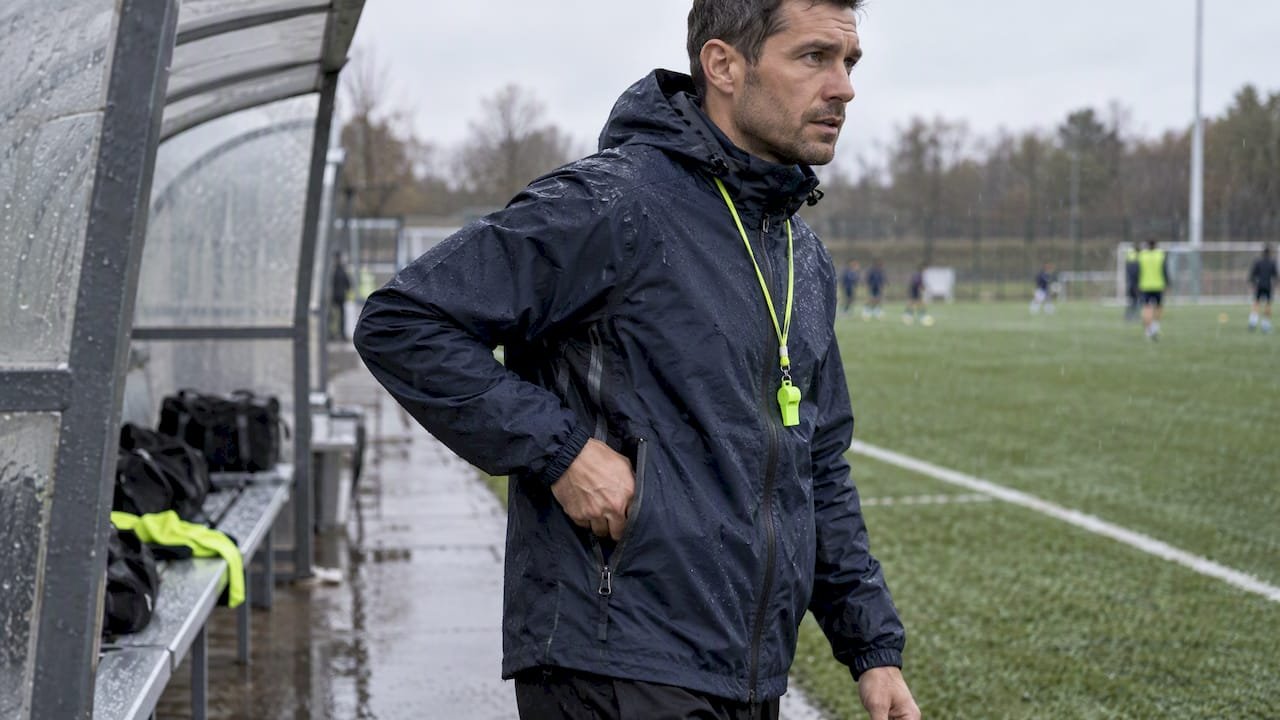
Care matters as much as the fabric itself. Cold water washing and air drying protect both the synthetic fibers and any printed or embroidered logo, since high heat is what causes cracking and peeling on heat-applied graphics over time.
Branding and logo placement that reads clean from a distance
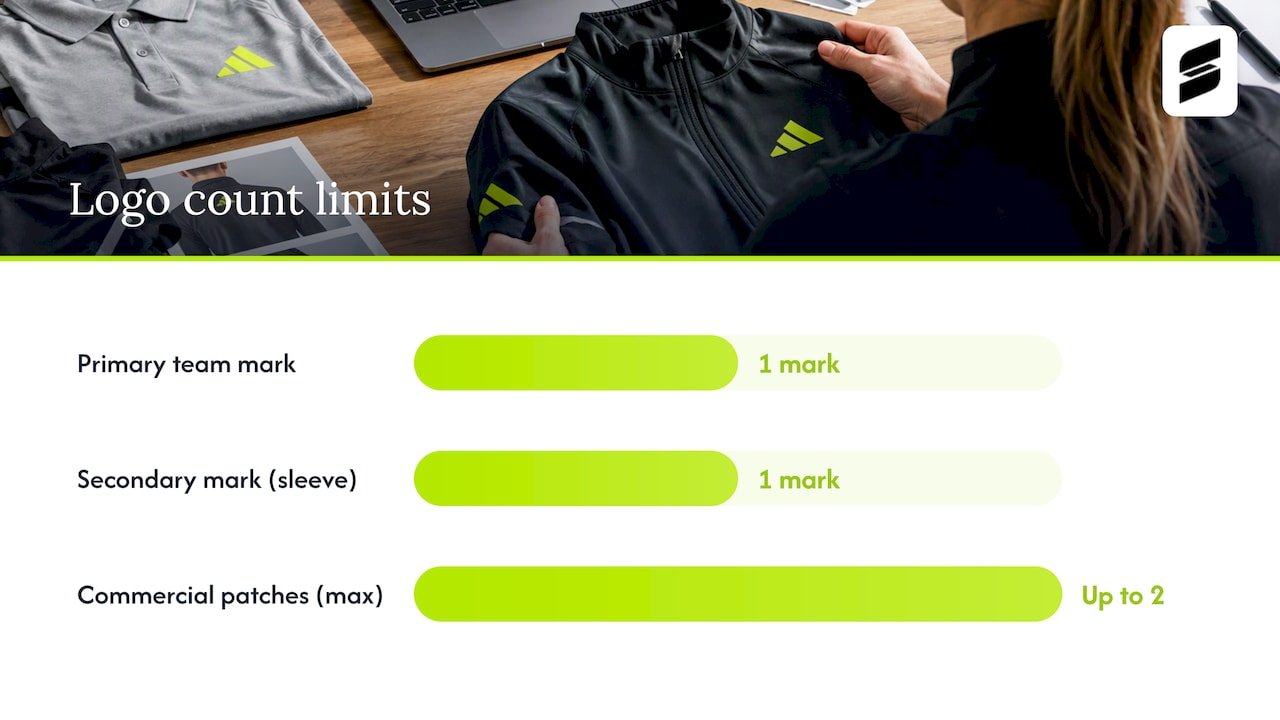
Good branding on coach apparel comes down to restraint: one primary mark, placed where it reads clearly from the stands, beats a shirt covered in logos.
Left-chest placement at a modest size is the standard for a reason. A second mark, if used at all, belongs on a sleeve or the back collar, never competing with the primary logo for attention.
- Primary team mark: left chest, sized for legibility from a distance.
- Secondary mark (sponsor or event): sleeve or back collar, smaller scale.
- Contrast matters: dark thread on light fabric or vice versa reads best on camera.
Governing bodies are also shaping how much branding apparel can carry. The NCAA Division I Cabinet approved a proposal permitting up to two additional commercial patches on uniforms and apparel for non-championship competition, with each patch capped at 4 square inches and placement reviewed by sport committees. A limited number of commercial patches with a modest maximum size is the new ceiling colleges are working within, and it is a useful benchmark even for programs outside that governing structure when deciding how much sponsor branding a jacket or polo can reasonably carry. Embroidery tends to outlast heat transfer on pieces that see heavy wash cycles, while heat-applied print works fine for lower-cost, shorter-life items like event-specific shirts.
Packing and ordering logistics that save a season
The apparel is only half the job. How it is packed, maintained, and ordered determines whether it actually helps on game day.
A mesh sub-bag system inside a coach bag, with separate pouches for medical supplies, spare apparel, and hardware, keeps a sideline emergency from turning into a search party. Cold-weather games call for their own kit: layering a moisture-wicking base layer under team gear, carrying heat packs, and storing spare dry layers in a waterproof container all help a coach stay focused instead of cold.
- Pack separate mesh sub-bags for medical, hardware, and spare apparel.
- Add heat packs and a spare dry layer for cold-weather games.
- Request a design mockup before committing to a full order.
- Approve a physical sample to confirm sizing and fabric drape.
- Ask suppliers about wash testing on stitching and printed graphics.
Pro Tip: Hand a single labeled mesh sub-bag to an assistant coach instead of the whole bag. It keeps supplies organized and saves time when someone else needs to grab gear fast.
Design templates you can hand straight to a designer
A designer works faster with a clear reference than with a vague request, so it helps to walk in with a template in mind rather than starting from a blank page.
A minimal, professional look pairs a tonal polo with subtle piping and a single left-chest wordmark, a combination that photographs well and never looks busy. A field-ready template adds high-visibility accent colors to a water-resistant shell with an embroidered crest, built for coaches who spend full games exposed to weather. A travel set, useful for away games or tournaments, combines a hoodie, a packable jacket, and a matching cap, all carrying the same primary mark for consistency across the trip.
- Minimal pro look: tonal polo, subtle piping, left-chest wordmark.
- Field-ready set: high-visibility accents, water-resistant shell, embroidered crest.
- Travel set: hoodie, packable jacket, and cap sharing one primary mark.
- Finish choice: embroidered crests hold up longer than printed names, though tackle twill offers a mid-cost alternative with strong durability.
Budget considerations and price ranges for coach apparel packages
Coach apparel budgets usually break into two buckets: a core set worn most of the season and a smaller rotation of travel or event pieces.
Pricing varies by piece and by finish, since embroidery and heavier fabrics cost more than a basic printed polo. For programs sourcing matching team uniforms alongside coach gear, Custom Basketball Uniforms run $35.99 to $39.99 per piece, Custom Baseball Uniforms run $66.99 to $74.99, Custom Soccer Uniforms and Custom Volleyball Uniforms both run $35.99 to $39.99, and Custom Football Uniforms run $57.99 to $64.99. A custom backpack to match runs $48.99 to $54.99.
Coach-specific apparel like polos, shells, and hoodies typically carries its own separate pricing structure from uniforms, so it is worth requesting a quote that covers both the player kit and the coaching staff set in one pass. Programs ordering for an entire coaching staff should also factor in embroidery setup costs, which are usually a one-time fee that applies across the whole order rather than per item. Keeping coach apparel and player uniforms on the same color program tends to simplify both the design process and the final invoice.
Comparing apparel quality across suppliers
Not all coach apparel is built the same, and the difference usually shows up after a few wash cycles rather than on the first wear.
Fabric weight is the first signal: a polo or shell that feels thin out of the package often pills or thins out within a season. Stitch density on logos matters just as much. Embroidery with tight, even stitching holds its shape through repeated laundering, while loose stitching unravels at the edges within a few months. Sublimated graphics, which dye the fabric itself rather than sitting on top of it, tend to resist cracking and fading better than standard screen print over a full season of outdoor wear.
When comparing options, ask directly about wash testing and stitch density rather than relying on photos alone, since both details are hard to judge from a product listing. A supplier willing to send a physical sample before a bulk order is giving a coach the clearest possible look at how a garment will actually perform, which matters more than any marketing claim on a product page.
Choosing apparel by age group and team level
A youth recreation league and a varsity program have different apparel priorities, even when both are buying the same style of polo or shell.
Youth programs benefit from simpler, more affordable pieces since players and budgets both turn over every season or two: a basic polo and a lightweight pullover usually cover most needs without a large investment. Middle and high school programs tend to add a sideline shell and a warmup hoodie to the mix, since practices and games run longer and across more weather conditions. Club and travel teams, which play more games in more locations, often justify a full set including a travel hoodie, packable jacket, and matching cap, since consistent identity matters more when a team is representing itself outside its home area.
Budget allocation should follow actual use. A coach running three practices a week needs a durable, breathable polo more than a dress-up piece worn twice a season, while a program that travels for tournaments gets more value from a packable shell than from a second polo in a different color.
Getting the fit right for a full day on your feet
Coach apparel has to survive bending, reaching, and standing for hours, so fit matters more here than it does for a shirt worn to an office.
A polo that is too tight across the shoulders restricts the arm motion needed for signaling plays or demonstrating a drill, while one that is too loose catches wind and looks sloppy on camera. The safest approach is sizing slightly looser through the body and torso while keeping sleeves fitted enough that they do not bunch during movement. Layering pieces, like a quarter zip worn over a polo, should be ordered one size up from a coach’s normal fit to leave room for the base layer without feeling restrictive.
Requesting a single sizing sample before placing a full staff order is the most reliable way to confirm fit, since body types and comfort preferences vary even among coaches who normally wear the same size. A sample also reveals how a fabric drapes in motion, which a size chart alone cannot show.
What actually matters when you build a coach wardrobe
Most coach apparel decisions come down to three things: does it survive a full season of washing, does it read clearly from the stands, and does it let a coach move without thinking about the shirt. Everything else, down to piping color or collar style, is secondary to those three.
The biggest mistake I see is over-designing a jacket or polo until the team mark gets lost in the noise. A single, well-placed logo on a durable fabric beats five small marks scattered across a garment, every time. Working directly with a designer on one clean template, rather than picking from a generic catalog, is what makes the difference between apparel that looks assembled and apparel that looks like a team.
— Agha
How Capra Sports helps you get from idea to order
Capra Sports builds custom apparel and uniforms around the design a coach actually wants, with a design process that starts with a mockup and includes a sample before any full order ships. That gives a coaching staff a real look at fabric drape, fit, and logo placement before committing a season’s budget to it.
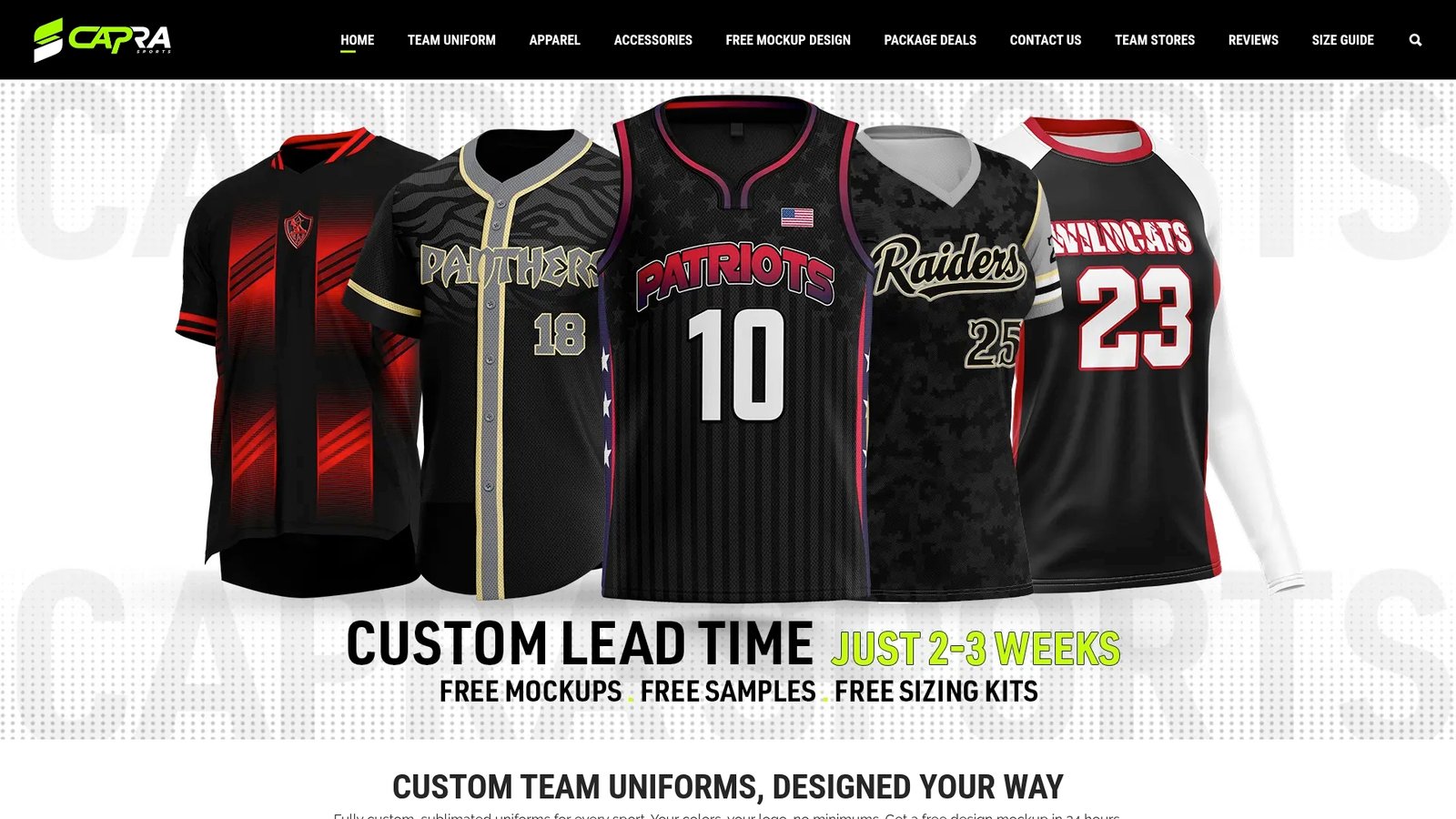
Starting the process is simple: visit the pricing and design request page to outline the sport, the pieces needed, and the logo placement in mind. When requesting a mockup, specify the fabric weight, the exact logo colors, and whether the order needs to match an existing player uniform, since those details shape how close the first draft lands to what a coach actually wants to wear on the sideline.
Sources
- DI Cabinet approves commercial patches for uniforms, equipment and apparel
- 10 things every youth football coach needs in his football bag
FAQ
What is a cool gift for a coach?
A branded quarter zip pullover or a personalized coach bag are practical gifts a coach will actually use on the sideline. Pieces that pair team colors with a small embroidered title, like “Head Coach” on the chest, tend to stand out without feeling excessive.
How should a coach dress on the sideline?
A coach should dress in layers built for movement: a performance polo as a base, a quarter zip or shell added for weather, and a cap for sun or visibility. Clothing should allow full arm motion for signaling plays and standing comfortably for an entire game.
What does every coach need in their apparel kit?
Every coach benefits from a performance polo, a weather resistant shell, a warmup hoodie, and a branded cap as the core rotation. A stocked coach bag with separated mesh sub-bags for medical supplies and spare gear rounds out a functional kit.
What is a good slogan for a coach to put on apparel?
A strong coach slogan is usually short, specific to the team’s identity, and easy to read from a distance, such as a team motto or a single word tied to the program’s values. Keeping it to a few words at most keeps the design clean and legible on a polo or jacket.
How much does a coach apparel package typically cost?
Pricing depends on the fabric, finish, and number of pieces ordered, with embroidery and heavier shells costing more than basic printed polos. Programs ordering matching uniforms alongside coach gear can check current per-piece pricing for specific sports to plan a full staff and team budget together.