
5 Uniform Checks U.S. Teams Need for USSSA Uniform Rules
USSSA requires matching team jerseys with readable, non-duplicating numbers, double ear-flap batting helmets for every offensive player, and cleats that match the age division. Tournament Directors have final say on uniform legality, and bats must meet age-specific stamps and drop limits tied to USSSA National By-Laws. Get these five things right and you will rarely have a problem at check-in.
TL;DR:
- USSSA mandates that team jerseys have clearly readable, non-duplicating numbers at least three inches high, with matching color and style for all players.
- Helmets with double ear flaps are strictly required for all offensive players at bat, on deck, or on base, and catchers must wear full protective gear with impact certification.
- Cleats are non-metal for players under 13U, while 13U and older can wear metal spikes, and bat drop limits vary by age division with specific standards for youth and scholastic levels.
- Uniform violations are handled directly by tournament directors who can require immediate correction or bench players without grounds for protest, emphasizing pre-game checks.
- Teams should provide detailed written specifications, order sample jerseys early, and verify all aspects such as number height, sleeve color, and logo placement before final production.
Table of Contents
- Core USSSA uniform rules for jerseys, numbers, and logos
- Equipment and age-specific safety rules for helmets, catchers, and cleats
- How uniform violations are handled at USSSA events
- Ordering compliant custom uniforms: a checklist for teams
- Why the rules exist and how to keep your team’s identity
- How Capra Sports helps teams get USSSA-compliant uniforms
- Sources
- FAQ
Core USSSA uniform rules for jerseys, numbers, and logos
Every player on a USSSA roster needs a matching team jersey or shirt with a number that is clearly readable from a reasonable distance and does not duplicate another player’s number on the same roster. Most tournament Rules Packets lean on NFHS guidance, which commonly calls for numbers at least 3 inches high along with limits on manufacturer logo size, so ordering to that standard keeps you compliant across most events even though USSSA itself does not publish a single universal number height.
Pants, socks, and caps should be consistent across the roster in color and style, and coaches typically treat these as a package rather than mixing and matching pieces from different seasons. Logos are where teams most often trip up: USSSA’s by-laws prohibit the visual display of non-USSSA association logos on uniforms, and manufacturer branding is capped in size with limited placement for patches.
Sleeves matter for pitchers specifically. Exposed white or gray undershirt sleeves are a common source of confusion, since visibility issues for batters have made bare or light-colored sleeves on the mound a point of scrutiny at the youth level, and teams generally solve this by keeping sleeve color uniform across the whole roster rather than letting pitchers wear something different from position players.
Before placing an order, confirm these items with whoever is making your uniforms:
- Numbers are non-duplicating and meet or exceed the commonly cited 3 inch height.
- Jerseys, pants, and caps match in color and style across the full roster.
- No non-USSSA association logos appear anywhere on the uniform.
- Manufacturer logos stay within typical size and placement limits.
- Sleeve color is consistent for every player, including pitchers.
Equipment and age-specific safety rules for helmets, catchers, and cleats
Helmets are the single most strictly enforced safety item in USSSA play; see this detailed baseball sizing guide for recommended helmet and gear sizes to ensure compliance. Every offensive player must wear a double ear-flap batting helmet while at bat, on deck, or on base, a rule spelled out directly in USSSA’s national by-laws under section 7.01.H, and younger divisions typically extend that same double ear-flap standard to catchers’ helmets during warm-ups and in-game receiving.
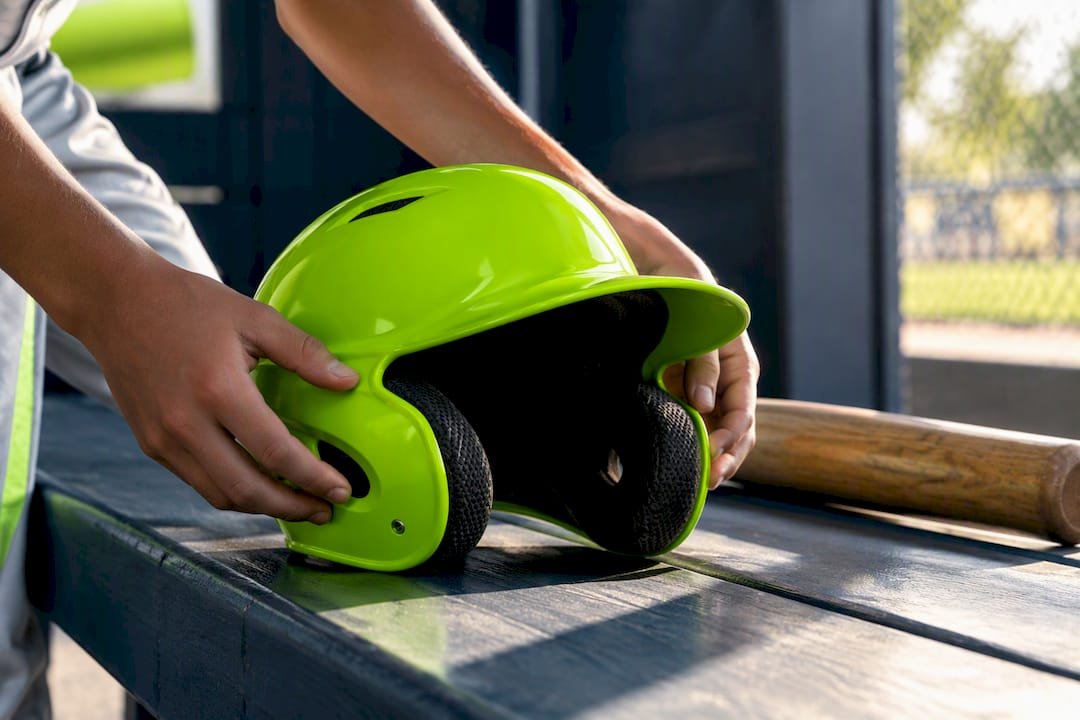
Double ear-flap helmets are mandatory for all offensive players at bat, on deck, or on base, according to USSSA’s rules, and umpires check this before a batter steps in.
Catchers need full protective gear: helmet with mask, chest protector, shin guards, and a throat guard, and equipment carrying a NOCSAE stamp is the safest way to confirm it meets impact standards where that applies. Cleats follow a clean age split, also drawn from USSSA’s by-laws:
- Players in the 4U through 12U divisions must wear non-metal cleats.
- Players 13U and older may wear traditional metal spikes.
- Bats for 14U and younger need the USSSA 1.15 BPF stamp, with a maximum drop of -8 for 13U and -5 for 14U unless a state exception applies.
- Scholastic-age divisions that use BBCOR bats must confirm that standard with their specific league before tournament play.
An illegal bat discovered mid-game typically results in the bat being removed from play and the plate umpire addressing it under the applicable rule, rather than a blanket forfeiture, though consequences can escalate if a team repeats the violation.
How uniform violations are handled at USSSA events
USSSA does not allow protests over uniform issues. Section 7.01.E of the national by-laws puts that authority squarely with the League or Tournament Director, who decides on the spot whether a uniform is legal and can require immediate correction or bench a player until it is fixed.
- The Tournament Director flags the issue, usually at check-in or during pregame warm-ups.
- The team is given a chance to swap in a conforming item, such as a spare jersey or a compliant helmet.
- A player who cannot correct the issue may sit until it is resolved.
- Repeat or willful violations can lead to a manager’s ejection.
Pro Tip: Run a five-minute helmet and number check before every game, not just the first one of the day, since gear gets swapped between players more than coaches expect.
Ordering compliant custom uniforms: a checklist for teams
When you order, hand your supplier a written spec covering number height and font, sleeve length, undershirt color (never white for pitchers), and exact logo and patch size limits, including placement for any American flag or memorial patch. Confirming these details in writing before production avoids a reorder mid-season.
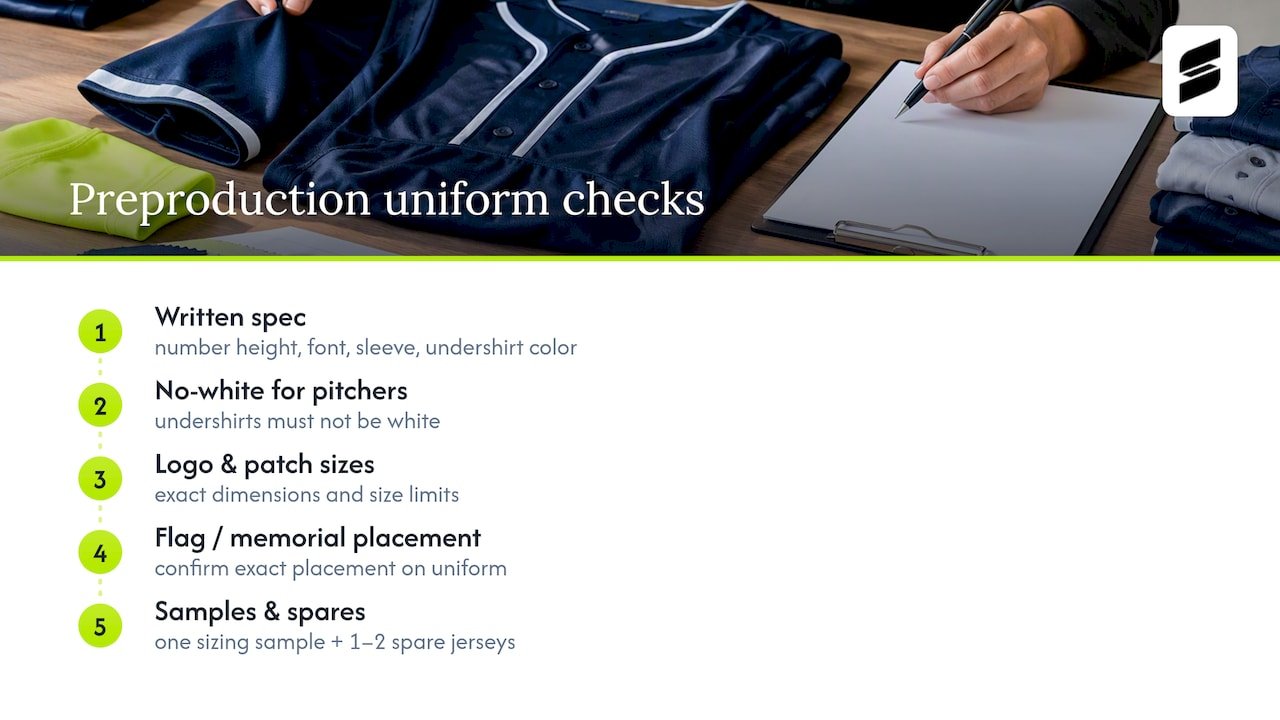
Order at least one sizing sample plus one or two spare jerseys for the roster, since a lost or damaged jersey the morning of a tournament is a common cause of last-minute scrambling. Keep photographed mockups, your written spec sheet, and the sample’s size tag on hand at check-in. A baseball size chart makes it easier to nail sizing before the samples ever ship.
Why the rules exist and how to keep your team’s identity
These rules exist to keep players safe, make identification instant for umpires, and keep tournaments moving on schedule. You can still express team identity through color, font, and sublimated design work within the size and logo limits. Check helmets and numbers every game morning.
— Agha
How Capra Sports helps teams get USSSA-compliant uniforms
Getting a jersey that fits the rule book and fits your players should not take multiple rounds of guesswork. A custom uniform supplier may include a sizing sample at no extra charge, plus a mockup within 24 hours to confirm number placement and undershirt color before production starts.
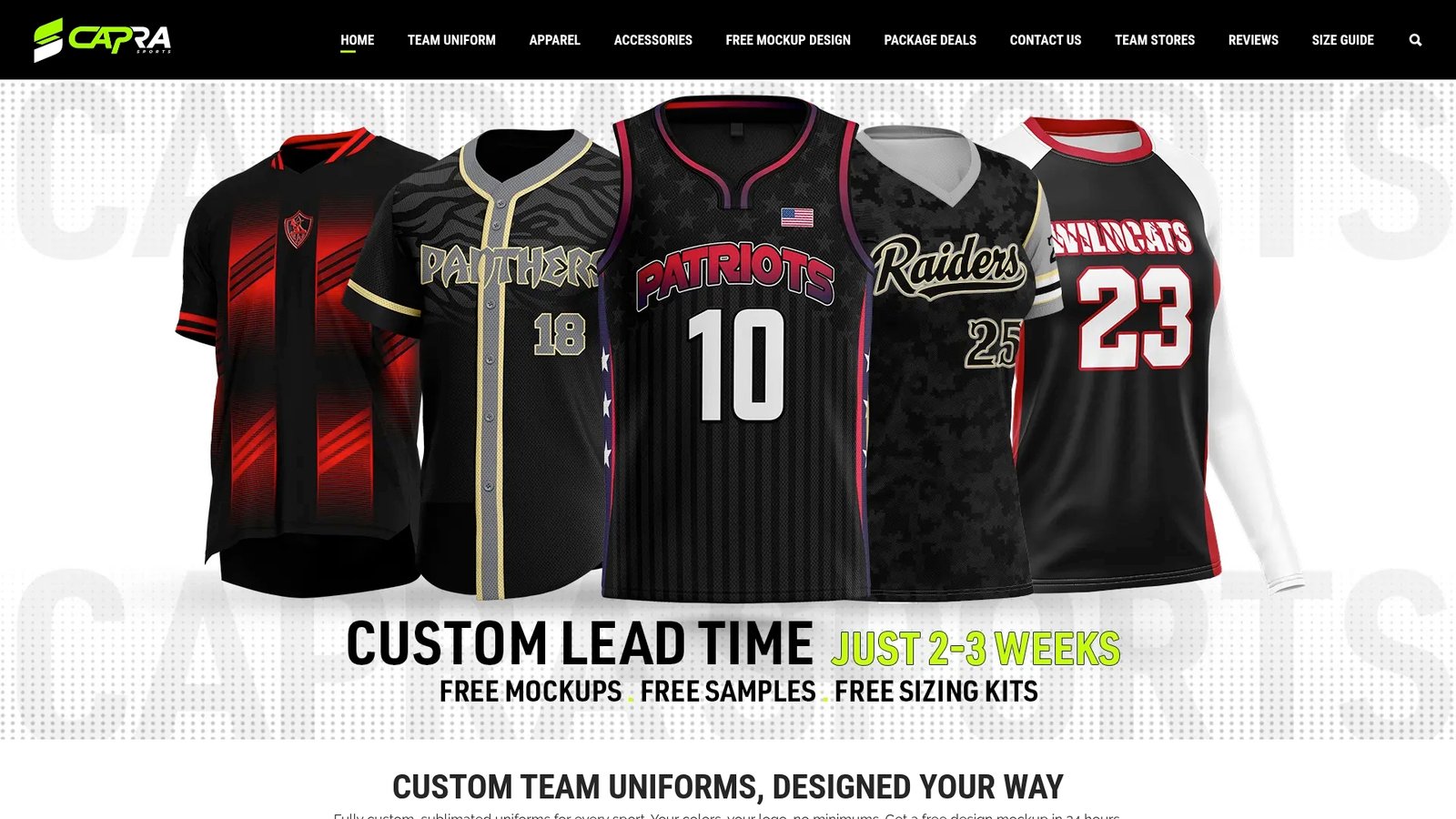
- Confirm number height, sleeve style, and logo placement on your mockup before you approve it.
- Order your sample early enough to fix sizing before your roster locks in.
- Bring your approved mockup and sample tag to check-in as your compliance record.
Request a mockup for your team’s custom baseball uniforms or browse pricing to get your order started ahead of tournament season.
Sources
FAQ
What are the new USSSA baseball rules for 2026?
The 2026 USSSA National By-Laws continue to require double ear-flap batting helmets for all offensive players and give Tournament Directors final authority over uniform legality. Cleat rules by age division and bat drop limits for 13U and 14U carry forward from prior years, so teams should still check their specific event’s Rules Packet for any local additions.
What color sleeves can pitchers not wear?
USSSA discourages exposed white or gray undershirt sleeves for pitchers because they can create visibility problems for batters at the plate. The safest approach is to keep sleeve color consistent across the entire roster rather than singling out the pitcher’s undershirt.
What’s the difference between USSSA and USA Baseball?
USSSA is an independent sanctioning body that runs its own tournaments and sets its own bylaws, including the uniform and equipment rules covered here. USA Baseball is the national governing body recognized for Olympic and international competition, and the two organizations maintain separate rule sets even though many youth players compete under both at different points in a season.
Why can’t pitchers wear white sleeves?
White or light gray sleeves on a pitcher’s arm can blend with the ball’s background during a pitch, making it harder for a batter to track it out of the hand. That safety concern is why many leagues and tournament packets ask teams to keep undershirt sleeves a consistent, non-white color across the roster.