
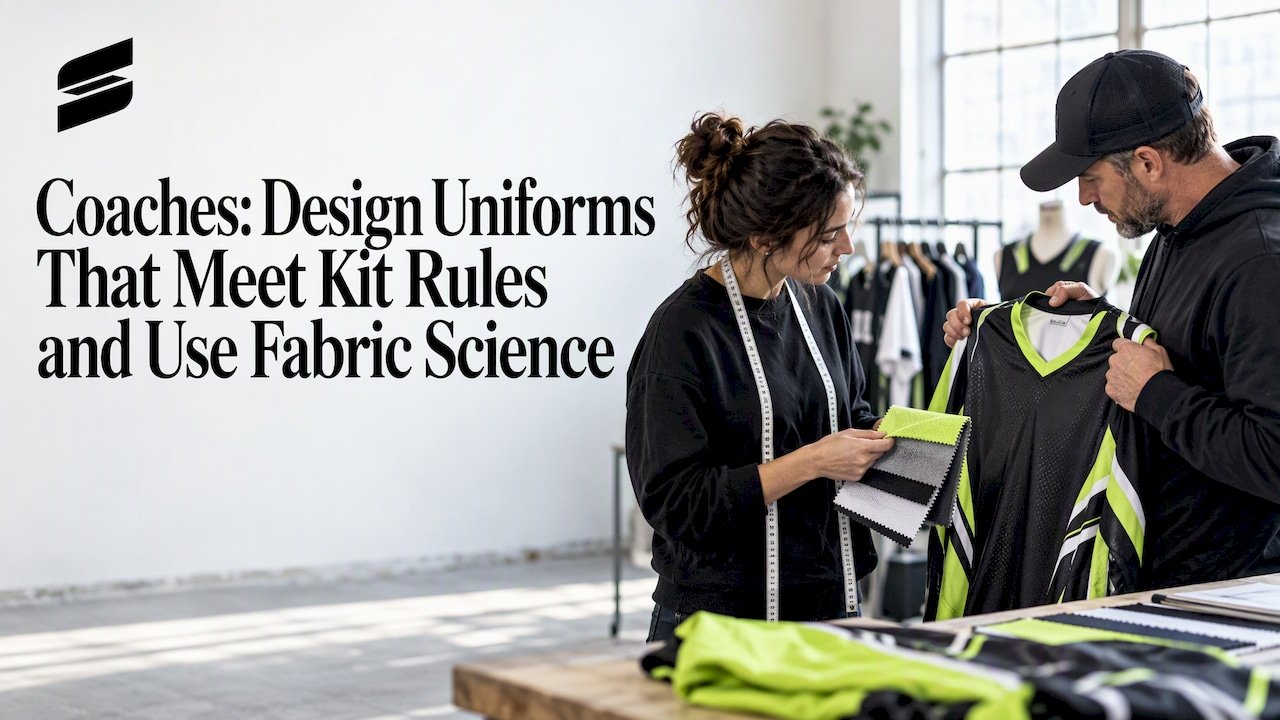
Coaches: Design Uniforms That Meet Kit Rules and Use Fabric Science
Design your team’s custom sublimated uniform by deciding sport-specific cut and color contrast, requesting a digital mockup, ordering a physical sample from a provider such as Capra Sports, then confirming sizes before the final order. Two priorities drive every decision along the way: a fit that works for every body on the roster and numbers that stay legible from the bleachers.
TL;DR:
- Ensure number contrast meets sport and league standards, with light numerals on dark backgrounds or vice versa, to maximize readability from the stands.
- Request a physical sample to verify fit, seam quality, and print clarity, as screen mockups do not reveal how garments behave under real conditions.
- Use lightweight, breathable, and regionally tailored fabric panels to improve durability and comfort, especially in hot weather or high-intensity sports.
- Collect accurate size measurements through in-person try-ons or measurement sheets to prevent mismatched jerseys and reduce reorders during the season.
- Confirm delivery timelines and complexity of artwork early, accounting for longer proofing or multiple kit variants to avoid delays and additional costs.
Table of Contents
- Step-by-step workflow: from concept to final order
- Design checklist: contrast, logos, numbers, and goalkeeper kits
- Fabric and performance: what to choose and why
- Sizing and samples: how to avoid a season of mismatched jerseys
- Production timeline, quantities, and what drives the cost
- Accessibility considerations for every roster
- Sustainability and eco-friendly material options
- Care and maintenance after the uniforms arrive
- What coaches get wrong about the design process
- Request a mockup and start your team’s design
- FAQ
- Sources
Step-by-step workflow: from concept to final order
Most uniform projects fail at the planning stage, not the printing stage. A clear sequence keeps the project on budget and on time.
- Set your goals first. Decide the sport, the number of kits needed, your budget per piece, and gather every asset you will need: team logo files, sponsor artwork, and exact color hex codes so printers match your shades instead of guessing.
- Choose a cut built for the sport. A basketball jersey needs a streamlined, sleeveless cut for freedom of movement, while a baseball jersey typically runs looser through the torso for layering and mobility; learn how to design custom jackets for teams like a pro to complement your uniforms. Soccer kits sit closer to the body for reduced drag. Matching cut and construction to the sport affects comfort as much as it affects looks.
- Request a digital mockup. Check number placement, seam lines, and reserved sponsor space before anything goes to production. This is the cheapest point in the process to catch a mistake.
- Order a physical sample. A screen rendering and a worn garment are not the same thing. Check fit across the shoulders, seam strength, how sharp the sublimation print looks up close, and whether the numbers hold contrast against the base color.
- Finalize names, numbers, and fonts. Lock in roster details and confirm placement rules against your league’s guidelines before you submit the final file.
- Sign off and place the bulk order. Once the sample passes inspection, approve the design and submit the full order. Budget for a handful of alternates or replacement jerseys, since rosters change mid-season and a jersey occasionally rips.
Pro Tip: Keep one sample jersey on hand all season. It is the fastest way to settle a sizing dispute without reordering from scratch.
A provider like Capra Sports’ mockup and sample process is built around this exact sequence, so you are reviewing a physical garment before committing to a full team order rather than trusting a screen render alone.
Design checklist: contrast, logos, numbers, and goalkeeper kits
Run through this list during mockup review, not after the bulk order ships.
- Primary and alternate contrast: numbers need to read clearly against the jersey color, light numerals on dark fabric or dark numerals on light fabric, never a close tonal match.
- Goalkeeper colors: FIFA guidance requires teams to declare two contrasting team kit colors and three contrasting goalkeeper colors, with numbers that stay legible against the shirt.
- Font choice: stick to blocky, uniform-stroke numeral styles built for distance reading. Decorative or script fonts look sharp on a screen and blur into mush from the stands.
- Logo and sponsor placement: keep a clear buffer around numbers and seams so sponsor marks and crests do not crowd legibility or get caught in stitching.
- League-specific rules: youth baseball and softball programs should check current Little League rule updates on undershirt colors, neoprene sleeves, and helmet decals before finalizing artwork.
Skipping any one of these items is the most common reason a finished order gets rejected at a game check-in.
Fabric and performance: what to choose and why
Sublimated polyester dominates custom team uniforms because the dye becomes part of the fiber instead of sitting on top of it, so the graphic will not crack, peel, or fade the way a screen-printed design can over a season of washing.
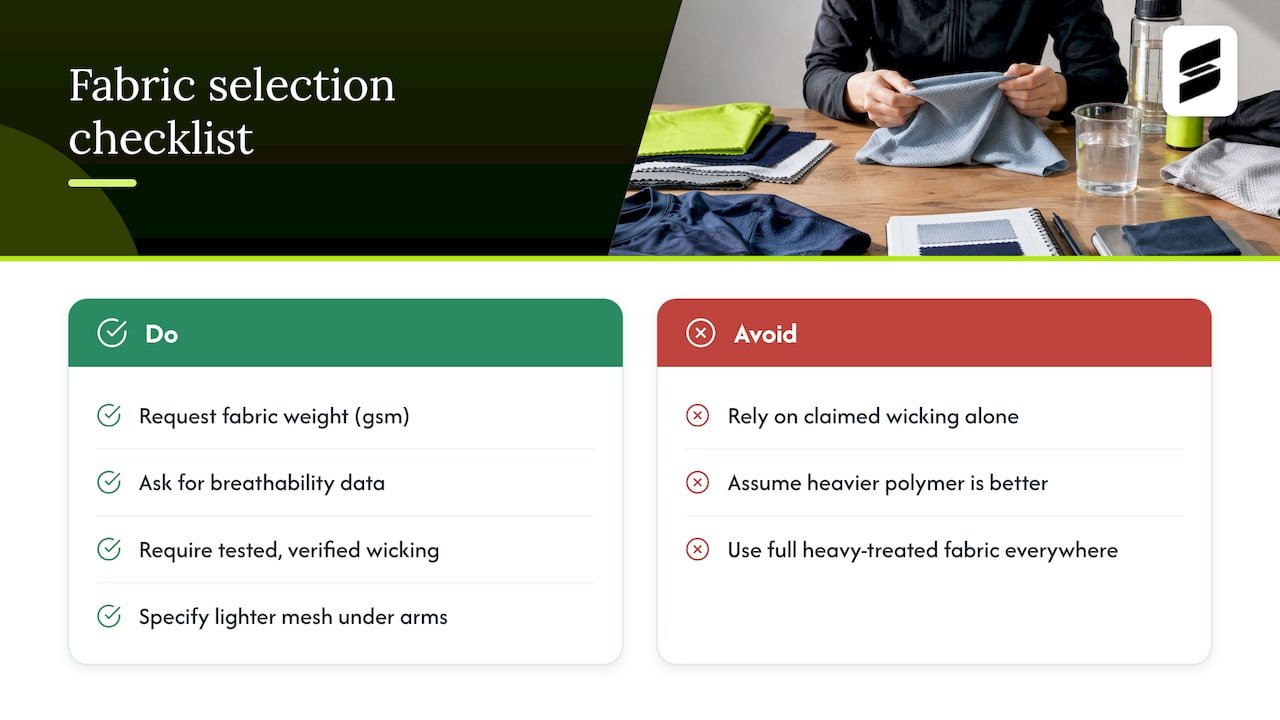
Fabric performance can vary by nearly a third based on treatment. Functional polymer finishes applied to performance fabrics have been shown to improve air permeability and some wicking measures, though they can also change the fabric’s structural properties like density and porosity. That means heavier polymer treatment is not automatically better: it is a trade-off between moisture control and fabric feel.
For hot climates or high-intensity sports like basketball and soccer, ask vendors for the fabric weight in grams per square meter (gsm), breathability data, and whether wicking has been tested rather than just claimed. Regional fabric design, such as lighter mesh panels under the arms and reinforced fabric at high-wear zones like the shoulders and seat, extends the life of a uniform while keeping the athlete cooler where it matters most.
Sizing and samples: how to avoid a season of mismatched jerseys
Collect sizes with a physical measurement sheet or an in-person try-on session rather than guessing from age alone, since youth sizing in particular varies widely between brands and even between cuts from the same brand.
- Check shoulder width, torso length, and sleeve length on the sample, not just the chest number.
- Confirm number placement and seam finishing hold up under a stretch test, not just a static look.
- Build in a small sizing allowance for shrinkage and for the snugger fit athletic cuts tend to run.
- Plan for mixed rosters: a team with both a 10 year old and a 14 year old will need more than two size options.
Pro Tip: Send parents a simple one-page sizing guide with a tape measure diagram. It cuts mismatched orders dramatically and saves a reorder cycle later.
Production timeline, quantities, and what drives the cost
A realistic season-prep timeline runs through several checkpoints: mockup turnaround, sample production, bulk production, then shipping. Confirm each milestone date with your vendor in writing before you commit to a season schedule.
- Complex custom artwork with many colors or gradients takes longer to proof and costs more than a simple two-color design.
- Ordering multiple kit versions, home, away, and goalkeeper, multiplies both cost and lead time.
- Rush turnaround on any step adds cost; build in a buffer rather than requesting the fastest option by default.
- Order a few extra blanks or plan a reorder window early so a lost or damaged jersey does not sideline a player mid-season.
Accessibility considerations for every roster
A uniform design that only works for one body type leaves players out. Adaptive considerations are worth building into the design brief from the start rather than treating them as a late addition.
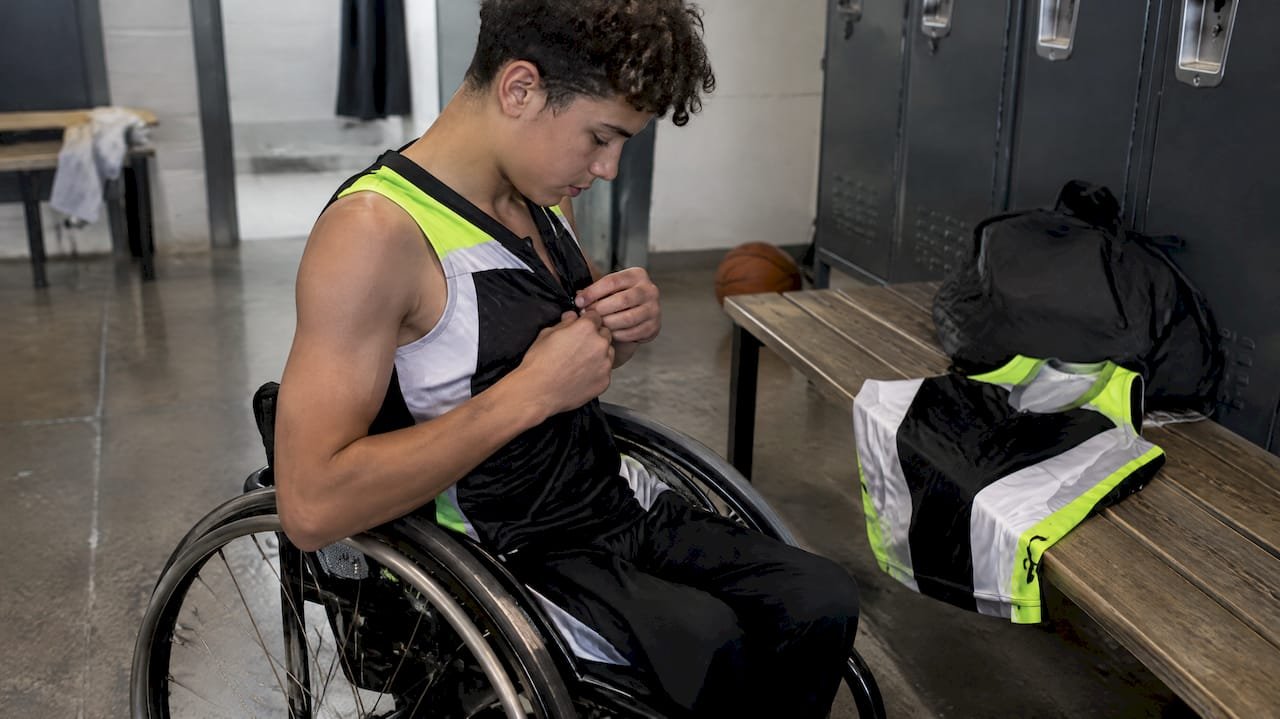
Closures matter more than most teams realize. Pull-over jerseys can be difficult for players with limited hand dexterity or who use a wheelchair; offering a button-front or zip option on request solves this without redesigning the whole kit. Sleeve length and torso cut should also accommodate players who wear a prosthesis or an assistive brace under the jersey, which often means slightly roomier cuts in specific panels rather than a uniform tight fit across the board.
Color and contrast choices that help spectators read numbers from a distance also help players and coaches with low vision follow the game on the field. The same high-contrast numeral guidance that satisfies league rules doubles as a practical accessibility feature.
Finally, think about sensory sensitivity. Some players, particularly younger athletes, react strongly to certain fabric textures or tight collar and cuff finishes. Offering a slightly looser alternate cut for players who need it costs little at the design stage and keeps a player on the field instead of pulling at a collar all game. Raise these needs during the roster-gathering step, not after the bulk order has already been placed.
Sustainability and eco-friendly material options
Sustainability in team uniforms mostly comes down to two choices: the fiber source and the garment’s lifespan. Recycled polyester, made from reclaimed plastic rather than virgin petroleum feedstock, has become widely available for sublimated sportswear and performs comparably to standard polyester for durability and print quality.
The bigger sustainability lever for most teams is simpler: order a uniform built to last the season and beyond rather than replacing kits every year. A well-made sublimated jersey with reinforced seams and quality print will typically outlast a cheaper screen-printed alternative, which reduces the total volume of apparel a program needs to order over several seasons.
Ask your vendor directly about recycled fiber content and dye processes if sustainability is a program priority. Not every supplier tracks or discloses this, so a direct question at the quote stage is more reliable than assuming based on marketing language.
Care and maintenance after the uniforms arrive
Sublimated prints hold up well, but only with reasonable care. Wash jerseys in cold water and turn them inside out before washing to protect the printed surface from friction against other garments.
Skip the dryer when possible. Heat is the main enemy of both the fabric’s performance finish and the sublimated graphic, and air-drying on a hanger or flat rack preserves both far longer than a hot tumble cycle. Avoid chlorine bleach entirely since it can dull or discolor sublimated dyes, and keep any ironing on the lowest setting, away from the printed area if you need to press out wrinkles at all.
Store uniforms folded or hung rather than compressed in a bag for months at a time, which prevents permanent creasing in the fabric. A simple one-page care card handed out with each jersey at the start of the season saves a surprising number of uniforms from premature fading or cracking.
What coaches get wrong about the design process
The biggest mistake coaches make is treating the mockup as a formality instead of the actual design decision point. By the time a bulk order ships, the only thing left to do is wait and hope. The real design work, the color contrast call, the font legibility check, the sponsor placement, needs to happen while it is still a file on a screen and cheap to change.
The second mistake is skipping the physical sample to save a week. A screen never shows you how a seam sits against a shoulder or how a print looks under stadium lights. One sample jersey, checked properly, prevents far more problems than any amount of mockup review alone.
Providers who build their process around designer collaboration and physical samples, such as Capra Sports’ step-by-step coach’s guide, reflect this reality: the companies that specialize in custom team uniforms treat the sample stage as central, not optional, because they work with the sizing problems that come from skipping it.
— Agha
Request a mockup and start your team’s design
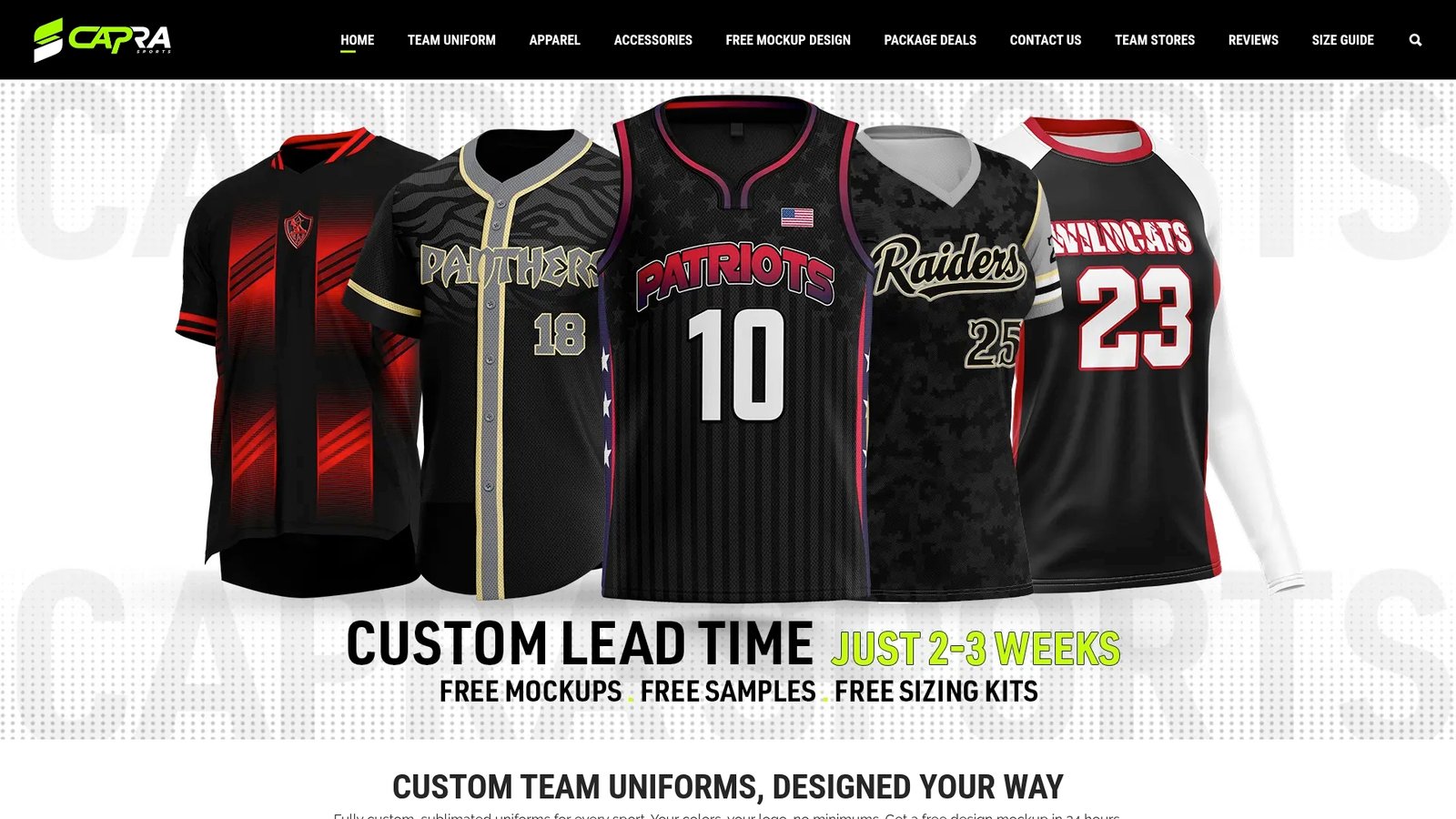
Custom-designed, sublimated team uniforms are available across basketball, baseball, softball, soccer, football, and volleyball, with direct collaboration from professional designers on every order.
Before you request a quote, have these ready:
- Your roster count and a rough size breakdown.
- Logo files and sponsor artwork in their original format.
- Exact color hex codes for your team colors.
- A target delivery date for the season.
With those details in hand, request a quote or browse current pricing for basketball, baseball, soccer, football, and volleyball uniforms to get a free mockup started.
FAQ
How long does it take to get a uniform mockup?
A digital mockup can be delivered within 24 hours of receiving your design details and assets. That turnaround lets you review and request changes quickly without stalling your season prep.
What fabric is best for custom team uniforms?
Sublimated polyester is the standard choice because the design becomes part of the fiber rather than sitting on top, so it resists cracking and fading across a full season of washing. Weight and weave should still match your sport and climate, with lighter, more breathable panels for high-intensity or hot-weather sports.
How do I make jersey numbers legible from a distance?
Use a blocky, uniform-stroke font and make sure the number color contrasts strongly against the jersey, light on dark or dark on light rather than a close tonal match. FIFA’s kit guidance applies the same contrast logic to professional kits for the same reason: legibility from the stands and for officials.
Do I need a physical sample before ordering a full team set?
Yes. A sample lets you check fit, seam strength, print clarity, and number contrast on an actual garment rather than a screen rendering, which catches problems a mockup alone will miss. One sizing sample is typically included at no extra charge before the bulk order ships.
What should youth baseball and softball teams check in league rules before designing?
Check current Little League rule updates on undershirt and sleeve colors, since certain items like neoprene sleeves are allowed only within specific color limits. The same update also clarifies that helmet stickers are permitted as long as they are not excessive or offensive.
Sources
- Functional polymer treatment and moisture management (MDPI)
- Design of functional textile fiber materials for high-performance sportswear (TLR 2026)
- FIFA World Cup 2026 Preliminary Competition: team kit color rules
- Little League 2025 Rulebook significant updates