

Teams: 5 Questions to Judge Soccer Kit Materials’ WVTR and Airflow
Modern soccer kits are built mostly from polyester and polyester blends because the fiber dries fast, holds color, and takes sublimation printing cleanly. But the fiber name tells you less than you think: fabric construction, zoned ventilation, and how the garment behaves once it’s soaked in sweat usually decide comfort on the field. Before ordering in bulk, ask for construction details, a ventilation plan, and a physical sample.
TL;DR:
- Fabric construction, ventilation zones, and fit significantly influence jersey comfort, often more than fiber content alone.
- Moisture vapor transmission rate and air permeability depend on knit density, microclimate, and how the fabric behaves when wet, affecting sweat management.
- Sublimation printing bonds permanently into polyester fibers, with open-knit zones and paneling improving airflow and durability of graphics.
- Proper care involves cold water laundering, air drying, and avoiding softeners to preserve fabric integrity and reduce microfiber shedding.
- Always request fabric performance data and a physical sample before ordering, and work with designers to optimize ventilation and panel placement for best results.
Table of Contents
- Common fibers and what they feel like on the field
- Why breathability and wet feel matter more than fiber alone
- How construction and printing choices depend on the fabric
- Caring for kits without wrecking the print or the fabric
- Choosing kit materials: a checklist before you order
- Where the science and the buying decision actually meet
- Get a soccer kit built around the fabric details that matter
- Sources
- FAQ
Common fibers and what they feel like on the field
Polyester dominates soccer kit production because it’s lightweight, resists stretching out of shape, and bonds permanently with sublimation ink. Recycled polyester behaves almost identically to virgin polyester in performance terms, since it’s the same polymer reprocessed from sources like plastic bottles, but it appeals to programs weighing environmental impact. Blends, usually polyester mixed with small amounts of spandex or elastane, add stretch for mobility without giving up much moisture handling.
Cotton blends show up occasionally in casual or fan-facing apparel rather than match jerseys. Cotton feels soft against skin and breathes reasonably well when dry, but it holds water once wet and takes far longer to dry than synthetic knits, which is a real problem in a 90-minute match with continuous sprinting. Research comparing cotton and polyester knits found that blend ratio and knit structure both shape drying speed and wet-state feel, so there’s no single blend that performs best across every condition.
A few practical distinctions matter when you’re comparing options:
- Polyester dries quickly, resists shrinking, and is the standard base for sublimated jerseys.
- Recycled polyester matches virgin polyester’s performance while using reclaimed material as its source.
- Polyester/spandex blends add four-way stretch for a closer, more mobile fit.
- Cotton blends feel soft but absorb and retain moisture, making them a poor fit for match-day jerseys.
Colorfastness also varies by fiber. Polyester holds sublimated color through repeated washing far better than cotton blends, which tend to fade and can bleed if not cared for properly.
Why breathability and wet feel matter more than fiber alone
Two terms explain most of what separates a jersey that feels fine in the 80th minute from one that feels like a wet towel: water vapor transmission rate, or WVTR, and air permeability. WVTR measures how quickly moisture vapor passes through a fabric instead of sitting against the skin. Air permeability measures how easily air moves through the weave or knit itself. A study using the upright cup method found that WVTR depends heavily on the microclimate, the thin layer of air between skin and fabric, and rises alongside a fabric’s air permeability. A tighter fit or a denser knit changes that microclimate and can slow moisture transport even when the fiber itself is unchanged.
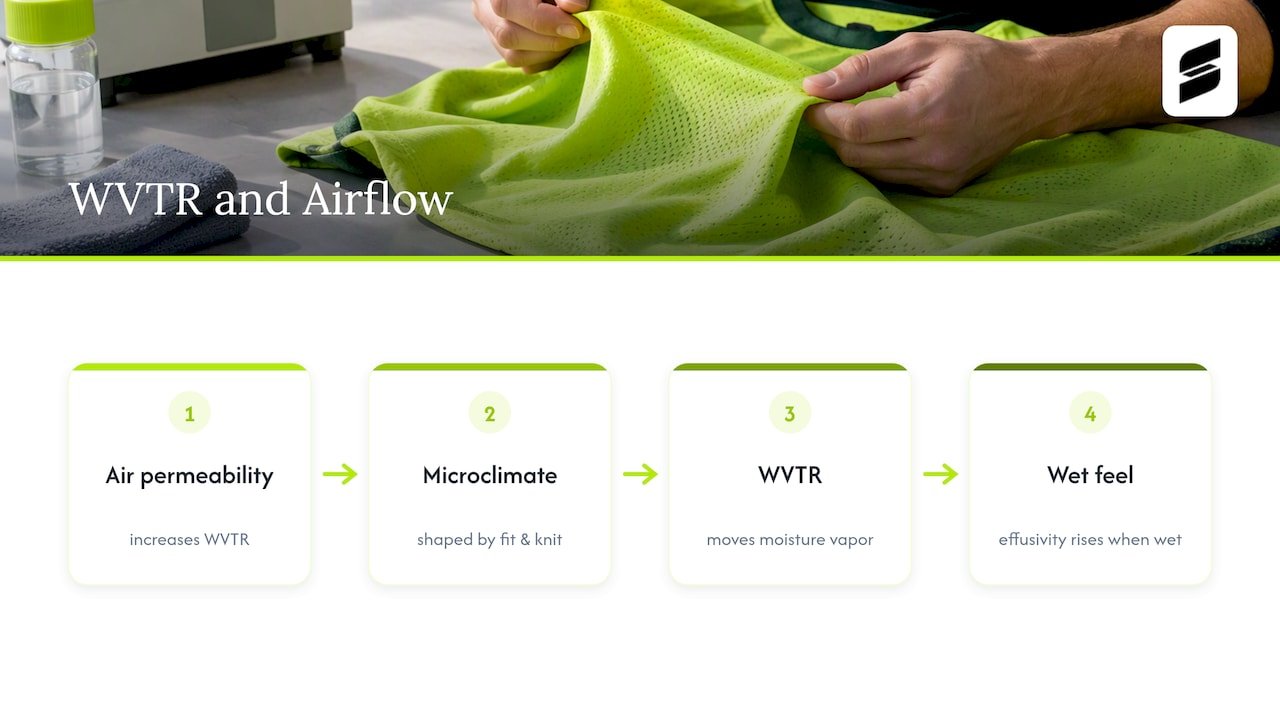
There’s a second, less obvious factor: how a fabric feels once it’s actually wet with sweat. Research on wet thermal effusivity found that this property increases as a fabric becomes more saturated, and thinner fabrics can feel hotter to the touch when wet than thicker ones holding the same amount of water. That’s counterintuitive for anyone assuming “thinner always means cooler,” and it’s why ventilation zones and knit structure carry so much weight in kit design.
Pro Tip: Ask your supplier for fabric weight, WVTR, and air permeability figures rather than relying on marketing terms like “breathable” alone.
A study on sportswear fabrics found that WVTR shows a positive, nonlinear relationship with air permeability, meaning small changes in knit density can produce outsized changes in how well a jersey moves sweat vapor away from skin.
How construction and printing choices depend on the fabric
Sublimation is the preferred printing method for polyester because the ink converts to a gas under heat and pressure, bonding directly into the fiber rather than sitting on top of it. Industry reporting on advanced polyester jerseys describes manufacturers combining textured knits with open and closed mesh zones to increase airflow while using sublimation for permanent, full-coverage graphics. That combination keeps the fabric light while allowing detailed designs that won’t crack or peel the way heat-transfer vinyl can over time.
FIFA’s equipment regulations confirm that different structural sections of a kit, chest, side panels, sleeves, collar, can legitimately use different fabrics or techniques within the same jersey. That’s why a single jersey might combine a tighter knit across the torso with a more open mesh under the arms.
When you’re checking a sample, look at:
- Seam strength along high-stress areas like underarms and shoulders.
- Print adhesion after a test wash, checking for cracking or peeling.
- Panel transitions, where mesh meets solid fabric, for puckering or loose stitching.
- Trim and badge attachment, since heavier appliques can pull at lightweight knits.
Caring for kits without wrecking the print or the fabric
Sublimated polyester holds up well, but only with reasonably careful laundering. Cold or warm water, rather than hot, protects both the print and the fiber’s shape, and skipping fabric softener keeps the knit’s ventilation zones from getting coated and clogged.
Microfiber shedding is a real concern with any synthetic textile. An EPA interagency report identifies laundering as a major source of released microfibers and recommends mitigation steps alongside low-shed fabric choices. A few habits make a difference:
- Wash kits in cold water on a gentle cycle to reduce fiber breakdown.
- Use a mesh laundry bag to catch shed fibers before they reach wastewater.
- Air dry instead of machine drying to protect both print and seams.
- Check high-wear zones, like the underarm and hem, for early fraying each season.
Fabric weight and stitch type are early warning signs of durability. Heavier fabric and reinforced stitching at the shoulders and sides tend to outlast lighter, single-stitched construction over a full season of practices and matches.
Choosing kit materials: a checklist before you order
Ordering for a team means balancing performance against budget and timeline, so it helps to work through priorities in order rather than picking fabric based on price alone.
- Confirm fabric composition and weight in grams per square meter, not just “polyester.”
- Ask for a ventilation zone plan showing where mesh or open-knit panels sit.
- Request any available performance data, such as WVTR or air permeability figures.
- Clarify the printing method and whether it’s sublimation, and confirm expected print durability after washing.
- Get a physical sample before committing to a full team order.
Pro Tip: Test a sample under real conditions: wear it during a practice, then check dry feel, wet feel, and how quickly it dries afterward.
Fit matters here too. A closer-cut jersey changes the skin-to-fabric microclimate discussed earlier, which can make a well-ventilated design feel cooler even without changing the fiber itself. Capra Sports’ soccer size guide is a useful reference when matching fit to the ventilation zones you’re specifying.
Where the science and the buying decision actually meet
The single biggest thing teams get wrong is judging a kit by its fiber content alone. Construction, ventilation placement, and fit decide comfort far more than whether the label says “100% polyester” or a blend. Capra Sports offers custom sublimated soccer uniforms with direct collaboration on fabric and paneling choices through its soccer uniform line.
— Agha
Get a soccer kit built around the fabric details that matter
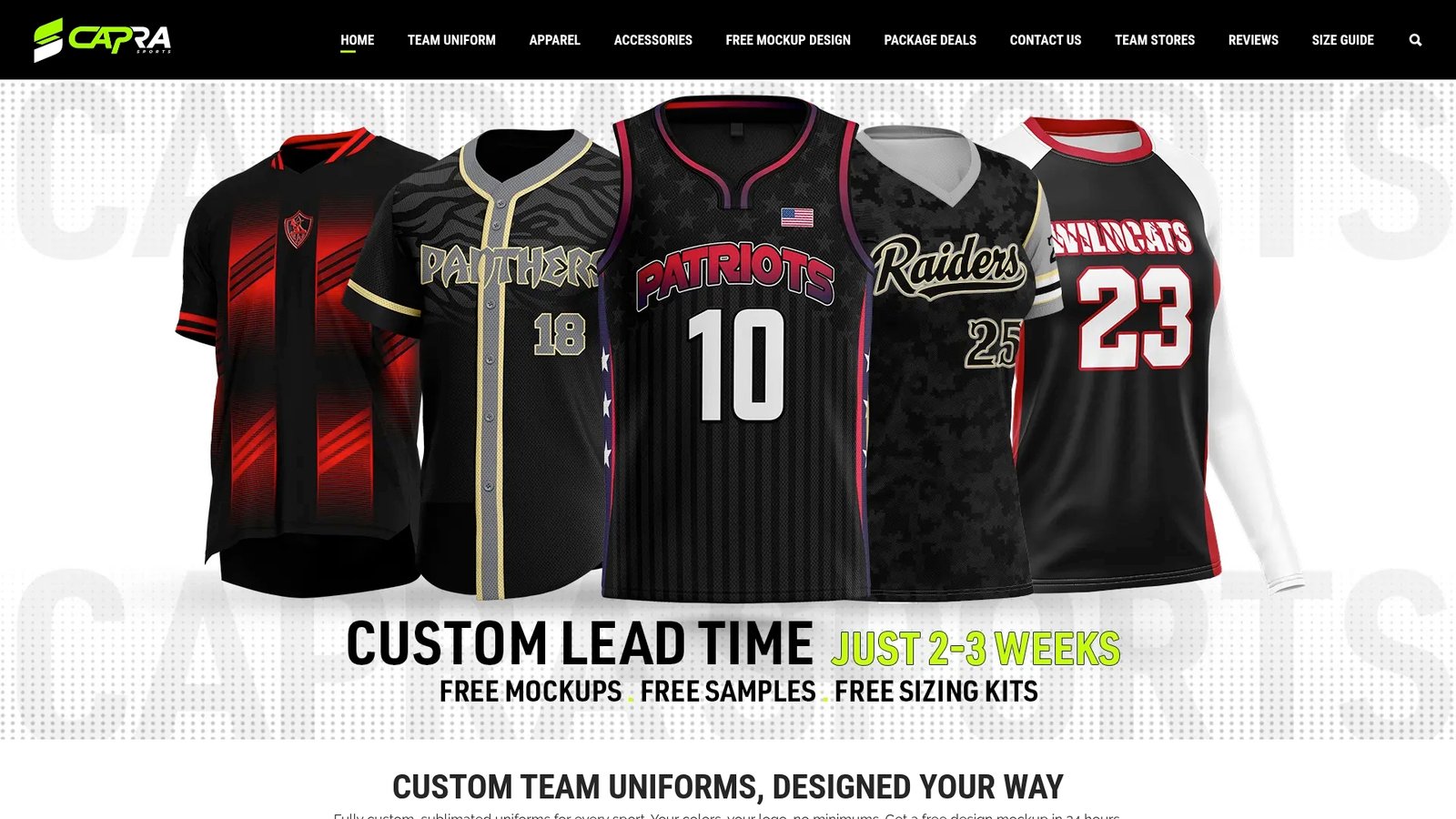
Once you know what to look for, testing the fabric yourself beats trusting a spec sheet alone. Custom soccer uniforms with sublimation printing and the ability to collaborate on design details like ventilation zones and paneling are available, allowing specification beyond stock templates.
- Request a fabric sample before committing to a full team order.
- Work directly with a designer on paneling and ventilation placement.
- Review pricing on the Custom Soccer Uniforms page, where soccer jerseys run [PRICE TBD] per piece.
Check the soccer jersey lineup or browse a finished soccer uniform to see how fabric and print choices come together before you request your own sample.
Sources
- FIFA equipment regulations (excerpts)
- Effect of microclimate thickness on the water vapor transmission rate of sportswear fabrics using the upright cup method
- The making of Aero-FIT: The material innovation keeping footballers cooler on the pitch — NIKE, Inc.
- Microfibers are a macro issue: Interagency report on microfiber pollution (EPA)
FAQ
What material are soccer kits made of?
Most modern soccer kits are made from polyester or polyester blends, chosen for fast drying and compatibility with sublimation printing. Recycled polyester is increasingly common and performs similarly to virgin polyester.
What does a soccer kit consist of?
FIFA’s equipment regulations list the required components as a jersey with sleeves, shorts, socks, shinguards, and footwear. Different sections of the jersey, like the chest and side panels, may use different fabrics or knit types.
What materials do you need for soccer?
Beyond the kit itself, players need shinguards and footwear as required equipment, with the jersey, shorts, and socks making up the uniform. The jersey fabric is typically a polyester knit designed for moisture movement and durability.
What material is used to make football kits?
Soccer jerseys, often called football kits outside the US, are built primarily from polyester knits, sometimes blended with small amounts of spandex for stretch. Construction details like mesh ventilation panels vary by structural section, as permitted under FIFA’s equipment rules.