
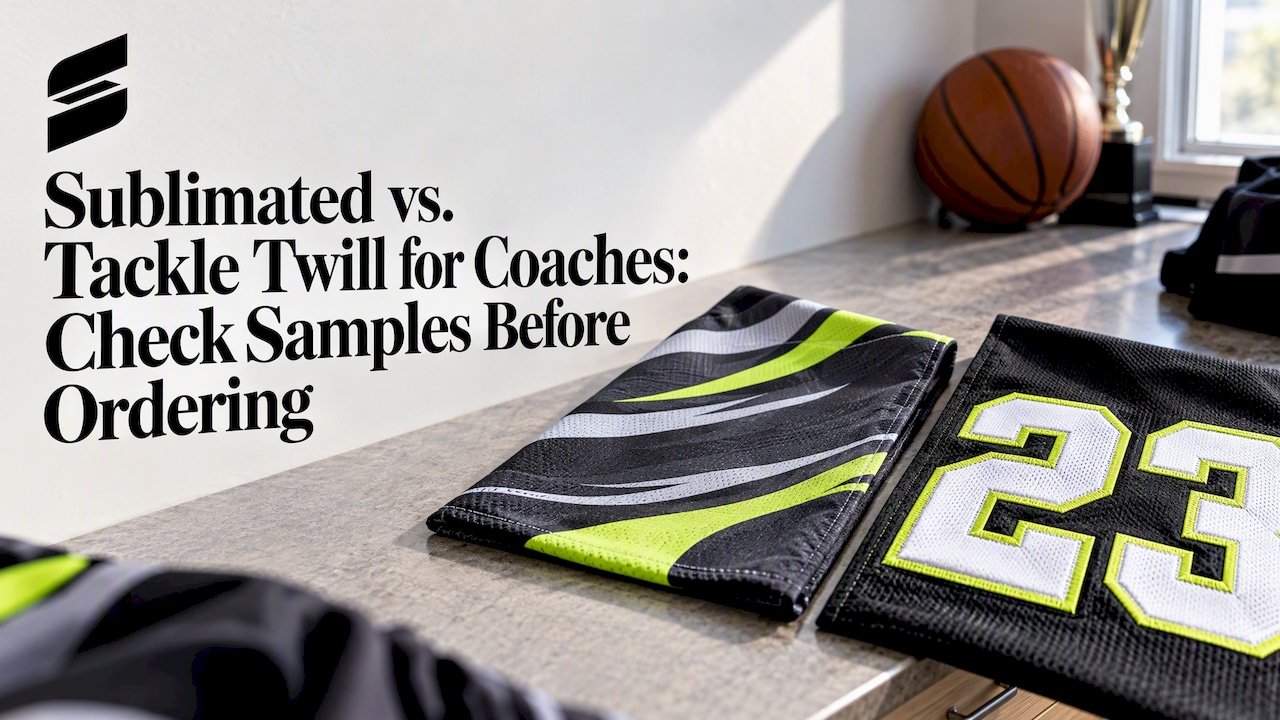
Sublimated vs. Tackle Twill for Coaches: Check Samples Before Ordering
Sublimation is usually the better call for full color, multicolor jerseys with gradients, logos, or complex patterns, while tackle twill wins when you want bold, raised lettering and a traditional varsity look. Many teams combine both: a sublimated body with tackle twill numbers. Whichever route you lean toward, ask your supplier for a physical sample or strike off so you can check color accuracy using a tool like the Delta E metric before committing to a full order with a supplier like Capra Sports.
TL;DR:
- Clemson testing found that 380°F for 55 seconds produced lower Delta E values than the other tested settings, improving color match in sublimation.
- Because heat and timing affect color accuracy, approve a physical strike off against your team colors before committing to a full production run.
- Sublimation requires compatible polyester, while fabric type, construction, and finishing, not the decoration method, determine comfort and moisture management.
- Sublimation prevents graphic peeling and cracking, but fabric construction determines overall jersey life; twill’s stitched edges can loosen with washing, abrasion, and contact.
- For hybrid uniforms, inspect a combined sample where twill numbers meet the sublimated body, and check stitching after every few washes for loose threads.
Table of Contents
- At-a-Glance Practical Differences Coaches Need to Compare
- How Sublimation and Tackle Twill Are Produced and Why That Matters
- Appearance and Design Trade-Offs: What Each Method Handles Best
- Durability, Failure Modes, and Laundering: Practical Expectations Over a Season
- Decision Checklist: What to Prioritize and What to Request From Your Supplier
- Research-Backed Takeaways for Teams
- Common Coach Choices and How We Help
- How to Get Samples and Start an Order With Capra Sports
- FAQ
- Sources
At-a-Glance Practical Differences Coaches Need to Compare
Sublimation and tackle twill solve different problems, and the right pick depends on what your team actually needs on game day.
Sublimation dyes the design directly into the polyester fibers, so the jersey has a flat, smooth surface with no raised texture. That matters for visibility at a distance: solid twill numbers tend to pop more under stadium lighting, while sublimated graphics read better up close and on screens. Twill also carries a traditional, old-school feel that some programs want to preserve for school identity.
Design freedom splits the two methods clearly:
- Sublimation handles gradients, photo-realistic art, and complex color designs.
- Tackle twill is limited to solid-color shapes cut from pre-dyed fabric, so fine detail and shading are not practical.
- Sublimation scales easily across an entire kit, including sleeves and side panels.
- Tackle twill is typically reserved for names, numbers, and simple logos.
Durability differs too. Sublimated graphics will not peel or crack because the dye lives inside the fibers, while tackle twill’s stitched edges can loosen over a season of washing and contact. Before you order either way, ask your supplier for care instructions and a sample so you know what you are approving.
How Sublimation and Tackle Twill Are Produced and Why That Matters
The two methods work in almost opposite ways, and understanding the process explains why each looks and wears the way it does.
- Sublimation transfers color into compatible polyester fibers using heat and pressure.
- Tackle twill adds raised lettering or numbers to a uniform.
Sublimation outcomes are process-sensitive. A Clemson study on sublimation transfer printing tested heat settings of 380°F, 390°F, and 400°F paired with dwell times of 35, 45, and 55 seconds, measuring color accuracy with the Delta E metric.
One finding stands out: a 380°F setting held for 55 seconds consistently produced lower Delta E values, meaning closer color matches to the intended design, than other combinations tested in the study.
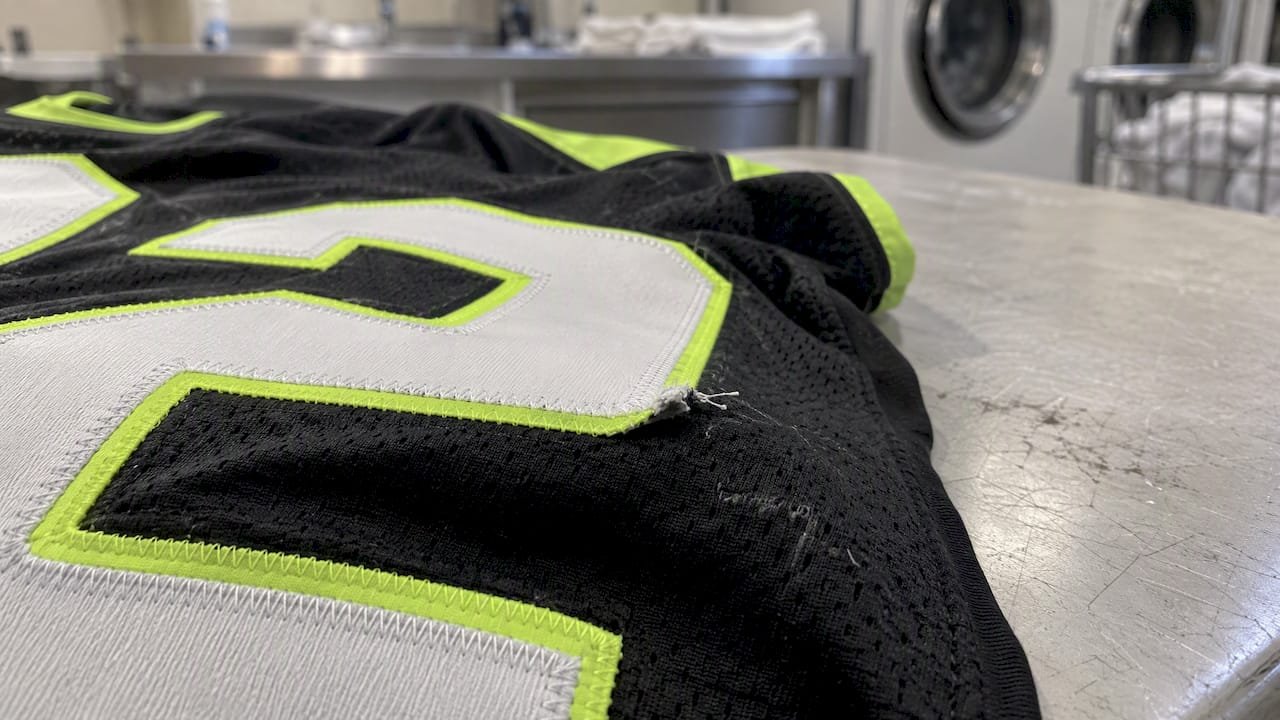
Tackle twill’s construction creates its own set of variables. Tackle twill’s exposed stitched edges can loosen after repeated laundering, abrasion, or contact. If color precision or edge durability matters for your program, ask about the sublimation printing process your supplier uses, or request a sewn sample before approving a full twill order.
Appearance and Design Trade-Offs: What Each Method Handles Best
Your choice here comes down to what you want people to see when the team takes the field.
Sublimation supports full-bleed graphics, soft gradients, and subtle shading because the color sits inside the fibers rather than on top of them. That makes it the practical choice for jerseys with sponsor logos, camo patterns, or multi-tone designs that would be impossible to replicate in cut fabric.
Tackle twill gives you a raised, bold look that reads clearly from the bleachers and pairs naturally with a classic uniform style, the kind you see on traditional baseball and football jerseys.
- Choose sublimation when the design uses multiple colors or includes blending.
- Choose tackle twill when the priority is bold, high-contrast lettering that holds up visually at distance.
When your school colors or brand elements have to match exactly, request a physical strike off so you can compare it against your actual color codes before production runs.
Pro Tip: If you want both looks, pair a sublimated jersey body with tackle twill numbers for contrast and texture in one uniform.
Durability, Failure Modes, and Laundering: Practical Expectations Over a Season
Knowing how each decoration ages helps you set realistic expectations and plan maintenance before small issues become bigger ones.
- Sublimated graphics resist peeling and cracking because the dye becomes part of the fiber rather than sitting on the surface, but the jersey’s overall lifespan still depends on the fabric itself. A study on functional finishes and polyester fabrics found that comfort and durability in activewear depend heavily on fabric construction, fiber type, and finishing, not on the decoration method alone.
- Tackle twill holds up well under normal use, but the stitched edges around each letter or number are the most likely point of wear, especially with repeated contact, pulling, or machine washing.
- Inspect stitching after every few washes, and follow washing guidance for sublimated jerseys to avoid high heat that can affect fabric finish over time.
- If you spot loose threads on twill patches early in the season, a quick repair stitch can prevent the patch from lifting entirely before your next order cycle.
Plan ahead for a reorder if inspection reveals widespread fading or fabric breakdown rather than isolated decoration wear, since that points to the base fabric reaching the end of its service life.
Decision Checklist: What to Prioritize and What to Request From Your Supplier
Turning this comparison into an order means knowing what to ask for before you sign off on anything.
Start by ranking your own priorities: color fidelity, budget, a traditional look, long-term durability, and how often the uniforms will be washed. Those answers point you toward sublimation, twill, or a hybrid before you even get a quote.
- Request a physical strike off to check sublimation color against your actual team colors.
- Request a sewn sample of tackle twill to feel the thickness and inspect the edge finish.
- Ask about wash-test results so you know what fading or wear to expect over a season.
- Ask your supplier about fabric weight, stitch method, reinforcement at stress points, and lead time.
Pro Tip: If you are considering a hybrid order, inspect the combined sample specifically where the twill numbers meet the sublimated body, since that seam is where fit and durability issues tend to show up first.
A hybrid build makes sense when you want a sublimated jersey for design flexibility but still want numbers that stand out in bold relief for referees and fans alike.
Research-Backed Takeaways for Teams
Two pieces of evidence matter most when you are choosing between these methods. Sublimation color reproducibility is sensitive to production controls: Clemson’s testing of temperature and dwell time shows that small changes in heat and timing shift Delta E results, meaning two “identical” print runs can look slightly different without tight process control.
Separately, fabric construction and finishing govern comfort and moisture management far more than the decoration method does. Choosing sublimation over twill does not by itself make a jersey cooler or drier. The practical takeaway: insist on physical samples, because lab conditions and production floors do not always match.
Common Coach Choices and How We Help
We see most teams choose sublimation for full-kit designs with multiple colors and logos, then add tackle twill numbers when they want a bold, high-contrast finish. Our process includes mockups and sample approval before production, with design collaboration so you can review the jersey before ordering. Request your sample early in the approval process so there are no surprises when the full order arrives.
— Agha
How to Get Samples and Start an Order With Capra Sports
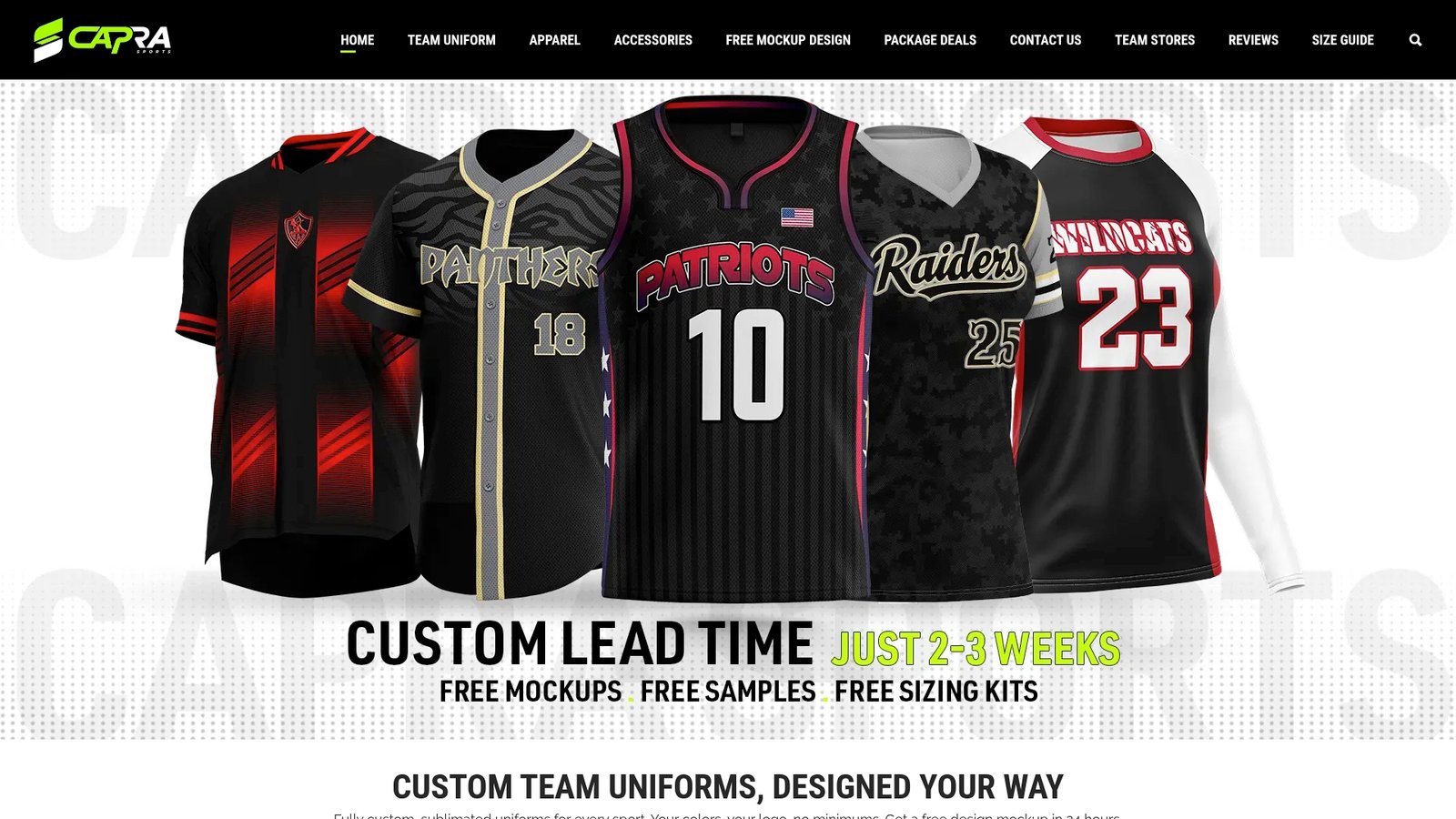
We build custom sublimated team uniforms for basketball, baseball, soccer, football, volleyball, and softball, with mockups and design collaboration so you can review your colors and layout before production starts. Fabric and decoration choices get confirmed on a sample before we move to full production.
- Browse custom basketball uniforms for teams to start a mockup.
- Check current pricing across basketball, baseball, soccer, football, and volleyball lines.
- Review soccer uniform and kit options if your team needs a full kit redesign.
Ask about a sizing sample and confirm your design before placing an order.
FAQ
Is tackle twill considered high quality?
Tackle twill is a durable, well-regarded decoration method, especially for names and numbers on traditional-style uniforms. Its main wear point is the stitched edge, which can loosen over a season of heavy use, so stitching quality from your supplier matters more than the material itself.
What does sublimated twill mean?
“Sublimated twill” generally refers to a hybrid uniform that pairs a sublimated jersey body with tackle twill lettering or numbers. The body gets full color design freedom while the twill elements add a raised, traditional look for names and numbers.
What are the disadvantages of sublimation?
Sublimation works on compatible polyester fibers. Ask for a physical sample to check how the colors appear on the selected fabric. Color accuracy is also process-sensitive. Clemson research found that temperature and dwell time changes shift Delta E color results, so requesting a physical sample before full production helps confirm accuracy.
Are sublimated jerseys better?
Sublimated jerseys are generally the stronger choice for full color, multicolor designs because the dye becomes part of the fabric and will not peel or crack. Whether they are “better” depends on your priorities: tackle twill may still suit teams that want a bold, raised traditional look over full color detail.
Sources
- Optimizing Sublimation Transfer Printing: Influence of Temperature and Dwell Time on Different Synthetic Fabrics With a Focus on Color Metrics and Delta E Evaluation
- [Influence of Functional Finishes and Polyester Type on Comfort Properties of Active Sportswear
| Journal of Textile and Apparel, Technology and Management](https://jtatm.textiles.ncsu.edu/index.php/JTATM/article/view/16408)