
Top 20 Youth Baseball Team Names Coaches Can Use Today
This article gives you a ready top-20 shortlist of youth baseball team names, plus categorized lists for funny, cool, little-league, and theme-based squads. Every name is checked for age-appropriateness and chantability, and you’ll find a quick three-step process below for turning a pile of suggestions into one name the whole team actually votes for.
TL;DR:
- Most youth leagues favor short, alliterative names like Diamond Dogs or Mighty Mitts, which are easy to chant and print effectively on jerseys.
- Names that work well for young children, such as Bat Cats or Tiny Titans, rely on rhythm and repetition to be memorable during warm-ups and games.
- Older teams seeking a competitive tone tend to choose strong, one- or two-word names like Vipers or Storm Chasers, avoiding direct pro team copying.
- Creative and funny names like Bunt Squad or Strikeout Kings connect humor with baseball terms to boost team spirit without risking offensive double meanings.
- A swift, structured process of collecting suggestions, narrowing to three finalists, and running a quick vote ensures a popular, appropriate team name before season start.
Table of Contents
- Youth Baseball Team Names: The Top 20 Shortlist
- Funny Baseball Team Names Kids Actually Laugh At
- Cool and Tough Names for Older Youth Teams
- T-Ball and Little League Names Kids Can Actually Chant
- Building a Theme Around Your Team Name
- How to Choose a Team Name Without a Family Feud
- Naming Etiquette: What Works and What to Avoid
- Cultural Sensitivity and Inclusivity in Team Naming
- Trademark and Copyright: What Youth Teams Need to Know
- Popular Names by League Size and Region
- Why Simple Beats Clever Every Time
- Bring Your Team Name to Life on the Field
- Sources
- FAQ
Youth Baseball Team Names: The Top 20 Shortlist
Skip the brainstorm and start here. These 20 work across most age groups, print cleanly on jerseys, and hold up when 20 eight-year-olds are yelling them at once.
- Diamond Dogs (9U–10U): Punchy, two syllables, easy logo with a paw print on a ball.
- Mighty Mitts (T-ball/8U): Playful and alliterative, built for tiny hands.
- Grand Slammers (11U+): Sounds serious without copying a pro team.
- Home Run Heroes (8U): A confidence booster for beginners.
- Rally Rockets (9U–10U): Fast rhythm, great for a chant.
- Base Invaders (11U+): Slight edge for older kids who want a tougher vibe.
- Sluggers United (all ages): Flexible for combined age divisions.
- Curveball Crushers (10U+): Fun to say fast during a rally.
- Line Drive Legends (11U+): Strong two-word jersey option.
- Dugout Dynamos (8U–9U): Alliterative and simple to spell for young readers.
- Pop Fly Pirates (T-ball): Silly enough for the youngest players to love.
- Wild Pitchers (9U): Doubles as a joke on control issues, kids find it funny.
- Fastball Falcons (11U+): Clean single-word feel for a cap logo.
- Bat Cats (T-ball/8U): Short, rhymes, near impossible to forget.
- Diamond Dashers (9U–10U): Alliterative names like this one are consistently easier for young players to chant.
- Thunder Bats (10U+): One-word energy, works on caps and sleeves.
- Base Runners (all ages): Straightforward, no risk of feeling too silly for older kids.
- Grand Slam Gators (9U+): Regional flavor with a built-in mascot.
- Sandlot Stars (8U–9U): A nod to backyard baseball roots that parents like too.
- Homefield Hawks (11U+): Serious enough for travel-ball rosters.
The top three, Diamond Dogs, Mighty Mitts, and Grand Slammers, get repeated votes across leagues for a reason: short chant length, a mascot that translates easily to a cap logo, and zero risk of an awkward double meaning.
Funny Baseball Team Names Kids Actually Laugh At
Humor sells more team spirit than any tagline. These lean on baseball terms without needing an explanation, which matters when your audience is seven years old.
- Grand Slam Wiches
- The Foul Balls
- Bunt Squad
- Error Prone
- Balk Stars
- The Pickle Pack
- Dugout Divas
- Strikeout Kings (or Queens)
- The Wild Pitches
- Bench Warmers United
- Sac Fly Guys
- Diamond Doofuses
- The Hit Squad
- Bases Loaded Bunch
- Catcher’s Mitts
- Southpaw Squad
- The Rundowns
- Full Count Crew
- Steal Home Heroes
- Whiff Kings
- The Ground Rule Doubles
- Batter Up Buddies
- The Nine Lives
- Home Plate Hooligans
- The Cleat Freaks
- Infield Insiders
- The Rally Caps
- Foul Territory Force
- Pinch Hit Posse
- The Bullpen Buddies
A name like “Bunt Squad” reads as harmless fun. A name that puns on a body part or a substance jokes belongs in the “don’t” pile, even if it gets a laugh at the sign-up table.
Pro Tip: Before you finalize anything, say the name out loud to a parent volunteer who wasn’t in the room when it was suggested. If they hesitate or ask “wait, what?” it’s a sign to pick something else.
Cool and Tough Names for Older Youth Teams
Once players hit 11U and up, a lot of them want a name that sounds less like a nursery rhyme and more like a real ballclub. These 25 lean into a stronger, more competitive identity without borrowing directly from a professional franchise.
Cyclones, Renegades, Outlaws, Grizzlies, Vipers, Titans, Wolfpack, Predators, Stallions, Hurricanes, Mavericks, Blaze, Ironclad, Storm Chasers, Ravens, Wildfire, Bandits, Rattlers, Rebels, Longhorns, Blackhawks, Thunderbolts, Copperheads, Comets, and Warhawks all fit the bill.
One-word names like Renegades or Vipers fit cleanly on a cap where space is tight, while two-word combinations such as “Storm Chasers” or “Copperhead Crew” tend to work better spread across a jersey back. Whatever you land on, keep some distance from any Major League club’s actual name or logo. Youth leagues can absolutely draw inspiration from pro ball, but a name that’s an exact match invites confusion and, in some cases, licensing headaches nobody on a volunteer coaching staff wants to deal with.
T-Ball and Little League Names Kids Can Actually Chant
Younger players remember names by rhythm, not meaning. A four-year-old learning to swing a bat isn’t going to grasp “Grand Slammers,” but “Bat Cats” sticks instantly.
- Tiny Titans
- Bat Cats
- Mini Mashers
- Base Buddies
- Rookie Rockets
- Little Sluggers
- Peewee Pirates
- Diamond Dynamos
- Squirt Squad
- Baby Batters
- Mighty Minis
- Sandbox Sluggers
- T-Ball Titans
- Home Base Heroes
- Little League Legends
- First Base Friends
- Rookie Rangers
- Ball Bandits
- Small Fry Sluggers
- Cub Crushers
Shorter names with a repeated sound or clear alliteration, like “Tiny Titans” or “Mini Mashers,” are simply easier for a five-year-old to hold onto during warm-ups. Print the name big on practice sheets and jerseys both, since young kids often recognize their team by shape and color before they can read it.
Building a Theme Around Your Team Name
A good name gets stronger when it connects to a color, a mascot, and maybe a nod to the sponsor paying for the jerseys. Group names by theme first, then let the theme drive your design choices.
- Animal themes: Wolverines, Wildcats, Barracudas, Hornets, Coyotes.
- Weather themes: Thunderbolts, Tornadoes, Blizzard, Lightning Bolts.
- Nautical themes: Anchors, Riptide, Sea Dogs, Buccaneers.
- Food/sponsor-friendly themes: Honey Badgers (great for a local honey shop sponsor), Pretzel Bombers, Pizza Pack.
An animal theme like Wolverines pairs naturally with browns and grays and a claw-mark logo. Weather themes lean toward blues, grays, and lightning-bolt graphics. If a local business is sponsoring uniforms, keep their name on a sleeve patch or a “presented by” line on the back, never in place of the team name itself.
How to Choose a Team Name Without a Family Feud
Picking a name works best as a short, structured process rather than an open debate that drags on for weeks.
- Collect ideas from everyone. Ask players and parents to submit one or two suggestions each, through a group text, sign-up sheet, or quick survey.
- Narrow to three finalists. As coach, pick the three strongest options based on how easy they are to chant, how age-appropriate they are, and how well they’d print on a jersey. Coach-narrowed finalists consistently produce better team buy-in than a wide-open vote with a dozen choices splitting support.
- Run a fast vote. A secret paper ballot works well for older kids who might feel pressure voting out loud; a show-of-hands works fine for T-ball groups. If there’s a tie, the coach breaks it.
Finish this whole process before your first game, and ideally before you place a uniform order. Changing a name after jerseys are printed means reprinting costs nobody budgeted for.
Pro Tip: Give the vote a deadline, like 48 hours after collecting suggestions. Open-ended naming discussions tend to stall out and never actually resolve.
Naming Etiquette: What Works and What to Avoid
A few ground rules keep the process smooth and the result something every family is comfortable with.
- Do favor short words, alliteration, and upbeat themes that any parent would be happy to see on a car magnet.
- Do let the players feel ownership over at least part of the final decision.
- Don’t pick a joke that targets or mocks another team in the league.
- Don’t use political references, inside jokes adults find funny but kids won’t understand, or anything with an unintended double meaning.
- Don’t copy a professional team’s exact name or logo. Popular name-list guidance consistently steers youth teams toward original or lightly inspired names rather than direct copies, partly to avoid any trademark confusion down the line.
Cultural Sensitivity and Inclusivity in Team Naming
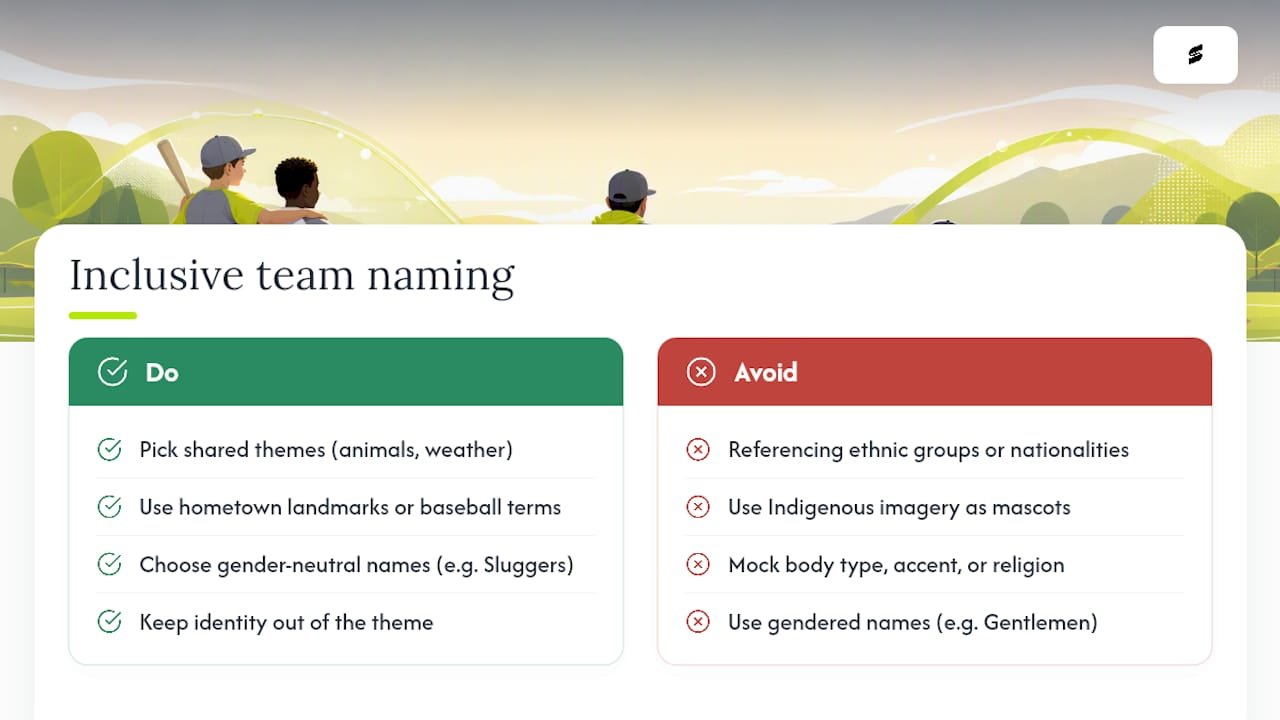
Youth rosters today are more diverse than most naming lists assume, and a name that seemed harmless a decade ago can land differently now. The clearest red flag is any name referencing a specific ethnic group, tribe, or nationality as a mascot, even when the intent is meant as a compliment. Names built around Indigenous imagery in particular have drawn scrutiny at the professional level in recent years, and that same caution applies at the youth level, arguably with more reason, since these are kids who don’t get a say in how their team is perceived.
The safer path is choosing themes that are shared rather than borrowed: animals, weather, colors, hometown landmarks, or baseball terms itself. None of those carry baggage. If a name pokes fun at a body type, an accent, a religion, or any characteristic tied to identity rather than to the sport, it’s off the list regardless of how funny someone finds it at the parent meeting.
Inclusivity also shows up in smaller ways. A name like “Sluggers” or “Diamond Dogs” reads as gender-neutral and works for coed rosters or all-girls squads without needing a modifier. Compare that to something like “Gentlemen of the Diamond,” which quietly signals who the name assumes is playing. Coaches running girls’ baseball or fast-pitch softball programs can find matching youth uniform kits built around similar neutral naming conventions, which keeps the team identity consistent across a whole club or rec league.
Trademark and Copyright: What Youth Teams Need to Know
Most youth teams never run into a legal problem over a name, but a few basic guardrails keep it that way. Professional sports leagues hold trademark rights over their team names, logos, and specific color combinations used in official branding. Using “Yankees” or a Yankees-style logo on a recreational team’s jerseys, even for a one-season 10U squad, technically infringes on that trademark, though enforcement against youth leagues is rare in practice.
The safer approach is treating pro team names as inspiration rather than a template. “Cyclones” is fine on its own; recreating the exact font, color scheme, and logo mark of an existing MLB or college team is where the risk actually lives. If your league or a sponsor wants to use a mascot image sourced online, check that the image is licensed for commercial use, since a stock graphic pulled from a search engine may carry its own copyright even if it has nothing to do with a pro franchise.
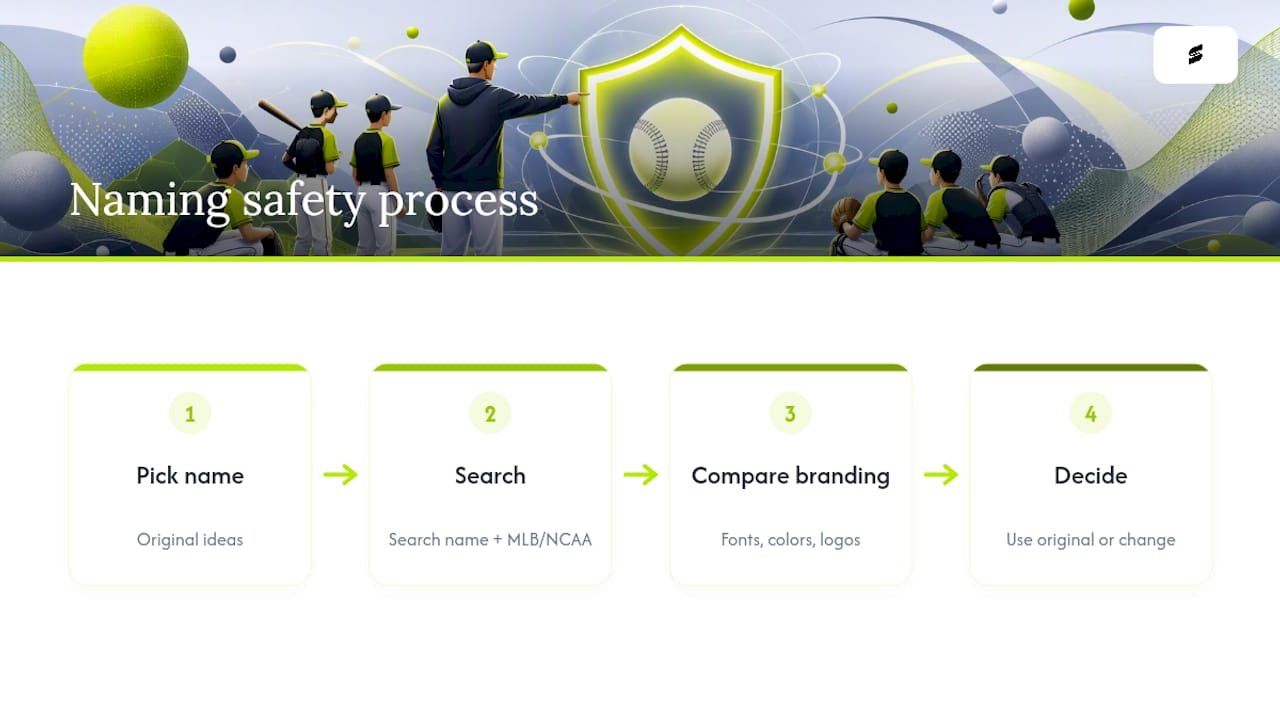
None of this should scare a volunteer coach away from a fun name. It just means originality is the safer default, and if in doubt, a quick search of the name alongside “MLB” or “NCAA” will tell you fast whether you’re treading on existing territory.
Popular Names by League Size and Region
Name conventions shift a little depending on how big the league is and where it’s located. Small recreational leagues with just four or five teams often lean toward simple, evergreen names that recur year after year. Community-sourced league name lists show favorites like Mini Sluggers and Mighty Mitts appearing across dozens of unrelated small-town programs, largely because they’re safe, chantable, and nobody has to think too hard to pick them.
Larger travel-ball organizations and regional tournaments tend toward tougher, brand-like names, think Renegades, Vipers, or Thunderbolts, since these teams often compete across state lines and want a name that reads as competitive on a scoreboard graphic or a tournament bracket.
Regional flavor shows up too. Coastal leagues gravitate toward nautical names like Riptide or Sea Dogs. Midwest and Southern leagues see more animal and weather names tied to local wildlife, think Copperheads, Wolverines, or Twisters. Northeastern leagues skew slightly more toward classic, old-school names like Grand Slammers or Base Runners, names that could have belonged to a team 40 years ago just as easily as one today.
None of these patterns are rules. A T-ball team in Arizona can absolutely call itself the Sea Dogs. But if you’re stuck between two finalists, checking what similar-sized teams in your area or league tier have picked can break the tie.
Why Simple Beats Clever Every Time
The biggest mistake I see in team naming is overthinking it. Coaches spend two weeks debating a name when three finalists and a quick vote would’ve settled it in a day. My three rules: keep it short enough to chant in one breath, make sure a seven-year-old can say it without stumbling, and let the vote happen fast so parents don’t turn it into a project. One team I watched voted on “Diamond Dogs” at the first practice, taught the chant in five minutes, and by the first game the whole dugout was yelling it unprompted. That’s the goal, not a perfect name, just one everyone’s excited to shout.
— Agha
Bring Your Team Name to Life on the Field
Once your team lands on a name, the next decision is how it shows up on the uniform, and that’s where Capra Sports comes in as a practical next step rather than a required one. Youth baseball uniform packages start at $119.97 per player for a four-piece kit (10-player minimum).
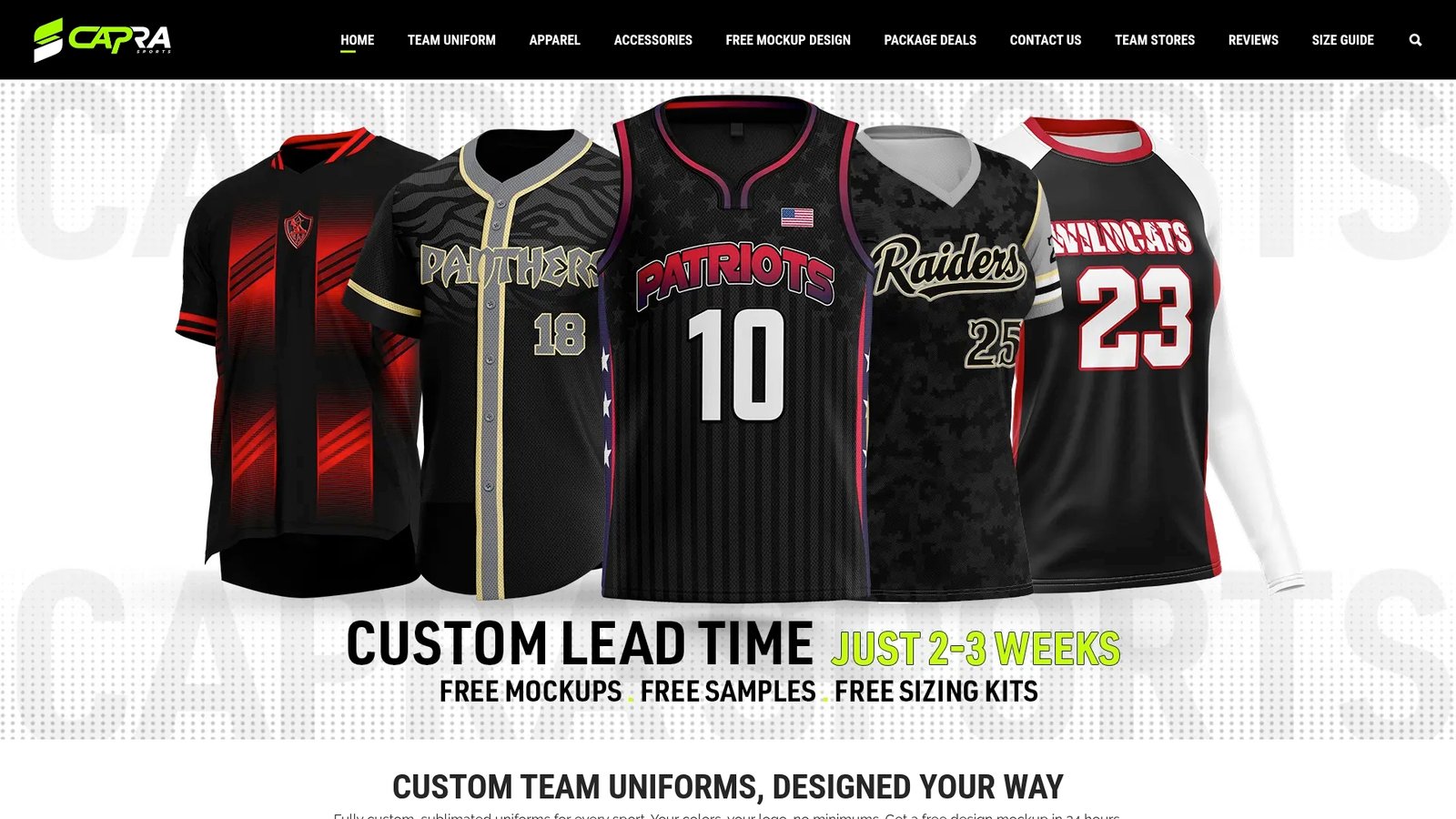
What makes this a low-risk step for a volunteer coach is the combination of a free 24-hour mockup and a 10-player team minimum. You send over your chosen name, colors, and mascot idea, and a designer builds a free digital mockup before anyone pays for anything, so there’s no guessing how “Diamond Dogs” or “Mighty Mitts” will actually look on a jersey. Small rosters don’t get penalized either: team orders start at 10 players, so you never order more uniforms than your team actually has. If you’re ready to see your team’s name on an actual jersey design, request a free mockup and get a visual back before you commit to a single order.
Sources
FAQ
What are good team names for kids?
Short, easy-to-chant names like Mighty Mitts, Tiny Titans, or Diamond Dogs work best for younger kids because they’re simple to say and remember during games.
What is a catchy baseball team name?
A catchy name usually combines a baseball term with alliteration or rhythm, like Diamond Dashers or Rally Rockets, since short, rhythmic names are easier for kids to chant as a group.
What are some hilarious baseball team names?
Names like Bunt Squad, Grand Slam Wiches, and Dugout Divas play on baseball terms for a laugh without crossing into inappropriate territory for a youth roster.
What are good baseball nicknames for kids?
Nicknames tied to the team name work well, like calling the Mighty Mitts “the Mitts” or the Diamond Dogs “the Dogs,” giving players a shorter chant during games.
How do we actually pick a final name without arguing for weeks?
Collect suggestions from players and parents, have the coach narrow it to three finalists, then run a quick secret vote, a process that consistently produces better buy-in than open-ended debate.