
Tournament Packing List for Players, Parents and Coaches
The best tournament packing list is one you build by role. Players need game gear and a backup uniform, parents need food, shade and a first-aid kit, and coaches need rosters, addresses and a few spares. Pack the night before, keep each bag labeled, and add sport-specific items on top of the basics below.
TL;DR
- Pack a full backup uniform and extra socks for every player. Sweat, rain and wet fields can ruin a set between games.
- Give each player one labeled gear bag, and keep a second bag for the parent kit: food, cooler, first aid, sun and rain protection.
- Follow the hydration guidance from NFHS: drink before, during and after play, and consider a sports drink when you play several intense games in a day.
- Coaches should carry printed rosters, field and hotel addresses, and a small kit of spares.
- Add sport-specific gear last: cup and helmet for baseball, certified equipment for softball, shin guards for soccer, knee pads for volleyball.
Table of Contents
- Pack the night before, not the morning of
- The player bag: essentials for every sport
- Uniforms: the backup set matters more than you think
- Sport-specific gear to add on top
- Food and drinks for all-day tournaments
- First aid, sun and weather
- What parents and spectators should bring
- The coach’s bag
- Extras for overnight tournaments and long drives
- Our perspective: the uniform is the part you cannot replace
- Need uniforms before the next tournament?
- FAQ
- Sources
Pack the night before, not the morning of
Tournament mornings are early, and the first game is rarely where you want to discover a missing sock. The simplest system is a standing routine: lay everything out the evening before, check it against the list, and leave only a quick bag check for the morning.
Three habits make the rest of this list work:
- One bag per player. Tournament sidelines fill up with near-identical bags, so assign each player their own and label every item.
- A dedicated family bag. Keep chargers, sunscreen and a first-aid kit in a bag that stays packed between events, so you only restock what you used.
- One printed list. Check items off rather than trusting memory. Players as young as eight can do their own bag with a checklist taped inside the lid.
The lists below start with what every athlete needs, then move to the sport-specific gear, food, health items, and the extras for coaches and overnight trips.
The player bag: essentials for every sport
These items go in every player’s bag regardless of sport. The Greater Midwest Little League tournament checklist covers much of this ground, and it holds up for nearly any team sport.
- Complete game uniform (every piece, not just the jersey)
- Shoes or cleats for the sport, plus a pair of slides or flip-flops for between games
- Extra socks, at least two pairs more than you think you need
- Water bottle, labeled with the player’s name
- Sunscreen, lip balm and sunglasses
- Bug spray for outdoor fields
- Extra clothes for changing, including a dry shirt
- A cooling towel for hot days
- Any braces or support sleeves the player normally wears
- Plastic or zip-top bags for wet clothing and dirty shoes
The plastic bags are the item most families forget. A wet uniform in a closed gym bag between games is how a bag starts to smell by Sunday.
Keep personal gear clean through a long weekend
NFHS hygiene guidance recommends showering right after every competition or practice with liquid soap, washing workout clothes after each use in hot water with high-heat drying, and cleaning personal gear such as knee pads, braces and gym bags at least weekly. On a tournament weekend you may not get a washer, so bring extra base layers and a way to separate worn items from clean ones. Wash everything as soon as you are home.
Uniforms: the backup set matters more than you think
The uniform is the one item that can stop a player from taking the field, so treat it as a checklist of its own.
- Home and away sets. If your tournament asks teams to wear a specific color, or two teams show up in similar colors, you want the second set in the bag.
- Every component. Baseball and softball players need pants, shirt, belt, socks and cap, per the Greater Midwest Little League list. Basketball and volleyball players need jersey and shorts. Soccer players need shirt, shorts and socks.
- The right numbers and names. Check that numbers match the roster you submitted. If a player borrows a spare, that is a conversation to have with the umpire or director before the game, not at the plate.
- A dry change between games. On multi-game days, a fresh shirt and socks do more for comfort than almost any gadget.
If you play under Little League rules, check the Little League uniform rules before you order or pack, since requirements affect what counts as a legal uniform. For USSSA events, the USSSA uniform checks are worth a read.
Fabric matters on long days too. Lightweight, breathable material dries faster between games, and our guide to moisture wicking jerseys explains what to look for. When the weekend is over, follow the steps for washing sublimated jerseys so the colors stay sharp for the next event.
Sport-specific gear to add on top
Baseball
The Greater Midwest Little League list calls for a uniform, cleats, a protective cup, a glove, a bat, a helmet, batting gloves and a baseball bag, along with sunblock, bug spray and extra clothes. Add a spare pair of batting gloves and a pair of sunglasses if your player wears them. Pack the cup in a place you will see it: it is the item most often left on the dresser.
Softball
Softball players need the baseball basics plus equipment that meets the rules of your governing body. USA Softball tells players to check whether equipment is approved for Championship play and to consult its certified-equipment listing. Its 2026 rulebook requires Junior Olympic fast-pitch offensive players to wear double-ear-flap NOCSAE-approved batting helmets with securely fastened NOCSAE-approved face guards, and catcher equipment includes a mask with throat protection, a helmet, shin guards and a body protector. Check the helmet and bat before you leave, not at the gate. If you are choosing uniforms for the season, our coach’s guide to baseball and softball uniforms covers the decisions in order.
Soccer
For soccer, pack both uniform sets (home and away), cleats, shin guards, a ball, water and a snack. Bring an extra pair of socks and an extra pair of shin guards, because a cracked guard or a muddy sock is common by the third game. Goalkeepers should add gloves and a different-colored jersey.
Basketball
Pack the uniform, basketball shoes, spare laces, and any arm sleeves or insoles the player normally uses. Throw in a ball for warm-up downtime if your gym allows it. Gyms run cold in the morning and hot by afternoon, so a warmup shirt and pants are worth the bag space.
Volleyball
Shoes, jersey, shorts, knee pads and a clean change of clothes are the core. Volleyball tournaments often run from morning until evening in a single gym, so add hair ties, tape for fingers and a towel. Bring a blanket or mat for the floor between matches.
Food and drinks for all-day tournaments
Games run on a schedule you do not control, so assume you will eat in the car, on the grass or in a bleacher. The goal is steady fuel, not a big meal.
What to pack
Families can combine shelf-stable snacks such as granola bars, crackers, pretzels and dried fruit with cooler items such as fruit and vegetables, hummus, sandwiches, hard-boiled eggs, yogurt and string cheese, according to a tournament travel nutrition guide. The Greater Midwest Little League list suggests protein-rich snacks, sandwiches and fruit, plus a cooler and ice packs.
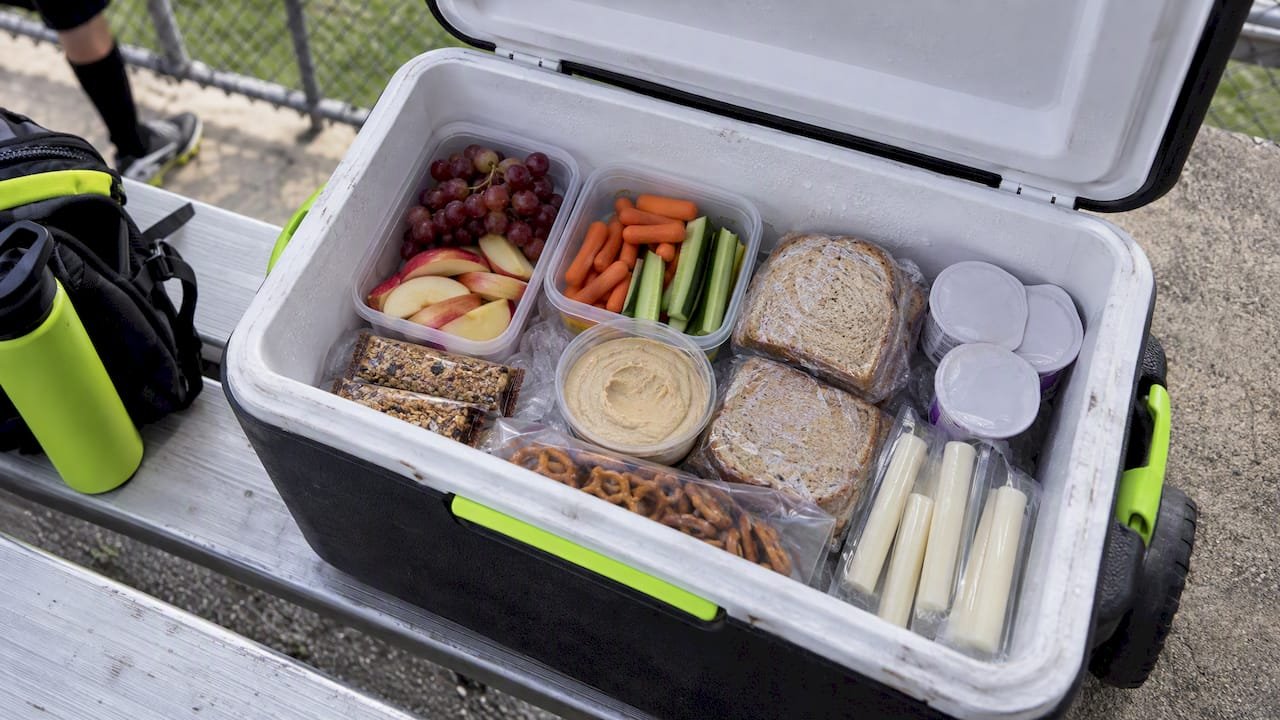
A practical trick from the same travel guide: freeze water bottles. They keep the cooler cold and give players ice-cold water as they melt.
The American Academy of Pediatrics’ HealthyChildren.org advises eating about every three hours to help keep a child’s blood sugar steady. On a tournament day, that means a snack between games rather than waiting for the next meal.
How much to drink
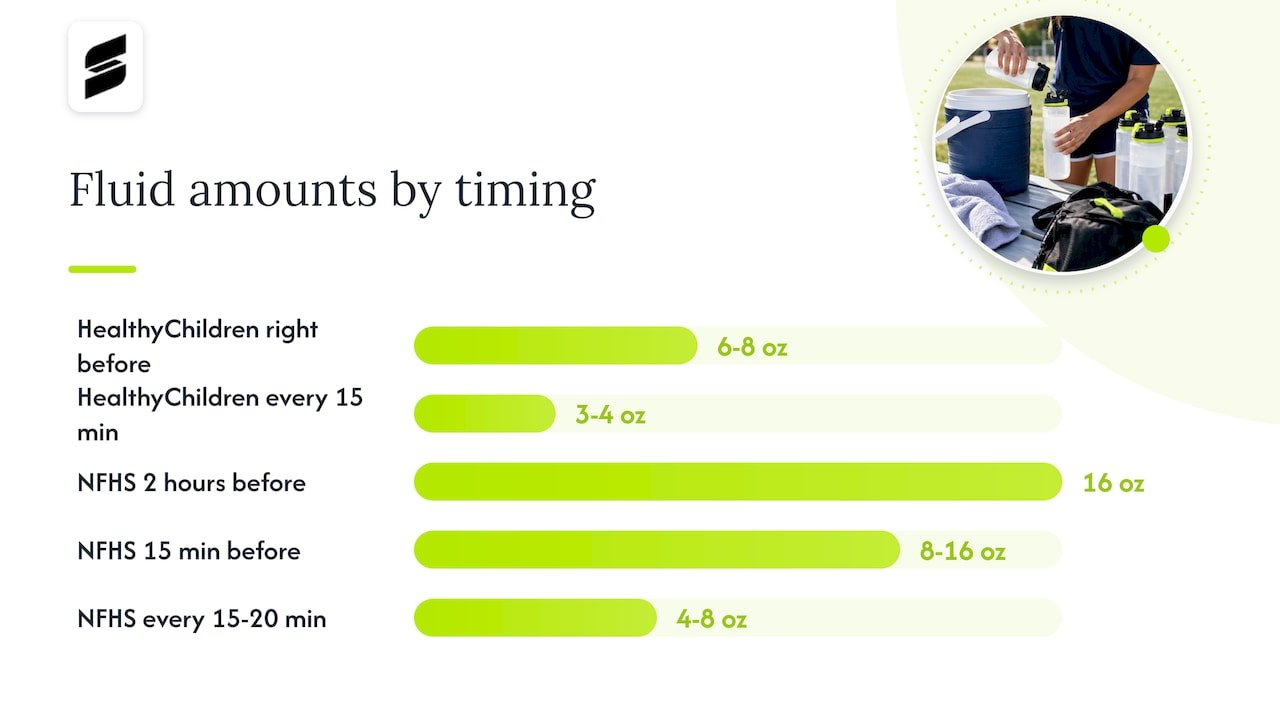
The same HealthyChildren.org page recommends 3 to 4 ounces of fluid every 15 minutes during exercise, and an extra 6 to 8 ounces right before. The NFHS hydration position statement gives an example schedule: 16 ounces two hours before activity, another 8 to 16 ounces 15 minutes before, and 4 to 8 ounces every 15 to 20 minutes during play.
On drink choice, NFHS says water is generally enough for most exercise. A suitable sports drink may help when activity lasts longer than 60 minutes, when a player has multiple intense bouts in the same day, or in warm-to-hot, humid conditions. Most tournaments fall into that second group, so bring both.
| Item | Why it earns its space |
|---|---|
| Frozen water bottles | Cool the cooler, then become cold drinking water |
| Sports drink | Useful for multiple games or hot, humid days |
| Sandwiches and fruit | Real food between games |
| Pretzels, crackers, granola bars | Shelf-stable backup that needs no ice |
| Zip-top bags | Ice, wet clothes, dirty shoes |
First aid, sun and weather
Tournament complexes are big, and the medical tent can be a long walk. A small kit in the family bag handles most problems.
- Bandages, blister pads and antiseptic wipes
- Tweezers, tissues and hand sanitizer
- Any medication your family uses regularly, in its original container
- Pain reliever or allergy medicine your child already takes, per your pediatrician’s advice. The Greater Midwest Little League list includes bandages, tissues, Benadryl, Tylenol and ibuprofen, but dosing for your child is a question for your pediatrician or pharmacist.
- Sunscreen, lip balm and aloe
- An umbrella or raincoat
Heat
Heat is the safety issue that matters most at summer tournaments. NFHS notes that most heat-related deaths happen in the first few days of activity, which is why players need time to adapt to the environment and intensity. For a team that has not practiced in the heat, that is a reason to be conservative about substitutions and rest.
NFHS also says coaches can track athletes’ weights before and after practice to confirm fluids are being replaced, and that ice-water tubs should ideally be on site, with ice packs or ice-water-soaked towels as the fallback. Put a few extra towels and a bag of ice in the coach’s kit. If a player shows signs of heat illness, such as confusion, vomiting or fainting, call emergency services rather than waiting to see if it passes.
Cold
Early spring tournaments can leave families standing in wind for hours. Pack extra layers, blankets and hand warmers when the forecast drops below roughly 50°F, as one parent guide suggests. Players should keep a warmup top and pants on between games, then change out of damp clothes quickly.
What parents and spectators should bring
Parents spend more hours at the field than players spend on it. A few comfort items change the day.
- Camping chairs or a bleacher cushion
- A pop-up tent or umbrella for shade, which the Greater Midwest Little League list treats as optional but welcome
- A small cooler with ice packs
- A phone charger or battery pack
- Cash for gate fees, parking or concessions
- Trash bags, wipes and a change of shirt
If your event is a pickleball tournament, it helps to understand how pickleball tournament formats work before you pack, because the format decides how many matches you play and how long the day runs. A round-robin day and a single-elimination day call for different amounts of food and shade.
Parents of players on school or club teams can also use a team bag to carry their child’s items. Our ideas for personalized team backpacks show how a name and number on the bag keeps gear from going home with the wrong family.
The coach’s bag
Coaches carry the weekend’s logistics. US Youth Soccer’s tournament presentation recommends giving families a detailed itinerary with hotel and field addresses, and that advice works for any sport. Build your bag around it:
- Printed rosters, in case the tournament office needs another copy
- Player medical and emergency-contact forms, plus any league paperwork
- Field and hotel addresses, with game times, shared with families before you leave
- A first-aid kit and a bag of ice
- Spare balls, pinnies, pump and needle, and tape
- Extra uniform pieces: a spare jersey, a few pairs of socks, belts if you play baseball
- Pens, a clipboard and a lineup card or substitution chart
- Sideline apparel, such as a coach’s jacket or polo, so staff are easy to spot
One more coach task: know your players’ sizes before the weekend. If a player outgrows a jersey mid-season, you want to find out at practice. Our guide to collecting uniform sizes, numbers and names keeps that process to one pass.
Extras for overnight tournaments and long drives
When a tournament means a hotel, add these to the bags:
- Casual clothes, pajamas and a swimsuit if the hotel has a pool
- Toiletries and any medications
- Backup sneakers or slides
- A phone charger, cards or games for downtime
- Pillows or a blanket for the car
If you drive, Dr. Chris Koutures of ActiveKidMD advises stops every 2 to 3 hours for food, fluids and light movement to prevent stiffness and cramping. He also recommends 8 to 9 hours of sleep the night before a tournament. Sleep beats an extra hour of screen time, and it beats a late pre-game practice.
Our perspective: the uniform is the part you cannot replace
At Capra Sports, we see a pattern in tournament-week questions: coaches worry about snacks and schedules, and the uniform is the piece nobody double-checks. A water bottle can be bought at the gate. A matching numbered jersey cannot.
Three habits we recommend to coaches who order from us or anyone else:
- Confirm sizes and numbers weeks before the event, not the week of.
- Order enough that every player has a legal set, and think about whether a second color or a spare set belongs in your plan.
- Keep a master list of numbers so a lost jersey does not become a duplicate-number problem.
We design every order with our designers, and you see a mockup within 24 hours. Our policy is a 10-set team minimum and one sizing sample at no extra charge, so you can check fit before the whole team is ordered. That early check matters more than any item on a packing list: a uniform that fits and arrives on time is one less thing to pack for.
— Agha
Need uniforms before the next tournament?
If your team is still working on uniforms, we make custom sublimated sets for basketball, baseball, softball, soccer, football, volleyball and cheer, along with warmup shirts, pants, hoodies and backpacks. See our custom team uniform pricing page for product lines, with pricing shown as [PRICE TBD] here, or start from our homepage to request a free mockup from our designers.
FAQ
What should I pack for a baseball tournament?
Pack the full uniform (pants, shirt, belt, socks and hat), cleats, glove, bat, helmet, batting gloves, a protective cup and a baseball bag. Add sunblock, bug spray, extra clothes and a water bottle. This follows the Greater Midwest Little League checklist.
What are the must-haves for a softball tournament?
Beyond the uniform, glove and cleats, check that your bat and helmet are approved for the event. USA Softball requires NOCSAE-approved helmets with face guards for Junior Olympic fast-pitch batters, and catchers need a mask with throat protection, helmet, shin guards and a body protector, per the 2026 rulebook.
What are the best snacks to pack for tournament days?
Mix shelf-stable items such as granola bars, pretzels, crackers and dried fruit with cooler foods such as sandwiches, fruit, yogurt, string cheese and hard-boiled eggs. Freeze some water bottles to keep the cooler cold. A tournament nutrition guide lists these options.
How much water should a young athlete drink at a tournament?
HealthyChildren.org recommends 3 to 4 ounces every 15 minutes during exercise, plus 6 to 8 ounces just before. Ask your child’s pediatrician if you have questions about their specific needs.
Sources
- Greater Midwest Little League tournament packing checklist
- NFHS hydration position statement
- NFHS guidelines for sports hygiene and skin infections
- NFHS heat acclimatization and heat illness prevention
- HealthyChildren.org sports nutrition for busy families
- USA Softball 2026 rulebook
- US Youth Soccer: Coaching at Tournaments
- Tournament travel nutrition guide
- Pickleball tournament formats