
Coaches: Free Mockups and Low Minimums for Sublimated Uniforms
Sublimated uniforms are polyester garments where dye gets infused directly into the fibers using heat and pressure, rather than printed or stamped on top. The result is full-color, seam-to-seam graphics that won’t crack, peel, or fade the way traditional printed jerseys do, while the fabric stays light and breathable. For teams that want a durable, highly custom kit with a professional look, sublimation is typically the strongest option on the market.
TL;DR:
- Sublimation allows unlimited colors at the same cost, making complex and full-coverage designs affordable for small teams.
- It bonds dye into polyester fibers, ensuring the graphics won’t crack, peel, or fade through repeated washes and heavy wear.
- The process works best on fabrics with at least 65% polyester and tight weaves, but is ineffective on cotton or natural fibers.
- Sublimated uniforms are easier to care for with cold wash, low heat drying, and avoiding abrasive detergents, which extends their lifespan.
- For highly detailed, all-over, or photo-realistic designs, sublimation outperforms screen printing and heat transfer on polyester materials.
Table of Contents
- How Dye-Sublimation Works, Step by Step
- What Makes Sublimated Uniforms a Smart Pick for Teams
- Sublimation vs. Screen Printing vs. Heat Transfer: Which Should You Choose?
- Fabric Specs Every Coach Should Ask About
- How to Wash and Care for Sublimated Uniforms
- Design and Ordering Checklist Before You Submit Artwork
- What Sublimated Uniforms Actually Cost, and How to Budget Smart
- Capra Sports: How We Produce and Support Sublimated Team Uniforms
- When Sublimation Is the Right Call for Your Team
- How to Get Started With a Custom Sublimated Order
- Sources
- FAQ
How Dye-Sublimation Works, Step by Step
The process starts with a design printed onto special transfer paper using sublimation ink. From there, a heat press applies extreme heat and firm pressure, which turns that solid ink into a gas. The gas then permeates the polyester fibers and bonds with them at the molecular level as the fabric cools, so the color becomes part of the material instead of sitting on its surface, according to the Dye-sublimation printing overview on Wikipedia.
Two production paths matter here:
- Transfer-press sublimation: standard for most jerseys, works well on light or white polyester panels.
- Cut-and-sew sublimation: prints the design onto fabric panels before the garment is assembled, which is what allows dark backgrounds and true all-over colorways, per Roland DG’s sublimation guide.
Because the dye becomes part of the fiber, there’s no raised layer of ink to peel or crack over time.
What Makes Sublimated Uniforms a Smart Pick for Teams
Coaches care about three things: how the uniform looks, how long it lasts, and what it costs. Sublimation hits all three in ways screen printing usually can’t match.
- Unlimited colors, one price. You can run a gradient, a mascot, sponsor logos, and player numbers across the whole garment without paying extra per color.
- No texture, no added weight. The design becomes part of the weave, so the jersey feels the same whether it’s plain or covered in graphics, a comfort factor that matters most during fourth-quarter sprints.
- Print permanence. Because dye bonds inside the fibers instead of resting on top, the print resists cracking, peeling, and typical wash fade.
- Cost efficiency for complex or small-batch orders. Detailed, personalized designs cost roughly the same as simple ones, which is rare in decorated apparel.
There’s also a quieter sustainability upside: since the image is dyed into the fabric rather than layered on top with plastic-based ink, some production flows generate less decoration waste.
Pro Tip: If your roster has players who each want a slightly different sleeve pattern or personalized number style, sublimation handles that without driving up your per-unit cost the way screen printing would.
Sublimation vs. Screen Printing vs. Heat Transfer: Which Should You Choose?
Sublimation dominates when you need full-coverage, multi-color, or photo-realistic graphics on polyester. Think camo patterns, gradients, or a jersey where the entire surface carries a design rather than just a chest logo.
It has real limits, though:
- Poor results on cotton and other natural fibers. Sublimation dye needs polyester or a polymer coating to bond properly, so it simply won’t work on a cotton tee.
- Struggles on pre-dyed dark garments unless the shop uses cut-and-sew, which builds the design into white panels before assembly.
- Screen printing or heat transfer can be cheaper for large, single-color runs on cotton merchandise, like fan shirts or spirit wear.
If you’re deciding between methods for an upcoming order, our breakdown of sublimation vs. screen printing vs. heat transfer walks through the tradeoffs in more depth.
Fabric Specs Every Coach Should Ask About
Not all polyester is equal, and the fabric underneath the print determines how the uniform performs on game day. Ask your supplier for specifics before you approve any order.
- Polyester content: look for at least 65% polyester; performance jerseys for basketball, soccer, and football commonly run 91 to 100% polyester for better sublimation results and moisture-wicking.
- Knit vs. woven: knit fabrics stretch more and suit basketball and soccer, where mobility matters; woven fabrics hold shape better for structured pieces like warmup jackets.
- Weave tightness: a tighter weave produces sharper, more vibrant print detail, especially for logos with fine text or gradients.
- Cotton and cotton blends: these don’t accept sublimation dye the way polyester does, so true dye-sublimation results require polyester or polymer-coated materials.
How to Wash and Care for Sublimated Uniforms
Sublimated uniforms hold up well through a full season if you treat the fabric right, not just the print.
- Wash cold on a gentle cycle, and skip chlorine bleach entirely. It breaks down polyester fibers over time.
- Tumble dry on low heat, or air dry when possible. High heat outside the controlled heat-press process can distort the fabric.
- Avoid abrasive detergents or fabric softeners that leave residue on the weave.
Here’s the honest expectation: fabric wear, not print failure, is usually what ends a uniform’s life. Seam stress from sliding, turf abrasion, and repeated stretching tend to wear out the garment long before the sublimated graphic shows any fade. Our full washing and care guide covers stain removal and drying specifics.
Design and Ordering Checklist Before You Submit Artwork
Getting a sublimated order right the first time saves you a reprint cycle and a delayed season opener.
- Submit vector files or high-resolution PDFs whenever possible; this keeps logos and numbers crisp instead of pixelated.
- Check colors against a physical proof, not just a screen, since monitor colors and printed colors don’t always match exactly.
- Decide your personalization method: cut-and-sew for full-color, dark-background designs, or panel-based heat press for standard jerseys with player names and numbers.
- Confirm number and name placement against your league’s rulebook, since sizing and position rules vary by sport and level.
- Ask about lead times and sample availability before you commit, especially if your season starts on a fixed date.
Pricing for sublimated orders is driven mainly by fabric grade, design complexity, and order quantity, not by color count. Our step-by-step design guide for coaches covers file prep and placement rules in more detail.
What Sublimated Uniforms Actually Cost, and How to Budget Smart
One of sublimation’s biggest financial advantages is that a five-color design typically costs the same as a one-color design, since the printing process doesn’t charge per color the way screen printing does. That makes it a strong fit for teams that want intricate crests, gradients, or sponsor logos without a price penalty.
Bulk screen printing can still beat sublimation on price for very plain, high-volume orders, like a single-color spirit shirt printed by the hundreds for a whole school.
A few ways to keep sublimated uniform costs in check:
- Reuse an approved template across multiple seasons or age groups instead of redesigning from scratch.
- Order during your sport’s off-season, when production shops often have more capacity.
- Stick with standard fabric weights and cuts unless your sport specifically needs a heavier or stretchier build.
- Ask directly about factory-direct pricing, which cuts out markup from middlemen resellers.
Capra Sports: How We Produce and Support Sublimated Team Uniforms
Capra Sports builds custom sublimated uniforms for basketball, baseball, softball, soccer, football, and volleyball, and we back every order with free design mockups so coaches see the finished look before committing.
- We use cut-and-sew sublimation workflows, which support dark, all-over colorways and full player personalization instead of limiting you to light backgrounds, according to Capra Sports’ own process breakdown.
- Low minimum order quantities mean a 12-player youth roster gets the same production quality as a varsity program ordering 40 kits.
- Factory-direct pricing removes the reseller markup that inflates a lot of team apparel quotes.
- Direct designer collaboration with unlimited revisions means the mockup you approve is the uniform you receive, not a rough approximation.
If you want to see how the fabric and print hold up before ordering, request a free mockup and physical sample so you can check sizing and colorway in person.
When Sublimation Is the Right Call for Your Team
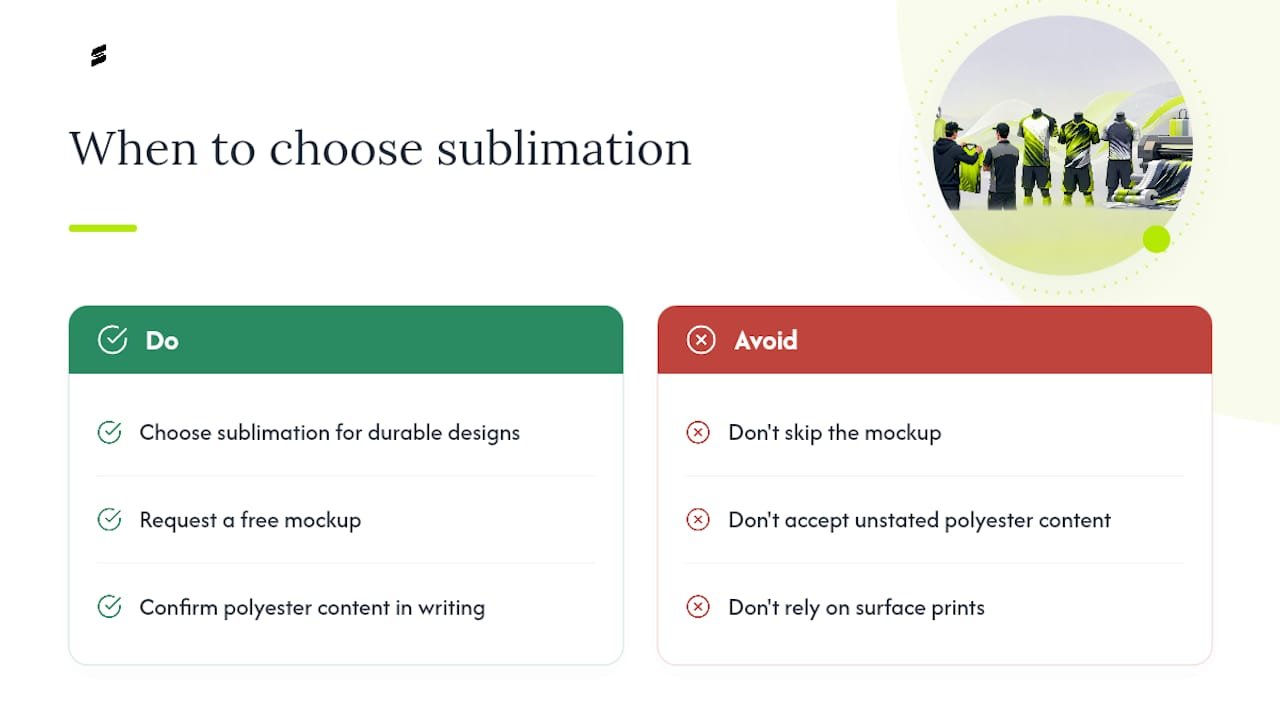
If your program needs uniforms that will survive a full season of washing, sliding, and sweat while keeping a sharp, all-over design, sublimation is the clear recommendation. It’s built for exactly that kind of repeated stress, and the print simply doesn’t have a surface layer to wear off.
Before you place an order anywhere, request a free mockup and confirm the fabric’s polyester content in writing. Those two steps catch most of the problems teams run into after the fact, when it’s too late to fix them cheaply.
— Agha
How to Get Started With a Custom Sublimated Order
Capra Sports runs on factory-direct pricing and low minimum order quantities, so a small rec league team gets the same attention and per-unit value as a large athletic program. There’s no markup from outside vendors sitting between your budget and your uniforms.
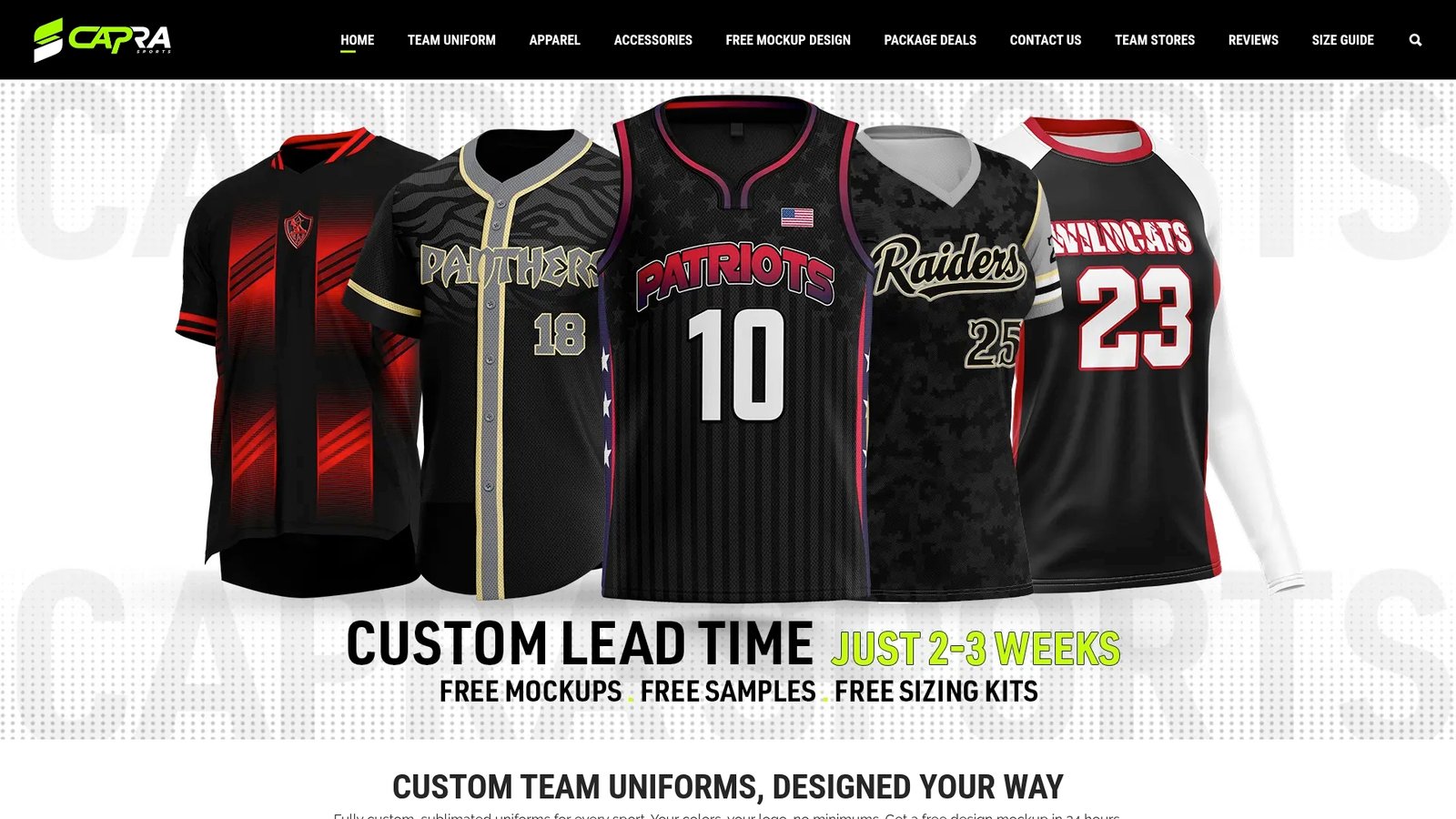
Getting a quote starts with a free mockup request, typically turned around within 24 hours. Have your sport, roster sizes, rough quantity, and any existing artwork or color preferences ready when you submit; that’s enough for our designers to build a first draft mockup and give you a realistic timeline. From there, you can request revisions until the design matches your program’s identity exactly. Browse the full custom uniform catalog to see options across basketball, football, soccer, baseball, softball, and volleyball, or head straight to the design request form to start your team’s order.
Sources
For a deeper technical breakdown of the sublimation process itself, see the Wikipedia overview of dye-sublimation printing and Printful’s explainer on how sublimation bonds to fabric. For sport-specific rules on uniform numbering and placement, check your governing body’s official rulebook, such as NFHS or NCAA guidelines. To go further on design prep, our coach’s guide to designing a custom uniform covers file formats and layout in detail.
- Dye-sublimation printing — Wikipedia
- What is sublimation printing? — Printful blog
- Dye sublimation guide — Roland DG (PDF)
FAQ
What Are the Disadvantages of Sublimation?
Sublimation doesn’t work on cotton or other natural fibers, and standard transfer-press sublimation struggles on pre-dyed dark garments unless the shop uses a cut-and-sew workflow. It also isn’t the cheapest option for simple, single-color, high-volume orders.
Are Sublimated Jerseys Better Than Screen-Printed Ones?
For full-color, all-over, or highly detailed designs on polyester, yes. Sublimated jerseys resist cracking and peeling because the dye bonds inside the fabric fibers, while screen-printed ink sits on top and can wear off over time.
How Long Does Sublimation Last on Clothing?
The print itself typically outlasts the garment. Fabric wear from washing, sliding, and abrasion usually limits a uniform’s usable life well before the sublimated graphic shows any real fading or cracking.
Is Cotton or Sublimation Better for Team Uniforms?
For performance apparel, sublimated polyester wins on durability, breathability, and design flexibility. Cotton can’t hold sublimation dye properly, so it’s a better fit for casual spirit wear printed with traditional screen printing instead.