
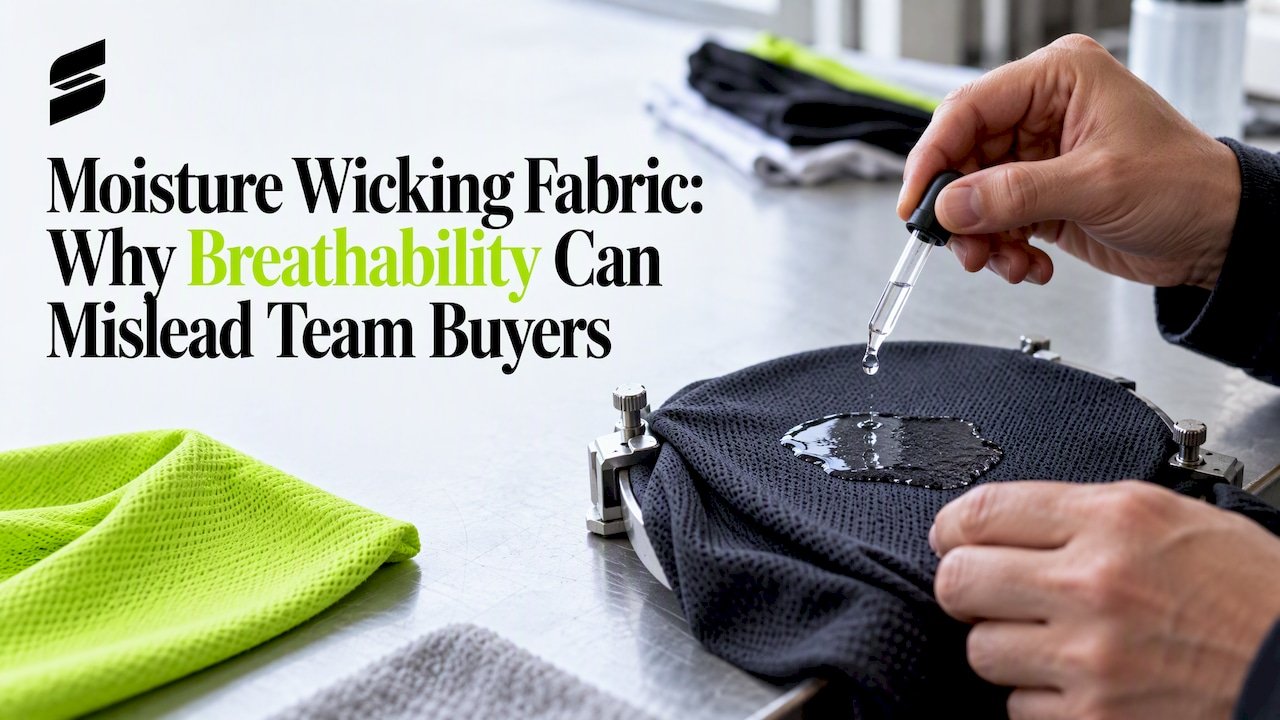
Moisture Wicking Fabric: Why Breathability Can Mislead Team Buyers
Moisture-wicking fabric moves sweat away from your skin to the garment surface so it evaporates faster, keeping you drier and more comfortable during activity. The effect comes from fiber structure and knit geometry working together, not a single magic ingredient. REI’s explainer describes this same two-part job: move sweat out, then dry quickly so the fabric never feels saturated against your skin.
TL;DR:
- Micro polyester in a lightweight single jersey knit outperformed rib and interlock structures for transport and drying, while cotton stays wet during sustained exertion.
- Ask suppliers for AATCC TM195 or vertical wicking results, plus fiber content, knit type, fabric weight, and airflow data; labels alone prove little.
- Wash in cold water without softener or bleach, then air dry or use low heat; persistent slow drying can signal residue or fiber damage.
- Choose lighter, more open knits for high exertion sports and humid conditions; in cold weather, pair a wicking base layer with insulation or wind protection.
- Synthetic performance fabrics shed microfibers in washing; a mesh laundry bag, lower spin speed, and less frequent washing, when hygiene allows, can reduce shedding.
Table of Contents
- How Moisture-Wicking Works: Capillary Action and Fabric Construction
- Which Materials and Constructions Perform Best for Shoppers
- How to Choose Moisture-Wicking Fabric: A Buyer Checklist
- Care and Maintenance to Preserve Wicking Performance
- Applying Fabric Performance to Team Uniforms
- Does Fabric Weight and Thickness Change Moisture Management?
- Environmental Considerations for Moisture-Wicking Fabrics
- When Moisture-Wicking Matters Most
- Capra Sports: Ordering Moisture-Wicking Team Uniforms
- FAQ
- Sources
How Moisture-Wicking Works: Capillary Action and Fabric Construction
Sweat moves through a wicking fabric the same way water climbs a paper towel. Tiny gaps between fibers, called microchannels, pull liquid along through capillary action, spreading it across a wider surface area where it can evaporate. This is a different job from vapor transmission, which lets water vapor pass through a fabric before it ever condenses into liquid sweat. A shirt can be good at one and weak at the other, which is why “breathable” and “moisture-wicking” towels and fabrics are not interchangeable claims.
Fiber shape and arrangement decide how well this works:
- Fiber cross-section matters: non-round or channeled microfibers create more surface area and faster capillary pull than round fibers.
- Microfiber diameter matters: finer fibers pack more microchannels into the same weight of fabric.
- Knit structure matters: a single-jersey knit tends to transport and dry liquid faster than denser rib or interlock knits.
- Finish type matters: a fabric can wick because of its fiber architecture (mechanical wicking) or because of a coating sprayed onto it (topical finish).
A textile study on knit structures found that plain single-jersey knits made from micro polyester outperformed rib and interlock structures for liquid transport and drying rate. That distinction between mechanical and topical wicking also affects durability: topical finishes tend to wash out faster than wicking built into the fiber itself, a point ScienceSignal’s breakdown of Dri-FIT-style technology makes clear when explaining why branded microfiber architectures hold up better over repeated wear.
Which Materials and Constructions Perform Best for Shoppers
Not every fiber wicks, and not every “wicking” claim holds up the same way across fabrics. A few patterns show up consistently in performance activewear.
- Micro polyester and polypropylene fibers have low moisture absorption themselves, so instead of soaking up sweat, they push it outward along the fiber surface.
- Single-jersey knits with consistent porosity give liquid a shorter, faster path from the inner surface to the outer surface, which speeds drying.
- Blends, such as polyester with a small amount of spandex or cotton, can add stretch or softness, but the wicking performance still depends mostly on the synthetic share and the knit.
- Cotton and other absorbent natural fibers soak up moisture rather than moving it outward, which is why a cotton shirt stays wet and heavy during sustained, high-exertion activity.
For team jerseys specifically, single-jersey micro polyester constructions tend to balance three practical needs at once: moisture transport, durability through repeated team laundering, and compatibility with sublimation printing for team colors and logos. That combination is a large part of why this construction shows up so often in competitive sportswear rather than heavier or more absorbent alternatives. Our guide to fabric choices for jerseys walks through how these constructions compare for specific sports.
How to Choose Moisture-Wicking Fabric: A Buyer Checklist
Marketing language like “advanced moisture technology” tells you nothing on its own. What actually separates a good wicking fabric from a weak one is measurable, and you can ask for the numbers.
- Ask whether the fabric has been tested to AATCC TM195, the standard lab method for measuring liquid moisture management, including absorption rate, one-way transport, and spreading speed.
- Ask for vertical wicking test results, which show how far water travels up a fabric sample over a set time and let you compare materials directly.
- Check the spec sheet for microfiber content, knit type (single jersey versus interlock or rib), fabric weight, and any stated breathability or WVTR figure.
- Compare dry time and airflow across samples rather than relying on labels like “cooling” or “performance,” which have no fixed definition.
- Request a fabric swatch or a small garment sample before committing to a large team order, so you can judge hand feel and drape in person.
Pro Tip: Ask any supplier for the specific test name and number, such as an AATCC TM195 index or a vertical wicking height at five and ten minutes, instead of accepting a generic “moisture-wicking” label.
Our guide to reading WVTR and airflow specs breaks down how to interpret those numbers when a supplier sends you a spec sheet.
Care and Maintenance to Preserve Wicking Performance
How you wash a wicking garment affects how long it keeps working as well as how it fits.
- Wash in cold water and skip fabric softener and bleach, both of which coat fibers and block the microchannels that move moisture.
- Use an enzyme-based sports detergent, or run an occasional vinegar rinse, to break down the sweat salts and detergent residue that build up over time.
- Air dry when possible, or use low heat if tumble drying; high heat can glaze synthetic microfibers and flatten the structure that makes wicking work.
- Watch for a garment that stays damp longer than it used to after normal washing, which usually signals residue buildup or fiber damage rather than a one-time laundry mistake.
Pro Tip: A jersey that no longer dries quickly after a proper cold wash and air dry has likely lost its mechanical wicking structure, and no amount of extra washing will restore it.
Care practices have a real, measurable effect here. ScienceSignal’s explainer on dry performance technology notes that many garments lose noticeable wicking capacity once sweat salts and detergent residue accumulate, which makes laundering habits one of the highest-impact things you control after purchase.
Applying Fabric Performance to Team Uniforms
When we build custom uniforms, fabric choice is never an afterthought. We guide teams through the same checklist outlined above, applied to the realities of a full roster order.
- Request a fabric swatch and a sizing sample before committing to a full team order, so coaches and players can check feel and fit firsthand.
- Confirm the fiber and knit type for the specific sport, since a basketball jersey and a baseball pullover carry different airflow and durability needs.
- Review care instructions with players and parents in advance, since laundering habits determine how long the wicking performance actually lasts.
Our moisture-wicking jersey guide covers how these choices play out across different sports and uniform types.
Does Fabric Weight and Thickness Change Moisture Management?
Lighter fabrics generally move moisture through a shorter path, which tends to support faster drying, while heavier or denser constructions hold more liquid before it reaches the outer surface. That is one reason lightweight single-jersey knits show up so often in running shirts and summer-weight jerseys rather than heavier fleece-backed fabrics.
Thickness interacts with knit density, too. A thicker fabric made from a tightly packed knit can trap liquid closer to the skin even if the fiber itself is a strong wicking material, because the moisture has farther to travel and fewer open channels to travel through. A thinner, more open knit made from the same fiber often outperforms it on drying speed.
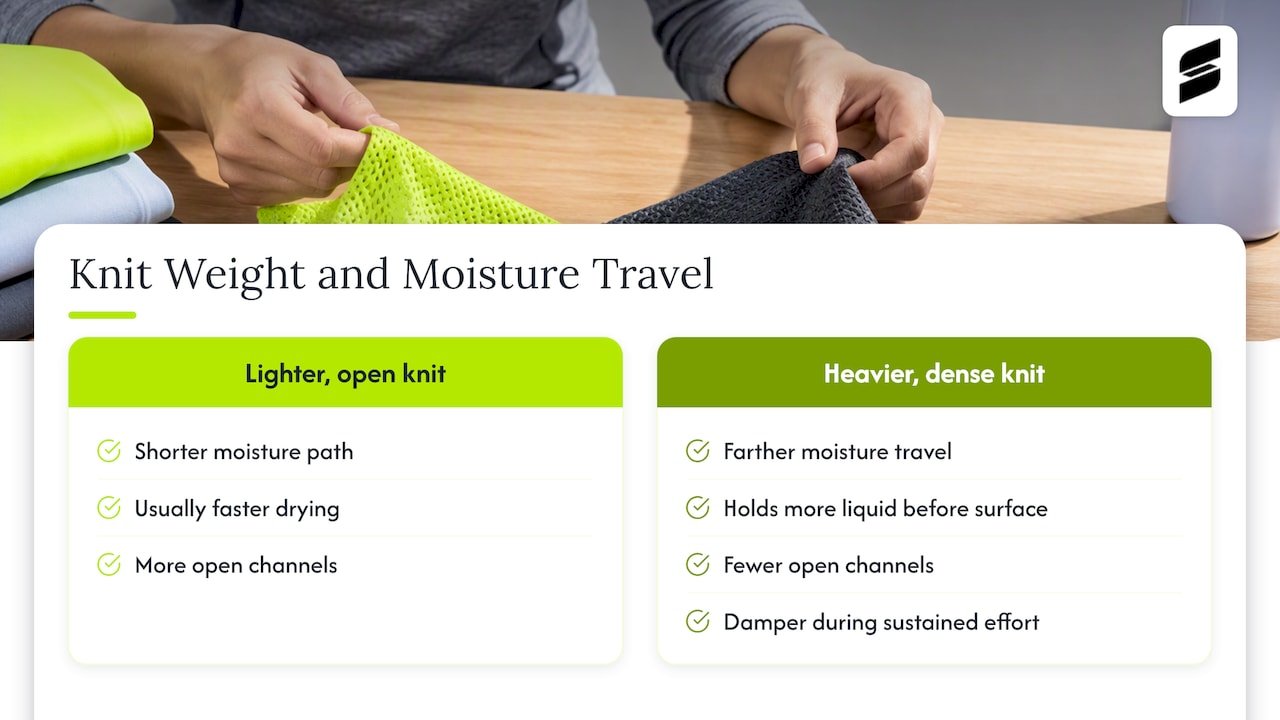
This tradeoff matters most in layering decisions. A heavier fabric can still make sense when a sport demands more abrasion resistance or structure, such as football pants or heavier training gear, but the tradeoff is slower drying and a damper feel during sustained effort. For high-output sports like soccer, basketball, or distance running, lighter, more open constructions usually serve moisture management better than heavier fabrics marketed on durability alone. Matching weight to the sport and season, rather than defaulting to the heaviest available option, keeps comfort and function aligned.
Environmental Considerations for Moisture-Wicking Fabrics
Most moisture-wicking fabrics rely on synthetic fibers like polyester or polypropylene, which are petroleum-based and do not biodegrade the way natural fibers do. That tradeoff is part of why some brands now offer recycled polyester options, which reuse existing plastic rather than drawing on new raw material while keeping the same microfiber structure that supports wicking.
Washing synthetic performance fabrics also releases microfibers into wastewater, a byproduct of the same fine fiber diameter that makes these fabrics wick well in the first place. Using a mesh laundry bag or a front-loading washer with a lower spin speed can reduce how many fibers shed per wash, and washing less frequently, when hygiene allows, has the same effect. These are small, practical adjustments rather than reasons to avoid synthetic performance fabric altogether, since the fiber properties that support sustainability efforts and the ones that support wicking performance come from the same underlying structure.
When Moisture-Wicking Matters Most
Moisture-wicking delivers the biggest payoff during high-intensity, humid, or long-duration activity, where sweat volume is highest and evaporative cooling matters most. In cold weather, insulation and wind resistance often take priority over wicking alone, and a simple layering approach, a wicking base layer under an insulating or breathable outer layer, covers both needs without one canceling out the other.
— Agha
Capra Sports: Ordering Moisture-Wicking Team Uniforms
We build every custom uniform around fabric designed to perform well for athletic use. Our team starts with your sport and climate, then recommends a suitable fabric construction for your needs.
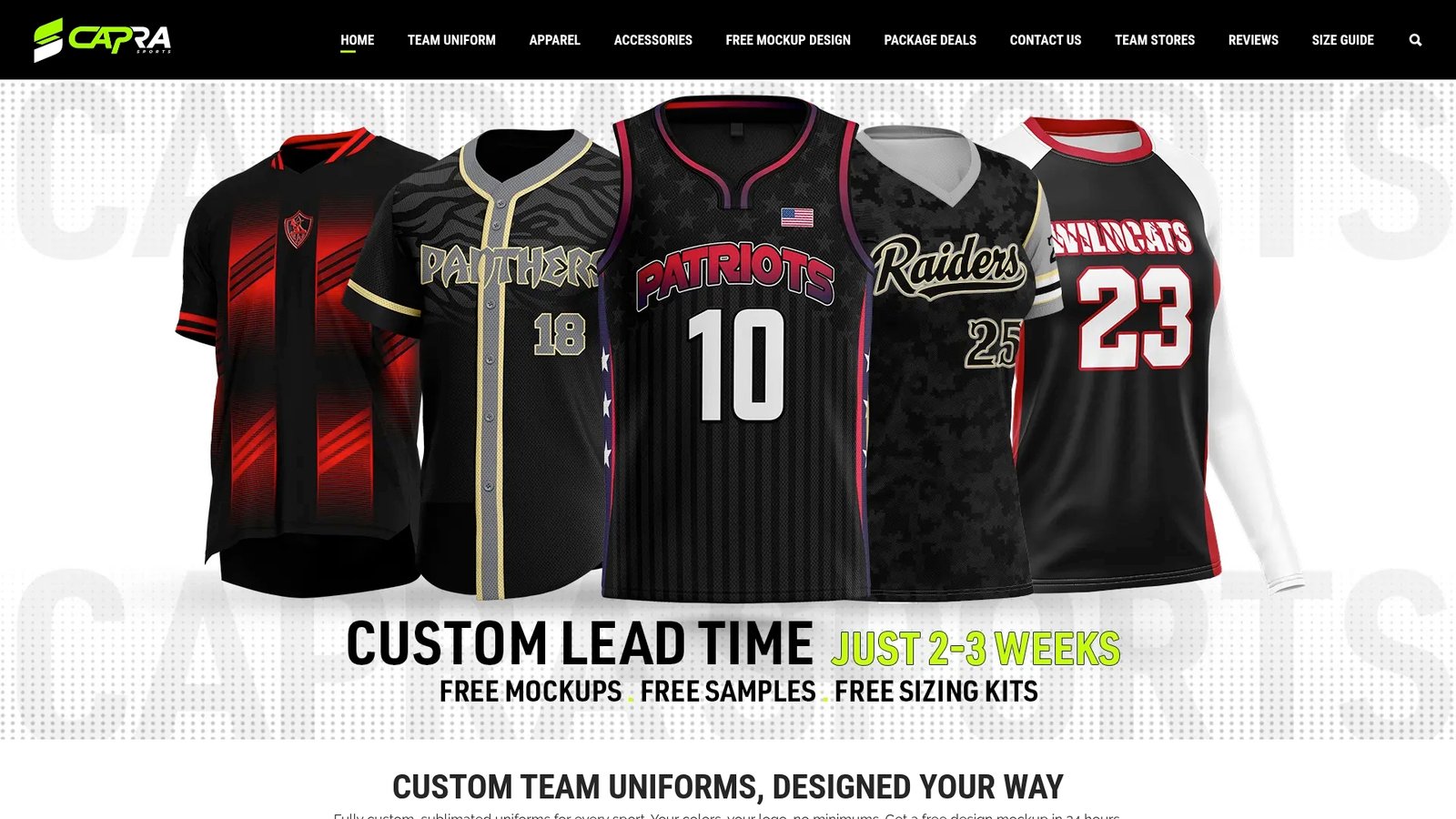
- Request a sizing sample before your full team order so players can confirm fit and feel firsthand.
- Work directly with our design team to confirm design and care instructions before production starts.
- Review sport-specific fabric guidance so your uniform matches the demands of your season.
Our pricing and ordering page lists current options for basketball, baseball, soccer, football, and volleyball uniforms, so you can compare your sport’s fabric and start a sample request today.
FAQ
What is the best fabric for moisture-wicking?
Micro polyester in a single-jersey knit construction is among the most consistently strong performers, since textile research found it outperformed rib and interlock knits for liquid transport and drying rate. Performance still depends on fiber cross-section and finish type, not the fiber name alone.
What’s the difference between Dri-FIT and moisture-wicking?
Moisture-wicking is the general function of moving sweat from skin to fabric surface, while Dri-FIT is a branded construction built on microfiber architecture designed to create that effect mechanically rather than through a sprayed-on finish, according to an explainer on the technology. Mechanical constructions like this tend to hold their performance through more washes than topical finishes.
What is the best breathable fabric for hot days?
A lightweight, single-jersey synthetic knit with an open structure tends to combine breathability and wicking well in hot weather, since a shorter liquid path supports faster evaporation. Heavier or denser fabrics, even in the same fiber, generally trap more heat and moisture against the skin.
What is the best material for wicking?
Micro polyester and polypropylene are the two fibers most consistently used for wicking, since both have low moisture absorption and push sweat outward along the fiber rather than soaking it up. Natural fibers like cotton absorb moisture instead of moving it, which is why they underperform during sustained, high-exertion activity.
Sources
- The Influence of Yarn and Knit Structure on Comfort Properties of Sportswear Fabric
- AATCC TM195-2011e2(2017)e5
- Test Method for Vertical Wicking of Textiles (AATCC TM197 excerpt)
- What Does Moisture-Wicking Mean? | REI Expert Advice
- Sciencesignal