
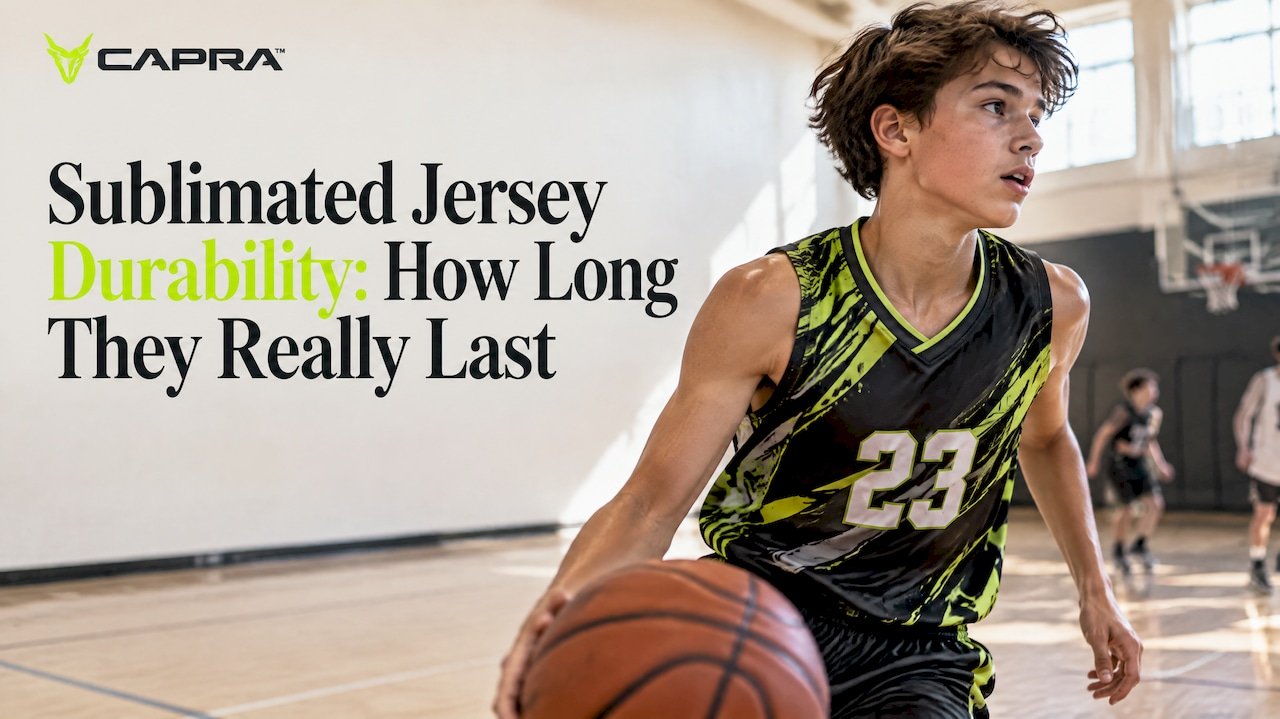
Sublimated Jersey Durability: How Long They Really Last
A well-made sublimated jersey holds its color for many seasons, because the design is dye inside the polyester fibers and not a layer of ink sitting on top. It won’t crack, peel or flake the way a screen print or heat transfer can. When a sublimated jersey does look worn, the cause is almost always heat, harsh chemicals, sun, friction or a fabric that was wrong for the job. Below is what separates a set that looks sharp in year three from one that looks tired after one tournament weekend.
TL;DR
- Sublimation bonds dye into polyester fibers, so there is no print layer to crack, peel or wear off at the surface.
- Fading comes from chlorine bleach, hot dryers, long sun exposure, fabric softener and cheap, thin fabric, not from normal games and normal washing.
- Cold water, inside out, air dry. That routine does most of the work of keeping a team set bright.
- What looks like fading near seams is often fabric stress or construction, so fabric weight and fiber blend matter when you order.
- Sublimation only works properly on polyester. Cotton and dark-fabric jobs are a different conversation.
Table of Contents
- Why sublimated jerseys last: the dye is part of the fabric
- Do sublimated jerseys fade?
- Fabric matters as much as the print
- How sublimation compares with other methods
- A care routine that keeps colors bright
- What this means by sport
- Perspective: what we tell coaches before they order
- Ordering for durability: a short checklist
- Custom team sets from Capra Sports
- FAQ
- Sources
Why sublimated jerseys last: the dye is part of the fabric
In sublimation, special dye is printed onto transfer paper, then heat and pressure turn it into a gas that enters polyester fibers. When the fabric cools, the dye is locked inside. There is no film, no raised ink and no adhesive. You can run your hand across a sublimated number and feel only fabric.
That is why the common failures of other decoration methods do not apply. Screen-printed numbers can crack as the jersey stretches. Heat-transfer vinyl can lift at the edges after enough washes. A sublimated graphic can’t lift, because nothing is stuck on. If you want the full process, our guide to what sublimation printing is and why it lasts on team uniforms walks through it step by step.
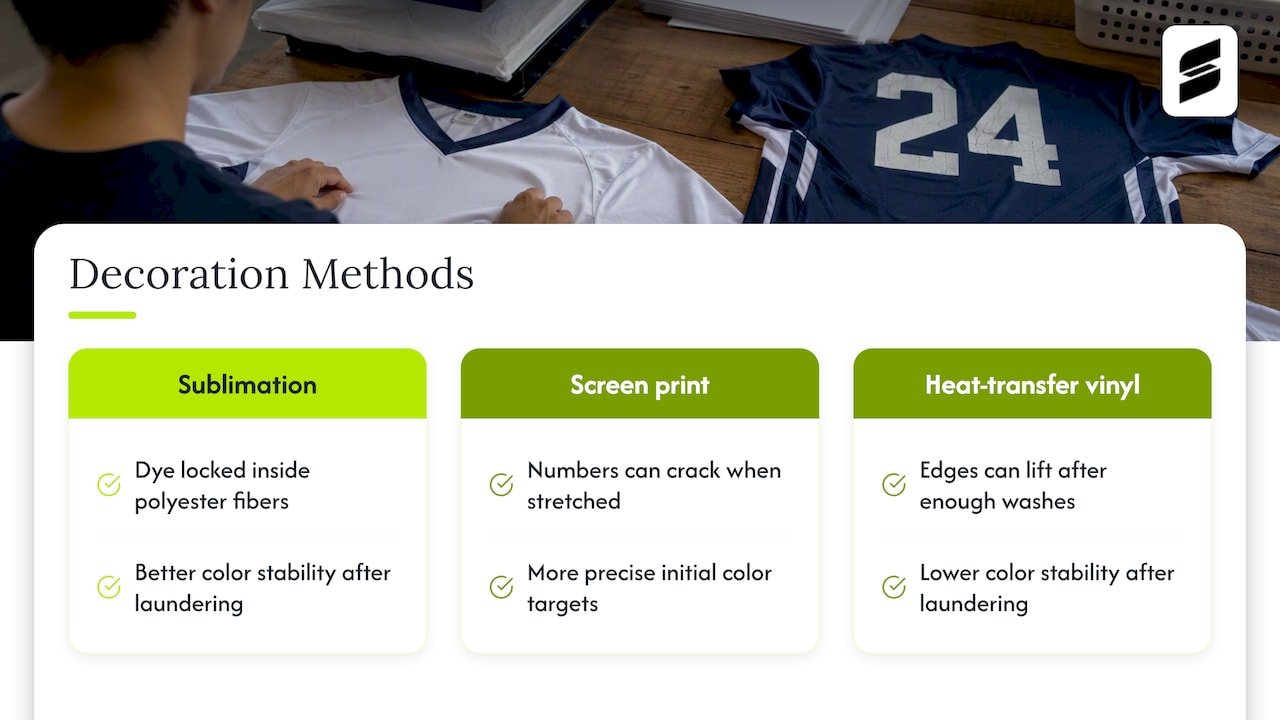
There is also research behind the claim. A study published through IS&T found that screen printing can hit specific brand color targets more precisely right out of the gate, but dye sublimation on polyester kept its color stability better than other methods after repeated laundering. Starting color and staying color are different questions, and for a team that wears the same set for years, staying color matters more.
Do sublimated jerseys fade?
Yes, eventually, like any dyed textile. The honest version is that sublimated jerseys fade slowly and that you control most of the speed.
Four things do most of the damage:
- Heat. Hot dryers and hot water put stress on polyester and the dye inside it. A hot dryer is the single most common mistake we see coaches and parents make.
- Chlorine bleach and harsh detergents. Bleach attacks dye. Oxygen-based cleaners and strong stain removers can also dull bright colors over time.
- Prolonged sun. Leaving a wet jersey on a dashboard, in a gear bag in a hot trunk, or on a fence all afternoon accelerates fading, especially in reds, purples and neon shades.
- Fabric softener. It coats fibers, traps odor and interferes with the moisture-wicking finish that keeps players cool.
Notice what is not on the list: sweat, grass, gym floors and being worn hard. Those are what the jersey is built for. Dirt can make colors look dull, but that is usually grime sitting on the surface and it comes out in the wash.
Fading versus wear: how to tell them apart
Coaches often call any change in appearance “fading.” Three different things can be going on:
- True color loss. The whole garment looks lighter, most obviously on areas facing the sun or rubbed by pads and bags.
- Surface dullness. Detergent residue, softener buildup or body oil leaves a film. A proper wash cycle brings the color back.
- Seam or stretch-point lines. Thin white lines at seams, armholes or creases can appear when the fabric is stretched and the base color underneath shows through. This can be a function of the fabric and how the panels were printed and assembled, not of how you washed it.
If you see the third one on a brand-new jersey, it is a construction and fabric question, not a care question. That is exactly why you should look at the fabric before you look at the print.
Fabric matters as much as the print
Sublimation is only as durable as the polyester it lives in. A thin, loosely knit fabric can pill, snag and distort, and when the fibers move the graphics move with them. Heavier, more stable polyester, and polyester blended with a small amount of spandex for stretch, tends to hold its shape and resist stress at the seams.
Two practical points follow:
- Sublimation needs polyester. On cotton, the dye has nothing to bond with. If a team wants a cotton tee, a different method is the right one, and we explain the tradeoffs in sublimation vs. DTF.
- Light colors are the best canvas. Sublimation dye is translucent, so it shows true on white and light fabric. Dark garments need a different approach, covered in sublimation on dark jerseys.
For a deeper look at what performs on the field, see our breakdown of the best fabric for jerseys and what keeps players cool in moisture-wicking jerseys. A jersey that wicks well also stays cleaner and smells better between washes, which means fewer aggressive cleaning cycles.
How sublimation compares with other methods
| Method | How it sits on the jersey | Typical durability concern |
|---|---|---|
| Sublimation | Dye inside polyester fibers | Slow color loss from heat, bleach and sun |
| Screen printing | Ink layer on the surface | Cracking and wear at stretch points |
| Heat transfer vinyl | Film bonded with adhesive | Edge lifting and peeling after repeated washes |
| Embroidery | Thread stitched on | Puckering, snagging, added weight |
Sublimation also allows full-coverage graphics, gradients and detailed patterns with no added weight, which is why most modern team uniforms use it. If you are weighing options for a specific program, our comparisons of sublimation vs. screen printing vs. heat transfer and embroidered vs. sublimated uniforms cover cost, look and reorder risk in more depth.
A care routine that keeps colors bright
The good news is that the routine is simple and cheap. For the complete version, we wrote how to wash sublimated jerseys and keep them looking new. The short version:
- Rinse or hang after games. Do not leave sweaty jerseys balled up in a bag overnight. Moisture and bacteria are the main source of odor and stains.
- Turn the jersey inside out. This protects the printed face from friction against other garments and the drum.
- Wash in cold water on a gentle cycle. Use a mild detergent, and use less than the bottle recommends.
- Skip bleach and fabric softener. Every time.
- Air dry. Hang the jersey out of direct sun. If you must use a dryer, use the lowest heat or air-only setting.
- Skip the iron. Direct heat on a decorated polyester surface can scorch it. If a jersey is wrinkled, a hang in a steamy bathroom usually works.
If you are looking for broader advice on washing athletic clothing, this guide to washing gym clothes without damaging the fabric covers the habits that carry across most performance gear.
Follow the care label
Federal rules require garment makers and importers to attach care instructions, and the FTC explains that the Care Labeling Rule applies to those labels. When a label and general advice differ, the label wins. If you manage a team set, take a photo of the label and share it with parents in the team chat so everyone washes the same way.
Storage in the off-season
Wash first, dry fully, then store flat or on hangers in a cool, dry closet. Avoid plastic bins in a hot garage or attic, and keep jerseys out of sunlit windows. Heat, humidity and light are what age stored polyester. Folded jerseys with a clean, dry surface will come out in August looking like they did in May.
What this means by sport
How a jersey wears depends on what the sport does to it.
- Basketball and volleyball: Lots of sweat, floor contact and frequent washing. Keep the routine strict and rely on air drying, because these sets often get washed after every game.
- Soccer: Grass stains, mud and long sun exposure. Rinse early, and do not leave kits in a hot car.
- Baseball and softball: Dirt, slides and heavy stains on pants and jerseys. Pre-soak in cold water before washing and avoid bleach on white pants, which is a common impulse.
- Football: Contact, pads and abrasion on shoulders and sleeves. Fabric weight and construction matter most here.
- Cheer: Frequent practice and performance wear. Rotate between sets if you can so each one gets full drying time.
Perspective: what we tell coaches before they order
We get asked about longevity more than almost anything else, and the best answer is rarely about the print. In our experience, coaches who have the longest-lasting sets do three things. They pick polyester that suits the sport, they approve a mockup carefully so there are no surprises in color or layout, and they hand the team a one-line care rule: cold, inside out, hang dry.
The second point is where we can help most. Our designers revise mockups with you, and we deliver a mockup within 24 hours, so you can catch problems like a dark color running next to a light one before anything is made. Fit is the other half of durability. A jersey that is too tight is stressed at every seam with every stretch, and a jersey that is too loose gets snagged. That is why our policy includes one sizing sample at no extra charge on a team order, so you can check size before the full set is produced.
We would rather you have a jersey that survives three seasons of real use than one that looks great in a photo and gives up early. Ask questions about fabric before you ask about colors.
— Agha
Ordering for durability: a short checklist
Before approving a design, run through these points:
- Is the fabric polyester or a polyester blend suited to your sport?
- Does the mockup place bold, dark graphics near seams in a way that could show base color when stretched?
- Have you checked sizing with a sample instead of guessing from a chart?
- Do you have a plan for who washes the jerseys and how, or will each family do their own thing?
- Do you have a spare set, or a way to reorder matching colors if players join mid-season?
That last one matters more than people expect. Dye lots and print runs can differ slightly between orders, so a later reorder may not match an older set perfectly. For leagues that grow during the year, plan a buffer in the initial order.
Custom team sets from Capra Sports
Capra Sports makes custom sublimated uniforms for basketball, baseball, softball, soccer, football, volleyball and cheer, plus warmup shirts, pants, hoodies and backpacks. You work directly with professional designers, get unlimited revisions and receive a free mockup within 24 hours. Team orders start at a 10-set minimum, and one sizing sample comes at no extra charge. Pricing for each sport is on our pricing page, with details listed as [PRICE TBD] here until you request a quote.
Ready to see your own design? Start from the Custom Basketball Uniforms for Teams page or the Custom Baseball Uniforms page, or head to our home page for softball and other sports.
FAQ
Do sublimated jerseys fade?
Over a long enough time, yes, but slowly. The dye is inside the fibers, so it does not wear off the surface. Bleach, hot dryers and extended sun are what speed fading up, and cold water with air drying slows it down.
How long does a sublimated jersey last?
It depends on fabric quality, how often it is worn and how it is washed. A well-made polyester jersey that is washed cold and air dried can look good for multiple seasons. A set that is bleached and tumbled hot will age much faster.
Can sublimated numbers and names crack or peel?
No, because there is no layer to lift. The graphics are dye within the fabric, so they stretch with it. If you see lines at seams, that is typically a fabric or construction issue, not a peeling print.
Is sublimation more durable than screen printing?
For polyester team jerseys, generally yes. Screen-printed ink sits on the surface and can crack or wear with stretching and washing, while sublimation becomes part of the fabric. Research on color stability after laundering points the same way.
Can I sublimate onto cotton?
Not effectively. Sublimation dye needs polyester to bond, so cotton garments call for another method, such as DTF.
Sources
- IS&T study on color stability of printing methods after laundering
- FTC: Complying with the Care Labeling Rule